Word Search Puzzles That Build Vocabulary and Critical Thinking Skills
- Word Search Puzzles That Build Vocabulary and Critical Thinking Skills
- Key Takeaways
- Why Word Search Puzzles Support Early Learning
- Choosing Age-Appropriate Word Search Puzzles
- Sight Word Word Searches
- Themed Vocabulary Puzzles
- Seasonal Word Search Activities
- Science Word Search Printables
- Improving Spelling Through Word Games
- Classroom and Homeschool Uses
- Printable Tips for Parents and Teachers
- Making Your Own Word Search Puzzles
Word search puzzles help you build vocabulary and critical thinking at the same time. You scan rows, columns, and sometimes diagonals to spot hidden words. That sharpens pattern recognition, memory, and focus. Themed puzzles can teach science words, sight words, and seasonal vocabulary too. Start with easier grids, then try harder ones as you improve. If you keep going, you’ll uncover even more smart ways these puzzles can enhance your learning along the way, too.
Key Takeaways
- Word search puzzles build vocabulary by exposing learners to repeated word patterns and themed word lists.
- Scanning rows, columns, and diagonals strengthens concentration, visual discrimination, and critical thinking skills.
- Finding sight words in order supports spelling memory and fluent reading habits.
- Age-appropriate grids and vocabulary keep practice engaging while increasing challenge.
- Daily word search practice reinforces learning, vocabulary growth, and long-term progress.
Why Word Search Puzzles Support Early Learning
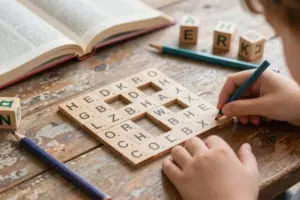
Word search puzzles help your brain grow while you hunt for hidden words. You join curious learners as you scan rows and columns, building Visual discrimination practice.
Each word you find strengthens concentration and memory because you track letters and remember your progress. Your letter pattern recognition skills grow when you spot sequences in the right order.
That practice can help spelling and vocabulary stick. Themed puzzles, such as animal or health searches, connect new words to ideas.
You can reason, try again, and celebrate small wins without test pressure. Every completed puzzle shows that practice helps you learn. Guided play can make word searches even more meaningful when adults ask questions and offer helpful materials without taking control.
Choosing Age-Appropriate Word Search Puzzles
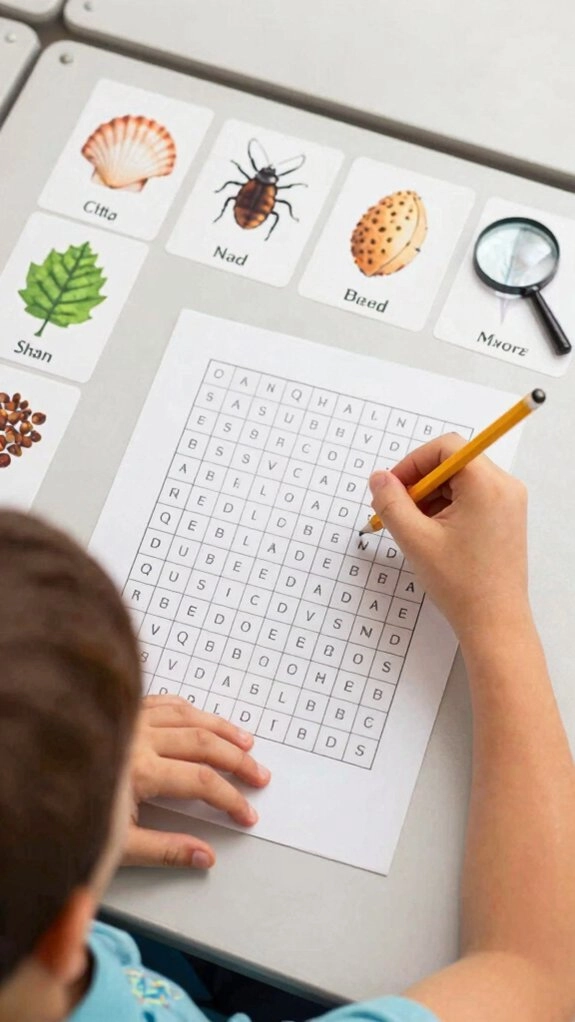
Choosing the right puzzle helps you learn without feeling stuck. If you’re in preschool or kindergarten, try large letters, a 9×9 grid, and short familiar words that run across or down. In grades one through three, you can investigate 15×15 grids, new themes, and diagonal words.
By fourth grade, bigger grids, tougher vocabulary, and backward words build persistence and pattern skills. Use age matched themes to spark curiosity, such as planets, artists, or dinosaurs. Science-themed puzzles can introduce ideas such as density and buoyancy through familiar experiments with liquids and floating eggs. Balance grid size and word length to keep challenges achievable.
With the right number of words, each success grows your vocabulary, confidence, and belonging.
Sight Word Word Searches
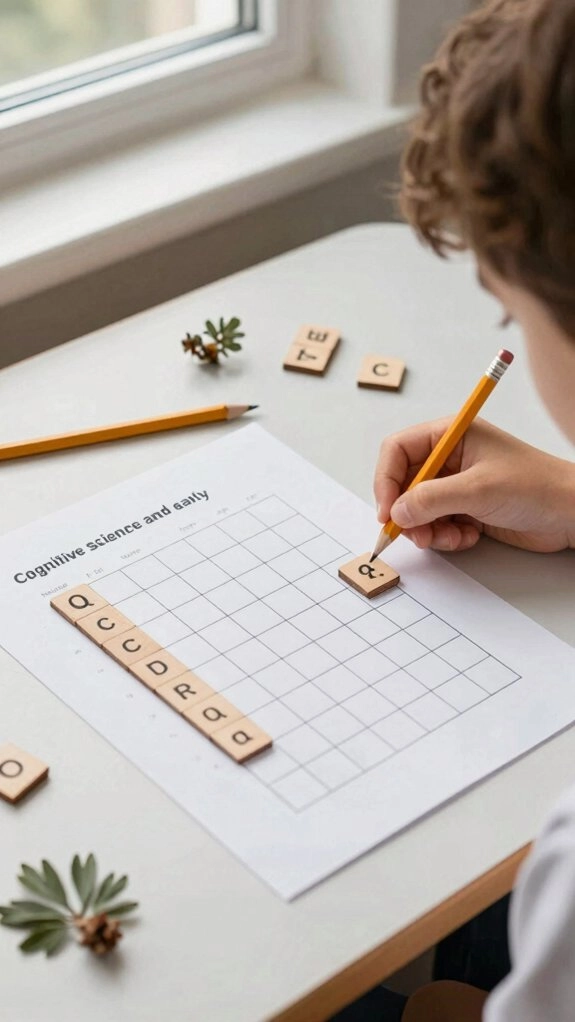
How can a small letter grid help you become a smoother reader? Sight word searches hide familiar high-frequency words among letters. You scan for each whole word in the correct order, building careful habits that support fluent reading.
Repeated finds strengthen your spelling memory and quick recognition. Choose a 9×9 grid when you need simple practice, or try 15×15 for more challenge.
Differentiate instruction for struggling readers by matching the grid to their needs. When you finish, read every word aloud and make a sentence. Add a Sight Word Scavenger Hunt to extend the practice through active searching and collaborative play.
Track progress with quick sight word assessments and celebrate steps with your reading group.
Themed Vocabulary Puzzles
A themed word search turns a letter grid into an exciting topic adventure. You join a learning team as you spot topic-specific words and notice their spelling patterns.
| Level | Puzzle idea |
|---|---|
| Young learners | Short animal words |
| Growing readers | Science terms |
| Grade 4+ | Larger grids, backward words |
| Everyone | Talk about meanings |
Choose age-appropriate words, so the challenge feels welcoming, not like a test. Larger grids and backward words help you scan in new ways. Create vocabulary word connections during a group chat. Use real life examples for each word found. You’ll build patience, confidence, and sharper thinking together with friends. After finding each word, use self-explanation to describe its meaning in your own words and strengthen understanding.
Seasonal Word Search Activities
Seasonal word searches turn each new season into a quick vocabulary adventure. You can investigate fall leaves winter snow spring buds or summer sunshine with classmates.
Seasonal theme vocabulary helps you recognize spelling patterns while you search rows columns and sometimes diagonals.
Practice pattern recognition and scanning strategies as you track letters in order. Start with a 9×9 grid, then try a 15×15 challenge when you’re ready.
These warm-up games build focus and persistence. After everyone finds words, you can share definitions, sort words into groups, or create a short silly story together.
Each puzzle helps learning community grow.
Pair a seasonal puzzle with taste-safe play dough for an edible sensory activity that encourages imaginative word building.
Science Word Search Printables
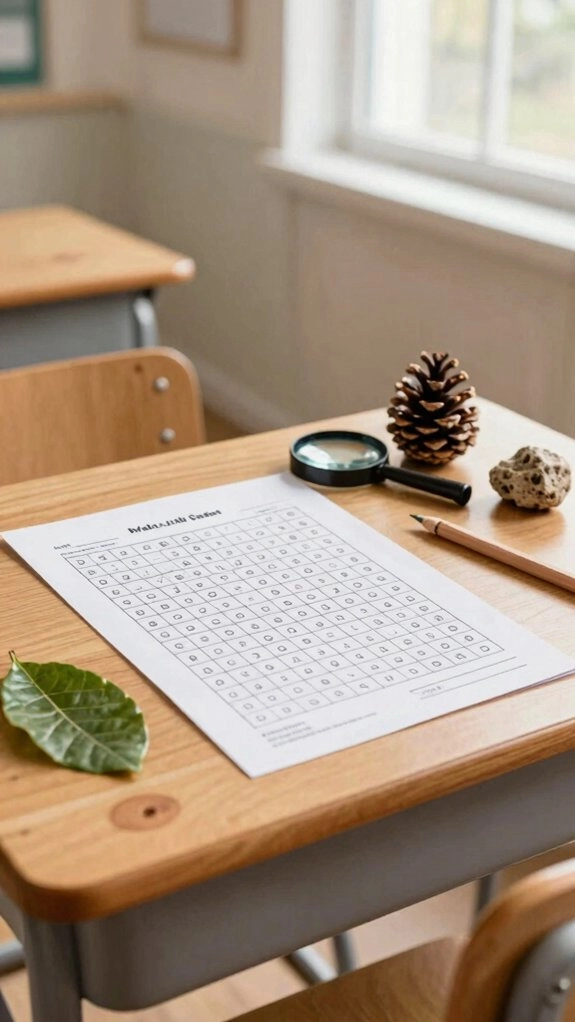
Science word search printables let you uncover big ideas one letter at a time. You join classmates and family members as you hunt science terms across rows, columns, and diagonals.
Each puzzle invites Back and forth reasoning and pattern recognition in grids. Choose a level that feels right, then keep going when a hidden word seems tricky.
- Start with a simple 9×9 grid.
- Try a 15×15 challenge with diagonal words.
- Circle investigation and reasoning vocabulary.
- Finish together by defining each word or creating a mini science scenario.
These puzzles build focus and persistence. You’re uncovering science together with friends.
Improving Spelling Through Word Games
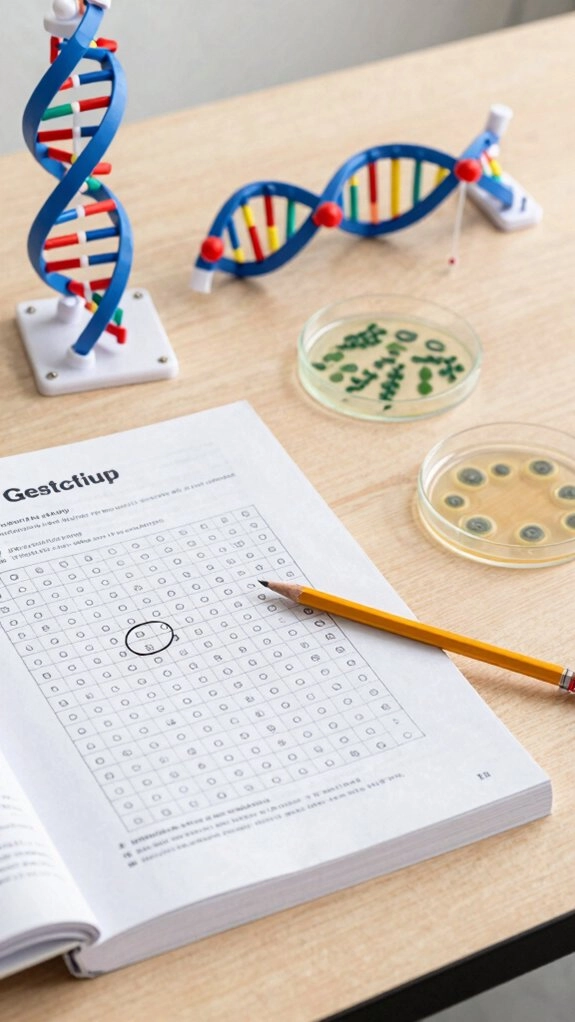
Word games turn spelling practice into a finding mission you can enjoy. Using letter grid strategies, building spelling confidence, you scan each word and notice patterns.
| Try | Why | Result |
|---|---|---|
| elephant | E-L-E | spelling |
| science | S-C | recall |
You’ll find that Differentiating sound to spellings, practicing word retrieval helps you spot look-alike words. Targeted lists keep the same spellings in new grids, so your brain recalls them again and again. You also feel calmer, focused, and ready to belong in the game. Every correct find gives you a quick visual rehearing, and that makes tricky spellings stick without pressure for good today.
Classroom and Homeschool Uses
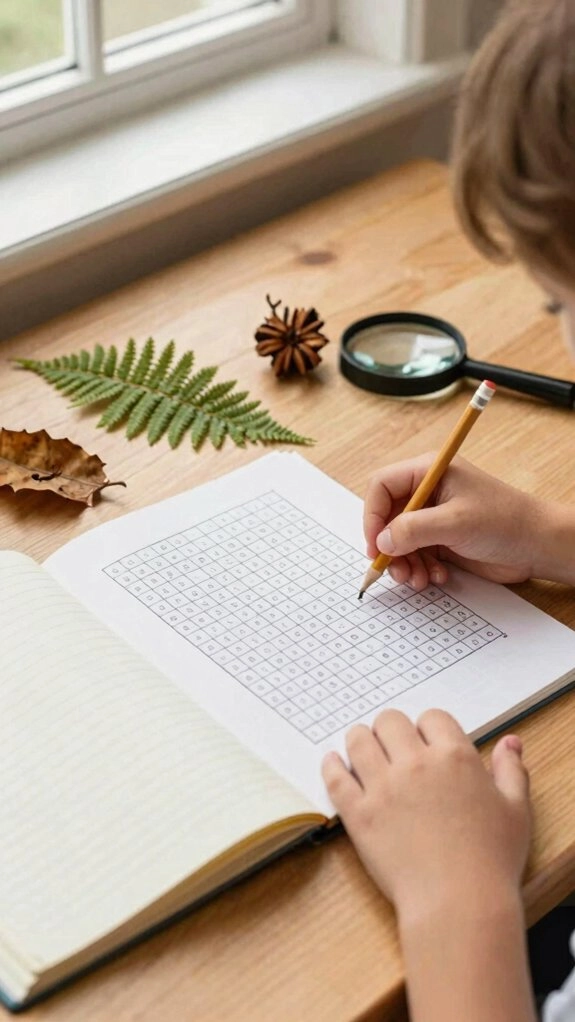
In class or at home, a word search can be a calm start to your lesson. You and your family can build focus while you hunt words like analyze, hypothesis, evidence, logic, and deduce.
- Use a 9×9 grid for easy practice.
- Try a 15×15 grid for more challenge.
- Add science or health themes to reuse key words.
- Finish with Guided partner talk and quick meaning checks so you can explain each word and feel proud. Older students can add diagonal or backward words, and younger learners can keep it simple, so everyone feels included too.
Printable Tips for Parents and Teachers
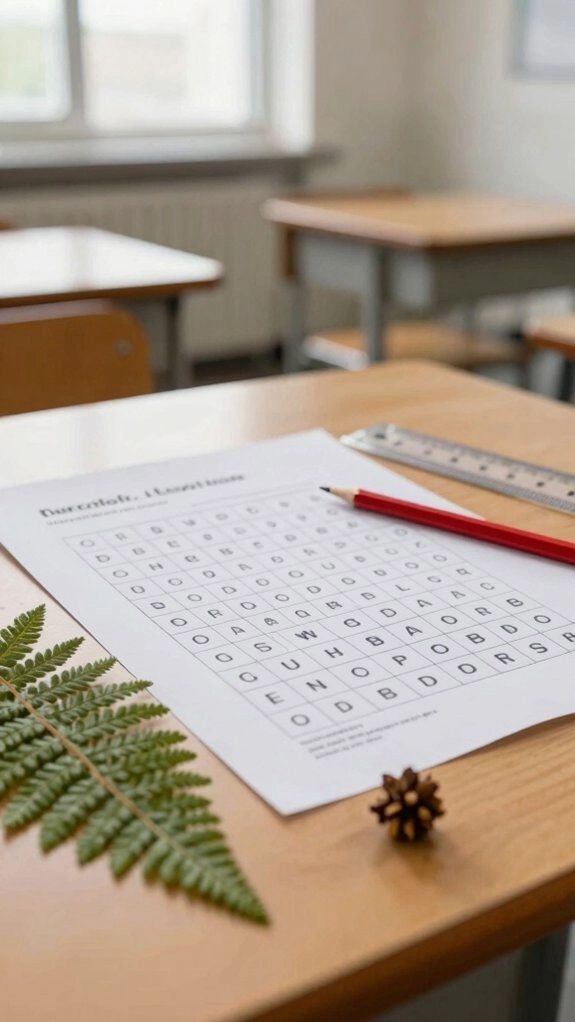
With a printable word search, you can give kids low-pressure practice with vocabulary and spelling. Pick a 9×9 grid for younger learners and a larger one for older kids. You can keep most words forward at first. After each puzzle, ask them to define new vocabulary, categorize word meanings, then use three words to make a silly story.
That talk turns practice into smart screen time.
Teachers can tie the puzzle to today’s lesson. Parents can join in too. You’ll help kids stay focused, notice patterns, and feel supported without quiz pressure.
Choose themed words so kids remember them.
Making Your Own Word Search Puzzles
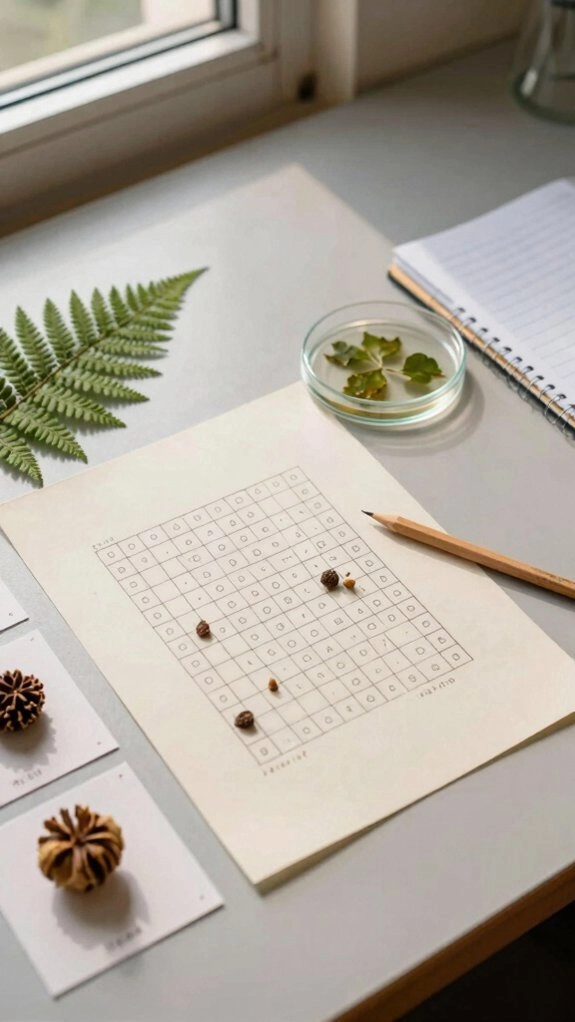
To build your own puzzle, start with a word-search generator and your target vocabulary list. Type words with commas, spaces, or lines.
Pick a 15×15 grid. Swap words or change the grid before you download.
Match the puzzle to your learners’ level. Use simpler themes for younger students. Use larger grids, diagonals, and backward words for older students.
- Keep fonts and colors steady.
- Use reusable theme templates for consistent puzzle making.
- Track which target words work best.
- Build low-stress warm-ups and finishers for practice daily.
Use feedback-focused word banks so you don’t grade every attempt.