Speech Therapy Activities That Build Communication Skills Through Play
- Speech Therapy Activities That Build Communication Skills Through Play
- Key Takeaways
- Understanding Early Speech and Language Development
- Language Activities for Everyday Conversations
- Listening Games That Improve Comprehension
- Articulation Activities for Preschoolers
- Vocabulary Building Through Storytelling
- Music and Rhymes for Language Development
- Play-Based Speech Activities
- Supporting Speech Development at Home
- When to Seek Professional Support
- Encouraging Communication with Confidence
You can build communication skills through games your child already enjoys. Narrate play, model simple comments, and encourage requests like “I want the ball.” Try I Spy, Simon Says, puppet stories, and turn-taking games to strengthen listening and conversation. Practice clear sounds with animal cards, rhymes, or a sound-of-the-day. Use dolls and picture prompts for new words and stories. If speech progress worries you, seek support. Keep exploring for more playful ideas at home today.
Key Takeaways
- Narrate play actions and model simple comments, questions, and answers to encourage natural conversation and participation.
- Use turn-taking games with phrases like “my turn,” “your turn,” and “what’s next?” to build social communication.
- Play listening games such as Simon Says, I Spy, and Mystery Bag to strengthen attention and following directions.
- Practice target speech sounds through playful activities, using cues like “slow and clear” during short, repeatable games.
- Encourage vocabulary and storytelling with puppets, picture choices, songs, and rhymes; seek evaluation if delays or red flags persist.
Understanding Early Speech and Language Development
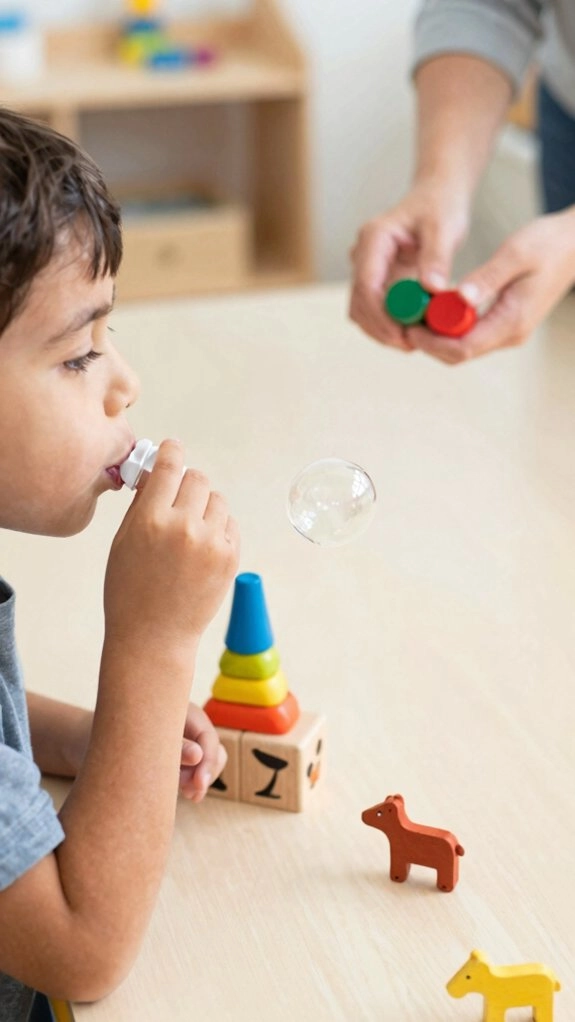
Early speech and language grow step by step, and play makes each step exciting.
You may hear babbling around four to six months.
Many children say meaningful words between 10 and 14 months.
They often join two words between 18 and 24 months.
Milestones tracking helps you see your child’s unique progress.
Notice interaction “turns” when your child looks, vocalizes, or points and you respond.
Responsive back and forth builds connection.
Early gestures, eye gaze, and sounds matter too.
If familiar voices, words, or combinations don’t emerge on time, ask for an evaluation.
You’re not alone.
Language Activities for Everyday Conversations
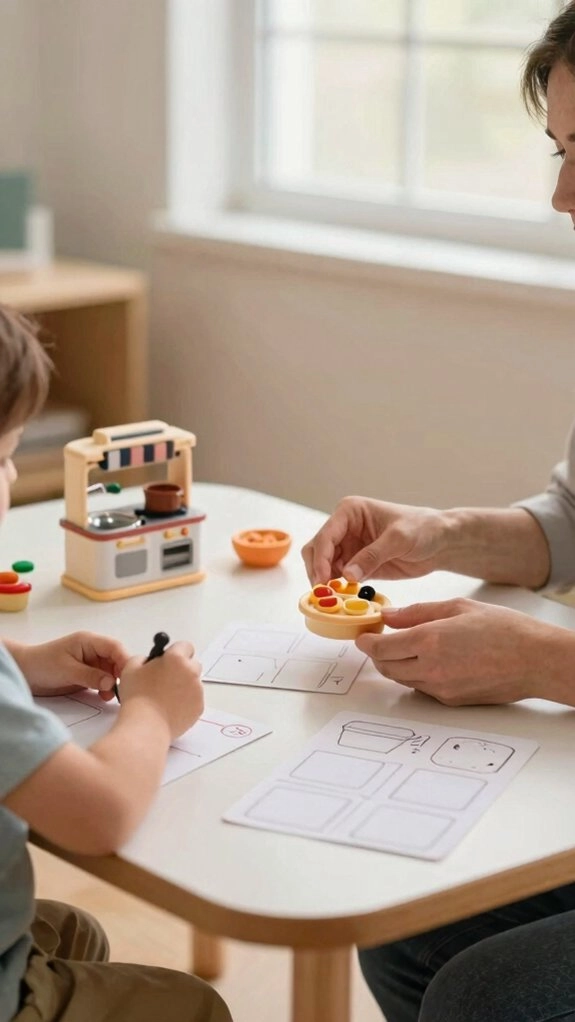
Everyday conversations give your child many chances to practice language through play.
Narrate what you’re doing as you build towers or toss a ball.
Model comments, questions, and answers so your child feels included.
During errands, play “I spy something that…” and name a color, shape, or animal.
Try simple turn-taking games.
Say “my turn,” “your turn,” and “what’s next?”
Pretend to run a restaurant or doctor’s office.
Encourage requests like “I want…”
Add conversation starters during cleanup, such as “Can you help?”
Label actions and feelings.
Weave Story retelling into play by sharing first, next, and last.
Listening Games That Improve Comprehension
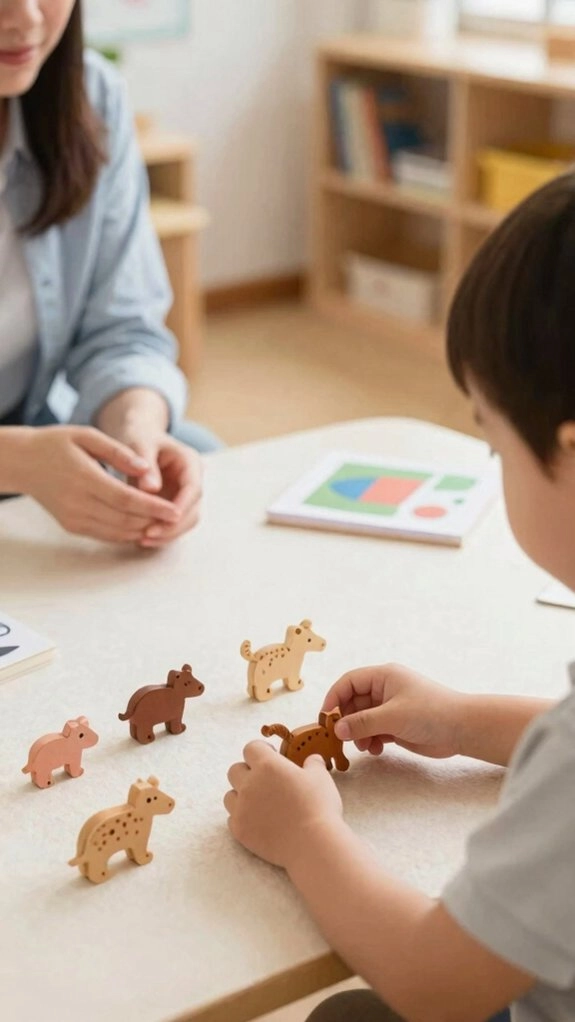
Why not turn listening practice into a game your child will love?
Play I Spy with clues about color, category, or sound. Your child chooses the matching object and learns useful details.
Try Simon Says with two-step directions, then add another step.
A Mystery Bag invites smart guesses from touch or sound clues.
During puppet stories, pause and ask who or where questions.
You can also say, “Listen, then show me the card.”
These shared games build Real world listening and attention switching.
Celebrate every try, so your child feels included, capable, and ready to listen with others too.
Articulation Activities for Preschoolers
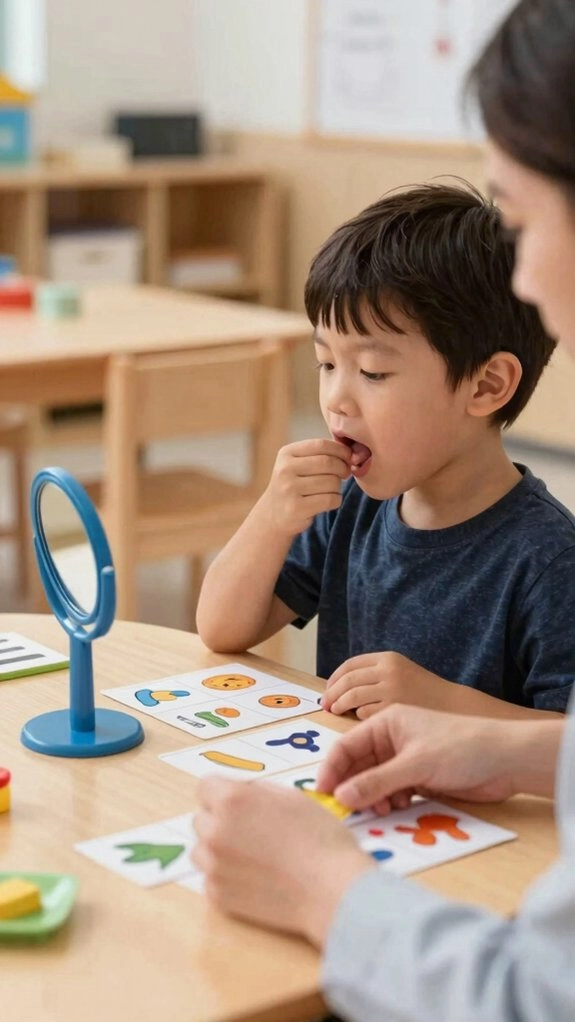
Articulation practice can feel like play when you make target sounds part of a game. Choose a sound-of-the-day and let your child earn turns by saying short phrases plainly. Try animal cards or a friendly monster game together.
In a board-game loop add a picture card after each correct word then hop or spin with it. Build blocks only after your child blends parts into a word.
Use the same cue: “Slow and clear.” Repeat favorite games during home practice routines. This steady support strengthens Positive parenting communication and helps your child feel included confident and proud of progress.
Vocabulary Building Through Storytelling
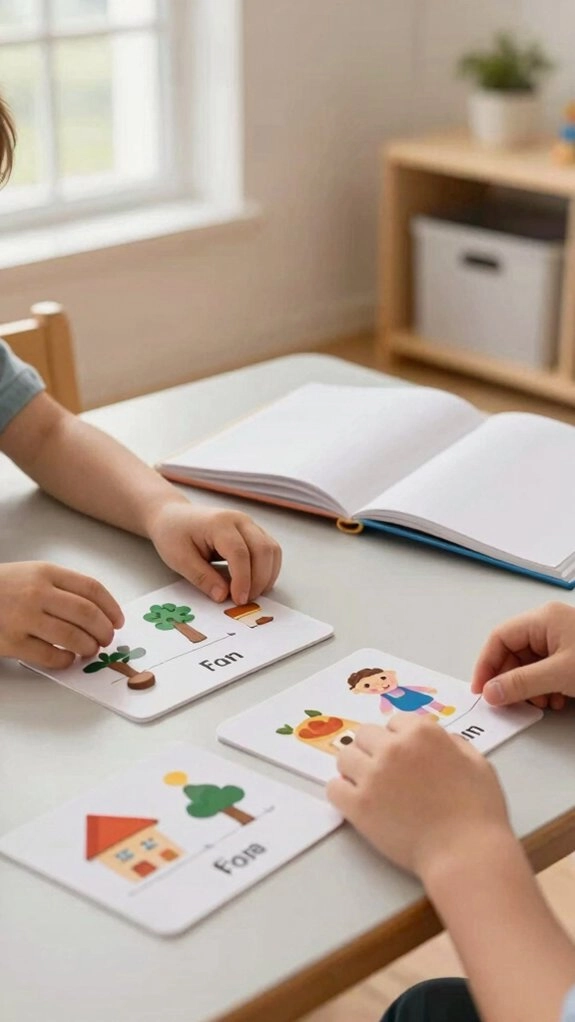
Storytelling turns new words into adventures your child can see and remember.
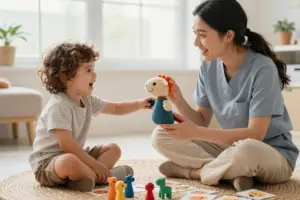
You can use a puppet or doll and pause to name characters, objects, and actions.
Ask, “The dog is hungry. What does it need?”
Offer Picture prompts with two or three choices for the next event.
Then model sentence starters such as, “The bunny wants the carrot.”
Repeat a beginning, middle, and end while adding words like crunchy, splashes, scared, or excited.
Your child gains confidence through patterns.
Afterward, extend the tale into play.
Search together for treasure items, label each find, and celebrate being part of the story.
Music and Rhymes for Language Development
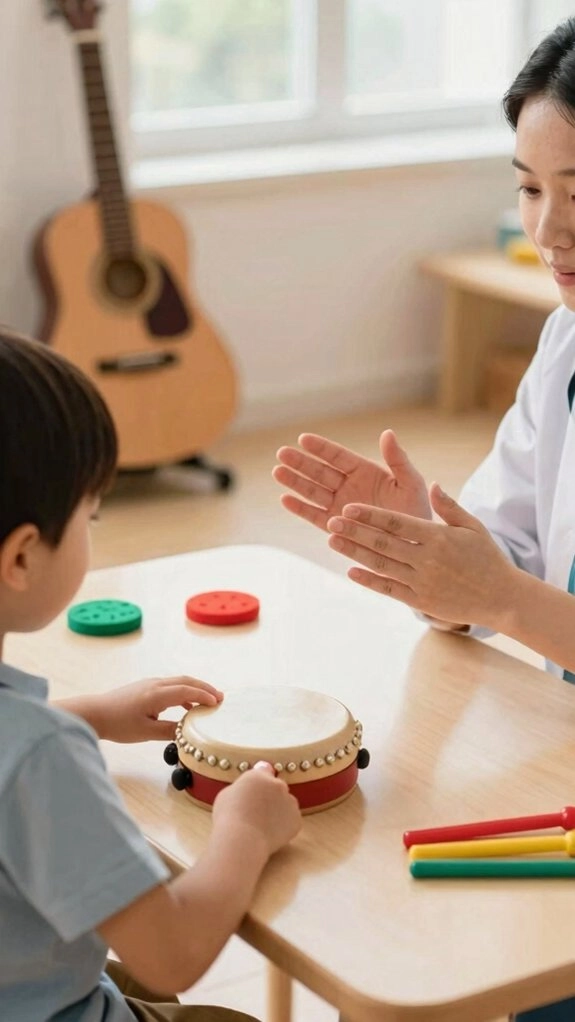
Music and rhymes make language practice feel like a game you can share. You can sing familiar tunes together and feel part of the fun. Repeated sounds build listening skills, clear speech, and confident sentences.
| Try this | It helps you |
|---|---|
| Sing “ba-ba” | Hear initial sounds |
| Find rhyme pairs | Build phonemic awareness |
| Name animals | Recall target words |
| Use phoneme echoing | Practice clear phrases |
Turn taking songs teach you to listen, wait, and answer. Chant “I see a ___” to organize longer ideas. Let a grown-up sing first, then finish the line. You’ll hear grammar patterns and use words with your own voice.
Play-Based Speech Activities
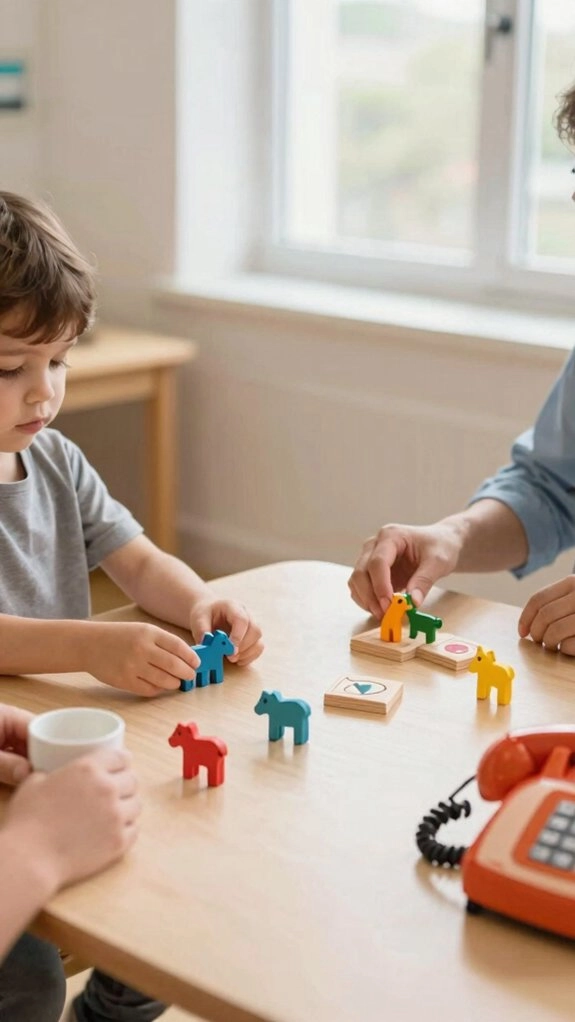
Play gives you another fun way to practice words after singing and rhyming. Choose dolls, puppets, or pretend jobs, and let the child guide the story.
You can model useful phrases for asking, explaining, and telling what happens next. Describe actions, textures, and funny sound effects with repeated words.
Games such as Simon Says or sound hunts make articulation strategies feel exciting. Model target sounds often, then invite the child to try.
Add turn taking practice by waiting, sharing ideas, and noticing gestures or facial expressions.
Repeat favorite games across sessions. As skills grow, add challenge so all join.
Supporting Speech Development at Home
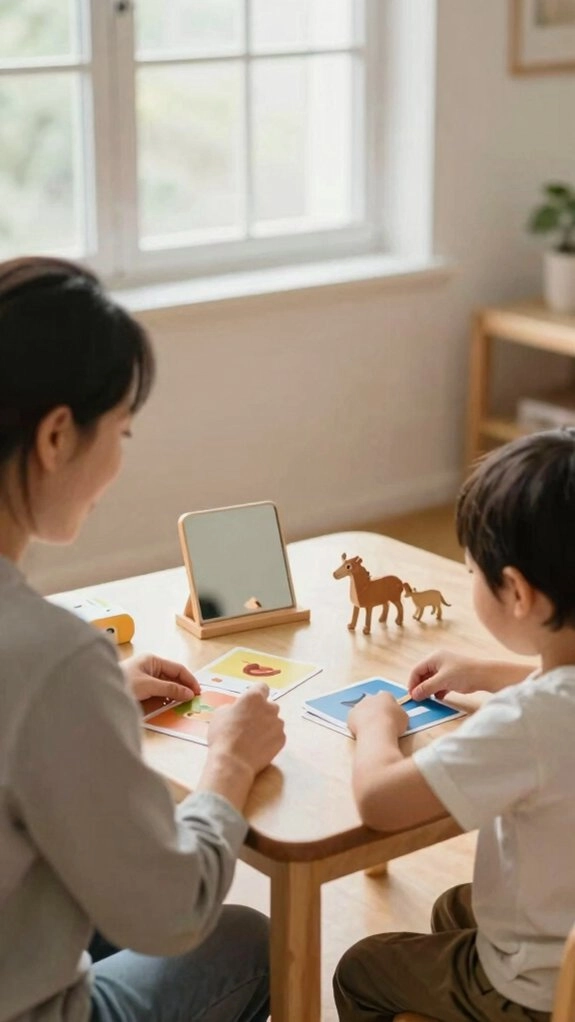
You can help your child build speech skills during small, everyday moments at home.
During blocks, cars, or dolls, describe actions: “Push it—crash!”
Copy sounds your child tries, such as “ba-ba,” then pause for their next turn.
Offer choices at snack time: “Apple or banana?”
Encourage helpful phrases like “Can you help?”
Play Simon Says or I Spy with a target sound.
Keep practice cheerful and short, about 5–10 minutes daily.
Screen time limits can protect these shared moments.
Invite sibling talk turns, too, so everyone feels included.
Repeating familiar phrases helps your child use new skills beyond play.
When to Seek Professional Support
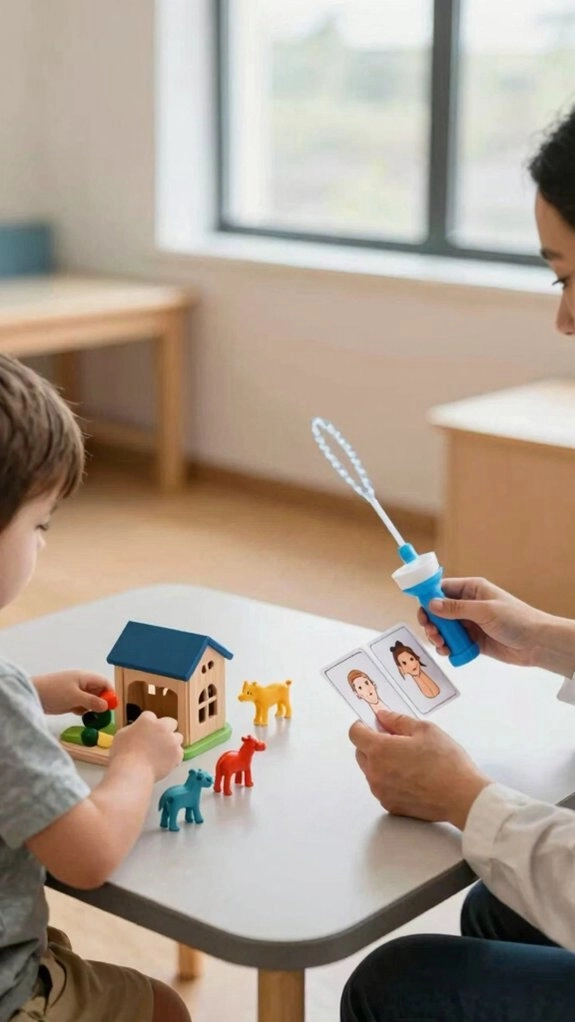
Home practice can build skills, but sometimes a speech-language pathologist can offer extra guidance.
If you notice red flags such as unclear speech, limited words, or trouble joining words, reach out.
Ongoing speech delays with sounds, vocabulary, or sentences deserve attention, especially when home practice hasn’t helped.
An evaluation can also help when play feels hard because your child struggles to take turns, follow directions, or respond.
Ask about feeding or swallowing concerns too.
Early intervention offers structured play-based goals and caregiver guidance.
Telehealth may help your family stay connected and supported.
Your care team is ready to help.
Encouraging Communication with Confidence
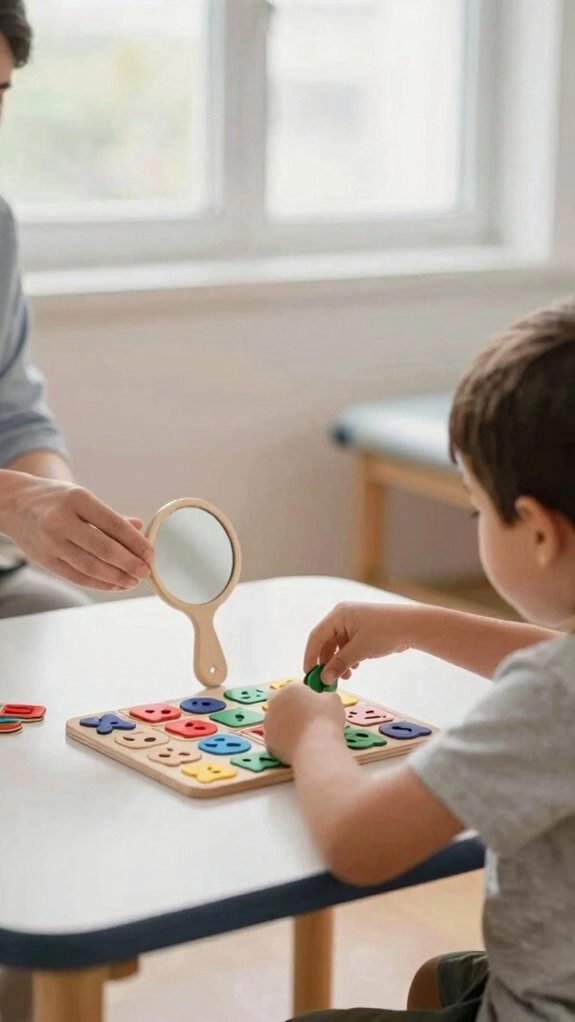
Confidence grows when children can practice words without fearing mistakes. Use games as safe practice, where trying matters more than getting every sound right.
Build Confidence routines with simple phrases like “My turn,” “Your turn,” and “I want…” during play.
Let your child become the helper who feeds a toy or delivers a package.
Pause so they can ask, answer, or try again.
Celebrate listening, waiting, and joining Simon Says or board games.
These wins show that every voice belongs.
Share playful scripts with family members.
Caregiver practice at home helps words feel familiar, useful, and strong everywhere, too.