
Why Movement Is Essential for Healthy Brain Development

- Why Movement Is Essential for Healthy Brain Development
- Key Takeaways
- The Brain-Body Connection
- How Movement Builds New Neural Pathways
- Physical Activity and Cognitive Performance
- Why Exercise Improves Attention and Focus
- The Role of Balance and Coordination
- How Active Play Supports Emotional Well-Being
- Daily Movement Habits Every Child Needs
- What Research Says About Active Learning
When you move, you help your brain build stronger connections for learning and remembering. Running, climbing, dancing, and balancing teach your eyes, muscles, and brain to work together. Active play can boost focus, mood, and self-control by supporting helpful brain chemicals. Movement also helps you manage big feelings and connect with friends. Even a short activity break can refresh your attention. Keep going to uncover simple ways movement drives your brain every day at home.
Key Takeaways
- Movement helps young brains integrate sensory information from the eyes, ears, muscles, and touch.
- Active play strengthens neural connections, supporting learning, memory, and communication between brain hemispheres.
- Running, climbing, dancing, and games can improve focus, planning, impulse control, and classroom readiness.
- Moderate activity boosts brain chemicals linked to attention, motivation, mood, and long-term memory.
- Daily movement supports emotional regulation, social connection, healthy habits, and resilience during big feelings.
The Brain-Body Connection

When preschoolers move, their brains and bodies learn to work as a team.
You build sensory integration when you crawl, spin, balance, and play with friends.
Your eyes, ears, muscles, and sense of touch send helpful information together.
This teamwork supports motor learning, so you can plan actions and stay focused.
Active play can also help your brain prepare for remembering new words and ideas.
Games that mix movement with thinking may strengthen attention and self-control.
Every hop, reach, and shared dance gives you a chance to investigate, learn, and feel connected to your community of growing learners, too.
How Movement Builds New Neural Pathways
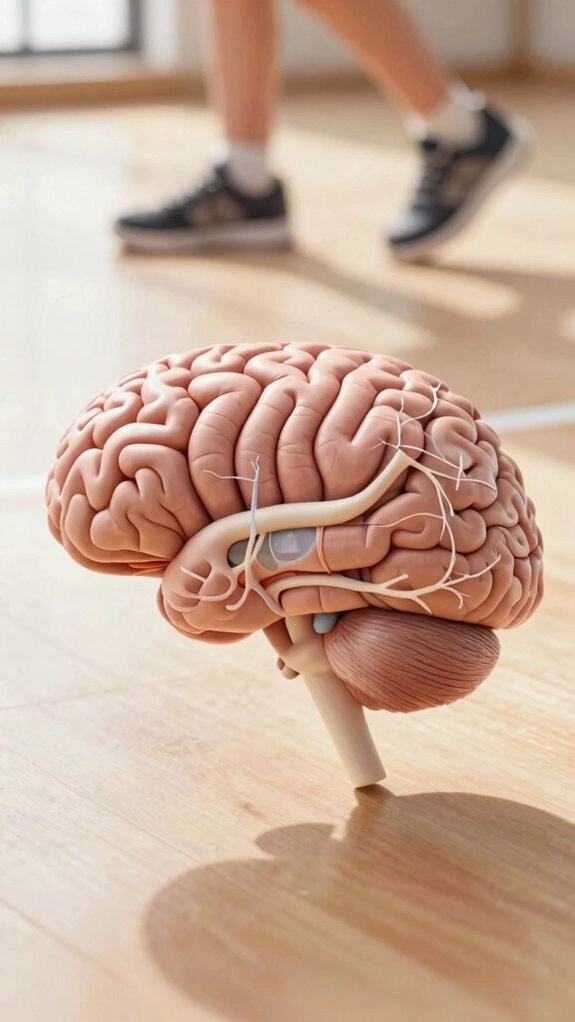
With every active game, your brain practices building stronger communication routes. As you run, dance, or climb, BDNF support helps neurons survive and connect. This Synaptic growth gives your brain fresh pathways that grow stronger with practice. You’re part of a powerful process shared by active kids everywhere.
| Movement | Brain change | Pathway result |
|---|---|---|
| Crossing your body’s middle | Corpus callosum links hemispheres | Sides work together |
| Steady aerobic play | New connections form | Networks become flexible |
| Ongoing activity | Dopamine, norepinephrine, serotonin rise | Connections consolidate |
Each movement adds a small signal. Together, those signals help your brain build a connected, adaptable community within.
Physical Activity and Cognitive Performance

Move your body, and your brain can sharpen its focus for learning. When you join active games or movement-rich lessons, you’re building skills that help you plan, remember, and control impulses.
Studies show that intellectually engaging activity can produce stronger neurocognitive outcomes than simple exercise alone.
A moderate workout around learning may help your brain store new words and ideas.
In one example, vocabulary memory rose about 20% after exercise.
Movement also boosts BDNF and helpful brain chemicals.
These changes support sturdy connections and learning durability.
Whatever activity you choose, you’re part of a growing community of capable learners.
Why Exercise Improves Attention and Focus

Although exercise works through your body, it gives your attention system a strong boost.
A 20-minute moderate activity break can help you stay on task for two or three hours.
You aren’t alone: movement can help your whole class feel ready to learn.
It supports classroom routines and sleep regulation, too.
- Raises BDNF, which helps brain cells grow
- Adds dopamine for focus and motivation
- Boosts norepinephrine for alert attention
- Strengthens inhibitory control before schoolwork
- Helps attention systems use resources efficiently
Studies of children show moderate-to-large attention benefits.
For some students with ADHD, the short-term boost can resemble medication’s effects.
The Role of Balance and Coordination

Balance and coordination do more than keep you steady—they train your brain. When you balance on one foot, reach, or move across uneven ground, your vestibular system builds spatial awareness.
These challenges also support sensory integration, helping you notice where your body belongs in space.
In gross motor games, you cross the middle of your body, follow patterns, and adjust to rhythms.
That teamwork strengthens brain pathways between both sides and supports attention, language, and step-by-step thinking.
During preschool years, each playful challenge helps organize fast-growing connections.
You’ll join other learners while building skills that make classroom tasks easier.
How Active Play Supports Emotional Well-Being

Active play gives your brain a healthy way to handle big feelings.
When you move with others, you can feel connected, calmer, and more ready to learn.
Your body releases helpful chemicals, including serotonin, that can lift your mood.
- Running helps you recover after stress.
- Dancing offers Sensory soothing through steady rhythm.
- Quick movement breaks reset focus.
- Games build impulse control and attention.
- self regulation coaching helps you notice feelings and choose responses.
Cognitively engaging play strengthens skills that help you pause before reacting.
You don’t have to manage every emotion alone; play gives you ways to practice.
Daily Movement Habits Every Child Needs
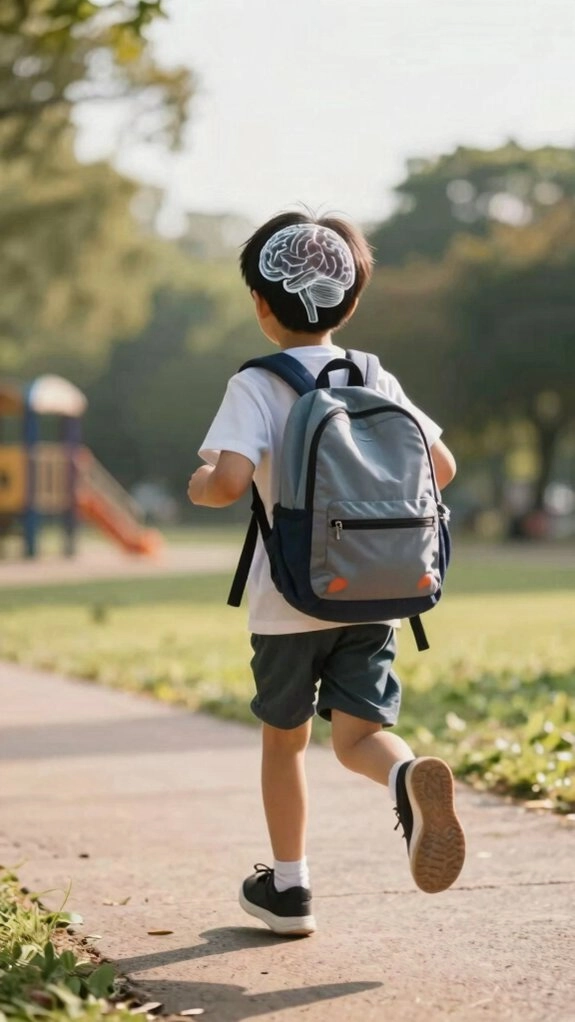
Daily movement gives your brain a strong workout along with your body. Build a shared routine with active time at home and school.
During routine planning, choose dance, obstacle games, or follow-the-leader activities that challenge memory and self-control.
Take a 20-minute brain break when you need to refocus. It can help you stay attentive afterward.
Make outdoor play a daily adventure with friends or family.
Limit Screen time by offering movement choices first.
Parent modeling matters too: when adults join in, you feel part of a team.
Keep these habits going for weeks, and let your growing brain practice.
What Research Says About Active Learning
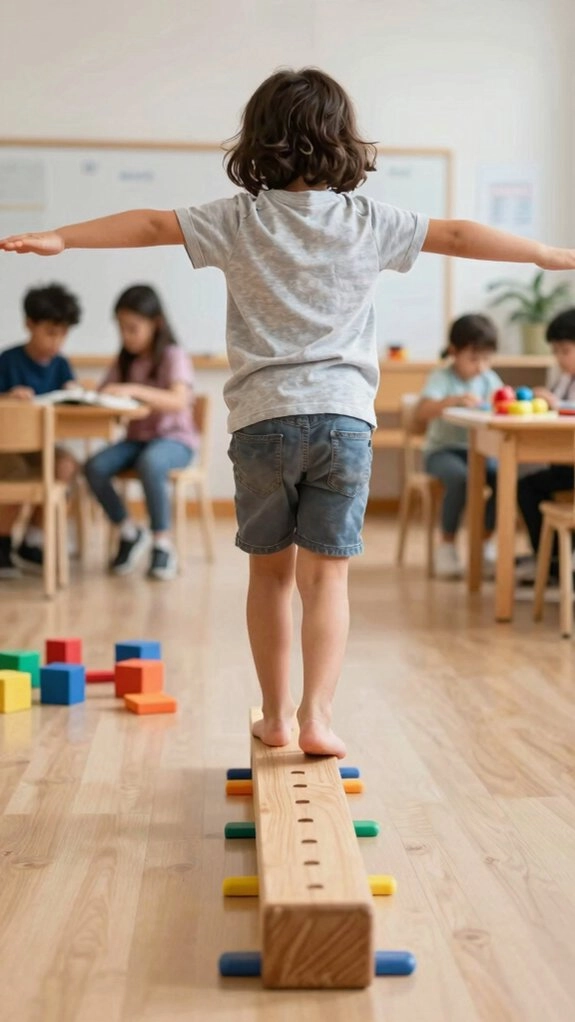
Research shows that when you learn while moving, your brain can work better. You’re part of a learning community that can grow stronger through motion. These active learning benefits help you focus, remember, and feel ready to join in.
- Twenty minutes of moderate activity can sharpen attention for two to three hours.
- Active play supports executive function growth, including self-control and attention.
- Exercise raises BDNF, which helps your brain build learning connections.
- Moving after studying may help you remember vocabulary 20% better tomorrow.
- Active programs showed mental gains, unlike sedentary-focused programs.
Your classmates can move alongside you each day.