Storytelling Competition Ideas for Kids That Spark Creativity

- Storytelling Competition Ideas for Kids That Spark Creativity
- Key Takeaways
- Storytelling Competition Basics
- Set Up Your Kids’ Contest
- Contest Rules
- Story Space Setup
- Prize Ideas
- Best Storytelling Ideas for Kids
- Try Short Storytelling Games
- Use Prompts That Spark Ideas
- Prompt Starters
- Idea Sparks
- Add Props to Inspire Stories
- Make Team Storytelling More Fun
- Set Kid-Friendly Judging Rules
- Practice Storytelling With Board Games
You can spark a kids’ storytelling contest with a simple recipe: character, setting, conflict, and resolution. Keep entries short, like 3–5 sentences, and use prompts such as a friendly dragon in the backyard or a tiny door in the house. Add props like puppets, crayons, or toy cars to inspire ideas. Try quick games like One Word Story or Fortunately, Unfortunately. Clear rules, fun awards, and a judge-friendly structure make every tale shine, and more ideas are coming next.
Key Takeaways
- Choose an age range, like 4–12, and keep stories short with a clear beginning, middle, and end.
- Use simple prompts and story recipes with character, setting, conflict, resolution, and one fun plot twist.
- Set fair rules, time limits, and voting so every child has an equal chance to share ideas.
- Add props, story boxes, and a story space with books, puppets, costumes, and toys to spark creativity.
- Offer fun award categories like best sequence, funniest twist, and most imaginative setting to celebrate storytelling skills.
Storytelling Competition Basics

When you plan a storytelling competition, start with a few clear basics. You can choose an age range, like 4–12, so everyone feels included. Then set the story recipe: a character, a setting, a conflict, and a resolution.
Keep the length fit for the kids’ skill level. A simple prompt can prompt creativity and help kids begin fast.
You might also ask for a clear beginning, middle, and end. These basics support audience involvement because stories stay focused and easy to enjoy.
When rules are fair and simple, you help every young storyteller feel welcome and ready.
Set Up Your Kids’ Contest

You can set clear contest rules so every story gets a fair chance.
Next, create a cozy story space with simple prompts and room for kids to think.
Then offer small prizes that feel special and keep everyone excited to join.
Contest Rules
To make the contest fair, start by setting clear rules that fit your group. Choose an age range that feels age appropriate, so every child can shine.
Set a player limit and use time boxing so everyone gets a fair chance to finish. For fair play and judge consistency, ask each storyteller to include characters, setting, conflict, and resolution.
Keep the format simple: beginning, middle, and end, plus one plot twist. This helps judges score the story, not just the length.
Add clear awards for descriptive language, sequencing, and creativity. Your contest will feel welcoming and exciting.
Story Space Setup
Now that the rules are set, build a story space that feels inviting and fun. You can help every kid feel welcome and ready to belong.
- Place picture books, puppets, costumes, and small figurines where kids can reach them.
- Hang a quick plot recipe with characters, setting, conflict, and resolution.
- Give one child a storytime assistant badge to guide the group.
- Start a story chain with a few items, then model one next line.
Keep a journal and photos nearby for each tale.
Invite peer feedback and use storytelling prompts to spark brave, creative sharing.
Prize Ideas
Because prizes can make kids excited to join, choose rewards that support storytelling skills.
You can offer a SimplyFun game night or Pickle’s Pig Tales for sequencing and memory-building retells.
Give a screenwriter prize with The Reel Script so kids practice clear story structure.
Try Family Stories Chat Ring too.
Its 98 questions and memory prompts help you share stories from your own lives.
For art lovers, ARTributes builds vocabulary through drawing and guessing.
You can also award categories like best sequence, funniest twist, and most imaginative setting.
These prizes help everyone feel included while practicing characters, setting, conflict, and resolution.
Best Storytelling Ideas for Kids

What if your next story started with a surprise? You can help your group feel welcome and brave. Try “story switch” swaps, “character remix” challenges, and these four ideas:
- Fortunately, Unfortunately: You and your friends trade turns. Each line flips from good to bad.
- One Word Story: Each kid adds one word. The tale grows together.
- Story Clap: Clap to pass the story with a place, people, conflict, and fix.
- Pickle’s Pig Tales or ARTributes: Use cards, drawing, and clues to spark memory, adjectives, and imagination.
You’ll build stories, confidence, and a real sense of team.
Try Short Storytelling Games

Short storytelling games can turn any spare minute into a fun creative challenge. When you share story seeds, you help everyone jump in fast and feel included.
Try “one word” rounds to practice turn taking and build a story together, one piece at a time.
You can also use silly constraints, like adding only sounds or starting with a surprise twist.
During a store line, walk to school, or dinner, play these quick games and keep the story moving.
Each round gives you a chance to listen, imagine, and belong with the group while making something new.
Use Prompts That Spark Ideas

You can use prompt starters to kick off ideas fast and keep kids moving. Try age-friendly idea sparks like a superhero ability, a backyard dragon, or a mission.
You can also ask for one more sentence, so the story grows with characters, setting, conflict, and an ending.
Prompt Starters
Great prompts can open the door to amazing stories. You’ll help kids feel included when you offer simple starters that invite character inspiration and sensory details. Try these:
- Imagine you’re snowed in overnight. What fun happens next?
- Find a tiny door in the house. Where does it lead?
- Let toys talk. What do they say, and what adventure follows?
- A friendly dragon lands in your backyard. What happens next?
For younger writers, use vivid actions. For older ones, add wishes or a talking pet. Keep entries short, like 3–5 sentences, so everyone can compare ideas fairly and cheer each other on.
Idea Sparks
Once kids have a simple prompt, their ideas can start to bloom fast. You can hand out Brainstorming prompt cards to kick things off with a spark. Try themed prompts like a friendly dragon in your backyard or a tiny door in your house.
You can also use one-word story turns, where each kid adds one word at a time. For quick partner “swap and add” story boosts, let friends trade ideas and build on them. A story clap round keeps the pace moving.
Fortunately, unfortunately rounds help you shape conflict, while story-card choices give you structure and a strong ending.
Add Props to Inspire Stories
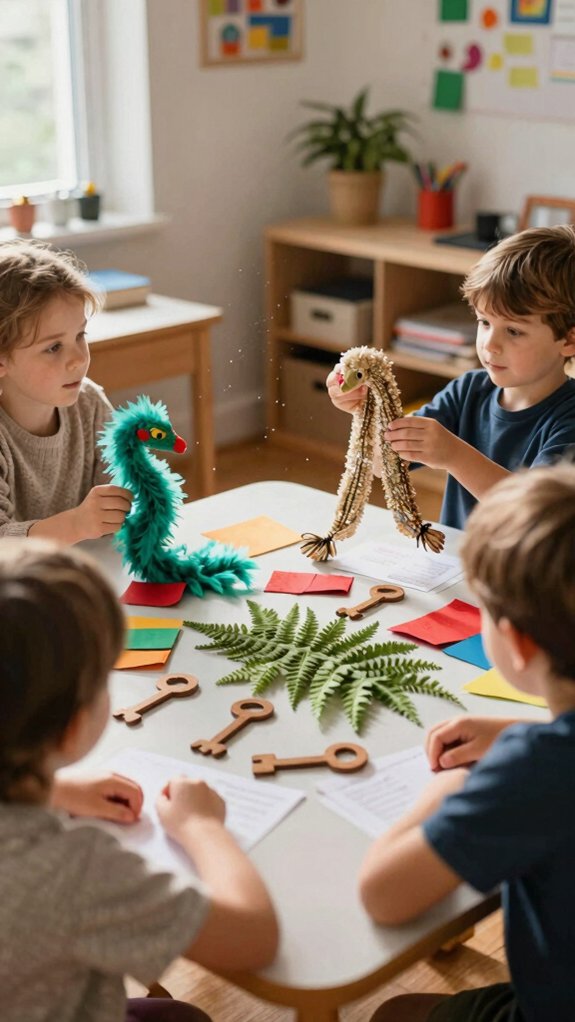
With a few props in hand, kids can turn a simple idea into a lively story.
Your story box can help you belong to the moment and shine.
- Pick a cape, mask, or puppet to create character and show and tell who’s speaking.
- Add crayons, glitter glue, feathers, and stickers to make quick story items. They help you use emotion and vivid details.
- Try toy cars, animals, or dollhouses to move scenes in order. Your hands can guide the plot.
- Use flashlights or lanterns to build mood and add sound effects for mystery.
Choose one prop and let it lead your tale.
Make Team Storytelling More Fun
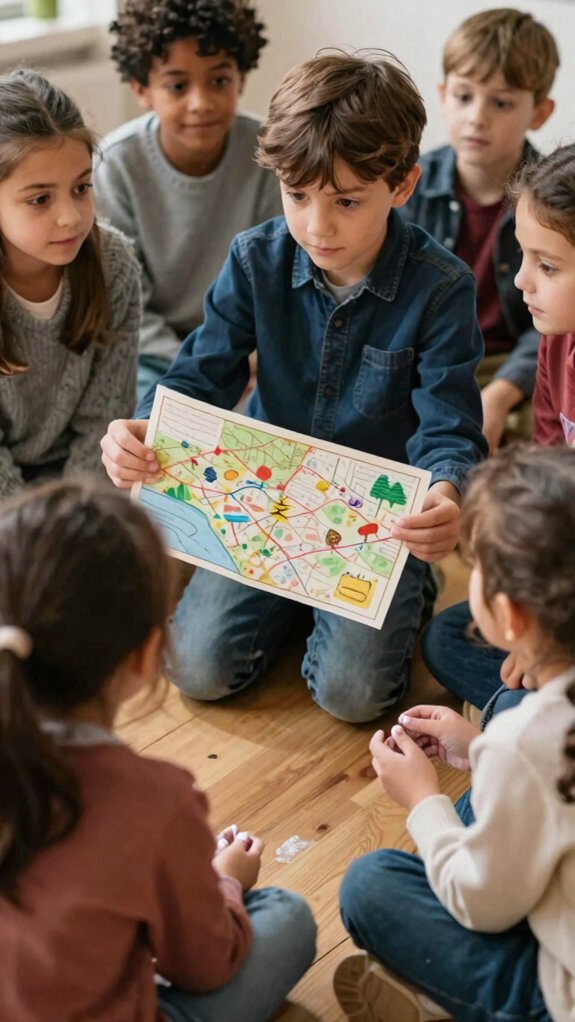
How can team storytelling become even more exciting? Start with active listening, then build a story chain together. You can set story goals with simple prompts like character, setting, conflict, and resolution. Small teams feel connected when everyone adds a piece. Practice turn taking with games like One Word Story or Story Clap. That keeps everyone involved and heard.
| Game | Players | Time |
|---|---|---|
| Story Chain | 2+ | 10 min |
| The Reel Script | 3–5 | 20 min |
| Family Stories Chat Ring | 2+ | 15 min |
These playful choices help you belong, create, and cheer each other on.
Set Kid-Friendly Judging Rules

Now that kids have built stories together, it’s time to make judging feel fair and fun. You can use a simple rubric with 4 parts. This helps everyone feel included and proud.
- Check the story’s beginning, middle, and end.
- Look for strong character ideas, conflict planning, and a clear resolution.
- Give points for a descriptive word bank, dialogue attempts, and turn taking practice.
- Let judges score quietly, then share totals as stars or ranges.
You should always give one strength and one try-next-time tip. That way, every kid leaves encouraged and ready to grow.
Practice Storytelling With Board Games
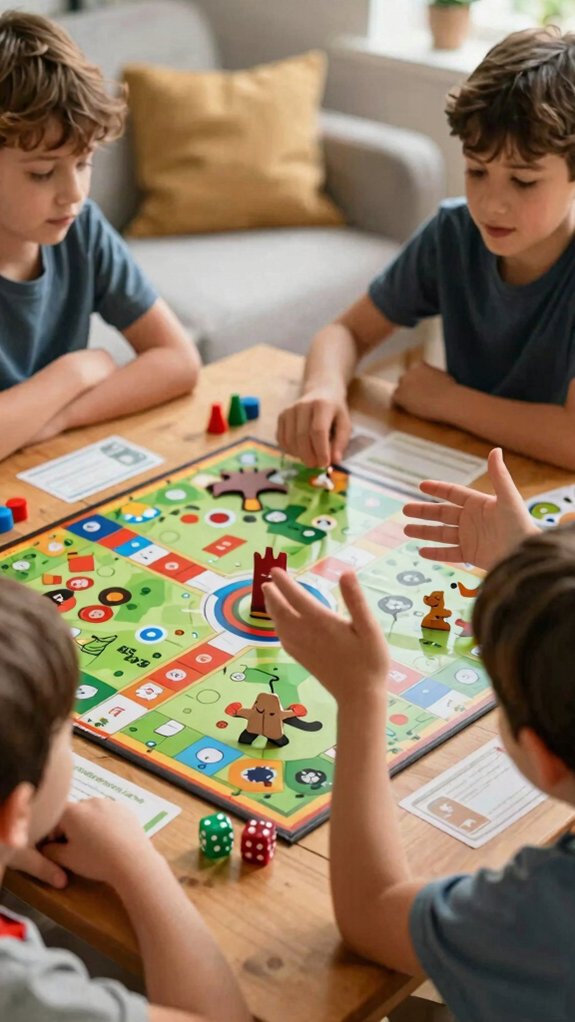
A few fun board games can turn storytelling practice into a lively adventure.
Try Pickle’s Pig Tales with prompt cards and a shared board. You’ll build stories together, improve memory, and practice sentence order.
Use The Reel Script for story voting, where each idea gets a fair chance.
Set time limits so everyone thinks quickly and stays focused.
In ARTributes, team roles help you draw, guess, and describe bold ideas.
Family Stories Chat Ring gives you questions that spark warm memories.
Add quick games like one-word turns or fortunately/unfortunately, and you’ll keep retelling with confidence and joy.