Motor Skills Activities That Help Young Children Learn Through Movement
- Motor Skills Activities That Help Young Children Learn Through Movement
- Key Takeaways
- Understanding Motor Skill Development
- Fine Motor vs Gross Motor Skills
- Indoor Motor Activities
- Outdoor Movement Games
- Balance and Coordination Activities
- Crossing the Midline Exercises
- Activities That Improve Hand-Eye Coordination
- Simple Obstacle Courses for Preschoolers
- Choosing Activities by Age
- Supporting Motor Development at Home and School
You help young children learn when you turn everyday movement into playful practice. Try crawling over pillows, hopping like animals, or balancing along a taped line. Build hand skills with tweezers, beads, stickers, and drawing. Outdoor bubble chases and simple obstacle courses strengthen coordination, confidence, and body awareness. Encourage children to reach across their bodies and try again safely. Choose activities that match their age and interests. Ahead, you’ll find ideas for home and school.
Key Takeaways
- Create safe daily movement opportunities like crawling, reaching, balancing, and climbing to build body awareness and confidence.
- Encourage gross motor play through jumping, dancing, animal walks, throwing, and simple indoor or outdoor obstacle courses.
- Strengthen fine motor control with threading beads, using tweezers, stacking, drawing, and turning pages.
- Build balance and coordination by walking taped lines, chasing bubbles, hopping, and shifting weight with nearby supervision.
- Practice hand-eye coordination and crossing the midline through sticker games, cross-body movements, mazes, and bead stringing.
Understanding Motor Skill Development
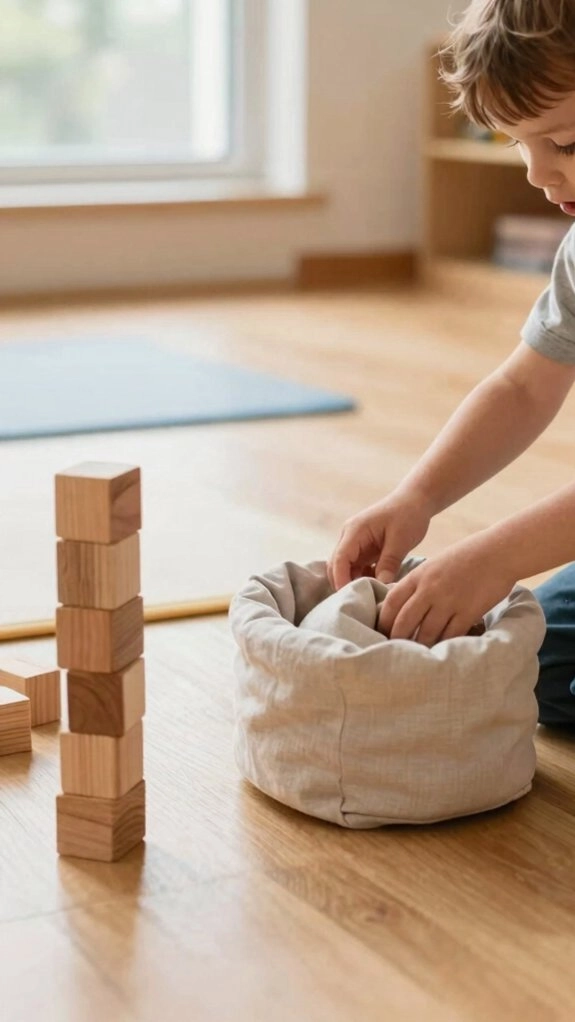
Motor skills grow as children move, play, and uncover their surroundings each day. You help this growth when you offer simple, safe chances to investigate movement. Reaching, balancing, and trying again teach the body what it can do.
These experiences build body awareness through messages from muscles, joints, and balance systems. Regular play also wakes up the brain and supports nervous system organization.
You don’t need elaborate equipment; familiar games and routines work well. When children repeat welcoming activities, they gain confidence, coordination, and play readiness.
Your encouragement helps them feel included, capable, and excited to keep uncovering together.
Fine Motor vs Gross Motor Skills
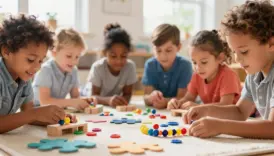
As children play, they build two important kinds of movement skills. Gross motor skills use large muscles when you crawl, jump, dance, throw, and balance. They help you stay steady and ready to learn.
Fine motor skills guide small hand and finger movements. You use them to stack, draw, turn pages, and hold utensils. Their careful control supports schoolwork and everyday independence.
- Try finger strength games with clothespins or tweezers.
- Examine the importance of tactile play with safe textures.
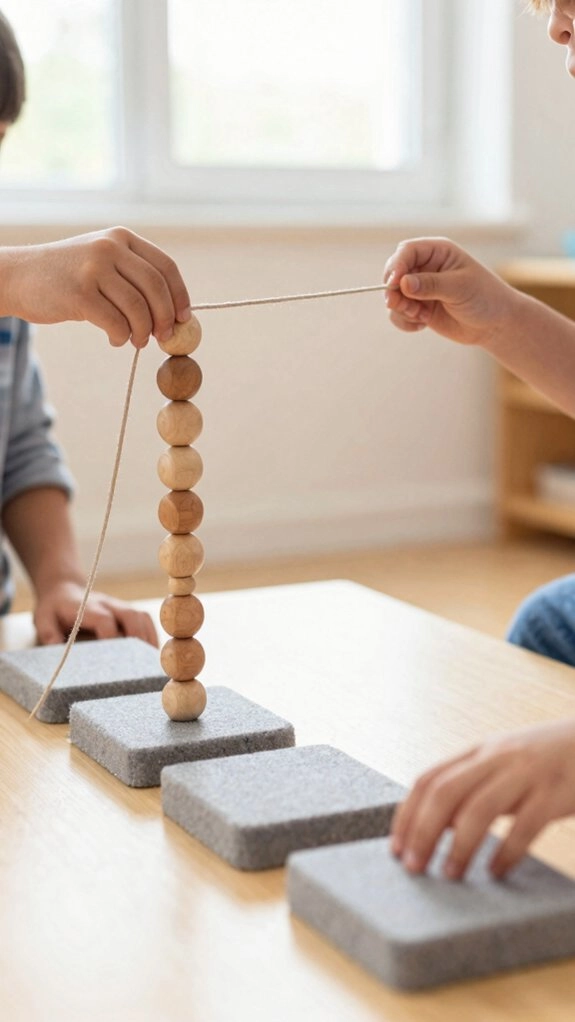
- Thread beads to practice both hands together.
- Peel and place stickers with care.
- Repeat favorite movements so you’ll grow stronger.
Indoor Motor Activities
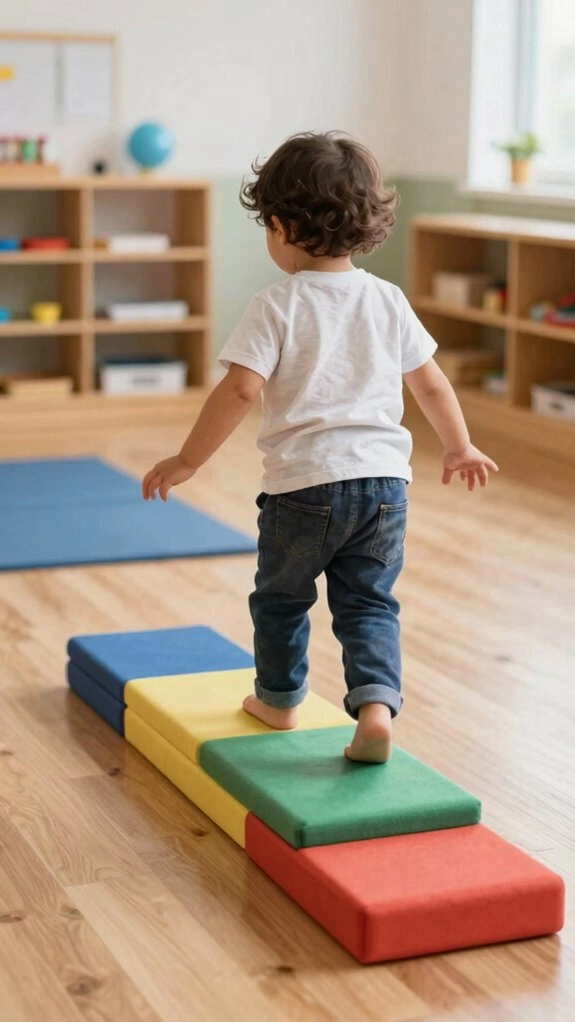
Rainy days can still become exciting chances to move, investigate, and grow.
You can build an indoor obstacle course with pillows, blankets, and sturdy chairs. Crawl under, climb over, and weave around them to strengthen balance, body awareness, and core control.
Add Sensory play by marching, hopping, or trying animal walks at different speeds and directions.
Let children choose brain-break cards, dice, or a wheel during classroom routines. These quick choices help everyone stay focused and included.
Try mazes or pegboards for hand-eye coordination.
Art stations with tongs, tweezers, and squirt bottles build strong fingers for future school tasks.
Outdoor Movement Games
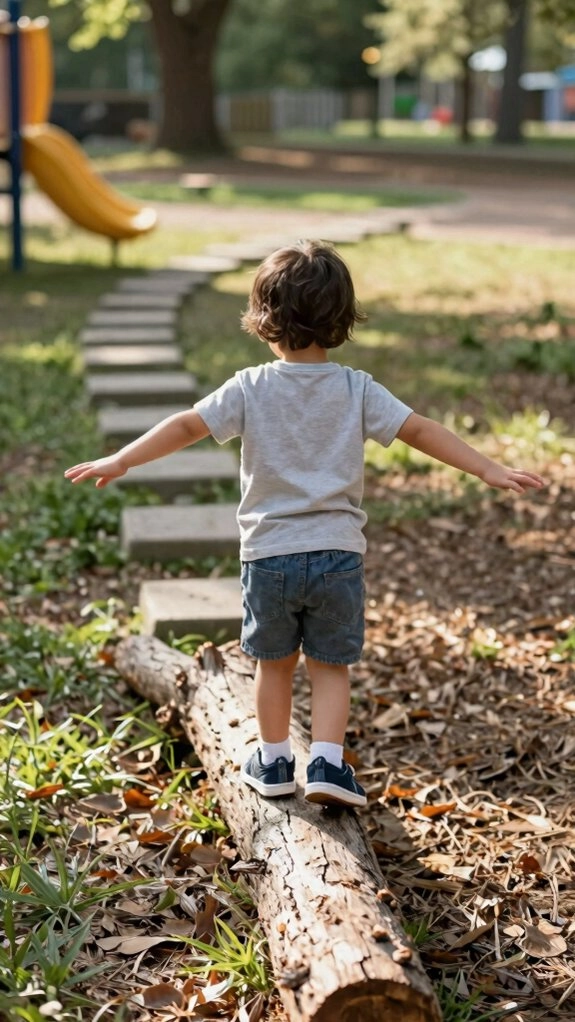
Sunny outdoor spaces give children room to move in bigger and bolder ways. You can invite friends or family to join, making every game feel welcoming and shared.
- Chase bubbles or balloons, running, jumping, and zigzagging after them.
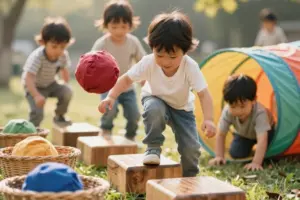
- Build an obstacle course with hoops, animal walks, and belly crawls.
- Ride tricycles, scooters, or pedal cars along a simple path.
- Try Music rhythm games outside, clapping, marching, and moving together.
- Probe water play movement by splashing, pouring, and carrying cups.
You don’t need equipment. Pick a safe spot, set rules, and cheer children on. Everyone finds a way to move.
Balance and Coordination Activities
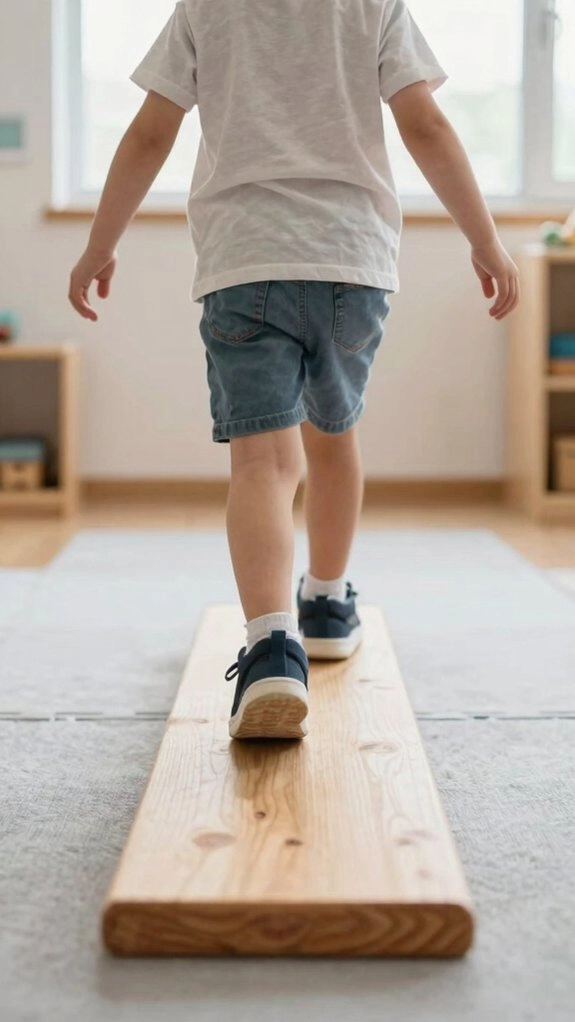
Balance and coordination activities help you feel steady, strong, and ready to move. Try a taped line or low beam with a trusted friend nearby. Shift your weight slowly and notice your proprioceptive awareness as your muscles guide you.
| Scene | Your move |
|---|---|
| A tunnel | Crawl through |
| Soft cushions | Step over |
| A swing | Rock gently |
These adventures give you vestibular input and help your brain organize movement. Start with two-foot jumps, then land quietly on a low step. Each careful turn, crawl, and landing builds control. You’re part of a moving community, learning together and cheering every brave try today.
Crossing the Midline Exercises
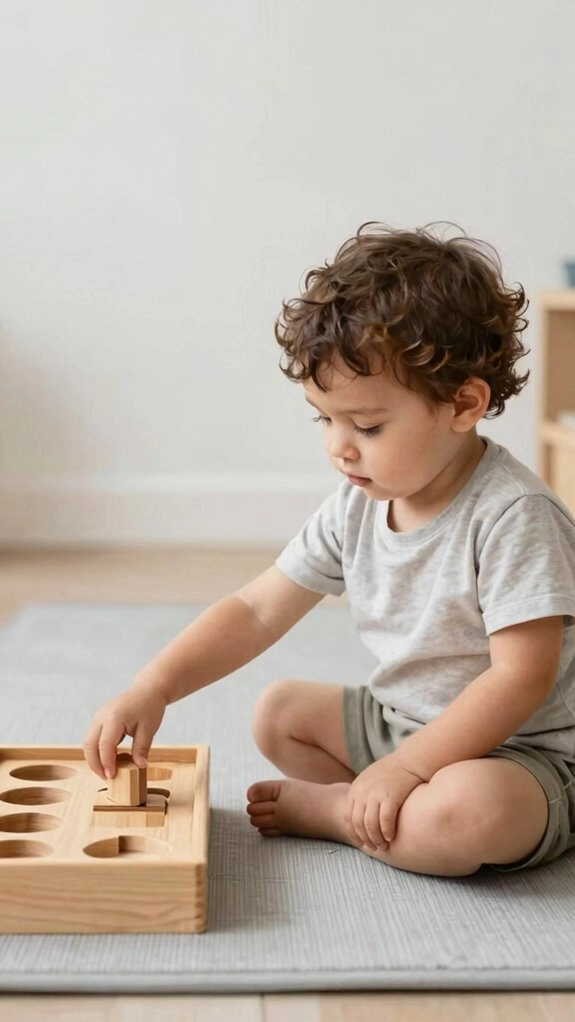
When you reach one hand across your body, you’re crossing the midline. This builds an interhemispheric connection and helps your brain organize whole-body movement. You can practice with friends or family, making each turn feel welcoming and fun. These moves support movement planning, sensory integration, and posture strengthening.
- Tap your opposite knee with an elbow.
- Shift your weight and reach across your body.
- Open a container while each hand has a job.
- String beads using hands on opposite sides.
- Add cross-body moves to obstacle courses and movement breaks.
You’ll feel steadier while you learn.
Activities That Improve Hand-Eye Coordination
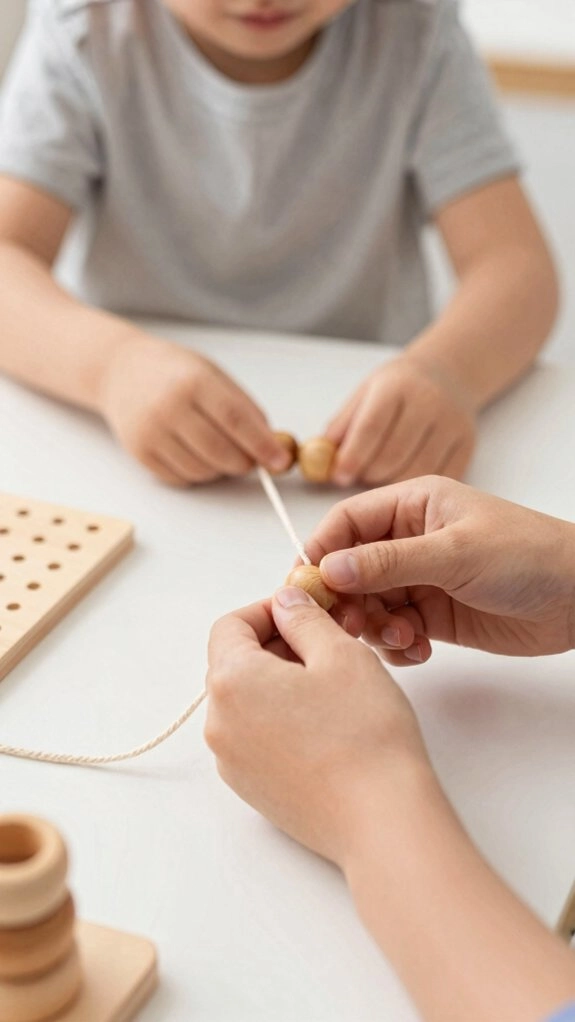
Hand-eye coordination helps your eyes guide your hands with accuracy and control. You can build it through small, satisfying games that make you feel capable and included.
Try placing stickers inside drawn circles. Peeling and pressing them develops your pincer grasp for buttoning.
String Cheerios onto a pipe cleaner, then lace with string, while both hands work together. Add pegs or tiny beads to a pegboard for writing-like precision and tactile feedback.
Drop coins into a piggy-bank slot, turning each one carefully. Pop drifting bubbles to practice tracking, reaching, and obstacle anticipation.
Celebrate try; your skills grow with practice.
Simple Obstacle Courses for Preschoolers
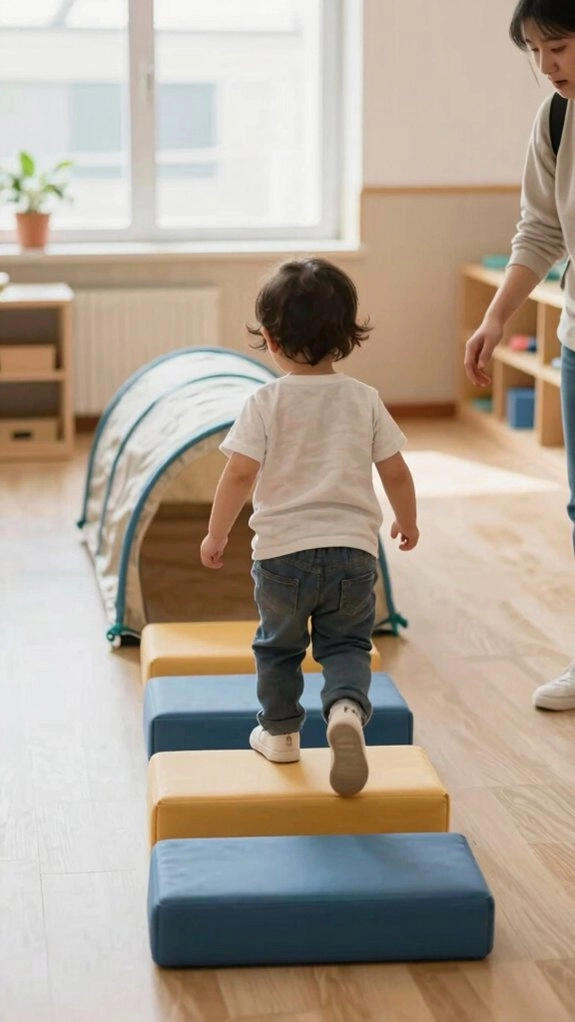
A simple obstacle course turns everyday movement into an exciting mission. You can build one that helps everyone feel included and proud. Try these stations in the same order each time:
- Crawl over pillows and under blankets.
- Investigate sensory play in a tunnel.
- Jump in and out of hula-hoops.
- Bear walk, belly crawl, then do jumping jacks.
- Cross a supervised wobble bridge or rope ladder.
These movement patterns strengthen your balance, core, and body awareness. Move at your own pace, and repeat the course.
Each finish builds confidence, motor planning, and a sense that you belong with your team.
Choosing Activities by Age
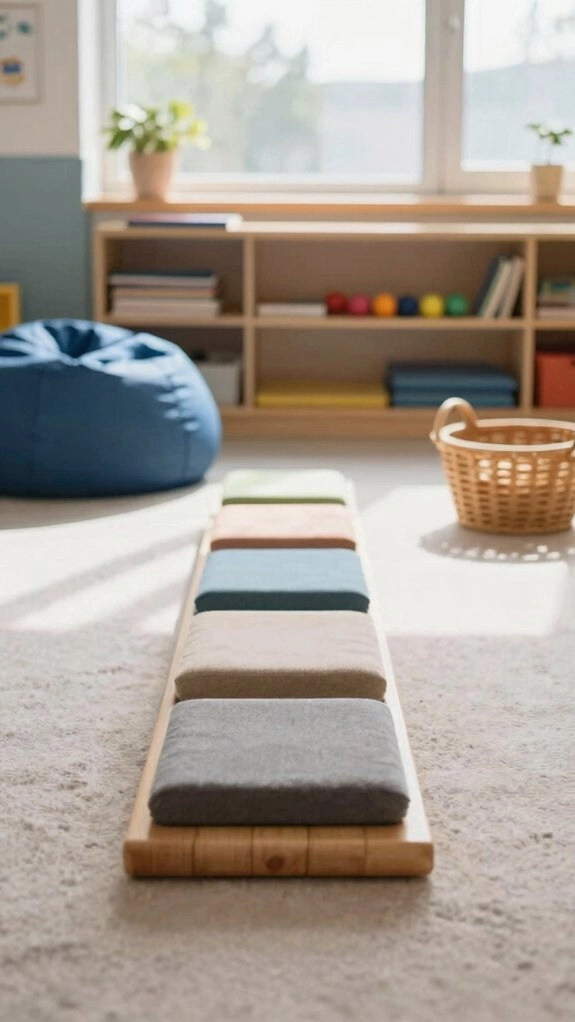
Each age learns through movement in its own exciting way. You can choose activities that match developmental readiness and include everyone.
For infants, try tummy time, reaching, rolling, or crawling toward a soft toy.
Toddlers enjoy safe paths, soft obstacles, and age-appropriate climbing.
Preschoolers can crawl through tunnels, circle cones, and balance along a line.
Adapt ball play too: infants reach and roll, toddlers take turns rolling, and preschoolers toss or kick at targets.
Gentle clapping suits babies, while toddlers love action songs.
Preschoolers often enjoy freeze dance or follow-the-leader.
Celebrate effort and let children move confidently together.
Supporting Motor Development at Home and School
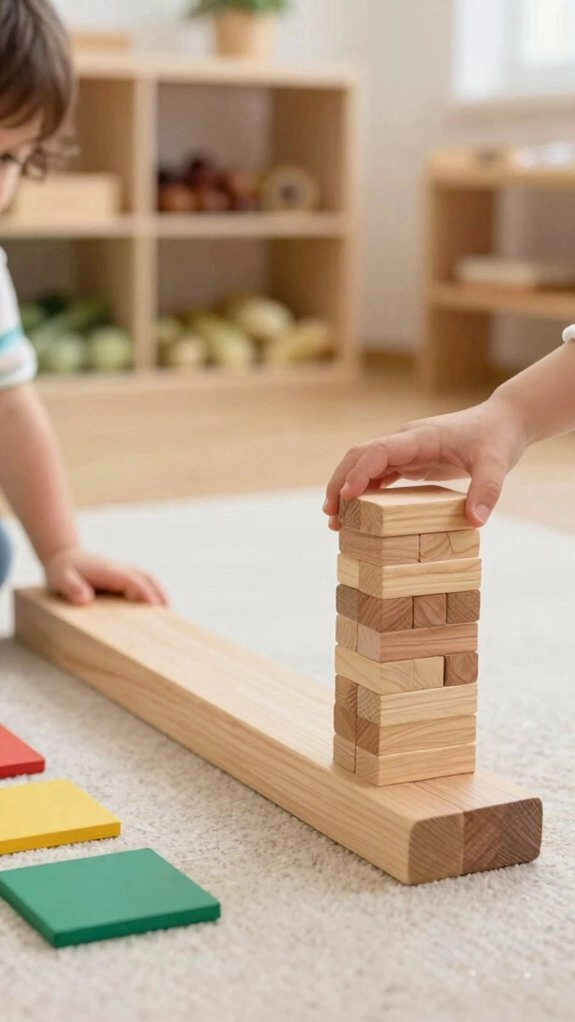
Once you’ve chosen age-friendly activities, make movement practice part of every day.
You can build joyful movement routines at home and school, helping every child feel included and ready to learn.
Try these shared practice ideas:
- Peel and place stickers, or thread large beads to guide careful fingers.
- Squeeze dough, use tweezers, and crumple paper for stronger grips.
- Create obstacle courses, hop, and chase bubbles during frequent breaks.
- Follow stepping and jumping sequences with songs, balance games, and chalk.
- String, cut, and open containers together to boost classroom readiness.
Steady encouragement helps little learners grow confident, coordinated, and connected.