Preschool Learning Activities That Build Essential Skills Through Play
- Preschool Learning Activities That Build Essential Skills Through Play
- Key Takeaways
- Why Play-Based Learning Matters
- Building Early Literacy Through Everyday Activities
- Letter Recognition Games
- Storytelling and Read-Aloud Time
- Rhyming and Phonics Practice
- Early Math Activities Children Naturally Enjoy
- Counting with Everyday Objects
- Sorting and Classifying
- Recognizing Simple Patterns
- Fine Motor Activities That Prepare Children for Writing
- Playdough Exercises
- Cutting and Pasting
- Tweezers and Pom-Pom Challenges
- Sensory Activities That Support Cognitive Development
- Gross Motor Activities for Healthy Physical Development
- Social and Emotional Learning Through Play
- Creative Art and Music Experiences
- Outdoor Learning Activities for Curious Minds
- Creating Simple Learning Centers at Home
- Choosing Activities Based on Your Child's Age
You can build fundamental preschool skills through playful moments each day. Try counting socks, sorting buttons, and shaping letters with dough. Ask your child what happens next during stories and let them retell adventures. Play sound hunts, rhyme games, and outdoor scavenger searches. Cut, glue, dance, and build together to strengthen hands, bodies, and confidence. Taking turns in pretend play also grows kindness and communication. Keep exploring for simple ideas that match your child’s age.
Key Takeaways
- Encourage child-led pretend play and shared projects to build problem-solving, persistence, turn-taking, and flexible thinking.
- Make literacy playful with daily read-alouds, story retelling, sound hunts, rhymes, and movement-based phonics games.
- Build letter knowledge through magnetic-letter races, alphabet hopscotch, and everyday questions about beginning sounds.
- Develop early math and fine motor skills by counting, sorting, playing shop, cutting, gluing, and using tweezers.
- Support physical, sensory, and emotional growth through obstacle courses, sensory bins, cooperative games, and calming strategies.
Why Play-Based Learning Matters
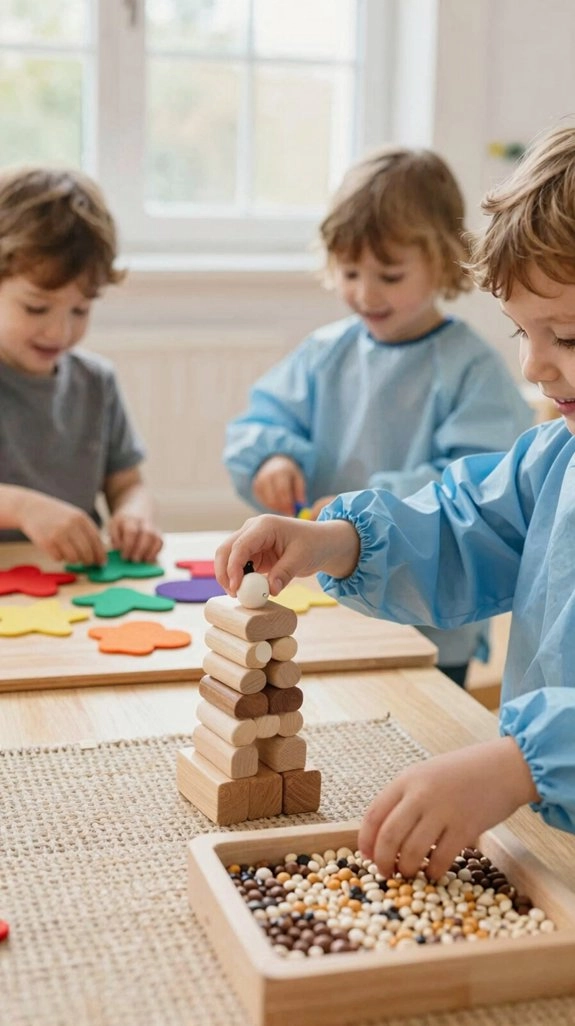
When preschoolers play, they aren’t just passing time—they’re building important skills.
You can Choose child led exploration as they follow curiosity and take safe risks.
Hands-on discovery lets them test ideas, revise plans, and solve problems together.
These joyful moments support executive functioning when children set goals, persist, and adjust.
Positive feelings boost motivation and memory, helping new learning stick.
Pretend games, shared projects, and turn-taking build social communication skills.
You create a welcoming space where every child can join in, contribute ideas, and feel valued.
Play makes kindergarten readiness feel like an adventure your community shares together daily.
Building Early Literacy Through Everyday Activities
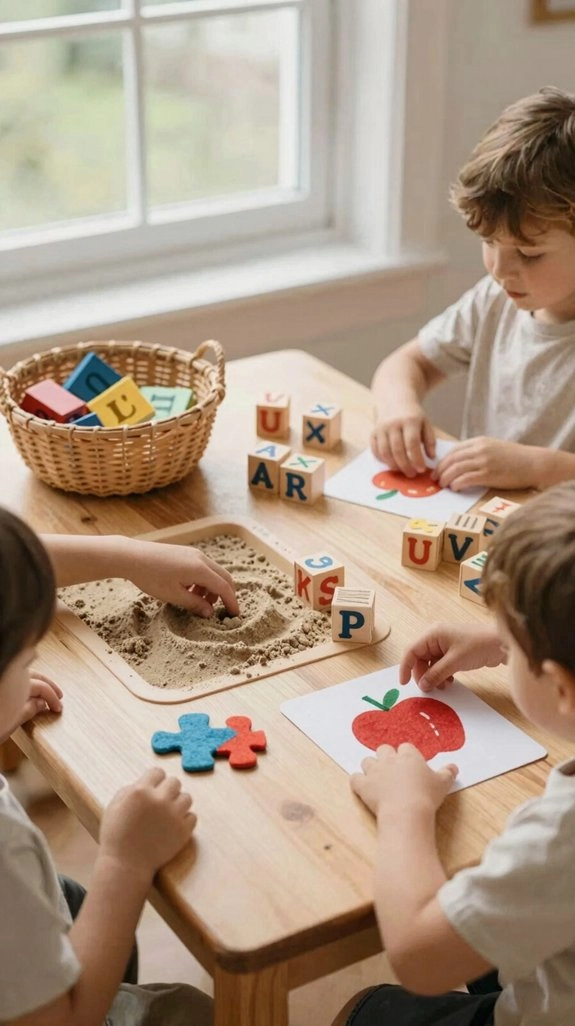
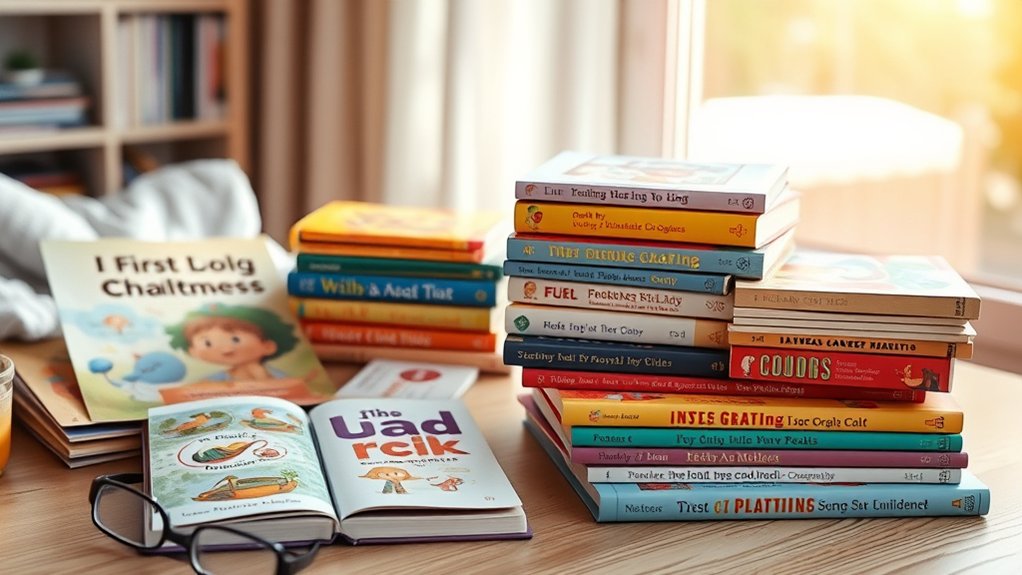
The same playful spirit can help your child become a confident early reader.
At meals, on errands, or before bed, invite them to listen for the first sound in familiar words.
During read-alouds, pause to ask what might happen next.
Then let your child retell the story, so everyone feels included in the adventure.
Try “I Spy the Sound” or phonics hopscotch to connect movement with listening.
Outdoor scavenger hunts can inspire words and shared findings.
Storytelling with puppets builds imagination, vocabulary, and confidence.
For extra support, Reading Eggs offers friendly games that practice sounds, words, fluency, and understanding.
Letter Recognition Games
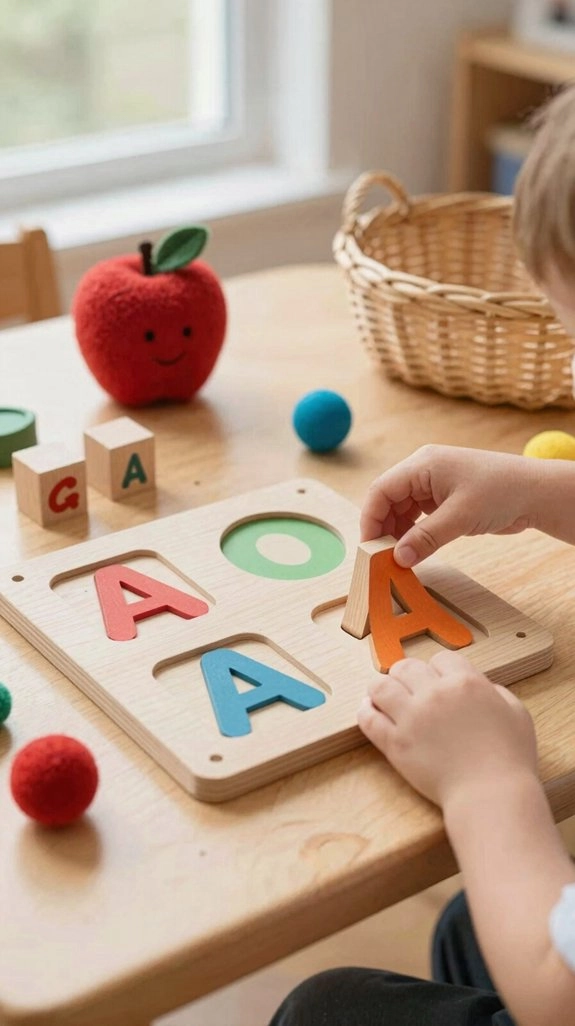
Letter recognition games turn everyday learning into an active adventure. You can invite your child to join Word run races with magnetic letters on a board. Call a sound or word, and they’ll race to add its first or last letter.
For a Letter sounds scavenger, ask them to spot something beginning with sss. Draw uppercase and lowercase letters in hopscotch squares, then let them jump and name each sound.
You can also connect rhyming word cards with rubber bands. During daily chats, ask, “What’s the first letter in this word?” These shared games help your little learner belong.
Storytelling and Read-Aloud Time
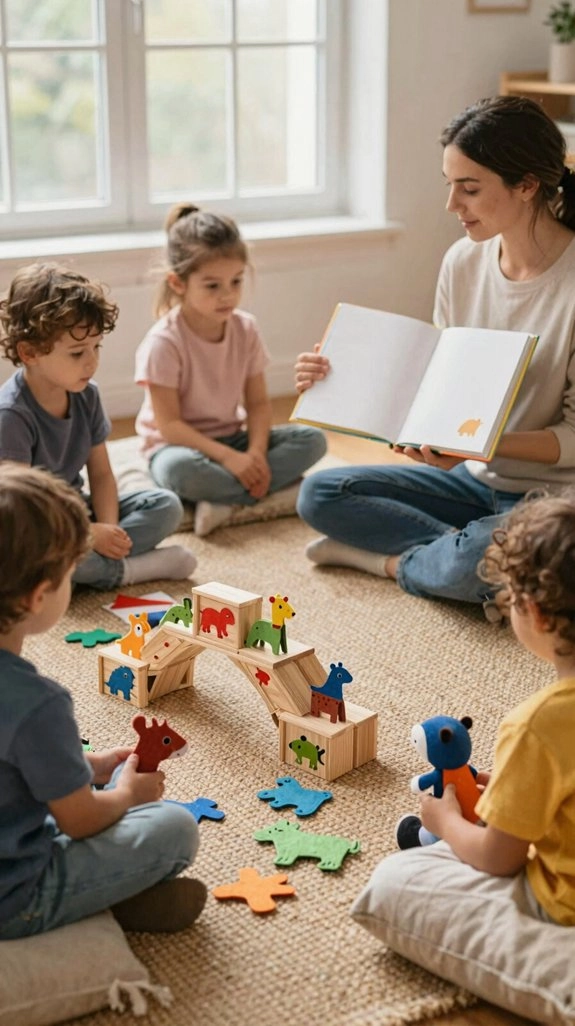
Storytime opens a bright doorway into new words, ideas, and adventures. During your literacy circle, you join friends to hear rich language and follow what happens first and next. Ask questions and share your favorite part; your ideas matter.
Daily read-alouds build vocabulary, understanding, and confidence.
- Use transition songs to gather everyone warmly.
- Try fine motor warmups before turning pages.
- Enjoy puppet storytelling with socks or simple puppets.
- Retell the story with a partner and take turns.
- Wear dress-up clothes to act out feelings and choices.
You’ll listen, imagine, and help everyone feel welcome. Stories show every voice belongs.
Rhyming and Phonics Practice
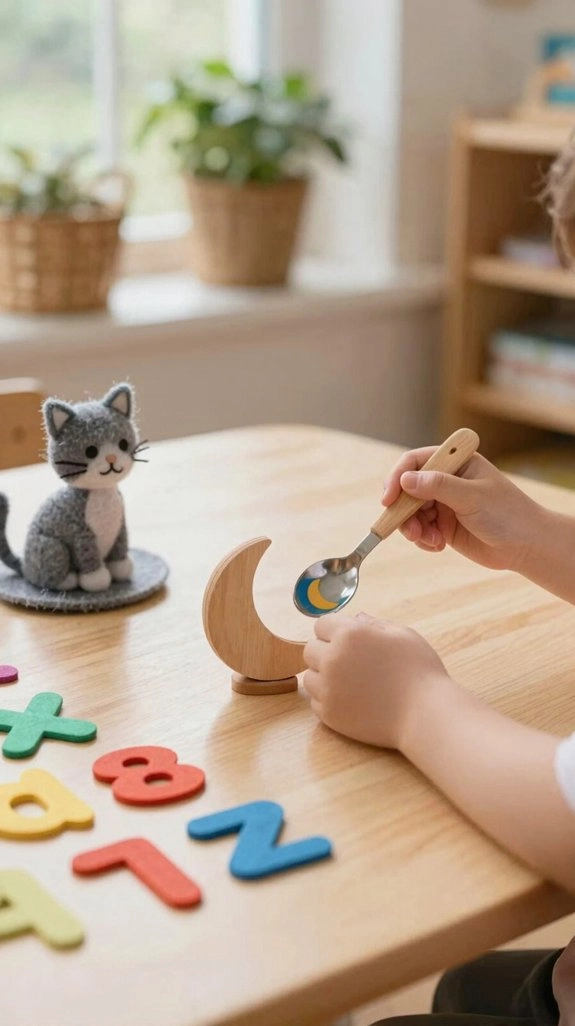
After you enjoy a story, you can listen closely for the sounds inside words. Try Daily word games, such as “I spy something starting with sss.”
You’ll learn to connect sounds and letters while playing together. Create Sound scavenger hunts at home, finding objects that begin with a chosen sound.
Race to match magnetic letters to sounds, or hop on chalk letter squares and say sounds.
For rhymes, link pairs like cat and hat with pins and rubber bands.
These challenges help you notice patterns, build confidence, and join the community of readers who love exploring how words work.
Early Math Activities Children Naturally Enjoy
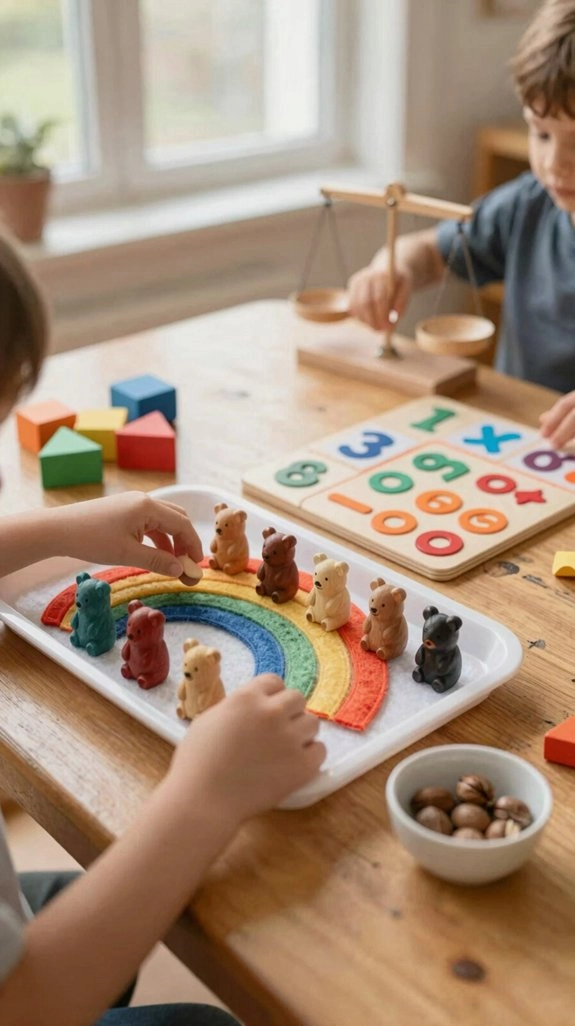
Math appears everywhere, and you can find it through games you already love. You belong in the fun when you test ideas, make guesses, and try again.
- Play Shop lets you match play money to price tags and investigate scarcity and plenty.
- Number Safari helps you spot numerals, patterns, and shapes around your neighborhood.
- Don’t Drop the Ball tracks successful taps before a miss.
- Guess the Weight compares your prediction with a kitchen-scale result.
- Shape numbers with playdough or park cars in matching spaces for Number bond games.
Each challenge shows how numbers work together. Celebrate findings together proudly.
Counting with Everyday Objects
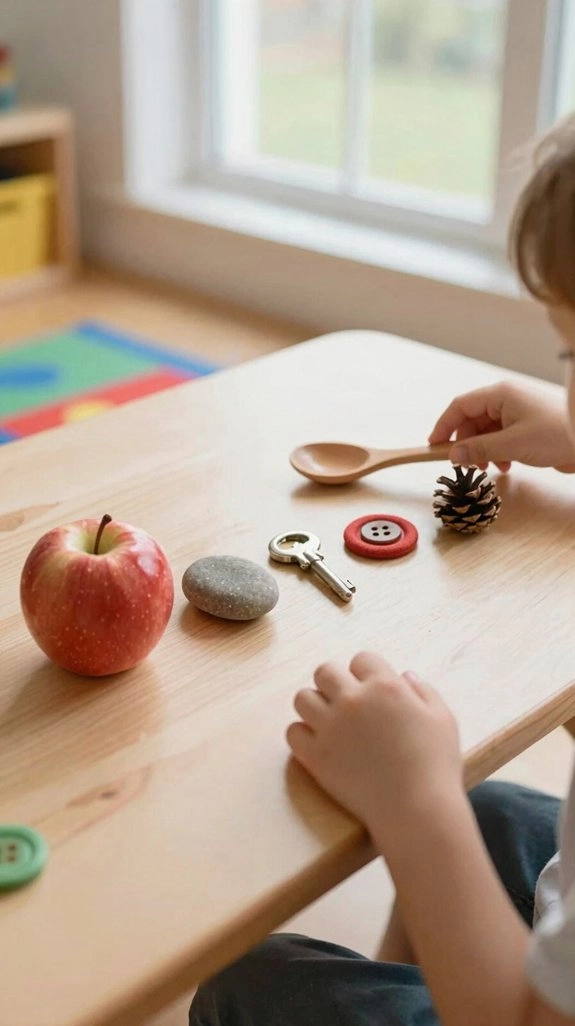
You can turn everyday objects into counting tools wherever you are. Count cereal pieces, buttons, socks, or blocks aloud during short routines. Say the total together: “We counted 12!”
Then change a small pile. Add one button or take away one block, and tell what number comes next. These number sense games help you notice how numbers grow and shrink.
Play shop with sticky-note prices and coins. Count items, then pay the right amount.
Try a coin toss too. Ask, “Heads or tails?” and count each result after several turns.
Invite others to join Skip counting challenges. Celebrate progress.
Sorting and Classifying
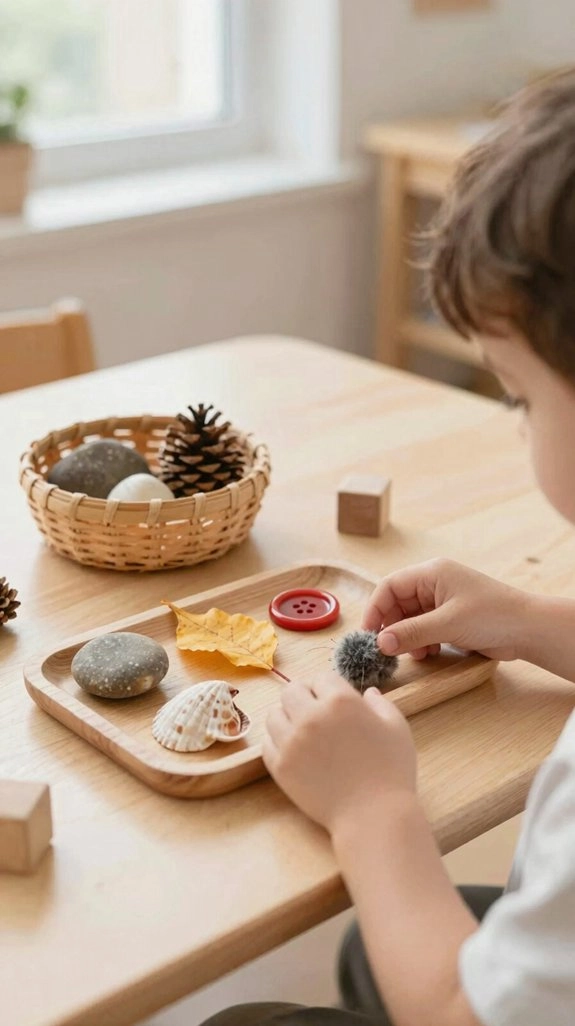
Sorting turns a mixed-up pile into groups that tell a clear story. You can play Sorting games with friends or family, using large buttons, blocks, socks, toy animals, or safe household objects. Choose one rule: colour, size, or type. As you pick up, move, and place each item in bowls, you build fine motor practice and hand-eye control.
- Put red blocks together.
- Find the biggest socks.
- Group animals by type.
- Ask, “Which group does this belong to and why?”
- Change the rule and notice new groups.
You’ll sharpen attention, learn categories, and grow early math thinking by comparing quantities.
Recognizing Simple Patterns
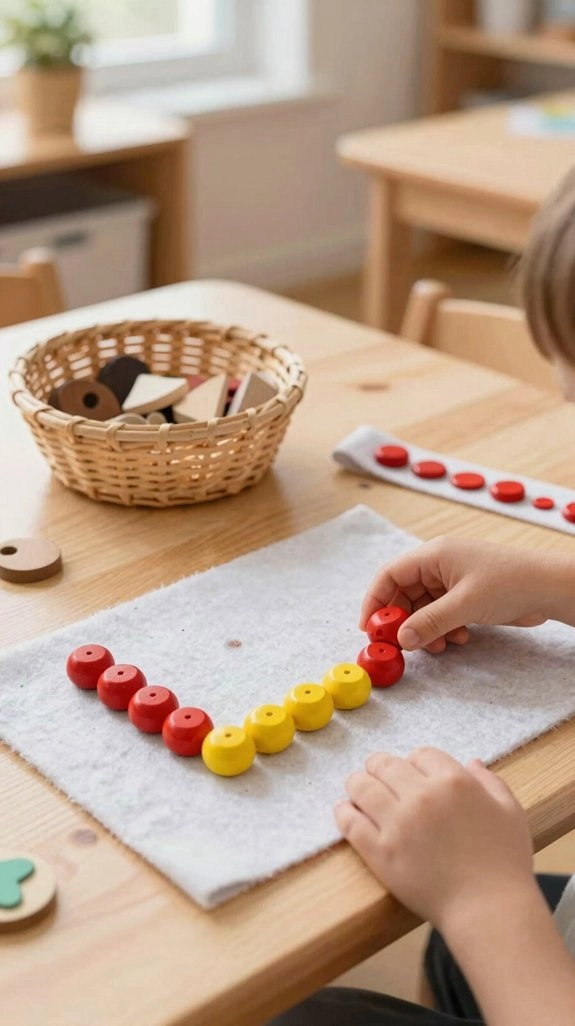
Patterns appear when colors, sounds, or actions repeat in a special order. You can spot patterns everywhere, and you’re part of the finding.
Make a track with blocks, buttons, or toy animals. Try red-blue-red-blue, then ask what comes next. Begin with steady two-step or three-step repeats. When you feel ready, investigate Pattern stories by adding repeated sounds or characters.
You can also lead movement sequences: clap-stomp, hop-hop-stomp, or march-turn. Take a pattern hunt indoors or outside. Find stripes, checks, and alternating colors on clothes or objects.
Each successful prediction builds early math thinking and helps you learn alongside others.
Fine Motor Activities That Prepare Children for Writing
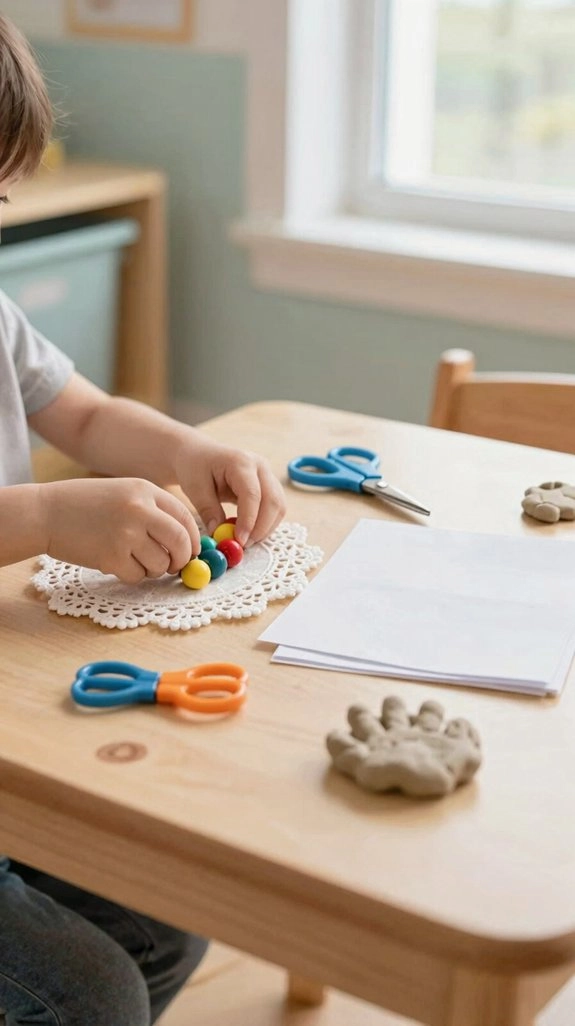
After spotting patterns, your hands can begin making their own marks and shapes.
You’re part of a community of growing writers when you build these muscles.
tactile play helps your thumb and finger work together.
Drawing, gluing, and beading build control for future pencil lines.
Try these activities with friends or family:
- Thread large beads onto a string.
- Make bold crayon trails on paper.
- Use glue to create simple picture paths.
- Enjoy scissor practice with plastic scissors.
- Pinch tiny paper pieces for a collage.
Each challenge strengthens your fingers, improves hand-eye coordination, and helps your writing hand feel ready.
Playdough Exercises
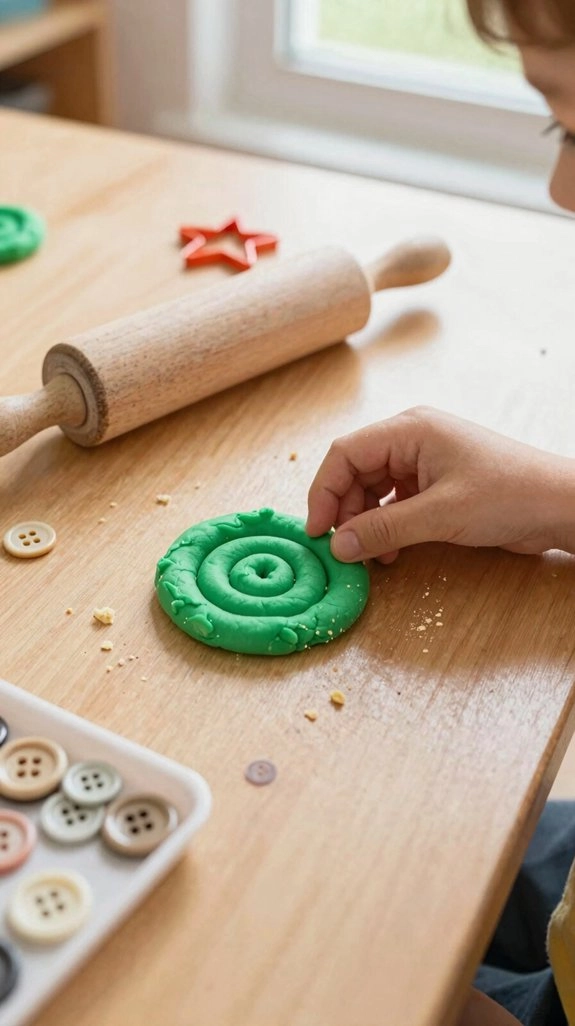
Playdough’s soft, squishy feel turns your hands into busy builders and investigators. Together, you can roll, pinch, and shape dough into letters, numbers, or tiny creations.
Try alphabet tracing on a labeled paper plate, then count each dough shape you make.
For sensory investigation, hide small animals or counters inside and become a number scavenger.
You’ll strengthen your pincer grasp while solving each little mystery.
Make balls and match them to numbered spaces.
Experiment color mixing and choose your own designs.
Your ideas belong here, and every twist builds coordination, focus, spatial reasoning, and confidence with your friends too.
Cutting and Pasting
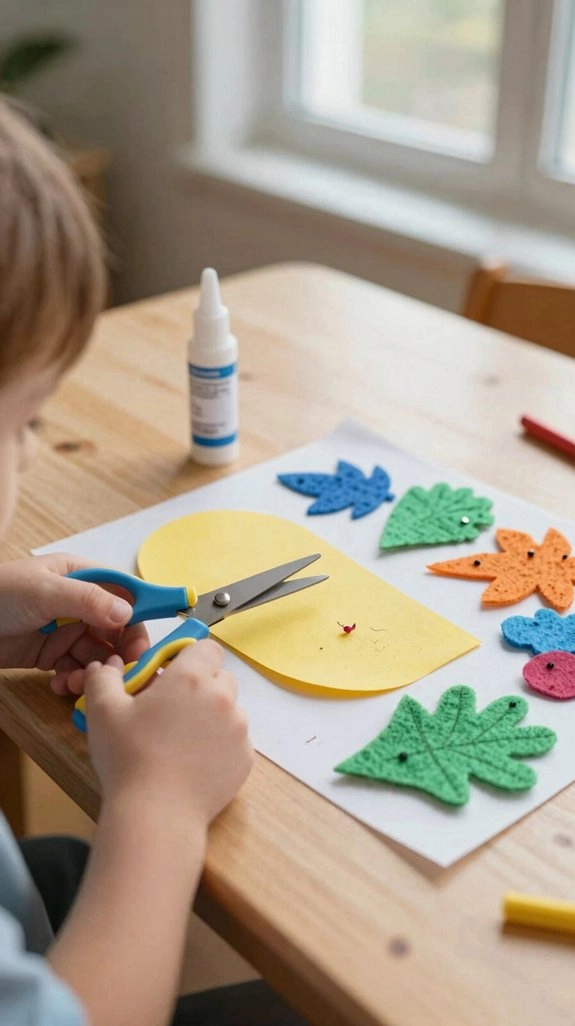
When you snip, place, and press paper, your hands learn important new skills. You’ll build strong fingers and a careful pincer grasp while you use child-safe scissors and glue. Try short 15-minute projects so you’ll feel successful alongside other young creators.
- Cut straight lines, big curves, and wide zigzags.
- Choose larger cardstock shapes that fit your hands.
- Follow the steps: pick up, position, press, and smooth.
- Create a face, tree collage, or picture border.
- Enjoy Easy shape sorting as hand eye coordination play grows.
You get to decide where each piece belongs. Your ideas matter, and your artwork shines.
Tweezers and Pom-Pom Challenges
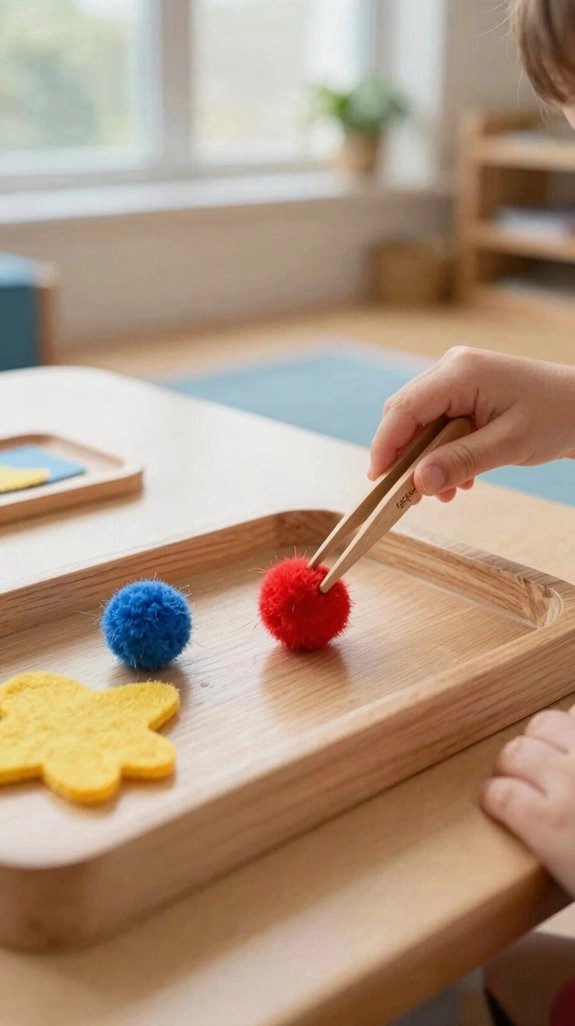
Tiny pom-poms give your hands a fun new challenge after paper projects. Use tweezers to pinch, lift, and place each fuzzy ball. You’ll strengthen your pincer grasp while working beside friends or family. Sort colors, sizes, or numbers into cups. For Preschool mindfulness breaks, try a calm set, go round and count correct moves together. You can also add them to Sensory bin play. If it feels tricky, choose wider tweezers first, then celebrate every steady win.
| Goal | Try this |
|---|---|
| Color | Match red pom-poms |
| Numbers | Fill labeled cups |
| Focus | Time a careful round |
| Easier start | Choose larger pom-poms |
Sensory Activities That Support Cognitive Development
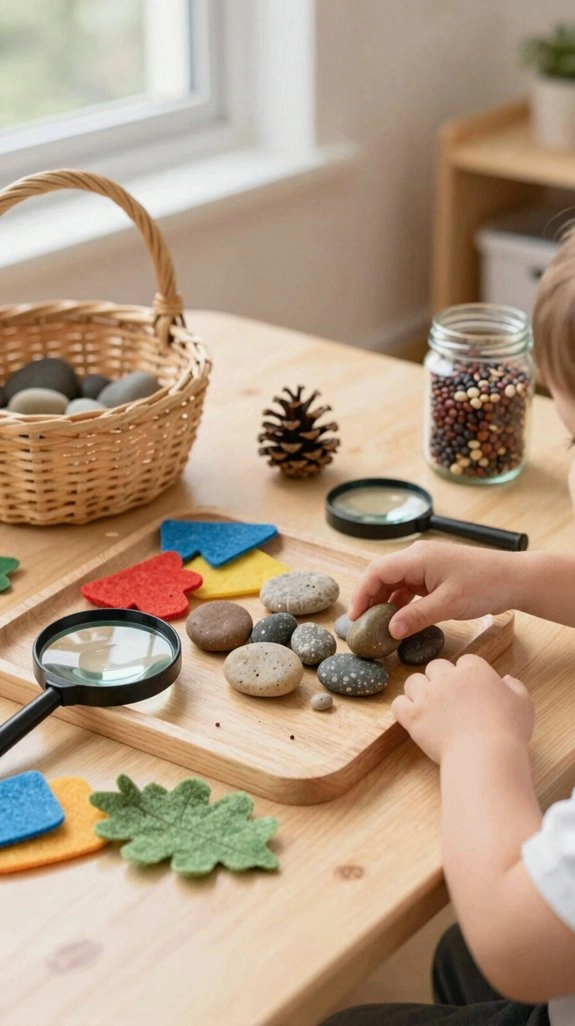
Sensory activities help your brain grow as your hands investigate, sort, and create. You belong in every curious finding, whether you’re pouring, pressing, or comparing.
- Try Sensory sorting with rice, beans, scoops, and cups.
- Shape dough letters and numbers to build coordination and counting.
- Finger paint or mold clay for problem solving practice.
- Hunt for leaves and rocks, then describe their textures.
- Stir and measure ingredients while predicting what happens next.
Repeated actions sharpen focus and detail. You’ll notice patterns, test ideas, and learn from surprises.
Each texture invites questions, and your choices guide the adventure with friends today.
Gross Motor Activities for Healthy Physical Development
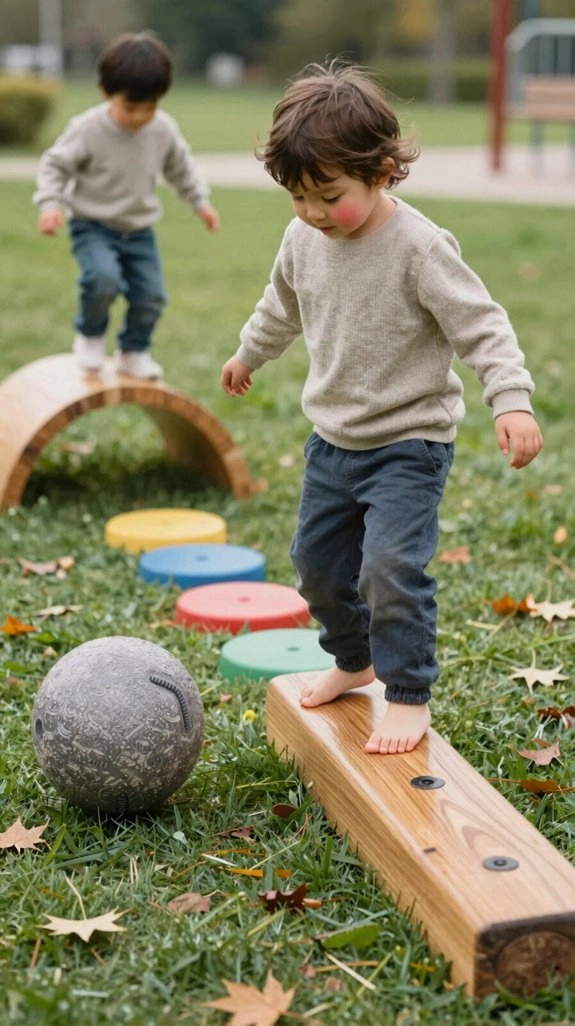
Movement turns everyday play into a strong-body adventure. You can join Gross motor games that build balance, coordination, and strength. Make a clear, safe space for jumping, hopping, skipping, running, and dancing. You’ll grow steadier with practice.
| Activity | Try this | Builds |
|---|---|---|
| balance beam drills | Walk a floor line slowly | Posture and balance |
| animal walk actions | Bear crawl or frog hop | Coordination and strength |
Add follow the leader challenges: hop on one foot, then two. Carry light supplies, climb with adult supervision, or throw and catch balls. Each repeated try helps your body move with control during your active day.
Social and Emotional Learning Through Play
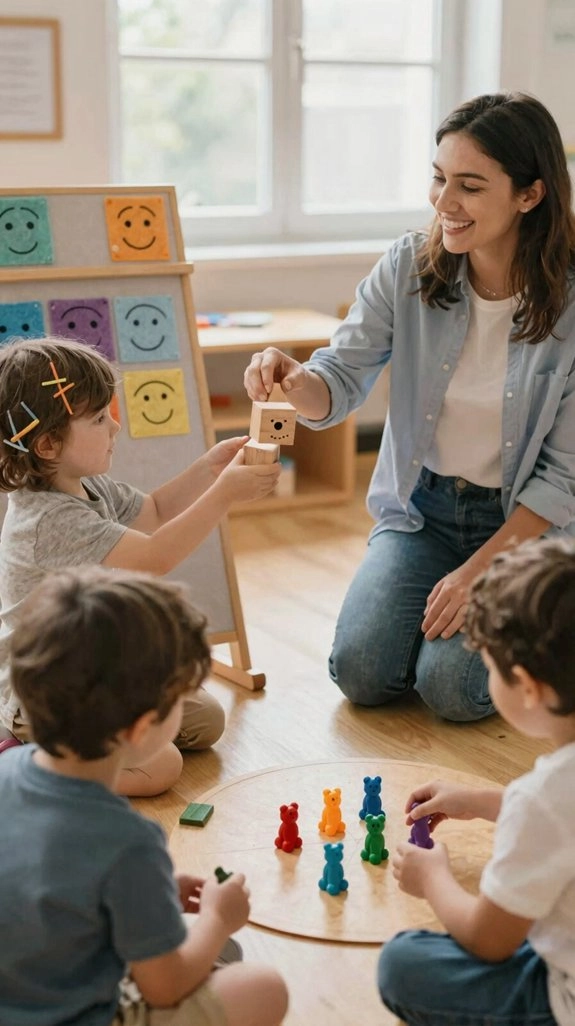
Play also helps you understand yourself and the people around you.
When you join cooperative gameplay, you practice sharing, listening, and solving problems together.
Friendly roleplay lets you imagine another character’s feelings, building empathy and kindness.
An adult’s open questions can spark an emotional conversation and help you share your ideas.
Mistakes feel safe, so you can try, adjust, and grow stronger.
- Take turns and cheer for friends.
- Name feelings during a story.
- Use calm down strategies when frustration rises.
- Listen to different ideas.
- Try again after a tricky moment.
Each choice helps you belong and believe in yourself.
Creative Art and Music Experiences
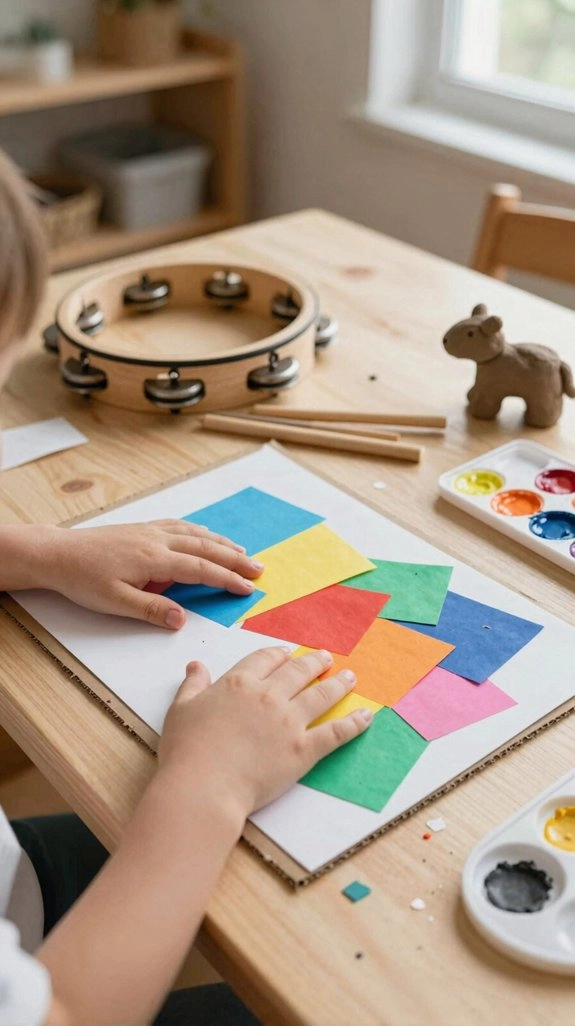
Creative art and music let you turn your ideas into something you can see and hear. You can shape play-dough, draw with crayons, cut paper, and glue pieces together. These choices build fingers, careful eyes, and confidence in your voice.
Build houses or towers with blocks, then decide what each part needs.
Try large beads and string to plan patterns.
During Collaboration during projects, you share materials and celebrate every person’s ideas. Ask, “Can you tell me about your picture?” Your words grow too.
Add sensory music play with rhythms and dance. You’ll feel connected as everyone creates together.
Outdoor Learning Activities for Curious Minds
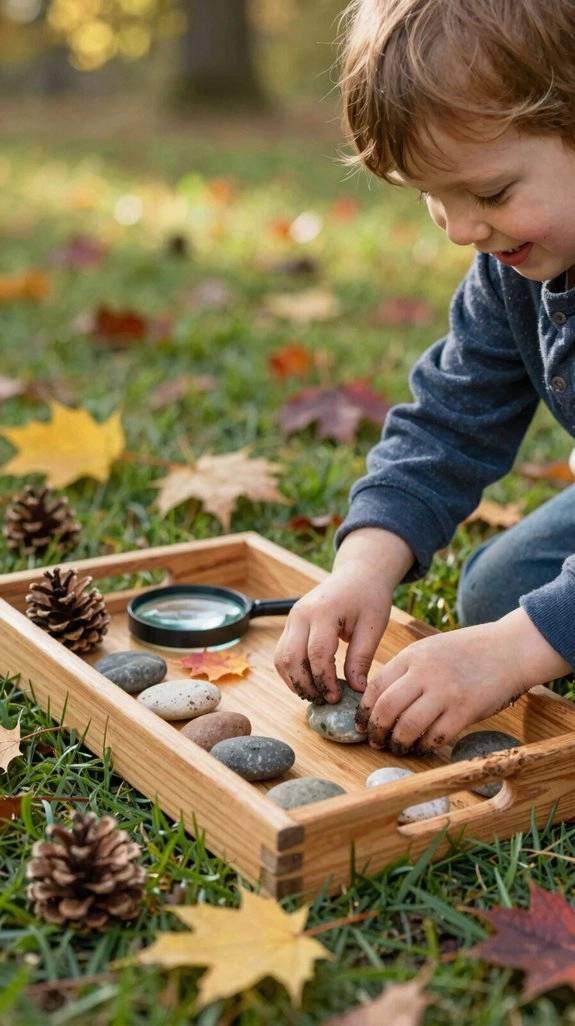
Outside, your backyard or park can become a place for exciting findings. You and your child can discover, notice, and learn as a team.
- Try a Sensory scavenger for leaves, rocks, flowers, and bugs.
- Sort your finds to build new observation words and steady fingers.
- Make chalk letters, then jump to each sound for a movement focus.
- Spray chalk lightly with vinegar, with adult help, and watch bubbles form.
- Start a Number Safari or hide shapes nearby; spot patterns, listen closely, and follow directions.
Each adventure helps your little discover feel included in the big world around them today.
Creating Simple Learning Centers at Home
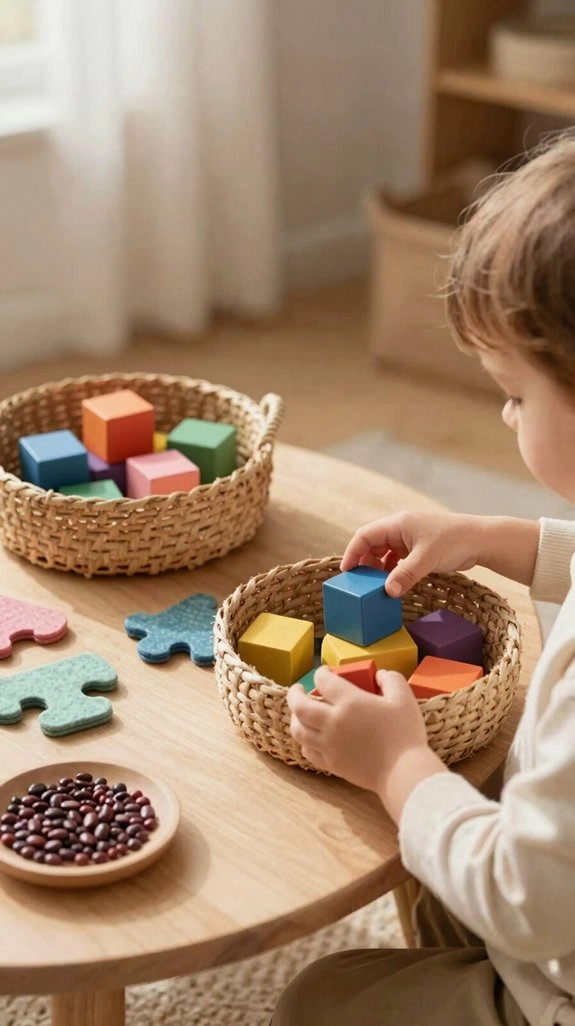
After outdoor findings, you can bring that same curiosity into simple learning centers at home.
Set up three to five cozy stations with everyday items.
Try sorting socks or blocks, art supplies, books and puppets, or a building spot.
Add sound games such as “I Spy the Sound” and a taped letter path for movement.
Rotate centers every 15–20 minutes to refresh Visual attention.
Let your child lead choice making while you offer warm encouragement.
Shared play invites peer interaction, communication, and problem solving.
Celebrate effort, ask open questions, and keep each goal simple yet open for finding together.
Choosing Activities Based on Your Child’s Age
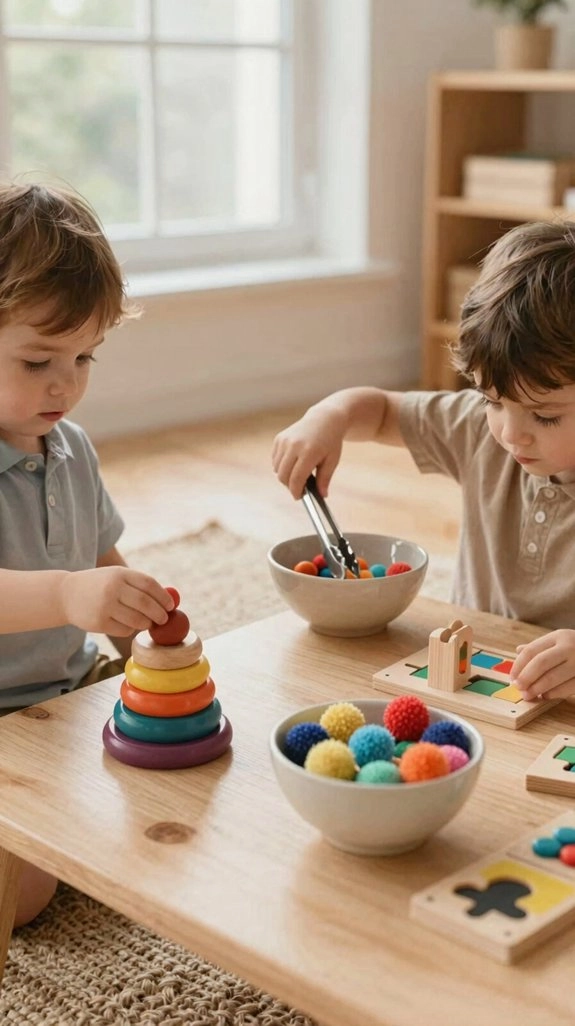
Each child learns best when play fits their growing skills and interests. You know your child best, so choose challenges that feel exciting, not frustrating. For ages two to four, begin simply and grow together.
- Offer large blocks or buttons for safe sorting.
- Use crayons, paper, and play-dough for busy hands.
- Keep an Age appropriate duration of 15–20 minutes.
- Add size matching or sound games as skills grow.
- Start nearby, then introduce guided play rules and questions.
Watch for wandering attention, then switch activities with a smile. Your support helps your child feel capable, included, and ready to discover.