
How to Build a Study Routine That Actually Works

- How to Build a Study Routine That Actually Works
- Key Takeaways
- Understand Why Study Routines Fail
- Start With Your Why
- Find Your Why
- Write It Down
- Let It Guide You
- Map Your Study Routine Around Your Schedule
- Find Your Study Windows
- Match Tasks To Energy
- Build Flexible Time Blocks
- Find Your Best Study Hours
- Set Realistic Study Goals
- Plan Study Blocks That Stick
- Use Pomodoro for Study Sessions
- Remove Distractions Before You Start
- Organize Your Study Materials
- Keep Materials Ready
- Choose A System
- Review And Reset
- Build a Study Space You’ll Use
- Add Breaks, Sleep, and Movement Time
- Keep Your Study Routine Flexible
- Track Study Streaks and Adjust Weekly
Build your study routine around your real life, not someone else’s. Start by writing why you want to study, then map your week and spot open time blocks. Put hard subjects in your best focus hours and set small goals you can finish in one session. Keep one study space, use short breaks, and protect sleep. Stay flexible, track what works, and adjust each week so your routine keeps getting stronger as you go on.
Key Takeaways
- Start with a personal “why” so your routine stays motivating when studying gets difficult.
- Build your schedule around real classes, work, sports, and energy levels, not someone else’s ideal day.
- Set small, finishable study goals and place them in calendar gaps with short focus blocks.
- Use one organized system for notes, practice, and mistakes so starting and resetting stays easy.
- Protect the routine with breaks, sleep, movement, and flexible adjustments when a study block is missed.
Understand Why Study Routines Fail

Study routines usually fail when they copy someone else’s life instead of yours.
These study habit myths push you into unrealistic schedule copying, like a 5 a.m. start that clashes with your real day.
You also run into energy mismatch patterns when your best focus time is different from theirs.
Vague goal traps hurt too.
“Study biology” sounds fine, but it’s too broad.
Break it into notes review and practice questions.
When a plan fits your classes, sports, and work, you feel less stuck.
Treat each routine like a draft, then debug it.
That keeps you growing with your people.
Start With Your Why

Before you plan your study time, ask yourself why it matters to you.
Write that reason down and keep it where you can see it every day.
When studying feels hard, let your why guide you forward and remind you what you’re working toward.
Find Your Why
Why are you studying in the first place? Your answer gives you motivation clarity and personal stakes.
Maybe you want a better job, a stronger grade, or real confidence.
Keep that reason close in your mind when days feel hard.
When your routine breaks, check your why before you change everything.
Studying can feel tough, and that’s okay.
You’re not lazy for needing a bigger reason.
You’re human.
Your why can help you stay with your group, your goal, and your future.
It turns each study session into progress toward who you want to become.
Write It Down
A simple note can change the way you study. Write your why on a sticky note and place it where you’ll see it.
Keep it personal and clear, like a compass for hard days. If study feels heavy, that’s okay.
Your reason can still give it meaning. Think of your self-study as course design, not failure.
Use why journal prompts to find the words. Make it a real part of your space.
- better future
- passing an exam
- building a skill
- motivation anchors
- your own path
Let It Guide You
When study feels hard, your reason can help you keep going.
Write your why on paper and keep it where you study.
It can be an exam date, a skill goal, or a career change.
Make it specific, like finishing grammar lessons or raising test scores.
Use it in your daily review and progress tracking.
Let habit triggers point you back to it.
If your plan changes, check your why first.
Talk with an accountability partner, too.
When you miss a day, don’t quit.
Start again with one small block.
Your why is your compass, and it belongs to you.
Map Your Study Routine Around Your Schedule

First, look at your real week and find the open pockets of time.
Then match your hardest tasks to the hours when you feel most awake.
Build small study blocks that fit your schedule, so they’re easy to keep.
Find Your Study Windows
Before you pick study times, look at your real week. List classes, work, sports, and club time first. Then find the gaps that truly belong to you. Use brain battery tracking for a few days. Notice when you feel sharp, calm, or sleepy. Those patterns show your best windows for energy matching tasks.
- Morning focus block
- Afternoon reset block
- Evening quiet block
- Short Pomodoro gap
- Repeat each week
Keep one or two steady study windows so your routine feels familiar. If an hour always feels tired, switch it to a better spot.
Match Tasks To Energy
Once you know your open study windows, you can match each task to your energy.
First, note your class, work, sport, and meeting times. Then place study blocks only in the free spots.
Watch your energy for a few days. When you feel alert, save that time for hard subjects. When you feel tired, do easier review.
This task prioritization helps you avoid energy mismatch and keeps your mind steady.
Use 25-minute Pomodoro blocks with short breaks.
A quick start-up routine, like coffee and opening materials, helps you switch into work mode.
If energy shifts, swap tasks and stay flexible.
Build Flexible Time Blocks
When your day already has school, sports, and chores, build study blocks around them.
Start with your fixed plans, then carve out study windows that fit your life.
Use natural gaps and make them repeatable.
Choose harder work for your sharpest hours, and save easier review for low-energy times.
Try Adjustable study blocks and Nearest window rescheduling so one missed session doesn’t ruin your flow.
That’s Missed session recovery and Routine consistency planning working together.
- Morning focus for tough math
- Afternoon gap for reading
- Night review for flashcards
- 25-minute Pomodoro cycles
- Move study to the next open slot
Find Your Best Study Hours

To study smarter, you need to know your best energy times. Track your study energy for a few days with peak tracking. Notice when you feel focused, tired, or distracted. That energy mapping helps you see your daily rhythm.
Then use task pairing: place hard subjects in your peak hours and easier work later. Build your routine around your brain battery, not someone else’s schedule.
A quick start-up habit, like setting out books, can boost focus timing fast. Keep your blocks to 2–4 strong hours. Test one block, adjust, and find what fits you best.
Set Realistic Study Goals

A good study routine starts with goals you can actually finish. Use SMART goals so each task is clear, small, and possible. Match your energy, too, so you don’t plan like a superhero on a tired day. Think in one-session tasks, not huge dreams.
- Review Chapter 3 notes
- Answer 10 practice questions
- Learn one idea today
- Drill it tomorrow
- Work for 25 minutes, then break
You fit study around class, work, and sports. That helps you belong to your routine. Small wins keep you going. When goals feel doable, you’ll see progress and stay proud.
Plan Study Blocks That Stick

Once you know your goals, you can fit them into real life.
First, look at your calendar and find the gaps you actually have.
Then place study blocks there, not in fantasy time.
Give each block a finishable task, like reviewing notes and doing 20 practice questions.
Start small with about 20 minutes, then grow later.
Turn off notifications and use blockers so distraction resilience gets easier.
This helps you build study consistency without relying on willpower.
Keep each block short and clear.
You’ll feel like part of a crew that keeps showing up and improving together.
Use Pomodoro for Study Sessions

With Pomodoro, you work in short bursts that feel easier to start. You set a timer for 25 minutes, pick one finishable task, and protect your attention management.
After each block, take a 5-minute reset: stand, stretch, and drink water. Repeat this four times, then enjoy a longer break.
These focus streaks help you feel part of a steady study rhythm.
- Complete 15 practice problems
- Summarize one section of notes
- Turn off notifications
- Use a website blocker
- Do a 10-minute micro-Pomodoro if you miss one
This routine helps you stay calm, connected, and ready to keep going.
Remove Distractions Before You Start

Before you start, clear away anything that can pull your attention off track. Put your phone far away and silence alerts. Use blockers on sites that steal time. Try Distraction triggers mapping so you spot what pulls you away. Choose one calm spot and keep your needed items close. Then your mind can stay on the task.
| Action | Why it helps |
|---|---|
| Phone away | Fewer surprise alerts |
| Block apps | Less time lost |
| Quiet setup | Less wandering |
| Environment cueing methods | Signals work mode |
You’ll feel more settled, and that helps you belong in your study flow.
Organize Your Study Materials

Pick one system for all your study materials, like a notebook or app, and stick with it.
Keep the notes, tools, and practice work you need ready before you start.
At the end of each session, review what changed and reset your materials for next time.
Keep Materials Ready
When your materials are ready, studying feels much easier to start.
Set one study station with your notes, pens, and water.
That simple material setup cuts session friction and helps rapid retrieval.
Use a readiness checklist before each session: open the right file, print the next page, and start the timer.
- Keep Lecture Notes together.
- Keep Practice Questions together.
- Keep Flashcards together.
- Update folders after class.
- Save unknowns in one backlog list.
With everything in place, you can join your own study routine fast.
You’ll feel prepared, calm, and ready to belong with your goals.
Choose A System
A good study system makes your work feel lighter and easier to start. Pick one home for everything, like Notion, Quizlet, or a planner. That gives you belonging in your own study space. Use a simple folder setup: notes, practice, and mistakes. Before each block, do a 60-second setup check. Keep pens, chargers, and worksheets ready. Add new terms right away, so you build Habit consistency and study accountability. Here’s a quick map:
| Spot | Use | Example |
|---|---|---|
| Notes | Lessons | Unit 1 Notes |
| Practice | Work | Practice Questions |
| Review | Errors | Mistakes/Review |
| Cards | Terms | Quizlet |
| Log | Fixes | error log review, practice feedback |
Review And Reset
Now that you’ve picked a study system, keep it neat and ready to use.
Use one place for everything, like Notion or a paper planner, so you don’t scramble before tests.
Make an exam-ready folder for each topic.
Put notes, review sheets, and missed problems inside.
Each week, review and reset.
Log what you covered and what still feels shaky.
Update error logs, active recall cards, and spaced repetition lists.
Track progress so you see growth.
Keep weak words in a small backlog.
Set out water, pens, chargers, and notes.
- topic folders
- weekly reset
- error logs
- progress tracking
- ready supplies
Build a Study Space You’ll Use

At your desk, make one spot that tells your brain it’s time to work.
Pick a desk and chair that stay the same each day.
Keep tidy materials close: water, pens, chargers, notes, and your book.
These consistent cues become focus triggers and help with distraction management.
Use a bright, comfy place with your screen at eye level and your back supported.
Keep your phone out of reach.
Set up clean folders for your current unit and next unit.
When your space feels ready, you’ll feel like you belong there, and starting gets easier every time.
Add Breaks, Sleep, and Movement Time

If you want your study routine to last, you need breaks, sleep, and movement built in.
Short pauses keep your mind fresh and stop burnout. Try 25 minutes of study, then 5 minutes off.
Protect sleep too, because your brain saves learning at night.
Add quick movement, like a walk or workout, to reset focus and cut tiredness.
Don’t believe time blocking myths that say every minute must be packed.
Watch your distractions triggers and plan around them.
Rest one day each week, and if you miss a block, start small again.
- Study
- Pause
- Sleep
- Move
- Rest
Keep Your Study Routine Flexible

Even the best study routine should bend a little when life gets busy.
Build an flexible schedule that feels like a predictable pattern, not a fixed script.
If class runs late or sports shift, move the block instead of quitting.
Use contingency triggers, like a later alarm or a quick note, to restart fast.
Keep cue based shifts the same, such as your desk or headphones, so study mode still clicks on.
Try block length options, like 25/5 or a 20-minute reset.
Expect mistakes early.
When you miss time, start small, rest some, and debug what worked.
Track Study Streaks and Adjust Weekly
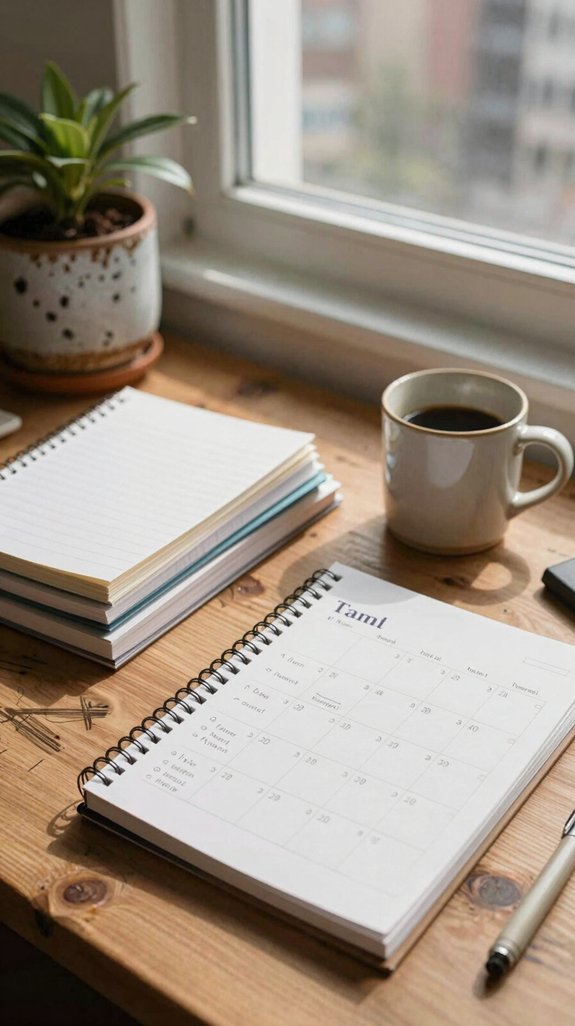
A simple streak grid can show you what your routine really looks like. Mark only days you finished your planned study block, not extra credit time. Add a symbol for planning days so you can see true progress.
If you miss a day, don’t restart with guilt. Use your missed day plan, then return at the next window.
- Track routine v1 in MTWTFSS
- Note why you missed
- Save planning days apart
- Do weekly reflection
- Build routine v2 from data
After two or three weeks, you’ll spot patterns. Then you can shorten goals, move hard tasks, or start small.