
What Year Is It?” Became More Complicated Than It Sounds

- What Year Is It?” Became More Complicated Than It Sounds
- Key Takeaways
- Why “What Year Is It?” Feels Time-Bending
- What “What Year Is It?” Means
- The Modal Jazz Sound Behind the Track
- How Miles Davis Reworked Cool Jazz
- Harmon Mute Sound
- Cool-Era Mid Register
- Why the Harmon Mute Matters
- Miles Davis’s Mid-Register Trumpet Sound
- Harmon Mute Signature
- Mid-Register Preference
- Cool Era Tone
- Kind of Blue and the Break From Bebop
- Cannonball Adderley’s Blues-Heavy Bop
- The 1959–63 Miles Davis Rhythm Section
- The 1963–68 Miles Davis Rhythm Section
- How Modal Jazz Holds Time Still
- Why the Beat Feels Unstable
- Uneven Backbeat Feel
- Syncopation And Drift
- Groove Without Center
- New Orleans Roots Behind the Jazz Language
- How Bebop Made Jazz Time Busier
- Why Miles Davis Kept Reinventing His Sound
- The Studio Tech That Shaped Modern Jazz
- How Modern Jazz Mixes Old and New
- What “What Year Is It?” Teaches Listeners
You hear “What Year Is It?” as a simple tune, but it bends time in sneaky ways. Miles Davis uses a Harmon mute, mid-range trumpet lines, and a modal groove that doesn’t rush. That open sound lets you feel space, color, and swing at once. The beat can shift slightly under you, so the music feels both old and new. Keep going, and you’ll see why this small song packs so much surprise.
Key Takeaways
- “What Year Is It?” sounds simple, but its modal jazz design makes time feel stretched and slippery.
- Miles Davis’s muted trumpet and mid-register phrasing give the track a cool, centered, strangely timeless identity.
- The song’s open harmony, pedal-like steadiness, and sparse chords leave more space for the listener’s ear.
- Jazz groove details like syncopation and micro-timing can subtly wobble the beat and reshape perceived time.
- More broadly, the piece reflects how pop songs can feel like a year without naming one, linking memory, style, and cultural change.
Why “What Year Is It?” Feels Time-Bending

Even though “What Year Is It?” sounds like a simple question, Miles Davis makes time feel slippery. You hear his trumpet in a cool, mid-range voice, and the Harmon mute changes its color. That mix can feel both old and new at once.
In this modal setting, a few chords hold steady, so your listener cognition starts stretching moments. As improvisation perception shifts, you notice the same space opening in new ways. Different bands also change the groove, so the pulse moves under you.
Davis’s styles meet here, and that keeps the music looping in your mind.
What “What Year Is It?” Means

So, what does “What Year Is It?” really mean? You’re really asking how music makes you feel a year without naming it.
In listener timekeeping, you track the moment through sound, not just clocks.
That’s why cultural music cycles matter so much.
Pop styles move fast, so today’s song can hint at an older era.
When melodies get simpler, you may find it harder to guess the year.
Different musical layers change at different speeds, so the answer can blur.
That’s the fun part: you’re learning how sound carries time in surprising ways.
The Modal Jazz Sound Behind the Track
When you hear the track’s modal jazz sound, you’ll notice it feels open and roomy. You’re hearing fewer chords and more space for ideas. That gives the music a calm pulse and lets each note breathe.
With Pedal tone focus, the band can hold one center while solos wander freely. Those sustained harmony settings guide you toward color, not hurry.
Miles Davis helped make this style popular in albums like *Kind of Blue*. John Coltrane showed its force too with long, flowing improvisation.
You can listen and feel how the music invites you in gently.
How Miles Davis Reworked Cool Jazz
You can hear Miles Davis reshape cool jazz by using a Harmon mute. He also stays mostly in the mid register, which makes his trumpet sound calm and clear.
That mix gives his lines a smooth feel that’s still easy to remember.
Harmon Mute Sound
Miles Davis found a new voice with the Harmon mute.
You hear how he used the Harmon mute technique to shape cool era rhythmic.
The mute softened his trumpet and made each note feel focused.
You can hear less brass and more calm control.
Davis also chose notes in a way that fit his cool sound.
He cared about phrasing and register as much as melody.
That choice gave his playing a clear identity.
Even when the harmony shifted or the tempo changed, you still knew it was Miles.
His sound invited you in and made cool jazz feel personal.
Cool-Era Mid Register
Often, Miles Davis stayed right in the middle of the trumpet’s range. You can hear how that choice formed cool jazz’s calm feel.
He didn’t chase the highest or lowest notes. Instead, he used careful trumpet register selection to keep the sound relaxed and clear.
His mid register phrasing worked with rhythmic restraint, so each line felt cool and steady.
The Harmon mute added a soft, bright color that made his voice stand out.
With that blend, you can see how Miles reworked cool jazz. He made it modern, controlled, and easy to recognize.
Why the Harmon Mute Matters
Because of its sound, the Harmon mute became a big part of Miles Davis’s cool-era trumpet voice.
You hear cool muted dynamic when he shapes each note with care.
His register voicing focus helped him pick the mid range for a softer, closer feel.
He didn’t use the mute just for style; he used it to change his timbre on purpose.
That choice helped you hear his sound as personal and calm.
It also shows why the mute matters in cool jazz, not later styles.
- It gives you a clear, linked sound.
- It supports quiet strength.
- It shows careful musical choice.
- It helps you feel included.
- It makes his style easy to recognize.
Miles Davis’s Mid-Register Trumpet Sound
You can hear Miles Davis’s cool-era sound most markedly in the middle of the trumpet range. He often used a Harmon mute, which gave his tone that soft, veiled color.
When you listen closely, you’ll notice how his register choice and mute sound work together.
Harmon Mute Signature
When you hear Miles Davis’s cool style, the Harmon mute is a big part of the sound. You can hear how his Harmon mute technique softens each note and adds mystery. His dynamic control keeps the tone calm and clear. He often shapes phrases in a mid register, so the trumpet feels smooth and centered.
- You hear one sound-world, not two parts.
- The mute changes the color of the note.
- The register choice keeps the line steady.
- Together, they make his style easy to recognize.
- You can listen for this calm voice and feel included.
Mid-Register Preference
In Miles Davis’s cool era, the mid register was a big part of his sound. You hear him stay in that middle range and keep things calm.
That choice gives his lines a smooth shape and helps you feel included in the music. He used harmonic restraint and rhythmic suspension to make each phrase breathe.
He didn’t chase sharp highs or heavy lows. Instead, he let the middle notes carry the message.
This made his trumpet voice feel steady, warm, and clear. You can listen for that focus and hear how it guides the whole mood.
Cool Era Tone
Miles Davis often molded his cool-era sound with a mid-register trumpet voice.
You can hear how his tone stays calm and close.
He often used a Harmon mute, which gave his notes a soft edge.
His register choice wasn’t random.
He centered his playing there on purpose.
That choice formed his instrumental phrasing and his time feel.
When you listen, his sound feels controlled, not flashy.
That can help you feel part of the music’s quiet confidence.
- Mid-register notes build calm
- Harmon mute adds warmth
- Phrasing stays smooth
- Time feel sounds steady
- Cool tone invites you in
Kind of Blue and the Break From Bebop
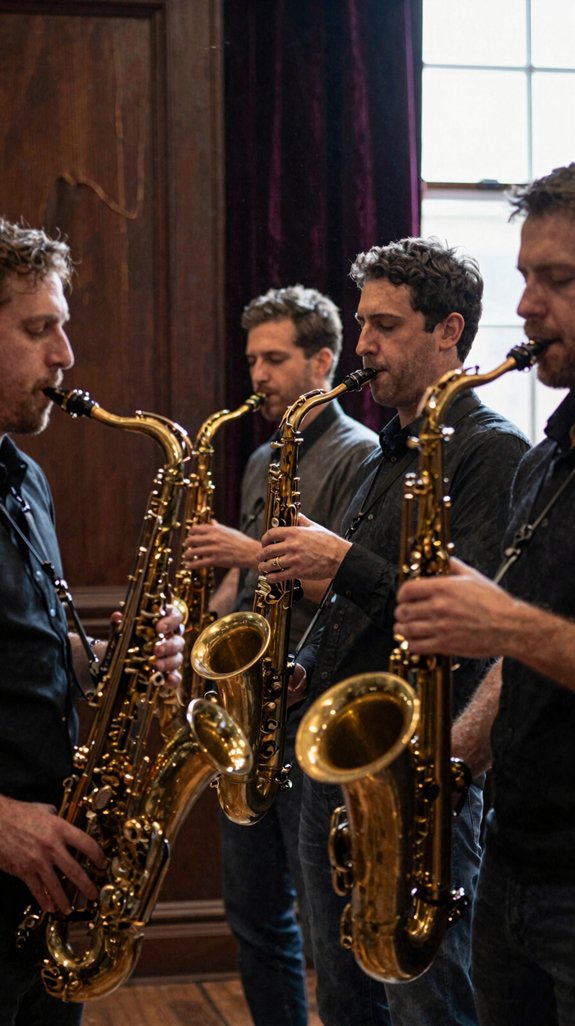
How did jazz change so much in just one album? *Kind of Blue*, recorded in 1958 and released in 1959, marked a huge turn away from bebop. You hear less speed and more space, so you can belong inside the sound.
| Change | Picture |
|---|---|
| Bebop | Busy chord races |
| Miles | Calm, open lines |
| Harmony | A few chords |
| Feel | Quiet confidence |
| Listener | Guided, not rushed |
Its reduced harmony gives you room to breathe and listen. That Alternative meter perception can feel fresh, while rhythmic ambiguity keeps you alert. John Coltrane’s long modal work showed the same path. You’re not chasing notes; you’re sharing ideas.
Cannonball Adderley’s Blues-Heavy Bop
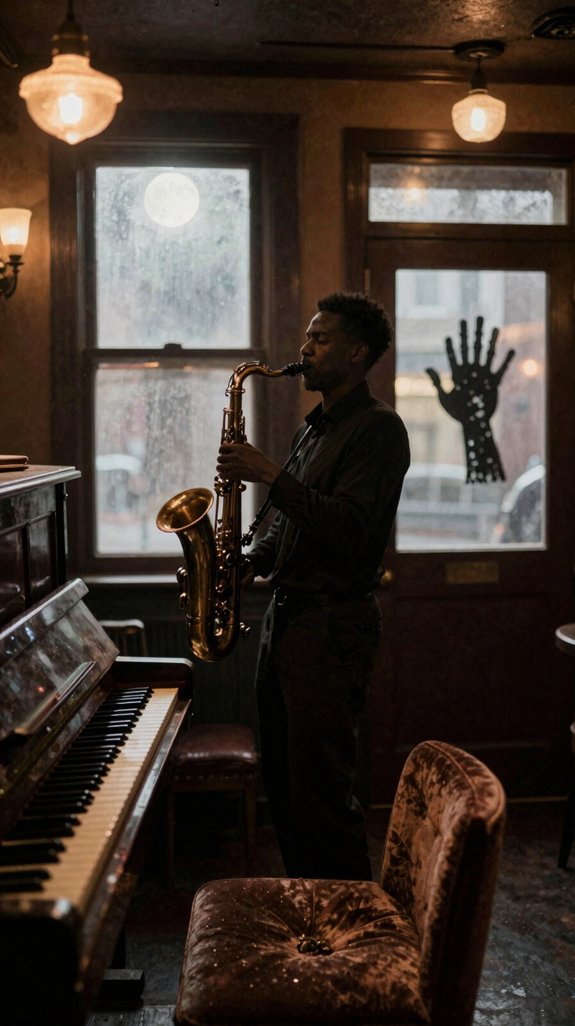
- You can feel swing and church roots together.
- Fast lines still sing like speech.
- Blues feeling keeps the music human.
- Technique never hides emotion.
- You belong in this soundscape too.
The 1959–63 Miles Davis Rhythm Section
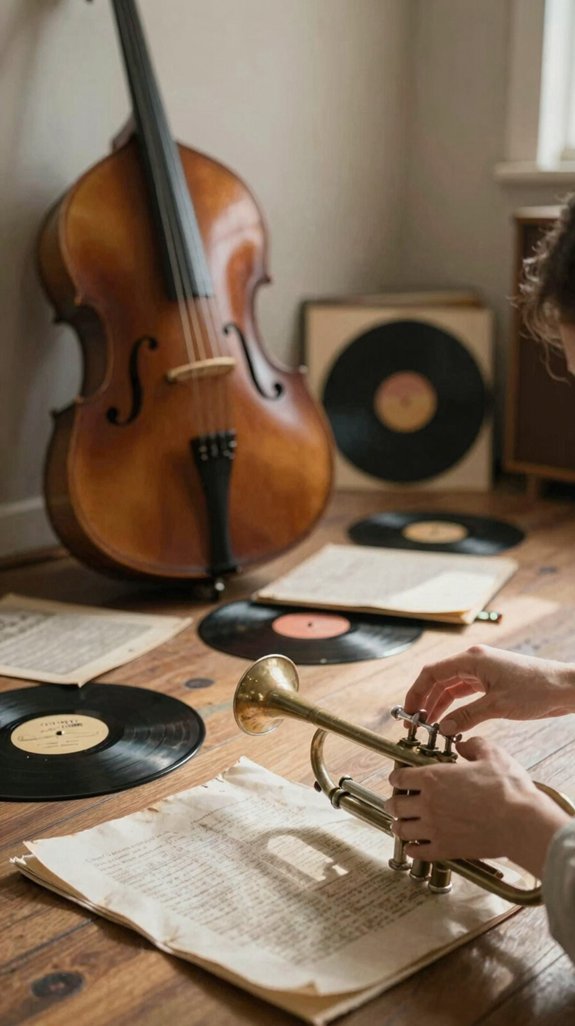
From 1959 to 1963, this rhythm section gave Miles Davis a firm but open path forward.
You hear the 1959–63 Lineup with Wynton Kelly, Paul Chambers, and Jimmy Cobb.
Chambers walks the bass and steadies the groove.
Kelly comps with quick, smart chords that guide you without crowding Miles.
Cobb keeps a crisp beat that holds everything together.
These interaction dynamics let Miles float in his mid-register horn sound and stretch out with ease.
If you listen closely, you can feel how each player leaves space.
That space helps you belong in the music too.
The 1963–68 Miles Davis Rhythm Section
As Miles Davis moved into the mid-1960s, his rhythm section changed in a big way. You’d hear Herbie Hancock on piano, Ron Carter on bass, and Tony Williams on drums. Together, they gave Davis a more modern, responsive sound.
Hancock guided harmony, Carter kept Bassline pulse control, and Williams added sharp timekeeping and Drummer’s ride texture.
- You can feel the trio listen closely.
- They support Davis without crowding him.
- Their groove stays steady and alive.
- You hear space for fresh ideas.
- This group helps you belong inside the music.
How Modal Jazz Holds Time Still
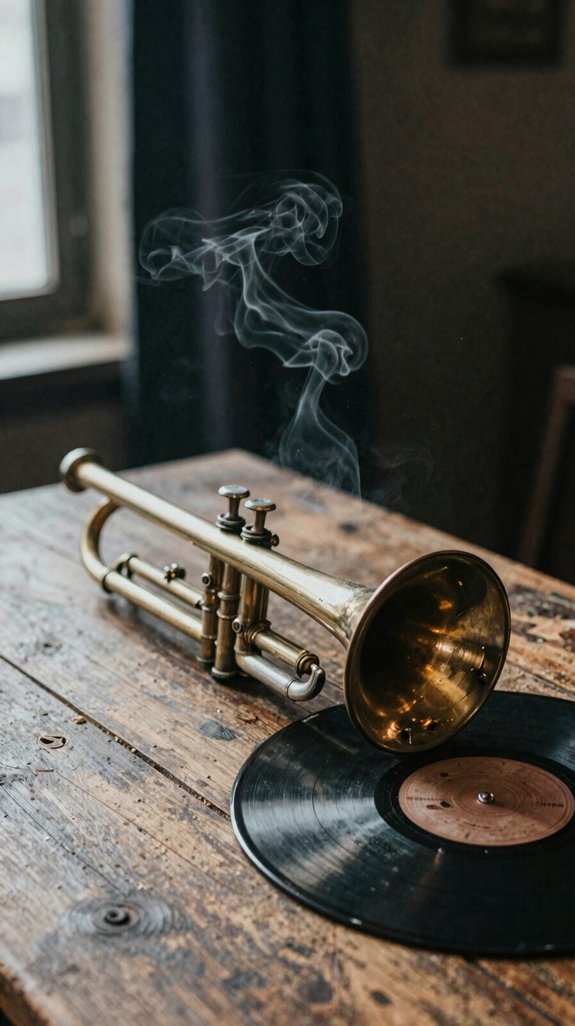
Miles Davis’s band had already learned how to listen closely and leave space. In modal jazz, you feel time stretch because the chords don’t hurry you along. You get a few tones, maybe one pedal point, and then you can breathe.
On *Kind of Blue*, that gentle design lets you hear melody, color, and touch more evidently.
John Coltrane’s long “My Favorite Things” does this too. You stay inside the groove and notice rhythmic sustain and tonal drift.
That gives you room to shape phrases, build ideas, and feel music that seems to hover while it moves.
Why the Beat Feels Unstable

You may feel the beat wobble when the backbeat lands a little unevenly.
Syncopation can pull your ear off center, so the groove seems to drift even when the tempo stays steady.
When parts push against each other, you keep searching for one clear pulse, but it never fully settles.
Uneven Backbeat Feel
Sometimes the beat feels shaky because the snare on 2 and 4 isn’t perfectly even. You might hear rhythmic persuasion in jazz, where the backbeat leans ahead or behind the grid. That can create studio tension, but it also makes the groove breathe.
When you count the beat, listen for tiny pushes and delays among drums, bass, and chords. Those small changes can make the song feel warm and alive.
- Count subdivisions
- Notice steady snare hits
- Hear micro-timing shifts
- Trust your ears
- Feel the shared groove
Syncopation And Drift
Often, jazz feels unstable because the band plays off the obvious beat.
You hear syncopation when notes land on surprising spots, and that can make the groove feel tilted.
Then drift adds tiny pushes and delays that nudge the pulse around.
In Miles Davis groups, that can happen when drums and bass loosen where the beat lands.
His mid-register, muted sound also leaves space that lets the music breathe.
For you, listener time perception shifts, and swing feel subtleties stand out.
The band stays together, yet the beat keeps asking where home really is.
Groove Without Center
That beat can feel slippery even when the pulse stays steady. You hear a rhythmic illusion when accents dodge the clear downbeat.
In Miles Davis, mid-register lines and muted notes pull your listener perception sideways.
In jazz teams like Kelly, Chambers, and Cobb, or Hancock, Carter, and Williams, arrangement changes where “one” lives.
Modal tunes like *Kind of Blue* leave space, so accents carry more weight.
That can change tempo perception without changing speed.
- You feel motion.
- You find clues.
- You trust the band.
- You belong in the groove.
- You hear balance, not chaos.
New Orleans Roots Behind the Jazz Language

How did jazz begin to sound like jazz? You can hear its roots in New Orleans, where African call and response mixed with European harmony.
In Congo Square, people kept drumbeats and dance alive.
That gave the music a strong pulse and a shared voice.
After the Civil War, brass bands grew with extra military instruments, so streets filled with bold sound.
Creole players brought classical skill, and blues musicians brought folk feeling.
Together, they formed jazz’s early language.
Parades, funeral parade rhythms, dance halls, field hollers, and work songs all helped you feel the beat and belong.
How Bebop Made Jazz Time Busier
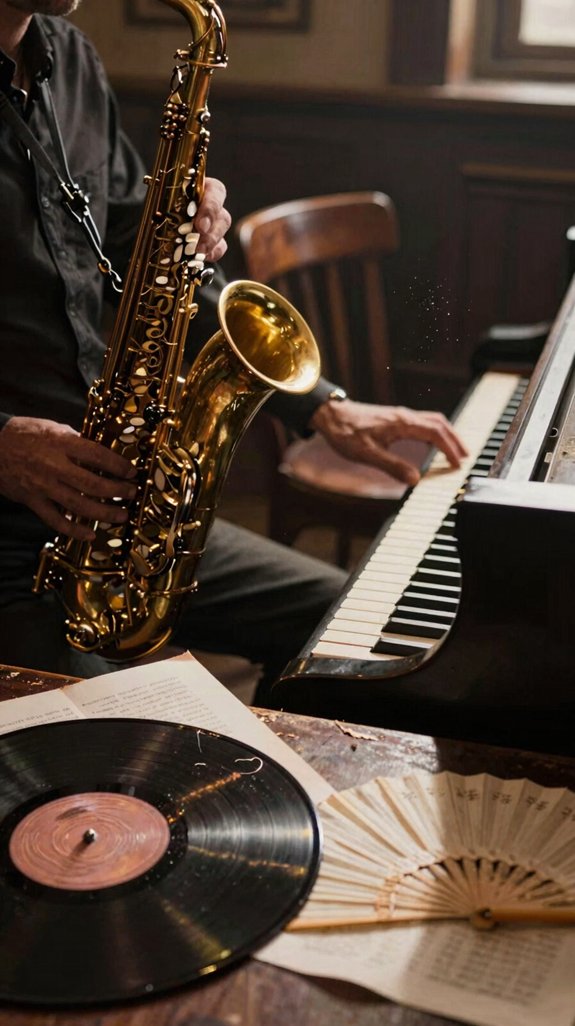
When bebop arrived in the early 1940s, jazz time got much busier. You hear faster tempos, tighter beats, and more swing tension.
- Your foot tracks quick pulse changes.
- Rhythmic phrasing bends the beat without losing it.
- Harmonic substitution adds surprise at every turn.
- Small combos make you feel each player’s job.
- Improvisation strategies must adjust fast or fall behind.
You’re not just listening for the tune. You’re following quick chord changes and sharp lines. That makes the music feel like a shared challenge. It’s harder to predict, and that’s part of the thrill.
Why Miles Davis Kept Reinventing His Sound
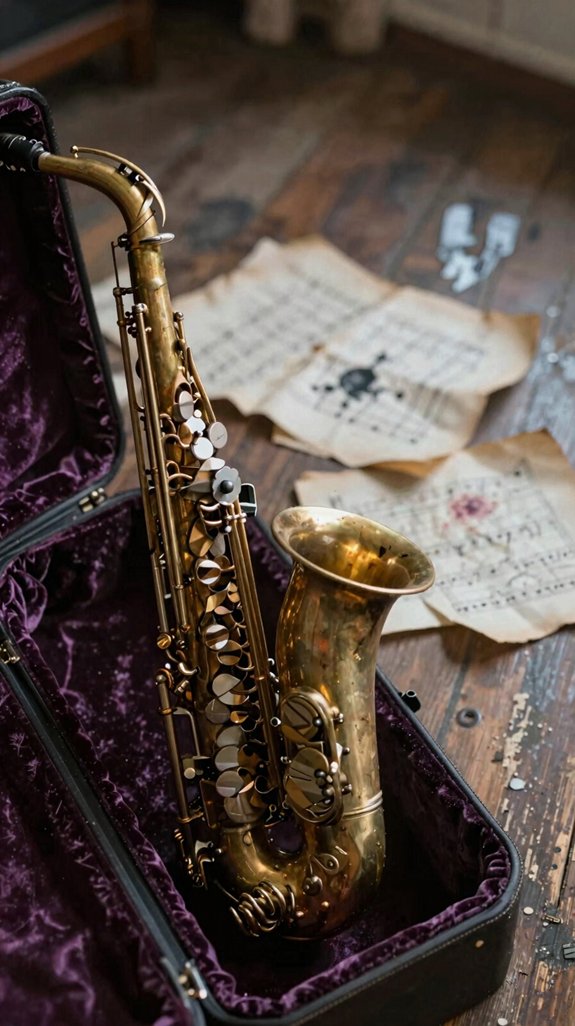
Bebop showed how jazz could keep changing its rules, and Miles Davis did the same with his sound.
You can hear reinvention as strategy in every era he touched.
He started with a cool style, using mid-register notes and a Harmon mute for a soft glow.
Then he helped shape hard bop with Horace Silver and Kenny Clarke.
Later, he turned to modal jazz, using fewer chords and more open space.
Kind of Blue showed that jazz form experimentation could feel fresh and calm.
In his second quintet, he kept reshaping the group’s voice too.
The Studio Tech That Shaped Modern Jazz
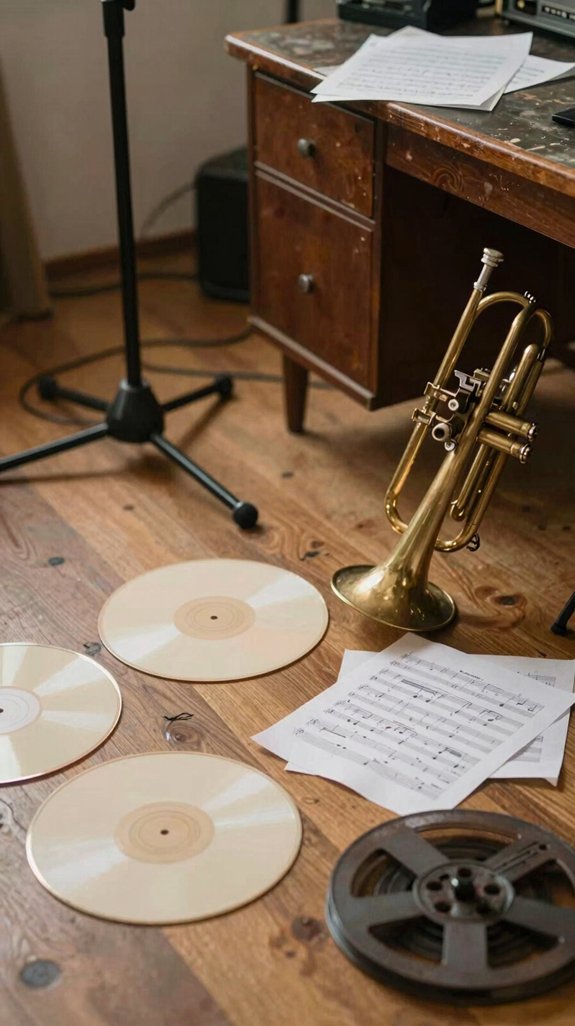
Even though jazz sounds alive in the moment, studio tech helped shape its modern voice.
You hear it in studios that act like extra instruments.
They balance bands, shape texture, and keep details clear.
Home recording and DAWs let you build songs at home with pro sound.
Digital mixing makes your ideas easier to test and change.
Radio and old recordings helped jazz travel far.
Today, streaming influence and mastering choices also guide what listeners hear.
- You can join a global jazz family.
- Your sound can grow with each try.
- Tools help your ideas reach others.
- Careful editing protects your voice.
- Small choices can change big feelings.
How Modern Jazz Mixes Old and New
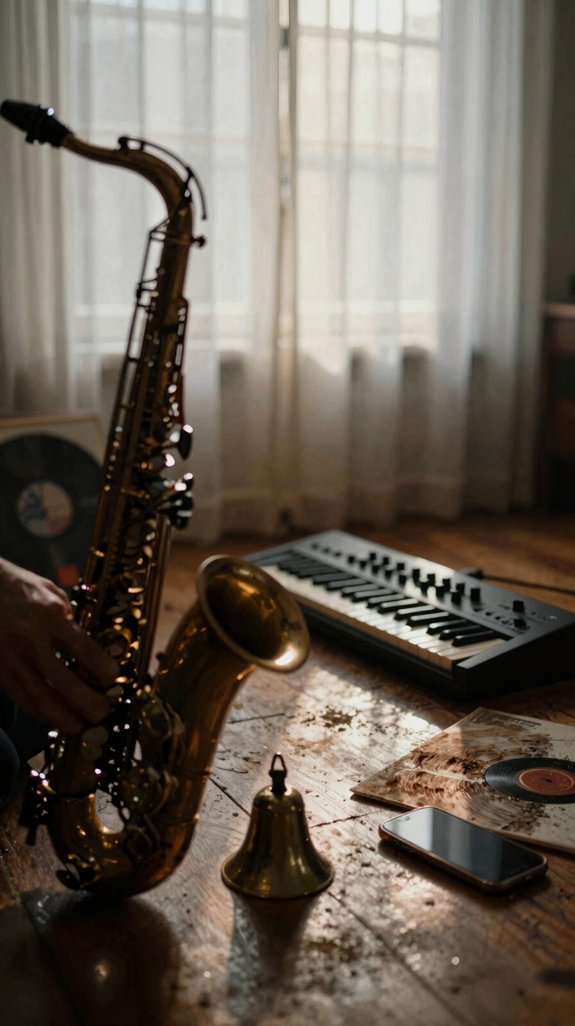
Modern jazz mixes old and new in exciting ways. You can hear hip-hop beats, electronic sounds, Afrobeat, and Caribbean rhythms inside it.
With Streaming era discovery, you can play Louis Armstrong and today’s artists in one afternoon. That helps you hear the family tree of jazz.
Genre blending playlists also show how styles meet and grow together.
Robert Glasper turns jazz toward hip-hop. Nubya Garcia adds Afrobeat color to London jazz. Yussef Dayes pushes drums into fresh places.
Even now, players still improvise together, so the heart of jazz stays alive while it changes.
What “What Year Is It?” Teaches Listeners
Turn a few listening ears toward “What Year Is It?”, and you’ll hear a big idea hiding inside pop music. You learn that hit songs often grow simpler, not duller.
Researchers track pitch and rhythm in 366 songs and find about a 30% drop since 1950. That brings a clear Memory complexity tradeoff. Your Listener experience change can feel smoother and warmer.
You notice melodies that are easier to sing.
You see complexity shift into other sounds.
You spot big changes around 1975, 1996, and 2000.
You hear how memory helps music spread.