Different Ways of Learning Change How Information Stays in Memory

- Different Ways of Learning Change How Information Stays in Memory
- Key Takeaways
- What Changes Memory Retention?
- Why Active Recall Sticks Better
- How To Practice Active Recall
- How Spaced Repetition Improves Memory Retention
- Why Cramming Hurts Memory
- Teach It To Remember It Better
- Use Practice Tests To Lock It In
- Why Handwriting Improves Learning
- Slower Note-Taking
- Better Memory Encoding
- Active Processing Boost
- Turn Your Notes Into Concept Maps
- Link New Ideas To What You Know
- Connect To Prior Knowledge
- Use Personal Examples
- Build Concept Maps
- Study One Topic At A Time
- Cut Distractions Before You Start
- Sleep To Support Memory Consolidation
- Use Exercise To Support Recall
- Eat Well, Drink Water, And Manage Stress
- Make Learning Personally Relevant
- Combine A Few Learning Methods
- Build A Weekly Memory Routine
- Weekly Recall Cycles
- Spaced Practice Blocks
- Sleep And Reset
You remember more when you learn in ways that make your brain work harder. Active recall, like flashcards or blank-page practice, helps you pull facts from memory. Spaced review, sleep, and calm study time help those facts stay longer. Handwriting, concept maps, and personal examples also make ideas stick. Cramming fades fast. When you mix smart methods, your memory gets stronger, and there’s even more to uncover below.
Key Takeaways
- Active recall and self-testing strengthen memory more than rereading because they require pulling information out of memory.
- Spaced repetition keeps information longer by reviewing it before forgetting, with checks around 24 hours, day 4, day 11, and day 25.
- Concept maps, personal examples, and meaningful connections improve encoding by linking new ideas to existing knowledge.
- Handwriting, monotasking, and fewer distractions help learning by slowing processing and reducing attention splitting.
- Sleep, exercise breaks, and calm study conditions support memory consolidation and make later recall easier.
What Changes Memory Retention?
Memory sticks better when you give your brain a real plan. You remember more when you understand ideas and organize them first.
That helps them connect and feel like they belong. Learning motivation grows when you study with purpose, not just repeat words.
A calm practice environment also helps because stress buffering lets your mind settle.
Sleep matters too, so 7 to 9 hours can lock in learning.
Review again after a day, then a few days later.
Good feedback timing and spaced practice help you keep more, longer.
Why Active Recall Sticks Better
Often, active recall helps you remember because you have to pull the idea out yourself.
That mental effort makes the memory stronger, like a path you walk again with friends.
Retrieval timing matters too.
If you wait a few hours or a day, you meet the forgetting curve at the right moment.
Then memory cues help you find the answer again.
In studies, testing held about 80% after a week, while rereading kept about 34%.
That’s why flashcards and self-quizzes stick.
Practice tests can also calm you because you feel ready together.
How To Practice Active Recall
To practice active recall, start by testing yourself instead of rereading your notes. Use flashcards, blank-page writing, or quick self-quizzes to pull answers from memory first.
If you study words, switch between meaning and word until you can say both. Apps like Anki or Quizlet can help you build study habit consistency and keep you on track.
Frequent practice tests can also lower worry because the format feels familiar.
A study group or short explanation to a friend can deepen your retrieval practice benefits.
You’re not studying alone; you’re building skills with every try.
How Spaced Repetition Improves Memory Retention
When you space out your studying, your brain gets chances to strengthen what you learned. | Review | When to do it |
| — | — |
|---|---|
| First look | Within 24 hours |
| Next checks | Day 4, then Day 11 |
| Later review | Day 25 |
This active recall timing helps you beat the forgetting curve. You’re not cramming; you’re re-teaching your mind just as ideas start to fade. That’s why learning from mistakes matters. Tools like Anki can guide your concept map structure and schedule. Rest also helps memory consolidation sleep. Keep testing yourself a few hours later, then a day later, until recall feels easy.
Why Cramming Hurts Memory
Cramming may feel helpful in the moment, but it works against long-term memory. You may think it’s a smart Exam day strategy, yet it often hides study procrastination.
When you rush, you split your attention and create mental overload. That makes it hard for your brain to store facts deeply.
Spaced practice helps you remember much more because it fights the forgetting curve.
Cramming also steals sleep, and sleep helps memories settle in.
Teach It To Remember It Better

Teach it, and your memory starts working harder for you.
When you expect to explain an idea, you must pull it from memory and sort it out. That active recall helps it stick.
Try a study group, the rubber duck method, or record your explanation.
Writing it out and using concept mapping can also help you see the big picture.
As you speak, gaps show up fast, so you know what needs work.
Build this into your memory routines right after learning, then come back later and teach it again.
That spaced practice can help you belong in the class.
Use Practice Tests To Lock It In

Want to make facts stick for longer? Try practice tests. When you pull answers from memory, you train your brain to hold them better.
One study found test practice kept about 80% after a week. Rereading kept only 34%.
Don’t quiz yourself right away. Wait a few hours or a day so recall feels harder.
Then use spaced repetition on Day 2, Day 4, Day 11, and Day 25.
Make low-stakes quizzes with flashcards or blank pages.
Mix topics with interleaving practice.
Do error analysis too.
Keep testing until you hit 100%.
Why Handwriting Improves Learning

When you write notes by hand, you slow down and choose the most important ideas.
That extra effort helps your brain turn words into your own thoughts, which sticks better in memory.
You also use more thinking strength while writing, so handwritten notes can give you a stronger path back later.
Slower Note-Taking
Usually, handwriting helps you learn better because it slows you down just enough to think. You make mindset shifts, choose key ideas, and keep note clarity strong. That helps with learning goals and error correction when you review. Your brain works harder, and that feels good because you’re truly taking part.
- You feel more focused.
- You join the lesson, not just copy it.
- You spot mistakes sooner.
- You build trust in your own notes.
- You feel ready to learn with your group.
Later, typing them can give you one more chance to check and remember.
Better Memory Encoding
Why does handwriting help ideas stick better? When you write by hand, you slow down and choose what matters. That helps you build meaningful connections instead of copying every word.
Your brain must shrink ideas into short phrases, so it works harder and encodes them more deeply. Brain scans show handwriting uses thinking, language, and working memory areas more than typing.
Handwritten flashcards and practice problems add retrieval cues and error correction because you generate answers yourself. That also helps clear up memory misconceptions.
Try handwriting first, then type notes later for extra review and reinforcement.
Active Processing Boost
Handwriting often helps you learn better because it slows you down just enough to think. You choose ideas, not just copy them. That active processing boosts memory and gives your brain real practice.
It supports attention control, metacognitive monitoring, and error correction as you write. Handwriting also wakes up thinking and language areas more than typing.
- You feel more focused.
- You notice what matters.
- You remember with your group.
- You build confidence fast.
- You care more when notes feel yours.
Try short summaries, sketches, and handwritten flashcards. Then type them later for another review. That small routine can make learning stick better.
Turn Your Notes Into Concept Maps
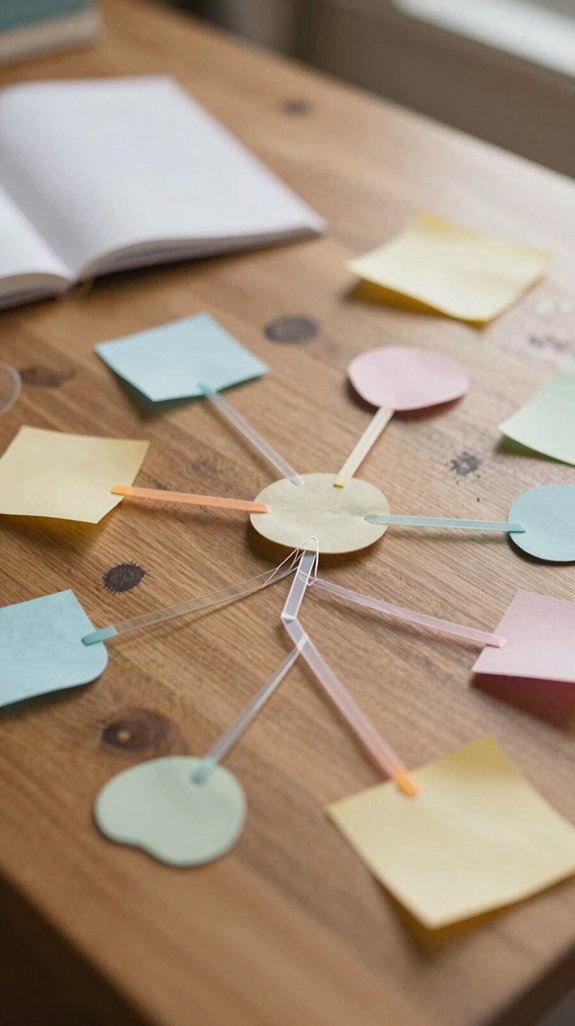
When you turn your notes into a concept map, you can see ideas more distinctly. Put the main topic in the center and branch out related ideas with lines.
This makes memory cues easy to spot and builds retrieval pathways your brain can follow later.
Use short labels, not full sentences, so each node stays clear and testable.
Color code categories like processes, definitions, and examples.
The colors help your mind group similar ideas.
Keep updating the map as you learn.
Add new links instead of rewriting.
Soon, your notes will feel organized, connected, and ready for recall.
Link New Ideas To What You Know

You can link new ideas to things you already know, and that helps memory stick.
Try using your own examples or old lessons to make a strong connection.
You can also build simple concept maps to show how ideas fit together.
Connect To Prior Knowledge
To learn something new, tie it to what you already know. That’s how you build strong memory paths. Your brain loves retroactive mapping and schema building. When a new idea fits an old one, recall gets easier later. If nothing matches, make a crazy connection so your brain can grab it. Try compare-and-contrast thinking to spot links and differences. Ask, “What does this remind me of?” and “How does this connect to last week?” Use concept maps to group ideas. You’ll feel ready, included, and smart.
- safe
- seen
- connected
- stronger
- hopeful
Use Personal Examples
Personal examples can turn a new idea into something your brain can hold onto. When you tie new facts to your own life, you give them a memory peg.
You can connect a hard idea to a real life scenario, like a choice you made or a mistake you learned from. That creates emotional tagging, which helps the idea stick.
If a link feels weak, make a crazy connection that makes you laugh or think. Ask yourself, “How does this connect to what I learned last week?” Then compare it with your own experience.
Build Concept Maps
Concept maps can help those personal examples grow into a bigger web of meaning.
Put the topic in the center, then branch out ideas with lines.
This relational learning boosts memory retrieval because each link gives you another path back.
Use comparison framing by asking, “How does this remind me of?”
Add shapes and colors as visual mnemonics so your brain groups ideas.
Cover parts and explain them aloud to test your map.
- You feel included when ideas connect.
- You see patterns.
- You remember more.
- You build study motivation.
- You grow confident together.
Study One Topic At A Time

Often, the best way to learn is to stick with one topic at a time. You build stronger learning focus and better task switching prevention when you stay on one subject.
Try monotasking for 25 to 50 minutes. Keep your mind on one problem type or idea. Don’t hop between tabs or apps. That kind of switching causes attention splitting and more mistakes. It also makes memories harder to find later.
When you finish one topic, your brain can store it more distinctly. If you change subjects, make it a real break between topics.
Cut Distractions Before You Start

Before you start studying, cut out anything that might pull your mind away.
Build a phone free routine and keep your ambient learning environment calm.
Turn off alerts and close extra tabs. That helps your brain stay with one idea, not jump around.
Use a study session checklist to note distraction limits before you begin.
Then work in focused blocks of 25 to 50 minutes, with short breaks after.
If you must switch subjects, do it once and on purpose.
You’re not alone here; steady focus helps your learning crew grow stronger together.
- Calm focus feels safe.
- Clean desks build confidence.
- Quiet screens lower stress.
- One task feels doable.
- Your progress starts to shine.
Sleep To Support Memory Consolidation

Sleep is like your brain’s nighttime helper. When you get 7–9 hours, it locks in new learning and makes it easier to find later. | Habit | What it does | Why it helps |
| — | — | — |
|---|---|---|
| Review before bed | Rechecks facts | Boosts storage |
| Sleep well | Saves memories | Improves recall |
| Skip all-nighters | Stops overload | Protects learning |
| Study across days | Spreads practice | Strengthens memory |
You’ll do better with a calm night before exams. Stress and recall can clash when sleep is short. Hydration impacts memory too, so drink water during the day. You belong in the group that learns smarter, not harder, by resting.
Use Exercise To Support Recall
Move your body a little, and your brain can stay sharper while you study. Exercise helps you remember because it enables Memory formation stages and eases Why forgetting happens.
Take a movement break every 15 to 30 minutes. Stand, stretch, or do jumping jacks. These quick bursts wake you up without making you tired.
- You feel ready again
- Your mind stays on track
- Recall feels less scary
- You fit in with your study crew
- You can keep going longer
Chewing gum or crunchy snacks can also boost focus. If sitting is hard, move more. You’re not alone.
Eat Well, Drink Water, And Manage Stress
With good food, enough water, and calm nerves, your brain can do its best work.
When you eat balanced meals, you give your mind fuel for attention and memory.
Sip water often too, because mild dehydration can blur focus.
In your learning environments, use distraction reduction so you can notice details and remember them.
Keep study scheduling simple with short blocks and breaks.
Consistent routines help your brain feel safe and ready.
Manage stress with deep breaths, movement, or quiet moments.
Sleep 7–9 hours, and don’t cram all night.
That’s how you stay sharp and keep learning strong.
Make Learning Personally Relevant
When new ideas connect to your own life, they stick much better. You remember more when lessons feel useful to you. Try real world examples from your day. Use them to build emotional anchors that help memory last.
- Picture solving a problem with friends.
- Feel proud when you use a skill.
- Notice fear in a safety lesson.
- Smile at a funny story link.
- Stay curious about a challenge you care about.
If a fact feels far away, make a crazy connection. Then sleep 7 to 9 hours so your brain can lock it in.
Combine A Few Learning Methods
Making learning personal helps, but combining a few methods can make it stick even more. Try retrieval practice after concept mapping or comparison contrast notes. Ask yourself elaboration prompts that explain the links.
| Method | Why it helps |
|---|---|
| Flashcards | Quick self-quizzes keep memories fresh |
| Handwriting | Slow writing helps your brain choose better |
| Mnemonics | Strange images make facts easier to grab |
Then review again after a day, then later. That spaced pattern shakes loose forgetting. Work in short monotasking blocks so you stay with your group of ideas. You’ll feel more confident, because each method supports the others.
Build A Weekly Memory Routine

You can build a weekly memory routine by reviewing on Day 1, then again after 24 hours.
After that, space your recall practice across the week with flashcards or short questions so your memory keeps getting stronger.
Don’t forget sleep, because 7 to 9 hours helps your brain store what you learned.
Weekly Recall Cycles
Each week, your memory works best when you give it a rhythm.
Try a mindset shift: memory myths fade when you use goal setting and a calm learning environment.
Start with a low-stakes quiz to find gaps.
Then review within 24 hours, and check again on Day 4, Day 11, and Day 25.
Use active recall with flashcards or blank-page quizzes.
Testing helps you remember far more than rereading.
Don’t cram; sleep helps memories settle.
Adjust each cycle by retesting missed items and saving easy ones for later.
- You’re not alone.
- Small wins feel influential.
- Mistakes help you grow.
- Your effort matters.
- You can belong here.
Spaced Practice Blocks
When you spread out your study time, your memory gets stronger little by little.
You can build a weekly routine that feels doable and friendly.
Learn on Day 1, then review after 24 hours on Day 2.
Come back on Day 4, Day 11, and Day 25.
That first review matters most, because forgetting starts fast.
Don’t quiz yourself right away.
Wait a few hours or a day so retrieval feels harder.
That retrieval difficulty helps you remember.
Aim for three or four reviews over weeks.
Tools like Anki can guide session timing and cut last-minute panic.
Sleep And Reset
After you study, sleep can help lock the new memory in place.
Build your week with 7 to 9 hours of sleep after learning.
Review once within 24 hours, then again on Day 4, Day 11, and Day 25.
This beats the forgetting curve and helps you feel ready with your crew.
Skip all-nighters because they block memory building.
The night before a test, do a light reset with practice testing and error analysis.
Aim for three perfect self-tests in a row.
- Calm
- Proud
- Safe
- Ready
- Connected