How Young Children Develop Number Sense
- How Young Children Develop Number Sense
- Key Takeaways
- What Is Number Sense?
- Why Number Sense Matters Before Kindergarten
- The Science Behind Early Math Learning
- How Children Learn Quantity and Comparison
- The Role of Patterns in Mathematical Thinking
- Common Math Misconceptions in Preschool
- Supporting Math Learning at Home
- Building Confidence Through Play
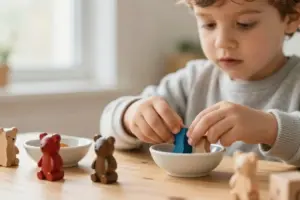
You build number sense when you play with amounts, notice patterns, and compare groups. You might see which plate has more crackers or match toys into equal sets. You learn small amounts quickly through subitizing, without counting each item. Counting becomes stronger when number words match real objects. You also figure out that five is one more than four. Games with blocks, containers, and ten-frames make these ideas exciting. Keep exploring, and you’ll uncover math connections.
Key Takeaways
- Young children develop number sense by noticing quantities, comparing which groups have more or less, and matching equal sets.
- Subitizing helps children recognize small amounts instantly, building understanding before they can reliably count.
- Counting becomes meaningful when children connect number words to actual objects and understand the final count represents the total.
- Playful experiences, such as sharing snacks, filling containers, and sorting toys, strengthen part-whole and “one more” relationships.
- Patterns, ten-frames, and adult questions help children predict changes in groups and correct misconceptions about number and quantity.
What Is Number Sense?
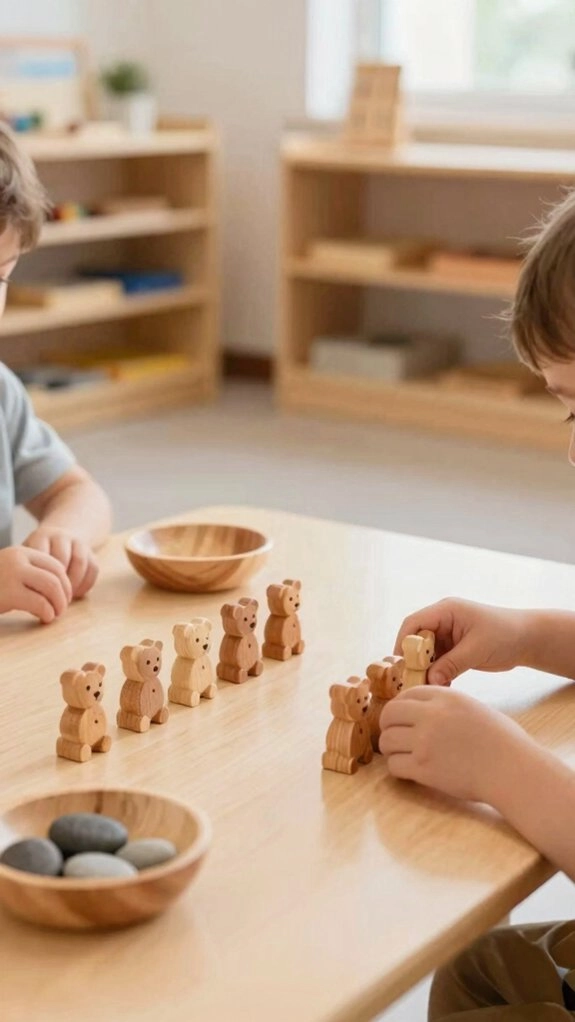
Number sense is your growing intuition about numbers and how they work together. You use it when you notice that one group has more than another. You also see small amounts quickly without counting. These subitizing skills help numbers feel real.
Counting development grows as you connect each number word to an amount. You learn number relationships when you see that four is one more than three or that five can split into two and three.
Comparing quantities helps you describe what you see. Every time you investigate numbers, you join a community of curious math thinkers who enjoy learning beside you.
Why Number Sense Matters Before Kindergarten
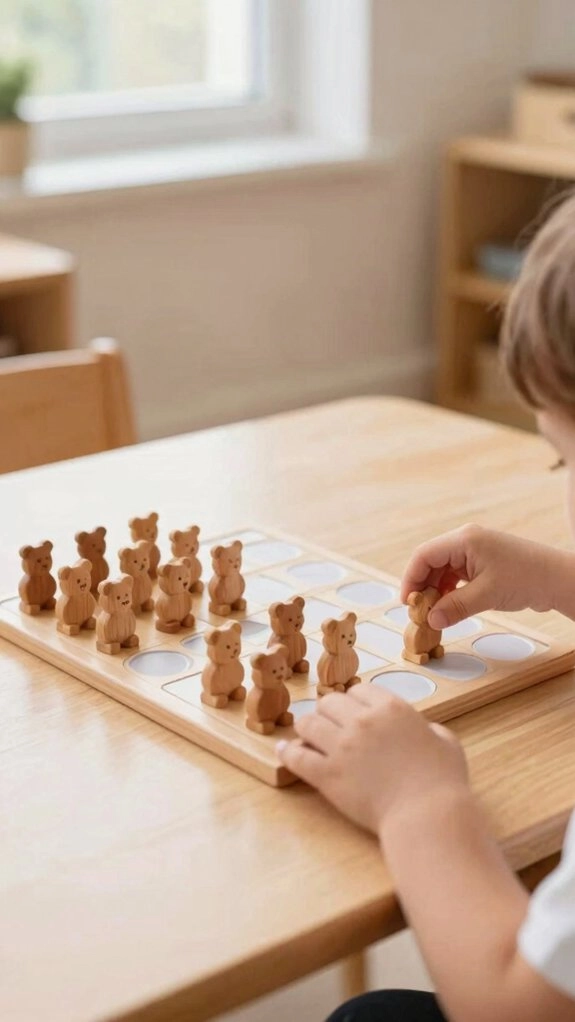
Before kindergarten, your growing feel for amounts helps math make sense. You use it when you notice which group has more, share snacks fairly, or guess how many blocks fit in a box.
These number comparisons and Estimating strategies build confidence for the ideas your class will examine together.
Knowing that five is one more than four, or that ten can split into six and four, gives you helpful number relationships.
Later, counting, adding, and place value won’t feel like random rules.
Every child can grow this skill. Different experiences create differences, not limits on what you can learn.
The Science Behind Early Math Learning
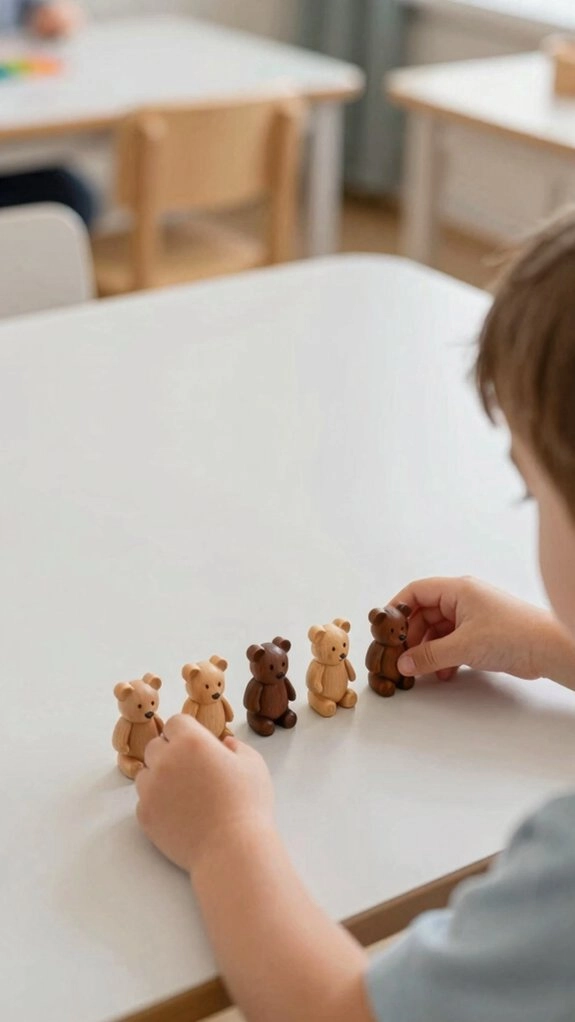
Long before you learn to count, your brain notices changes in amounts. Scientists call this early ability number sense.
In Infant quantity studies, babies watched dot pictures with new amounts longer, showing their brains detected change.
Klein and Starkey’s 1988 research suggests this ability appears at birth.
You also build ideas about what happens when small groups change.
Your brain connects these ideas with patterns and space, even when objects disappear.
Decarli and colleagues found that number sense at 12 months can foresee math skills at age four.
These foreseeing learning milestones show you’re part of a learning community.
How Children Learn Quantity and Comparison
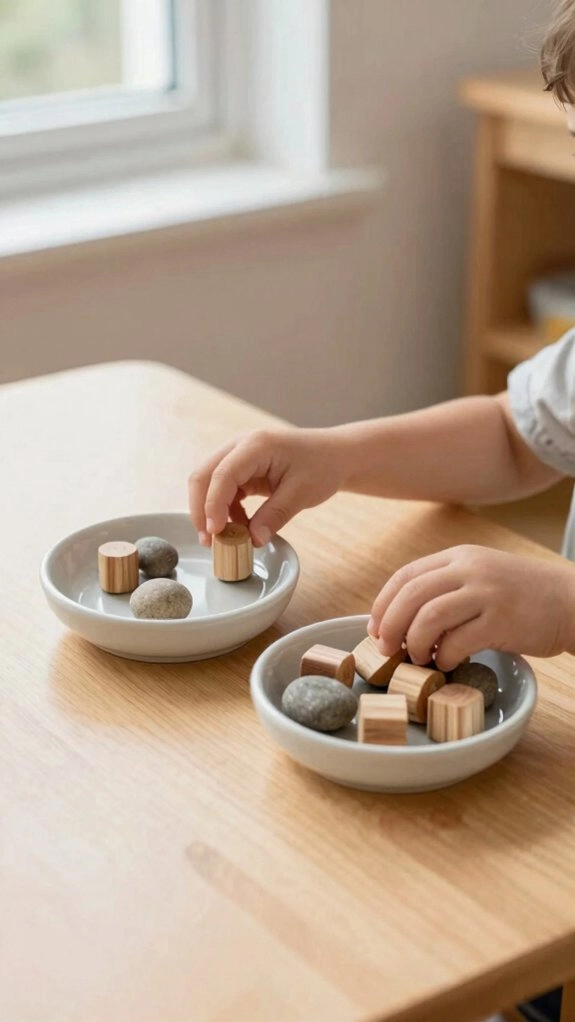
As you grow, early quantity awareness becomes a clearer idea of more and less. Even as a baby, you notice when a group changes.
You may look longer when there are more objects, or expect a different amount.
These early skills can support later math learning.
In preschool, you often see small groups quickly without counting. This is called Subitizing comparisons.
When you fill and empty containers or sort objects, you compare groups.
Set matching helps you see whether groups are equal.
You’ll then use number words as labels for how many things you share with friends and community.
The Role of Patterns in Mathematical Thinking
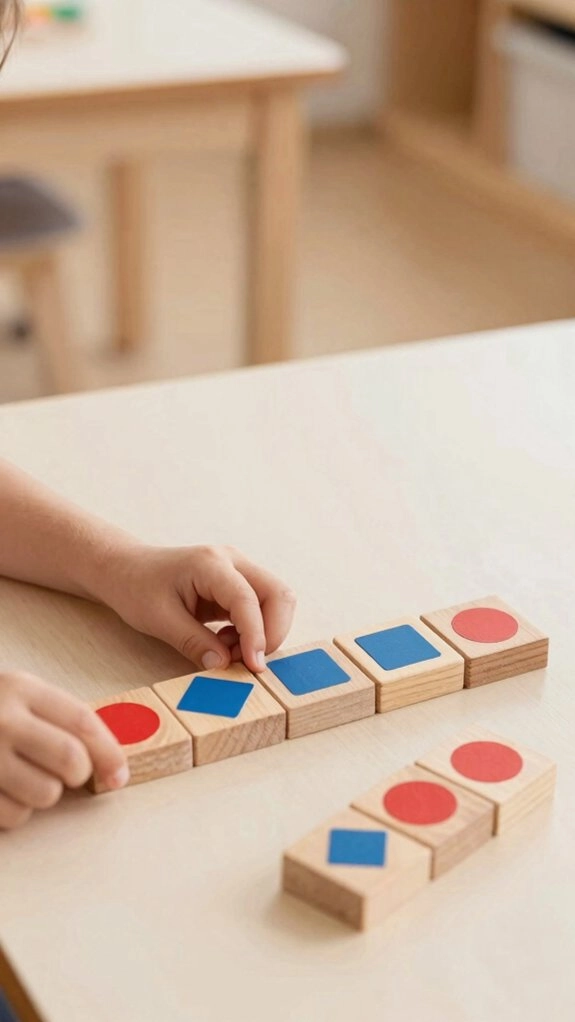
Patterns help you notice order and make smart guesses about what comes next. You belong in this kind of thinking: everyone can spot a rhythm. Even babies notice when dot groups change or routines repeat. During Early pattern play, you might arrange red, blue, red, blue blocks and predict blue.
| You notice | You predict |
|---|---|
| 3, 4, 5 | 6 |
| one more | next step |
Consistent sequence games help you see relationships. Ten-frames show how quantities grow in steady steps. You can predict one more or one less before formal counting feels easy. These findings build your number sense together each day.
Common Math Misconceptions in Preschool
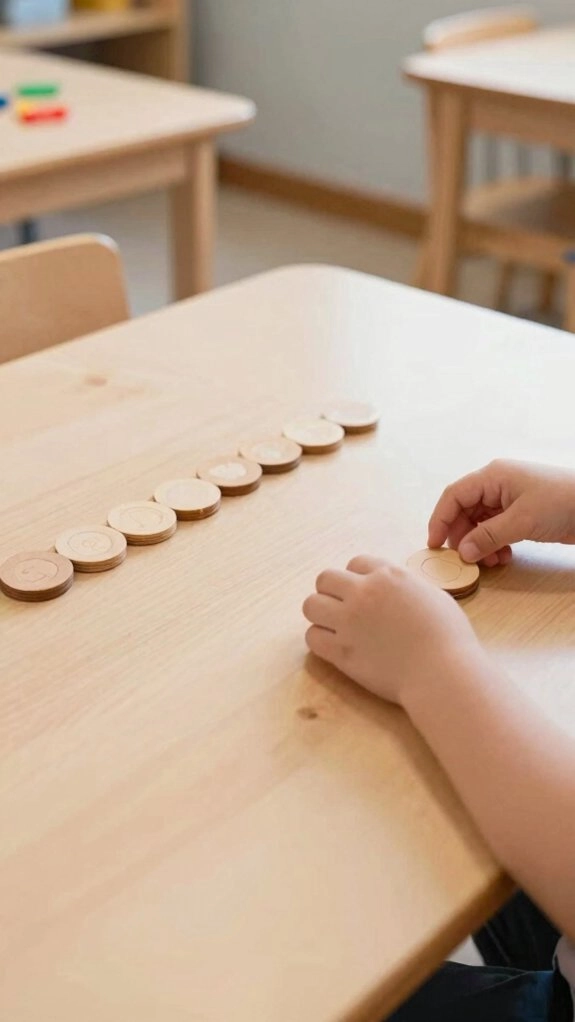
It’s normal to have mixed-up ideas about numbers while you’re learning. You belong with many young mathematicians who are figuring things out.
- You might think a bigger numeral always means more, but layouts can trick your eyes.
- Subitizing errors happen when you count every object instead of quickly seeing one, two, or three.
- You might memorize number words but miss one more, five, or part-whole links.
- Cardinality misconceptions can make you think location or counting path changes the total. The last number tells how many.
Numbers also show scores, dates, and prices. You’re building flexible ideas step by step.
Supporting Math Learning at Home
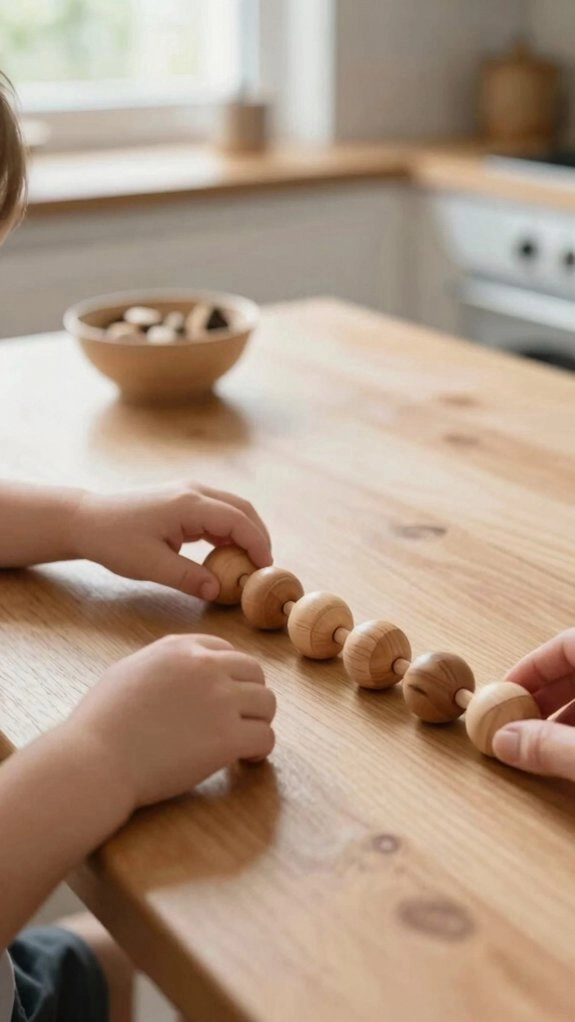
Home offers many easy chances to turn mixed-up number ideas into stronger ones.
You can use daily counting routines with snacks, steps, or toys. Touch each item once, then ask, “How many?” This helps number words match real amounts.
Try Number word games with dot cards or dice. Let your child spot one, two, or three without counting.
Compare containers: Which has more, less, or the same?
Use a ten-frame to ask what happens when one joins or leaves. You’re building a family habit of noticing numbers everywhere.
Board paths and estimate jars add quick reasoning your child can use.
Building Confidence Through Play
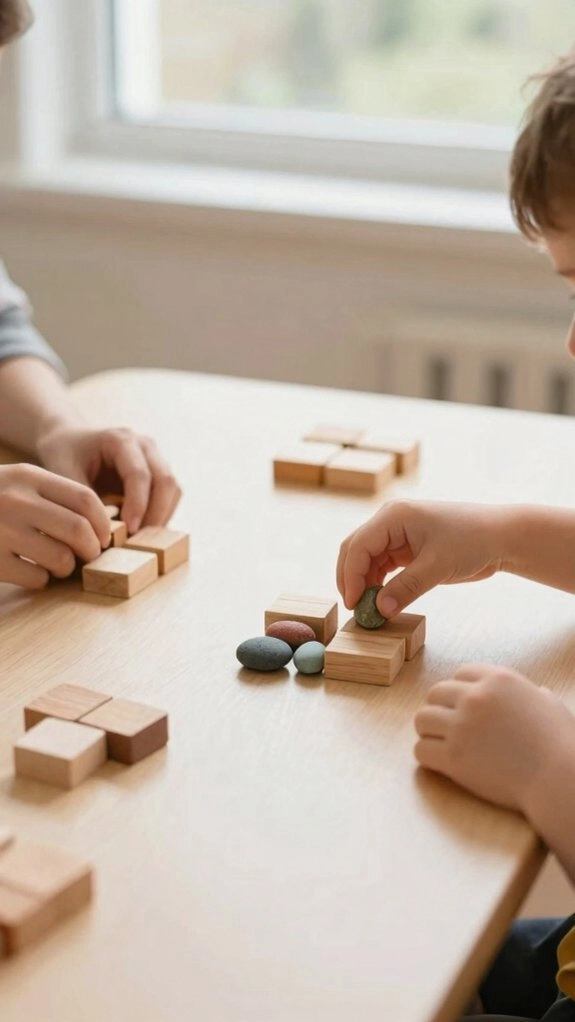
Play gives children a safe, exciting way to understand what numbers mean. You can join their findings and show that everyone belongs in math. Try these moments:
- Use Sensory sorting to group buttons, shells, or blocks by size.
- Practice playful measuring by filling cups with sand or water.
- Flash dot cards or roll dice, then notice amounts quickly.
- Build ten-frames and ask, “What changed when you added one?”
Ask curious questions, not “What’s the answer?” Your encouragement helps children compare more and less, see five and ten, and try again confidently.
Each game makes numbers familiar, friendly, and possible.