How Fine Motor Skills Develop in the Growing Brain
- How Fine Motor Skills Develop in the Growing Brain
- Key Takeaways
- Why the Brain Controls Every Small Movement
- Brain Development During the Preschool Years
- How Neural Pathways Become Stronger Through Practice
- The Connection Between Movement and Learning
- Why Repetition Improves Motor Skills
- How Sensory Experiences Support Brain Development
- Sleep, Nutrition, and Healthy Brain Growth
- What Current Research Tells Us About Early Motor Development
- How Parents Can Support Healthy Brain Development Every Day
Your growing brain builds fine motor skills each time you use your hands. The premotor cortex plans movements while the motor cortex guides your fingers and wrists. Practice strengthens brain pathways, so drawing, stacking, buttoning, and cutting become smoother. Sensory feedback helps you adjust your grip and force. Sleep, healthy food, and daily play support this growth. As you probe these skills, you’ll uncover how movement also boosts learning, focus, and confidence over time daily.
Key Takeaways
- Fine motor skills develop as motor and premotor brain areas plan and control precise finger, hand, and wrist movements.
- The prefrontal cortex helps children focus, remember movement steps, and pause or adjust actions when needed.
- Repeated practice, such as drawing, stacking, buttoning, and cutting, strengthens neural pathways and makes movements smoother.
- Sensory feedback from touch, vision, and body position helps children refine grip, force, timing, and hand-eye coordination.
- Sleep, nutrition, and supportive everyday routines help the brain consolidate practice and build confidence with challenging hand tasks.
Why the Brain Controls Every Small Movement
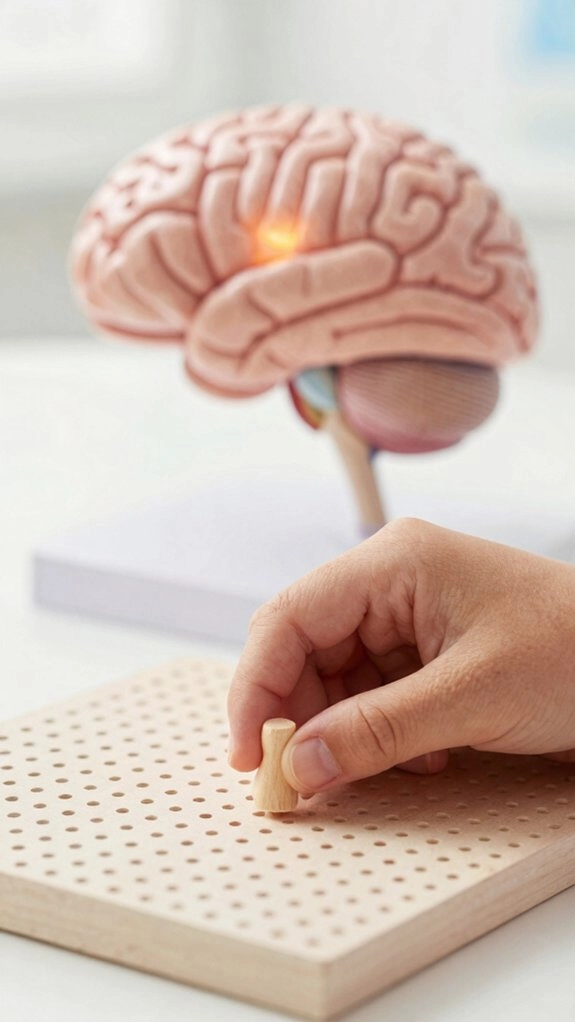
Every small movement begins with a message from your brain. Your primary motor cortex sends signals that guide your fingers and hands.
Premotor areas help you plan each action before you grasp a toy or reach during play.
This Cortical control lets you join games and daily tasks with growing confidence.
Your prefrontal cortex helps you remember steps choose actions and pause when needed.
As you practice, sensory feedback tells your brain what feels right.
It refines nervous pathways so movements become smoother.
You build these skills through everyday attempts, and each success helps you take part with others.
Brain Development During the Preschool Years
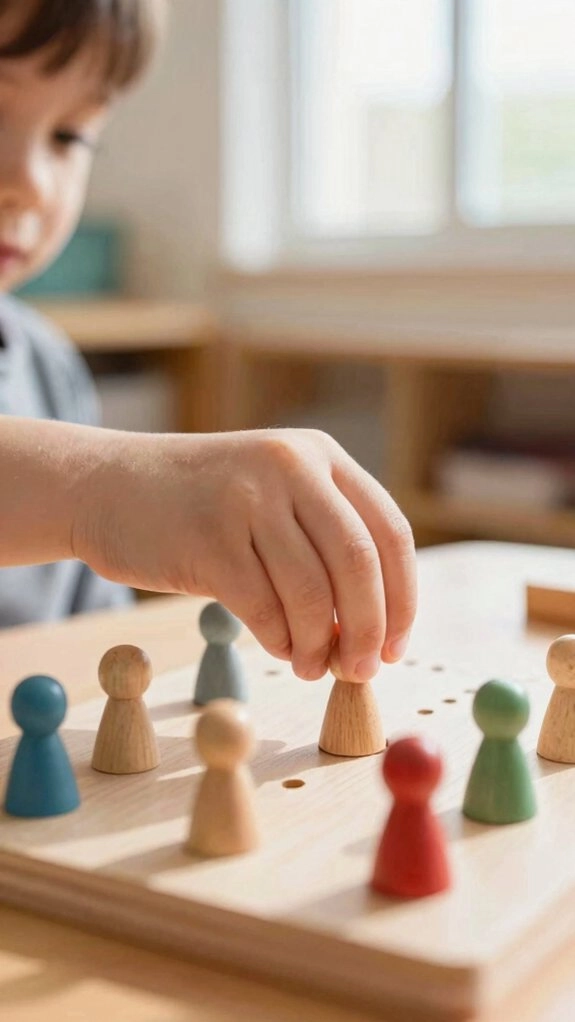
During preschool, your brain grows quickly and gains more control over small movements. Your prefrontal cortex helps you plan, focus, remember steps, and stop when needed.
It works with your motor cortex, which sends signals that guide your fingers and wrists. Together, they help you join classmates in drawing, stacking blocks, fastening buttons, and building.
You may start holding a marker with three fingers or cutting along a straight line. Play based handcrafts and sensory motor games give you welcoming ways to discover these skills.
Each new challenge helps your hands, eyes, and thoughts work smoothly as a team.
How Neural Pathways Become Stronger Through Practice
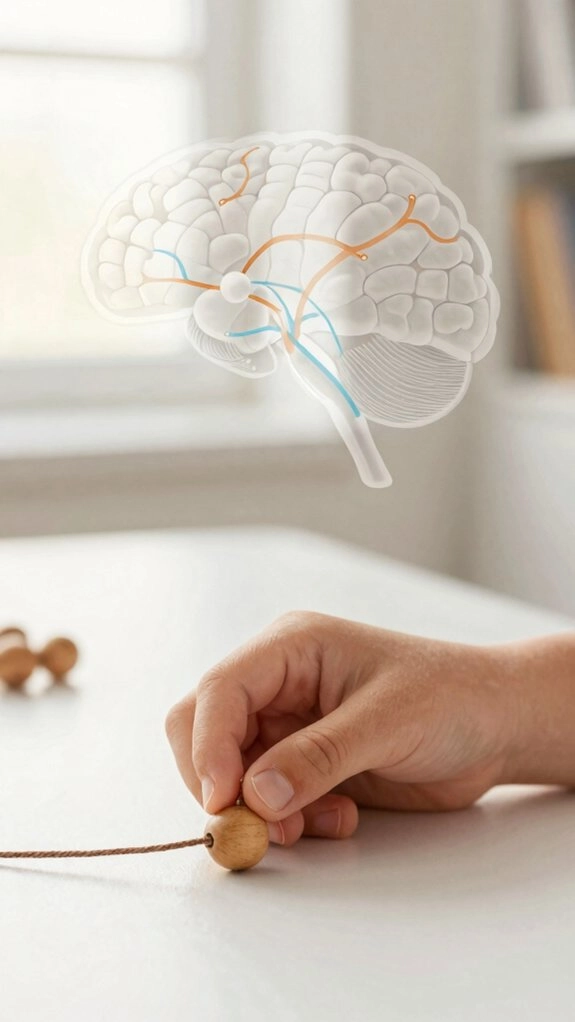
With each careful try, you’ll strengthen pathways that guide your hands. Your premotor cortex plans each action, while your primary motor cortex sends signals to your muscles. Repeating a task builds electrical efficiency, so your timing and eye-hand control grow steadier. You’re part of a community of learners who improve through practice.
- Start with a simple grasp.
- Practice pincer picks with small objects.
- Draw or cut slowly and carefully.
As practice continues, skill automation helps actions feel smoother. Each round reinforces the routes your brain uses. Keep going—regular practice makes your abilities stronger each day.
The Connection Between Movement and Learning
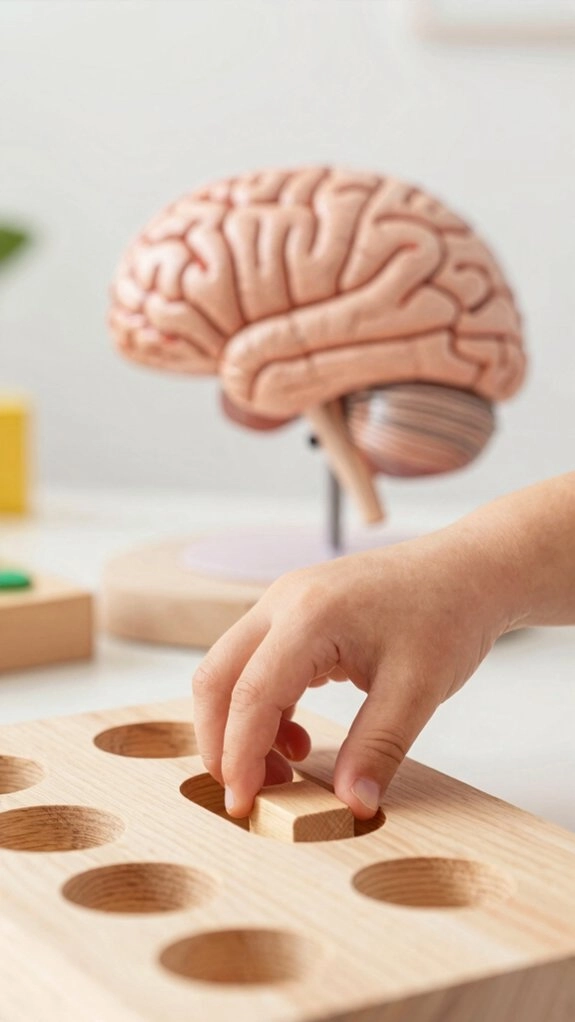
Movement does more than build hand skills; it also helps your brain learn. When you grasp, write, or guide a ball, your primary motor cortex sends precise signals to your muscles.
Challenges like obstacle courses and scavenger hunts ask you to plan, remember, and adjust. Your prefrontal cortex joins in, supporting working memory, flexible thinking, and self-control.
Gross motor coordination also sharpens eye-hand precision for schoolwork.
With movement, you build skills that support classroom attention growth, memory, and problem-solving. You’re part of a learning community where every active step helps you feel ready to investigate and contribute with confidence.
Why Repetition Improves Motor Skills
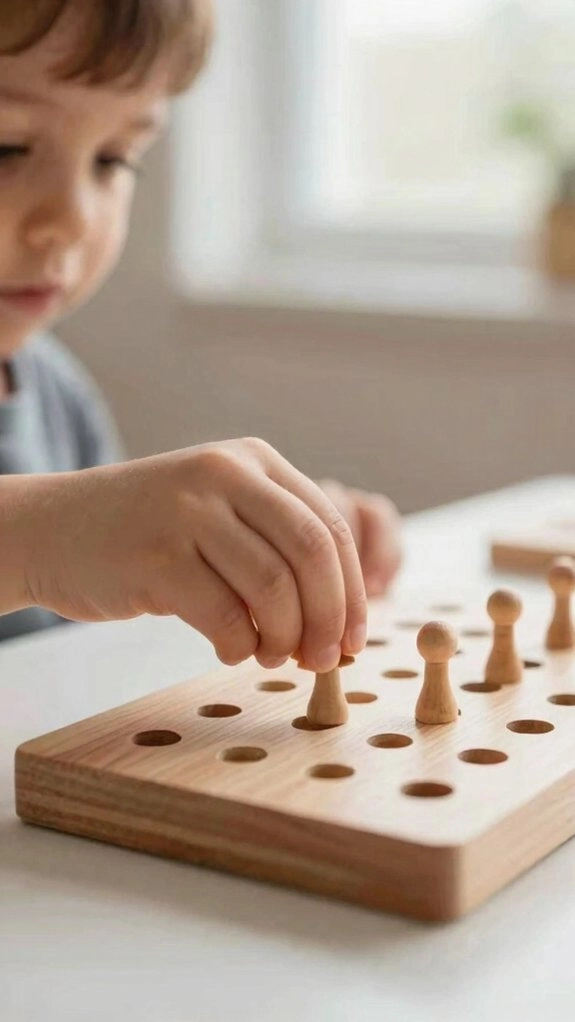
Each time you repeat a hand task, your brain and muscles work together better. Practice strengthens control in your fingers, wrist, and hand. It helps nerves and joints coordinate. You become part of a shared learning pathway as movements grow smoother.
- Obstacle feedback shows you what to adjust when a spoon tips.
- Attention training helps you remember steps for drawing, page turning, or cutting.
- Errorless practice builds confidence with easy successes and supports skill generalization in new tasks.
With time, you can grasp toys more accurately and use a pincer grasp. If skills stall or worsen, tell your provider.
How Sensory Experiences Support Brain Development
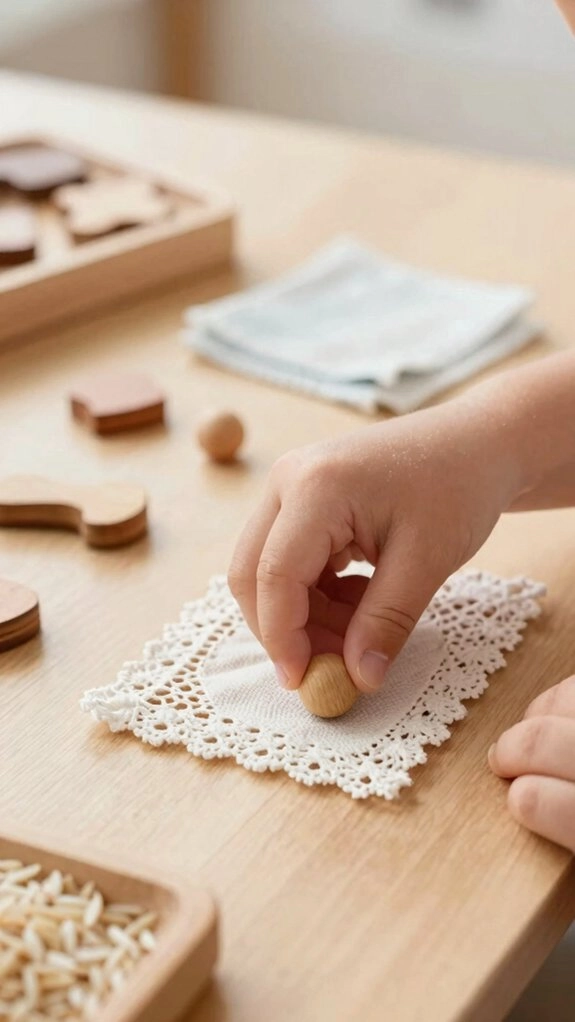
Sensory experiences help your brain learn how your hands should move.
When you reach for a toy, hand eye learning builds useful pathways.
Tactile exploration tells you whether something feels smooth, rough, heavy, or soft.
Proprioceptive feedback shows where your fingers are, even when you aren’t looking.
This Sensory calibration supports force adjustment and spatial awareness during play.
Auditory guidance, like a spoon tapping a bowl, adds another clue.
Through multisensory integration, your motor and planning brain areas work together.
Each shared challenge helps you join in with growing confidence.
You learn timing and control for skilled actions too.
Sleep, Nutrition, and Healthy Brain Growth
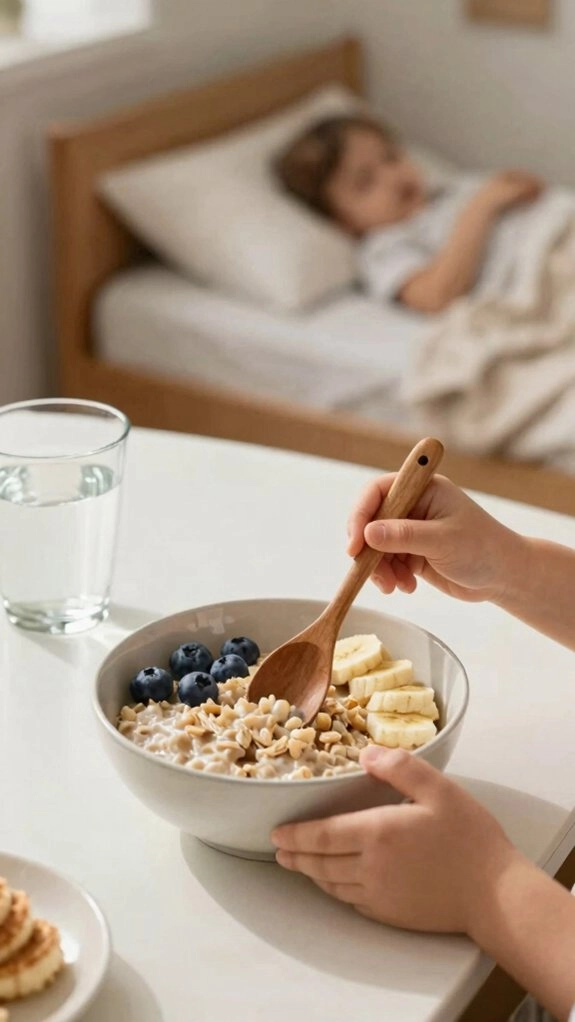
While you sleep and eat nourishing foods, your brain prepares your hands for new challenges. Sleep helps your brain store practice memories, strengthening pencil control and buttoning.
Balanced meals supply energy and building materials for your growing brain, nerves, muscles, and joints.
- Support neural plasticity with regular sleep.
- Build executive control by eating balanced meals.
- Pair drawing or scissors practice with these routines.
You’re part of a caring team helping your skills grow. If your hand skills suddenly worsen, especially after sleep or food changes, tell a trusted adult and contact a pediatric provider promptly for guidance and support.
What Current Research Tells Us About Early Motor Development
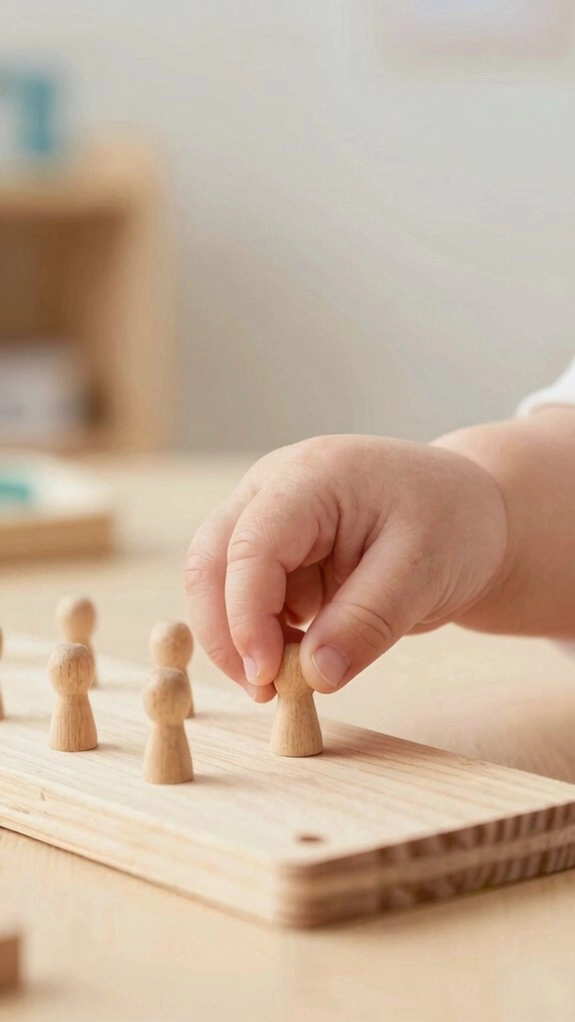
Scientists are finding that early hand skills grow alongside the brain’s mentally skills. At birth, early reflexes, like grasping, show that movement starts before you can control it.
As your hands, wrists, and fingers strengthen, brain plasticity helps you practice and improve. Your motor cortex guides actions, while your prefrontal cortex helps you plan, remember steps, and pause when needed.
Research suggests changing, hands-on activities can challenge executive skills more than predictable movements. Studies also connect long-term practice with growing mental benefits.
Even one active session may sharpen thinking briefly. These findings show how movement and learning belong together.
How Parents Can Support Healthy Brain Development Every Day
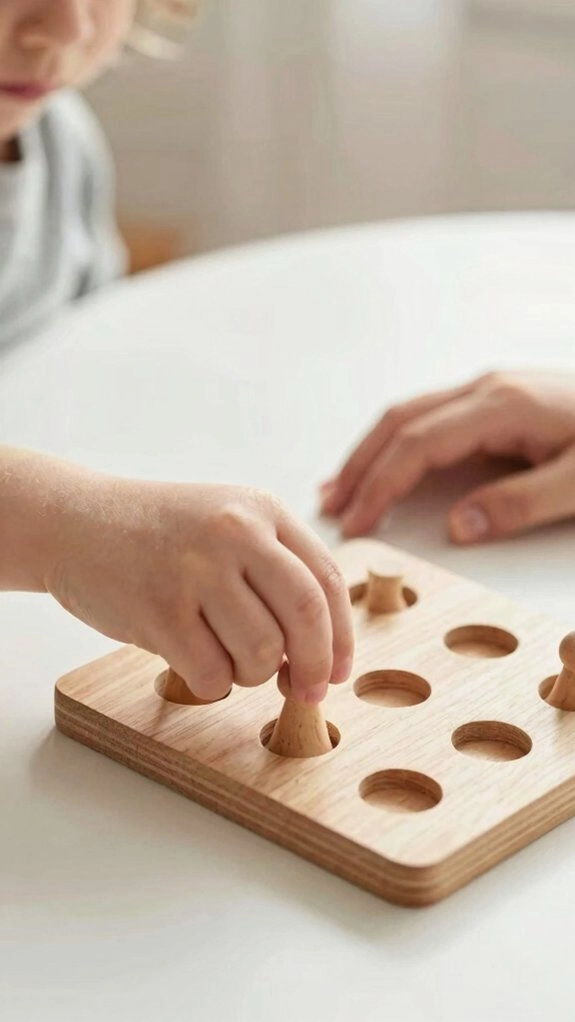
Each day gives your child new chances to build hand skills and brain strength. You’re part of a caring community helping children learn through play.
Try Parent friendly routines that add everyday practice:
- Play fine motor games, such as finger songs, picking up small safe items, and drawing shapes.
- Offer challenging hand tasks, including feeding, buttoning, and beginner scissors work.
- Choose skill building activities with two steps, like copy then cut, to grow focus and planning.
These toddler supports strengthen hand, wrist, and finger control while brain areas guide action. If skills regress or lag, call your pediatrician right away.