
How to Memorize Things Faster Using Simple Brain Tricks

- How to Memorize Things Faster Using Simple Brain Tricks
- Key Takeaways
- How Fast Memorization Works
- Why Most Memory Tips Fail
- The 3 Rs of Fast Memorization
- Record, Retain, Retrieve
- Why The 3 Rs Work
- Understand Information Before You Memorize It
- Make Lists Meaningful With Patterns
- Find Hidden Patterns
- Group By Meaning
- Use Memory Hooks
- Use Acronyms, Rhymes, and Songs
- Build a Memory Palace That Sticks
- Chunk Lists Into Smaller Groups
- Why Chunking Helps
- Simple Grouping Methods
- Why Repeating Isn’t Enough
- Use Spaced Repetition to Retain More
- Sleep and Move to Lock It In
To memorize things faster, first understand them and make them fit with what you already know. Then turn long lists into small chunks, patterns, or simple memory hooks like acronyms or tiny stories. Don’t just reread, because that only feels familiar. Test yourself instead, then review again after a few hours or a day. Sleep well and move around too, because both help lock facts in. Keep going, and you’ll find even smarter tricks below.
Key Takeaways
- Focus attention deeply so information is encoded, not just exposed through rereading or passive listening.
- Turn facts into chunks, patterns, acronyms, rhymes, or tiny stories to make them easier to store.
- Use active recall and self-testing instead of highlighting or rereading to strengthen real memory.
- Review again after a few hours or a day, then space later reviews over days and weeks.
- Sleep well and study before bed so your brain can consolidate facts into long-term memory.
How Fast Memorization Works
If you want to memorize faster, it helps to know how memory works first. Your brain starts with sensory memory, where facts stay only seconds.
Then active perception moves a few into your sensory to conscious funnel. Next, working memory handles them, but working memory limits mean you can only juggle about seven items.
So you need clear chunks and strong links. Storage happens on purpose, not by accident.
Finally, timing for retrieval matters a lot. If you review after hours or a day, you remember more easily.
That’s how you join the group of smart, steady learners.
Why Most Memory Tips Fail
Most memory tips fail because they help you look at information, not truly store it. You may feel busy, but attention vs encoding matters more.
Why rereading fails is simple: it gives you exposure without strong memory cues.
If you listen while distracted, highlight pages, or cram once, your brain may not keep the facts. Your working memory is small, so random items fade fast.
Real learning needs you to record, retain, and retrieve. When you test yourself and review later, you build stronger recall.
That’s how you join the group that remembers more.
The 3 Rs of Fast Memorization

To memorize faster, you use the 3 Rs: Record, Retain, and Retrieve.
First, you capture the exact facts, then you connect them in your mind, and later you test yourself.
This works because your brain remembers better when you learn it, store it, and call it back on purpose.
Record, Retain, Retrieve
The fastest way to remember something is to use the 3 Rs: Record, Retain, and Retrieve.
First, you Record by paying close attention and holding the idea in working memory for a few seconds.
Then you Retain by linking it to what you already know, building encoding for long term.
That’s how you store beyond your memory’s small limit.
Finally, you Retrieve with active recall schedules after a few hours or days.
Don’t just reread or highlight.
Those steps only help if you actively use all three.
You’re not alone here.
These brain tricks help your whole study group learn faster.
Why The 3 Rs Work
When you use the 3 Rs, your brain gets a full path for memory, not a shortcut. You join a smart group that beats working memory bottlenecks and attention based encoding failures. First, you Record with focus. Then you Retain by strengthening it in long-term storage. Finally, you Retrieve after a short wait, which proves the memory stuck.
| R | Why it matters |
|---|---|
| Record | You notice it on purpose |
| Retain | You make it last |
| Retrieve | You test real memory |
Skip one step, and you get garbage memory. Self-testing helps you belong to the few who truly remember.
Understand Information Before You Memorize It
Before you try to memorize anything, make sure you really understand it. When you use prior knowledge, make schemas first, connect concepts, and ask meaning questions, your brain starts to care. That makes facts easier to hold.
- Link new ideas to something you already know.
- Turn strange facts into a small story or picture.
- Stay focused, because attention moves facts into memory.
Your brain won’t store things by itself. You help it decide what matters. After you learn, sleep and a quick review before bed can lock it in. You’ll feel smarter, calmer, and more ready to learn.
Make Lists Meaningful With Patterns
You can make a list easier to remember by finding hidden patterns in it.
Group items by meaning, and link them with a simple memory hook like a letter, place, or category.
When you do this, your brain has fewer random pieces to hold and more clues to use.
Find Hidden Patterns
One smart way to remember more is to spot hidden patterns in a list. You can turn random items into friendly chunks that feel easier to hold. Try these pattern recognition exercises:
- Bridge prior knowledge by linking concepts you already know.
- Group items by first letter or shared features and keep each chunk near seven.
- Use an acronym or acrostic so each clue points to one answer.
When you practice finding meaningful relationships, your brain gets a clear route. You won’t face lonely facts. Instead, you’ll navigate them like shelves in a library and remember them faster.
Group By Meaning
Now that you can spot patterns, the next step is to group items by meaning.
You’ll remember faster when you use practical groupings like category, function, or relationship.
Put meaning first, then make small chunks of about seven items.
This helps reduce confusion and keeps your mind organized.
Try to apply real life examples, like sorting snacks, school supplies, or planets into friendly sets.
When a list feels random, create one clear link to something you already know.
That shared shape helps your brain feel at home, and belonging makes recall easier during review.
Use Memory Hooks
Memory hooks can turn a plain list into something your brain can grab fast. You can create vivid hooks by grouping items into chunks, like categories or first letters. That helps reduce interference and makes your list feel friendly.
- Use retrieval cues with acronyms, like PEMDAS, or fun acrostics.
- Turn each item into a picture and link them in a tiny story.
- Keep each chunk near seven items, then practice quick spaced recalls at 7 days, 3 days, 2 days, and 1 day.
You’ll remember more when your pattern feels clear, familiar, and shared.
Use Acronyms, Rhymes, and Songs

Acronyms, rhymes, and songs can help you lock facts in fast.
You group ideas into a cue you can rebuild later.
That’s the chunking vs meaning trick in studying: you turn many facts into one small prompt.
Acronyms use first letters, like SMART, so you spot the pattern quickly.
Acrostics make a first-letter poem that guides your recall.
Rhymes add sound, like “I before E except after C.”
Songs work even faster because a melody gives you a strong clue.
Keep each cue simple.
If you can’t rebuild it, it’s too weak to help.
Build a Memory Palace That Sticks

A memory palace turns a familiar place into a map for your ideas. You can use your childhood home or daily route, then place vivid images on each spot. This feels like a team effort with your own mind.
- Pick clear loci like a door, lamp, or stair.
- Put one strong, silly image on each spot.
- Walk back through the place during active recall practice.
Use sound, smell, or touch to make each image pop. This method works great for lists and mixed facts. It gives you memory confidence boosts and helps you trust your recall.
Chunk Lists Into Smaller Groups

You can remember more when you split a long list into smaller chunks.
Your brain handles a few items at a time, so grouping them makes recall feel easier.
Try using natural categories or simple sets, then test each chunk on its own.
Why Chunking Helps
- You feel the list get shorter.
- You remember groups faster.
- You avoid overload by watching chunk size importance.
If each group stays small, your mind can hold it better.
Then recall feels smoother, and you’ll feel more confident, like you belong with smart memorizers everywhere.
Simple Grouping Methods
Chunking works best when you keep each group small and easy to name. You can hold about seven items at once, so make groups of five to seven.
Sort things by topic, aisle, or first letter to make them feel like a team. That helps you fit in with the idea and remember it faster.
For long numbers, split them into parts. If one chunk grows too big, break it again.
These mind mapping strategies and retrieval cue design tricks give your brain clear paths. Soon, you’ll recall lists with more ease and confidence every day.
Why Repeating Isn’t Enough

Why doesn’t repeating something always make it stick? Your brain isn’t a tape recorder.
When you only repeat, you may build familiarity, not real recall.
Working memory is small, so too much repetition can crowd it.
- Replace passive review with active testing. Try to say the idea from memory.
- Avoid rereading without retrieval practice. Reading again can fool you into feeling ready.
- Connect facts to meaning and clues. That helps you lock them in.
Real memory grows when you practice pulling ideas back out.
That’s how you join the group of strong rememberers.
Use Spaced Repetition to Retain More
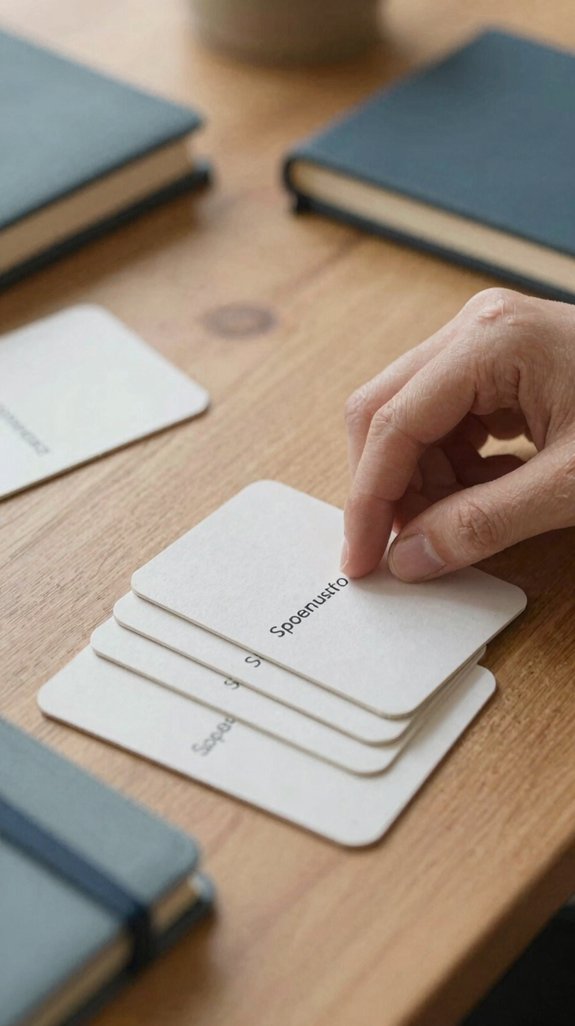
Try spacing out your reviews, and your memory will thank you. You’ll remember more when you use gradual review instead of cramming.
After you learn something, wait a few hours or a day, then test yourself with active recall. That test timing helps you catch the answer before it fades.
Try flashcard schedules that start daily, then shift to weekly and monthly. Each return visit makes the idea stronger.
Memory drops fast at first, so spaced repetition fights that curve. You’ll need fewer study sessions too, and you’ll feel like part of a smart, steady team.
Sleep and Move to Lock It In

Sleep can quietly lock new facts into your memory. When you study before bed, your brain keeps working while you rest. That helps move facts from short-term storage into long-term memory. You also slow the forgetting curve, so more sticks.
- Review a little before sleep, then Test active recall to check what stayed.
- Sleep about 7 to 8 hours. Less sleep makes recall weaker.
- Move your body during the day. A walk or workout can lower stress and help you sleep better.
Keep your space calm and manage study distractions. You’ll feel more ready and more connected to your group.