Visual Perception Activities That Strengthen Early Learning Skills
- Visual Perception Activities That Strengthen Early Learning Skills
- Key Takeaways
- What Is Visual Perception?
- Why Visual Perception Matters Before Children Learn to Read
- Visual Discrimination Activities
- Spot the Difference Games
- Matching Picture Cards
- Visual Memory Activities
- Memory Card Games
- Picture Sequence Challenges
- Figure-Ground Activities
- Visual Closure Activities
- Spatial Relationship Games
- Everyday Activities That Improve Visual Perception
- Signs a Child May Need Extra Support
- Tips for Parents and Teachers
You can build early learning skills with visual perception games that train your brain to notice shapes, colors, and space. Try spot-the-difference puzzles, matching cards, sorting by size or color, and simple hidden-picture hunts. These activities help you focus, remember details, copy patterns, and tell left from right. They also support reading readiness and confidence. If you keep going, you’ll find even more easy ways to make practice fun for your eyes and brain together.
Key Takeaways
- Sort shapes, colors, and sizes to build visual discrimination and early matching skills.
- Play spot-the-difference or hidden-picture games to strengthen attention and figure-ground skills.
- Use picture-copy and “study then draw from memory” tasks to improve visual memory.
- Practice dot-to-dots, missing-piece puzzles, and partial images to build visual closure skills.
- Follow left-right paths, block models, and picture sequences to support spatial awareness and sequencing.
What Is Visual Perception?
Visual perception is how your brain makes sense of what your eyes see. Your eyes gather pictures, but your brain turns them into useful information.
You use this skill when you notice shapes, colors, and movement around you.
Eye tracking skills help your eyes follow a moving ball or scan a busy room.
Brain processing helps you organize those details quickly.
You can focus on one thing, then shift your gaze to another.
These skills work together every day.
They help you understand your surroundings and feel connected to the world you share with others in your community daily.
Why Visual Perception Matters Before Children Learn to Read
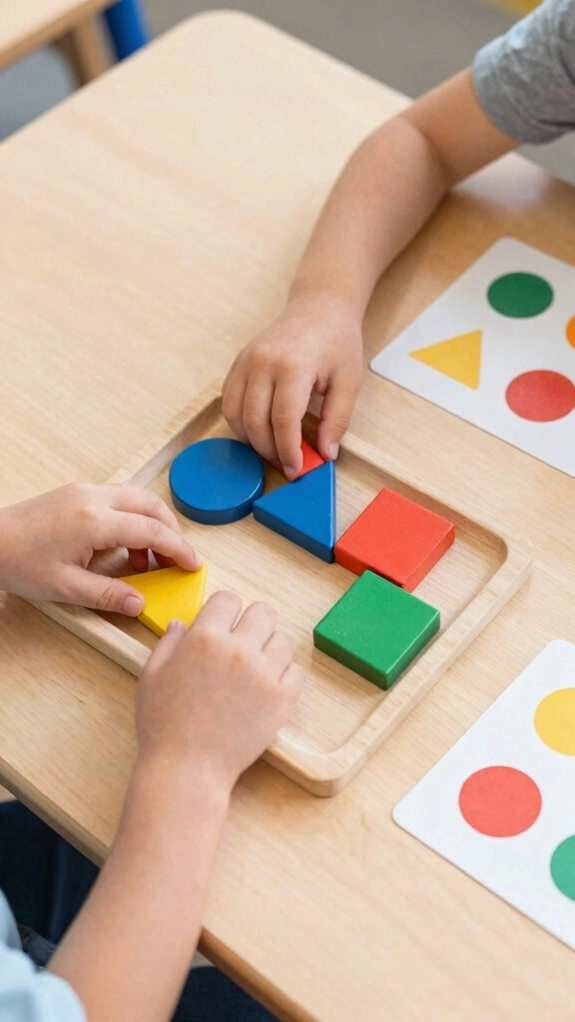
Before you can read words, your brain needs to understand what your eyes notice. Visual perception helps you focus, find shapes, and remember what you just saw. That’s why Classroom routines and sensory play matter. They train you to notice order, space, and where things belong. With these skills, you can follow directions, copy models, and feel ready for books.
| Skill | Helps you |
|---|---|
| Focus | Find the right spot |
| Memory | Recall shapes and letters |
| Space | Know left and right |
You’ll join a community of learners who notice, think, and grow with confidence every day.
Visual Discrimination Activities
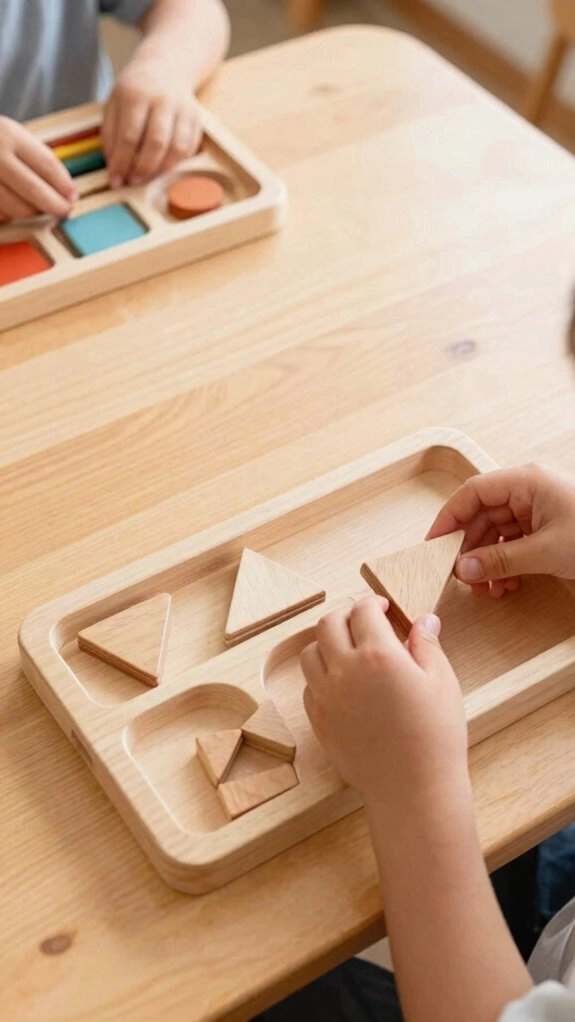
You’ll train your eyes with fun picture games that notice tiny differences. Visual discrimination helps you tell b from d and 6 from 9. It also strengthens reading, writing, and confidence.
- Use eye tracking to follow shapes and letters.
- Try shape sorting and matching games to notice color, size, and form.
- Look for hidden items in busy pictures to sharpen your careful focus.
You’ll spot patterns, compare details, and build the steady skills that make school feel friendly too. That means you can practice every day and feel like you belong in a smart, supportive learning circle together always.
Spot the Difference Games
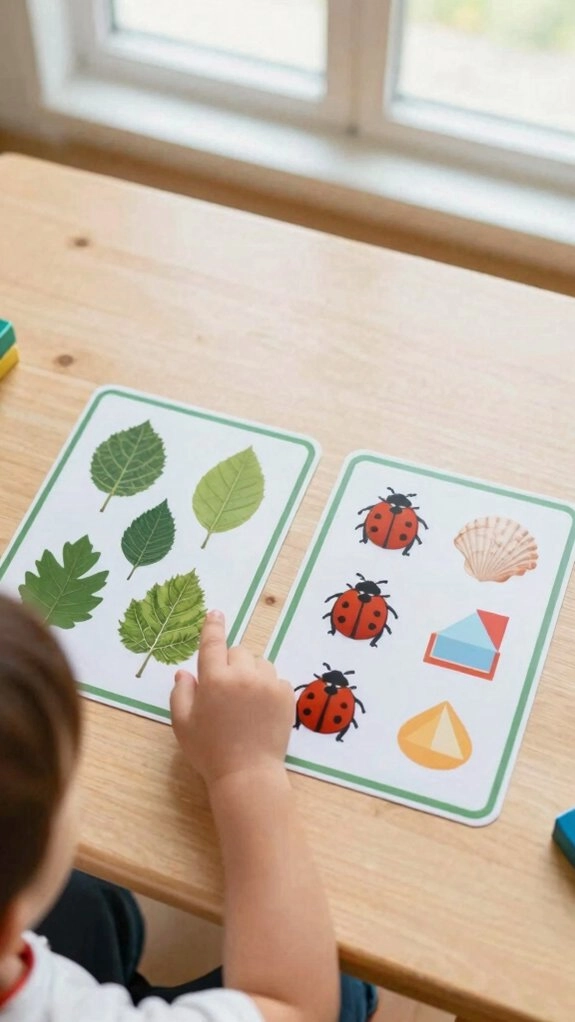
These picture puzzles ask you to hunt for tiny changes in two almost matching images. You build visual attention when you focus on one detail and ignore clutter. You also sharpen visual discrimination by noticing shifts in color, size, and shape.
Start with two very similar pictures and just two or three differences. Then add more as you get stronger.
Point, circle, or mark what you spot to train hand-eye coordination.
Use colorful picture talk to say what changed.
Try turn taking spotting with a friend so you both stay alert and feel included and keep your eyes ready.
Matching Picture Cards
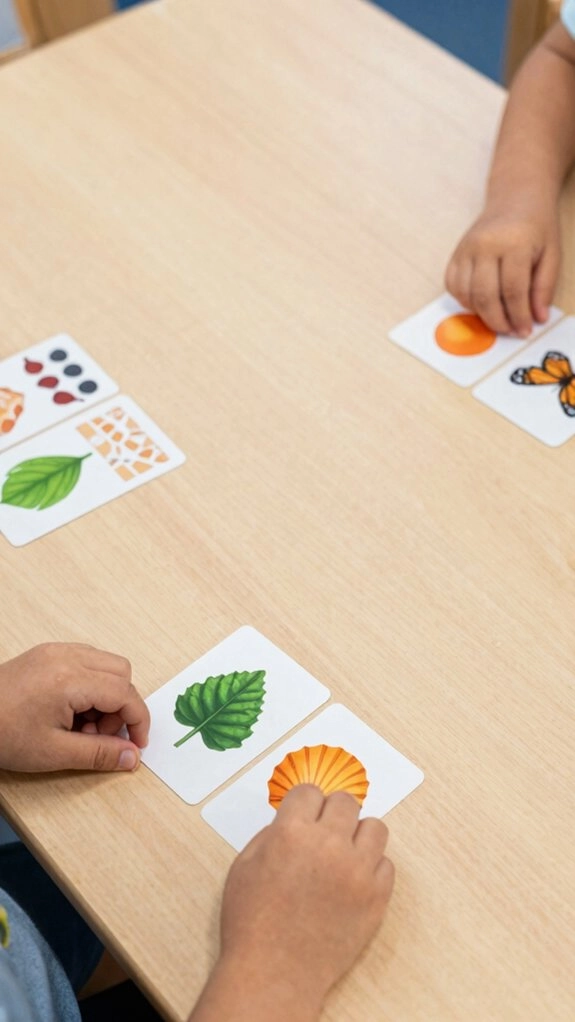
A small stack of picture cards can turn matching into a fun focus game. You look for shape, color, and details.
Start with cards that look different. Then make it harder as you improve.
On a clear table, fewer cards help you stay focused.
Try these:
- Match by theme, like animals or vehicles.
- Match by one feature, like color or size.
- Use color pattern sorting and letter sound games to spot b and d.
You’ll feel like part of a smart team. That practice builds careful eyes and helps you notice friends faster every day together.
Visual Memory Activities
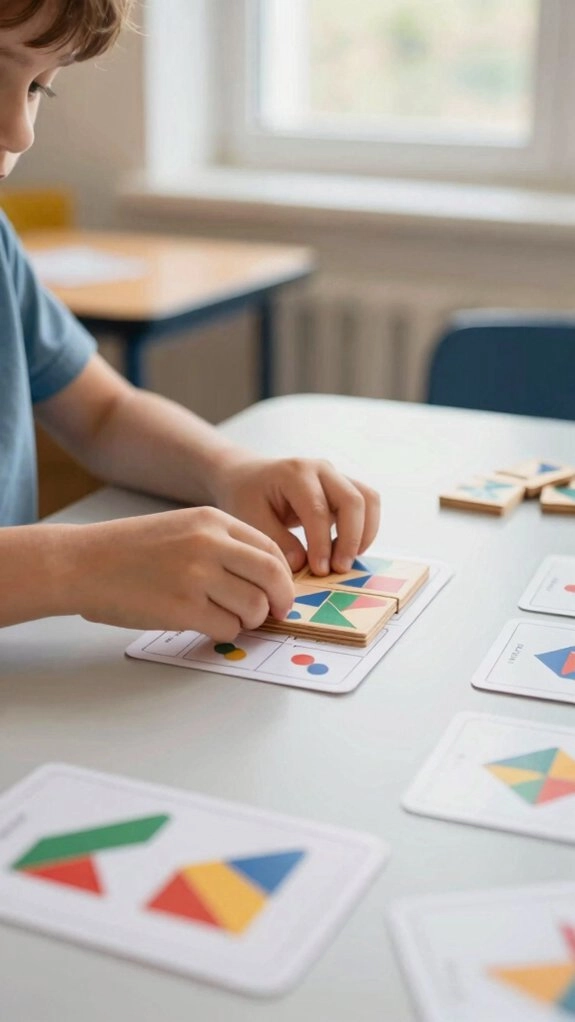
When you study a picture for a few seconds and then try to draw it from memory, you practice visual memory. This skill helps you remember shapes, letters, numbers, and sight words after they’re gone.
Try copy without a model practice by studying a picture or letter, then writing it from memory. Hidden picture and scavenger hunts also build short term recall because you scan and hold details in mind.
These activities support sensory integration, attention training, and multisensory learning. They fit nicely into brain breaks too.
If copying from the board feels slow or details slip away, keep practicing. You’re training your brain to notice, store, and return visual information with confidence every step, and you belong here today.
Memory Card Games
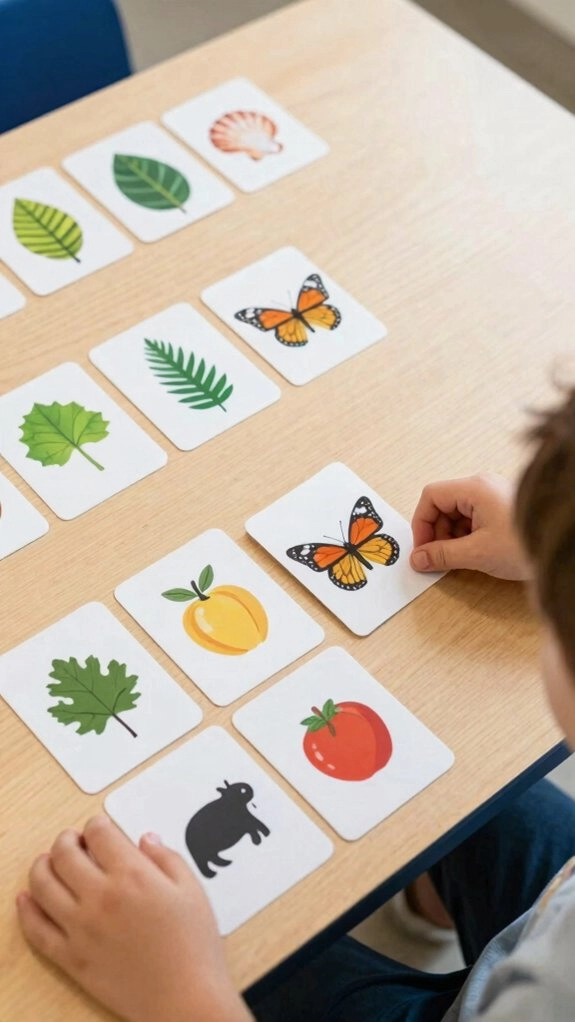
As you play memory match card games, you train your brain to store pictures and bring them back fast. Start with a small set of distinct cards so you’ll focus better without extra distractions. Flip two cards at a time and notice what comes up. Use b/d or p/q cards for letter sounds, and try shape sorting cards today.
- You build visual memory.
- You sharpen visual discrimination.
- You practice turn-taking with confidence.
As pairs increase, your attention grows, and you’re part of the game.
With friends who cheer you on and keep you smiling together too.
Picture Sequence Challenges
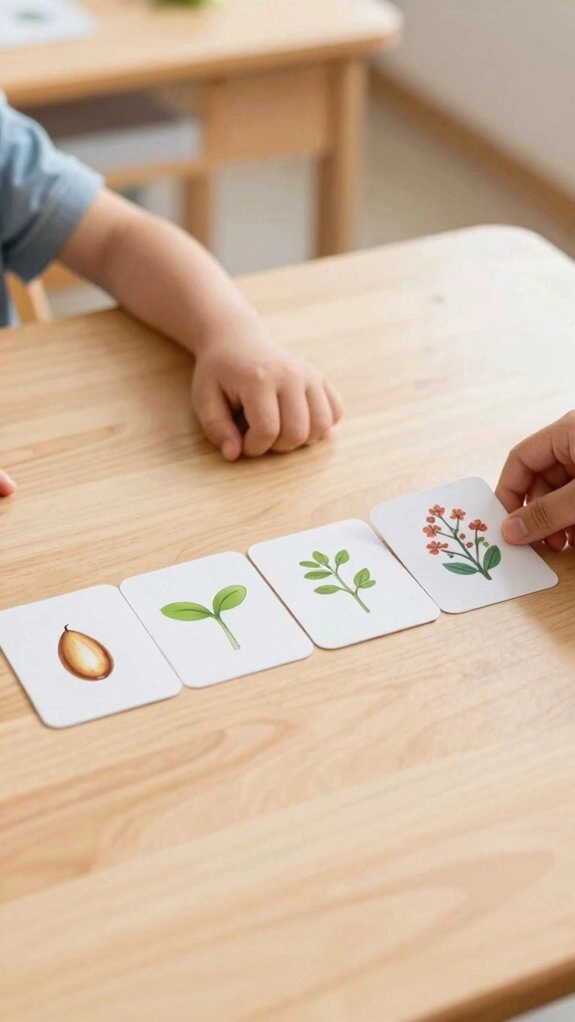
Picture sequence challenges help you train visual sequential memory, which means remembering pictures in the right order.
Try 2 or 3 cards first, then add more as you improve. You can arrange them from left to right or by event order.
Use a first-then-last board or a checklist to stay focused.
This helps you with story retelling and action ordering in class.
After you place the cards, wait a few seconds and see if you can rebuild the same sequence.
That small pause checks true recall.
With practice, you’ll feel proud and ready for longer challenges every single time too.
Figure-Ground Activities
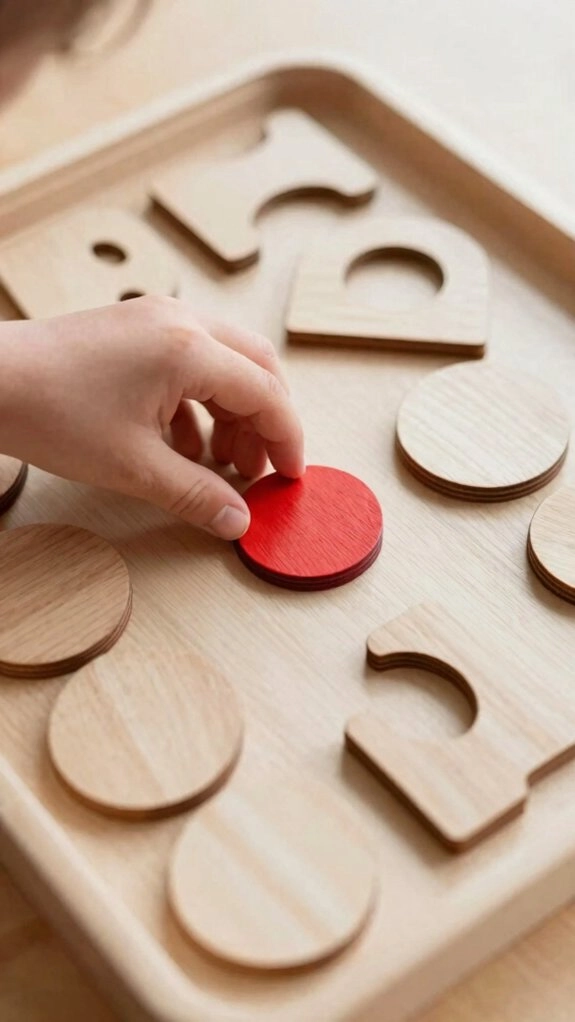
Even in a busy scene, your eyes can learn to find one thing fast. Figure-ground practice helps you spot a letter, word, or object in a busy background. That builds Reading readiness and strengthens attention focus.
Try these:
- Find a blue pencil on a busy carpet.
- Do a worksheet search for one hidden answer.
- Look for a partly covered animal in a crowded picture.
You’ll get better each time. Around ages 6–7, your brain handles more clutter, and you can stay calm, curious, and ready to learn. You belong here, and every search makes your skills stronger and brighter.
Visual Closure Activities
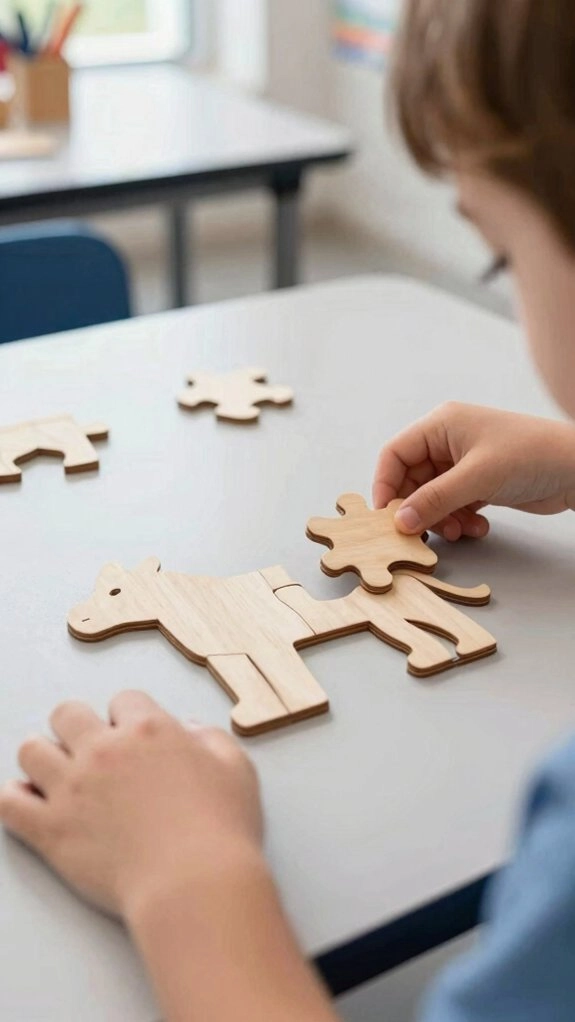
When part of a picture is hidden, your brain can still guess the rest. You practice visual closure when you finish dot-to-dot art, solve a partly built puzzle, or match a missing-piece card.
You also grow stronger at reading when you cover a few letters and predict the word. Start with bold, simple images, then hide more as you improve.
This object permanence play helps you trust your mind’s clues. Each round builds pattern prediction practice, and you’ll notice whole shapes faster.
Keep going with your crew, because every guess brings you closer to learning and stronger every time.
Spatial Relationship Games
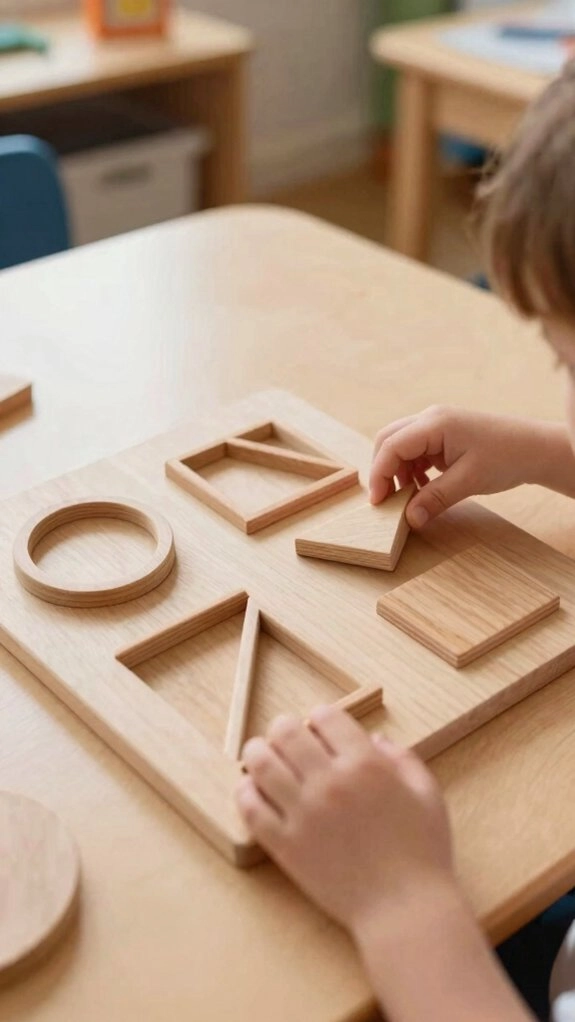
You can turn playtime into a map game. Build pillow tunnels and box paths so you crawl over, under, and between. Say left, right, next to, and behind often.
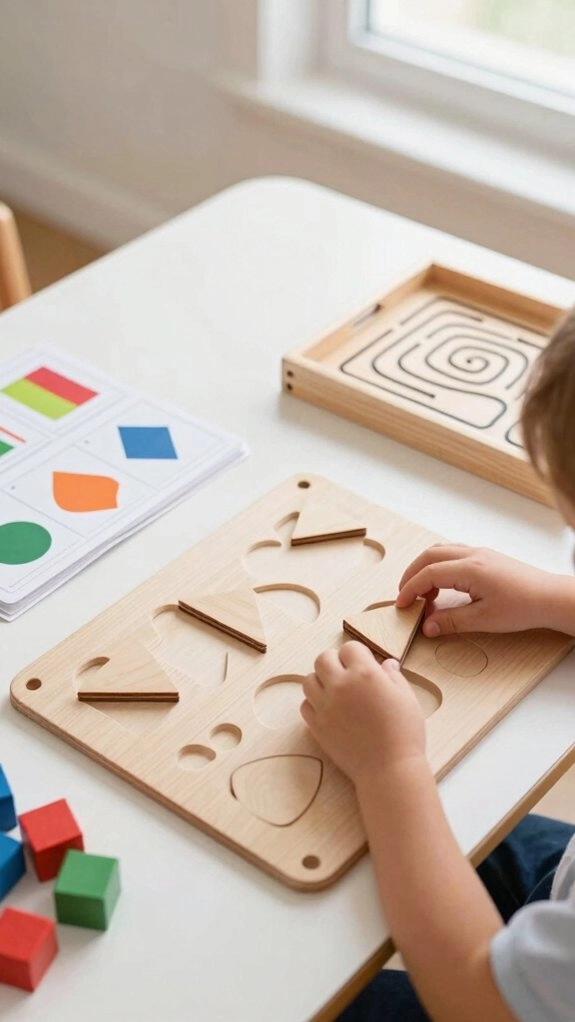
Try knob puzzles first, then interlocking ones, to match pieces in space.
- Place a toy on top of another.
- Ask where it’s in front or behind.
- Trace curves and angles for shape, letter, and number work.
These focus games grow attention spans, Fine motor control, hand strength, and belonging as you’re learning together with friends who cheer for you and help you feel confident every step.
Everyday Activities That Improve Visual Perception
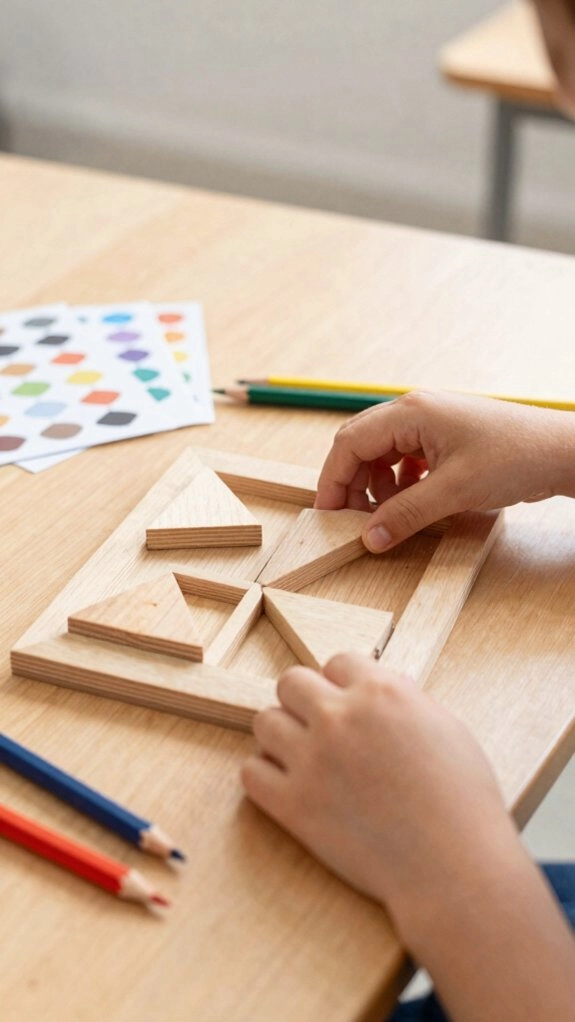
Often, simple everyday games can sharpen your eyes and help your brain notice details faster. Try a nature scavenger or color hunts with real objects. Use sensory sorting and matching trays at snack time.
| Activity | Visual perk |
|---|---|
| I Spy | Builds attention |
| Bubble play | Trains tracking |
| Sticker taping | Improves placement |
| Ball roll | Guides eyes |
| Obstacle course | Boosts space sense |
These little challenges make you look closely, compare shapes, and move with care, so you grow more confident each day while feeling part of your group here too.
Signs a Child May Need Extra Support
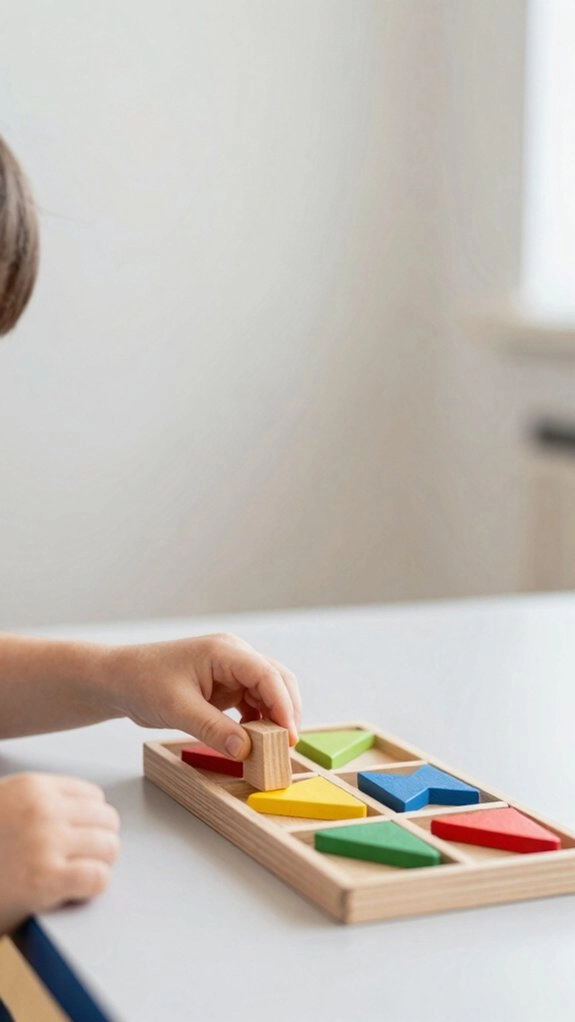
Sometimes a child’s eyes and brain need extra help to work together well. You might notice missed lines, slow copying, or mixed-up letters. These signs can affect reading accuracy and Classroom readiness.
- Trouble finding one item on a busy page can show weak visual attention and need attention supports.
- Mixing b and d, or 6 and 9, can point to visual discrimination needs.
- Forgetting what you just saw can signal memory support needs.
If you see squinting or eye turns, screening considerations matter first, and ask for an ophthalmologist visit to rule out eye or nerve problems before guessing.
Tips for Parents and Teachers
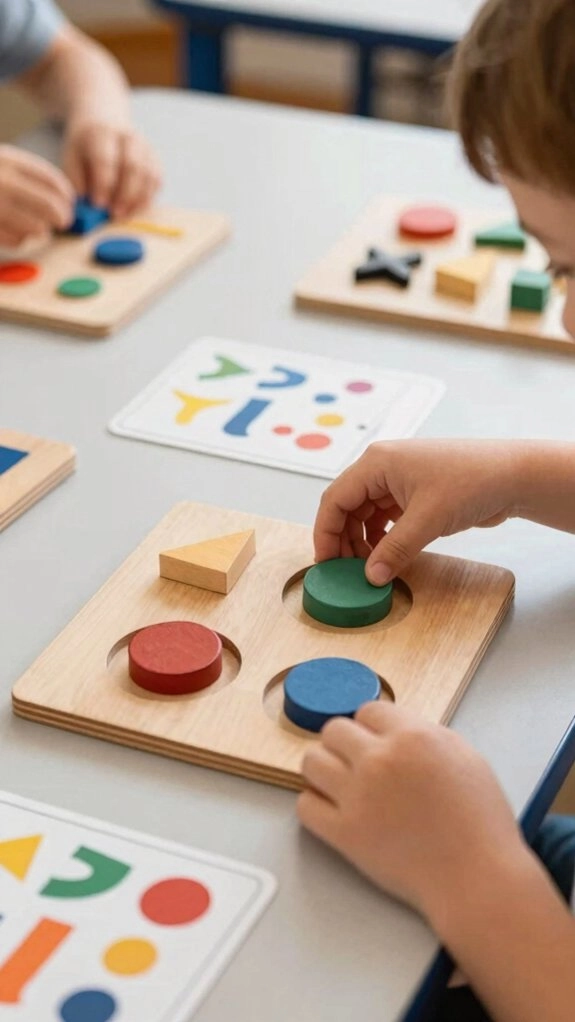
For a calmer workspace, try reducing visual clutter first. You can streamline worksheets, move your child away from busy windows, and bold key ideas.
Build focus with short visual tasks, then add more as they improve. Use checklists or visual timers to guide classroom routines and home practice.
Try spot-the-difference games, sorting by shape or color, and puzzles to sharpen noticing skills. Cover parts of pictures for figure-ground and closure games.
Sticker paths and block copies boost hand skills, and steady left-right words help direction. Keep progress tracking simple so you’ll cheer each small win together with confidence today.