How Children Develop Problem-Solving Skills Through Play
- How Children Develop Problem-Solving Skills Through Play
- Key Takeaways
- What Problem-Solving Skills Look Like in Early Childhood
- Why Open-Ended Play Encourages Thinking
- Building and Construction Activities
- Puzzles and Matching Games
- Sorting and Classification Challenges
- Everyday Problems Children Can Solve Independently
- How Adults Can Guide Without Giving the Answer
- Supporting Persistence When Activities Become Difficult
Through play, you build problem-solving skills by choosing a goal and testing ideas. When a block tower falls, you try a wider base or stronger support. Puzzles teach you to notice shapes, colors, and positions. Sorting games help you compare objects and change rules. Roleplay lets you plan what happens next and understand others. Adults can ask helpful questions without taking over. Keep exploring to find more simple activities that make your thinking even stronger.
Key Takeaways
- Play builds problem-solving when children set goals, test ideas, notice outcomes, and try different approaches.
- Building with blocks and loose materials teaches balance, planning, spatial reasoning, and learning from mistakes.
- Puzzles and matching games strengthen observation, memory, patience, and flexible thinking when pieces do not fit.
- Sorting activities help children compare color, shape, size, and patterns while explaining their choices and changing rules.
- Open-ended play and supportive adult questions encourage children to persist, collaborate, imagine possibilities, and make independent decisions.
What Problem-Solving Skills Look Like in Early Childhood
When young children play, they’re often solving problems without even noticing it. You can spot these skills when you build a block tower, sort objects, or finish a puzzle.
You focus, remember your goal, and test what works. If your tower falls, you try again with a new plan.
In Imaginative roleplay, you decide what happens next and see challenges from others’ views.
During turn taking negotiations, you practice patience and clear words.
Conflict resolution helps you handle upset feelings and stay connected.
Flexible strategy shifts show when you change plans after a setback.
Guided play can extend this learning when adults ask thoughtful questions or offer materials without taking control.
Each try helps you grow.
Why Open-Ended Play Encourages Thinking
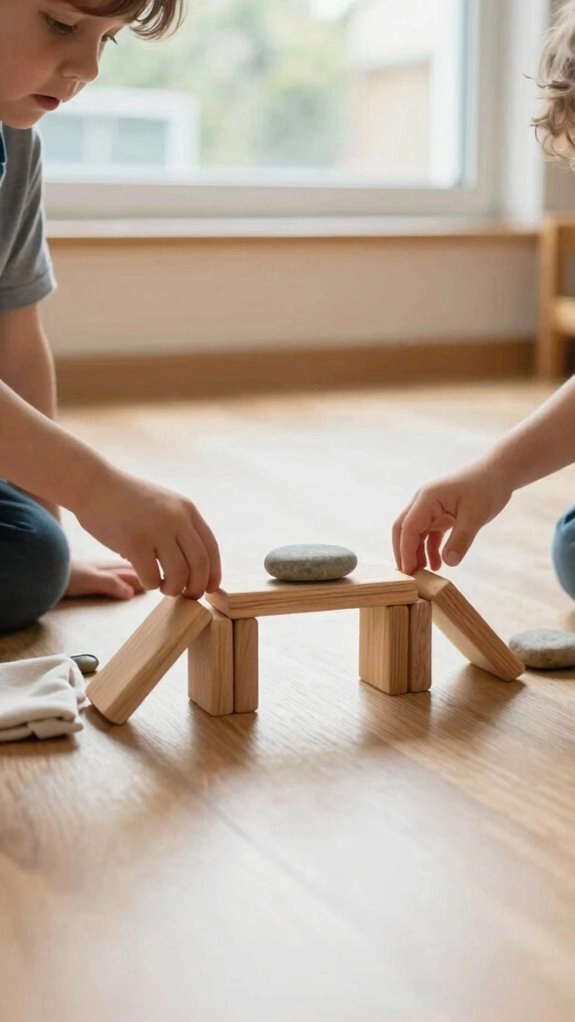
Open-ended play turns ordinary materials into big thinking adventures.
When you choose what a box or stick can become, you create your own path.
Imagination flexibility grows as you test an idea, notice what happens, and try another plan.
Choice reasoning helps you compare possibilities and decide what fits your game.
You keep track of goals, remember your rules, and pause before changing direction.
A caring adult can ask, “What might happen next?” or “What else could you try?”
These gentle questions help you examine solutions, learn from surprises, and feel that your ideas belong in the play.
Building with blocks adds spatial reasoning as children plan, test stability, and redesign their creations.
Building and Construction Activities
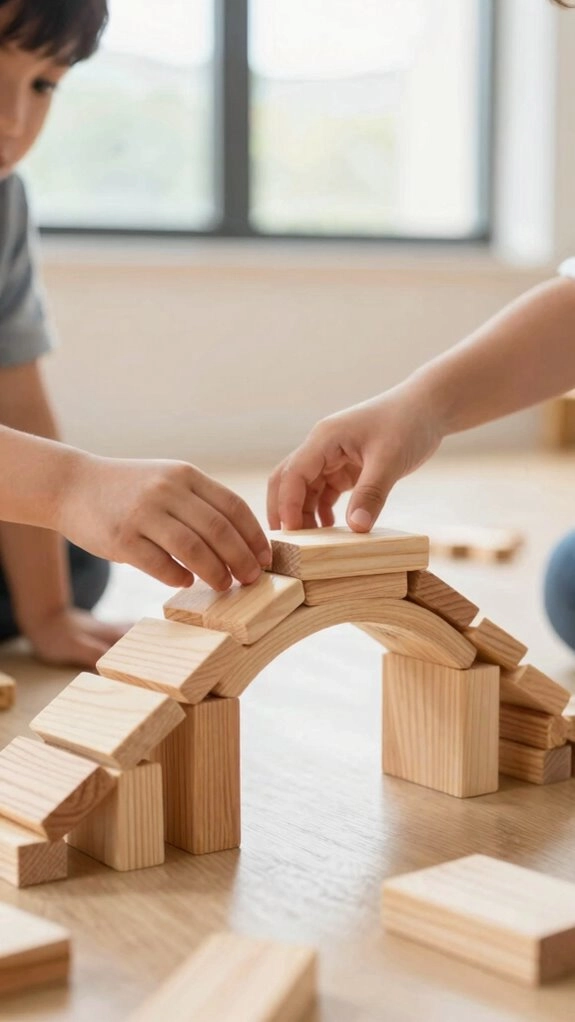
Building activities give your ideas a shape you can test and improve. In Home play, blocks, tiles, boxes, and sand help you investigate balance, length, and spacing. When a tower falls, you learn from feedback and try again. You belong on a building team, where teamwork roles and turn taking practice help everyone contribute.
| Try | Notice | Change |
|---|---|---|
| Bridge | Wobbles | Add support |
| Track | Stops | Shift pieces |
| Tower | Leans | Widen base |
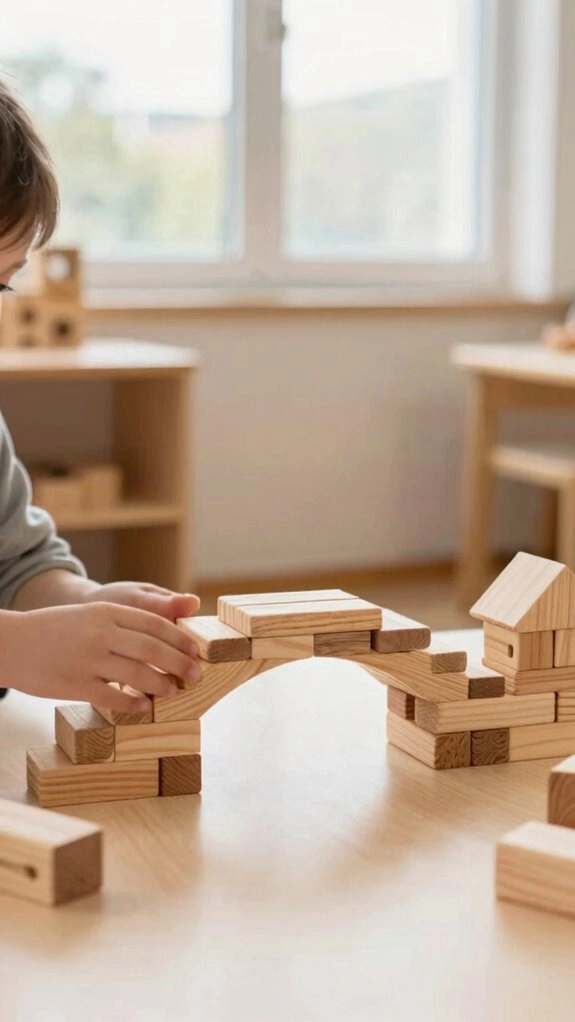
Create imaginative worlds together. Use safety planning before you build. Rule following games can guide sharing while your attention and flexible thinking grow. Each new plan makes you a stronger problem-solver. Building a bridge can help you explore tension and compression as you test how much weight your design can hold.
Puzzles and Matching Games
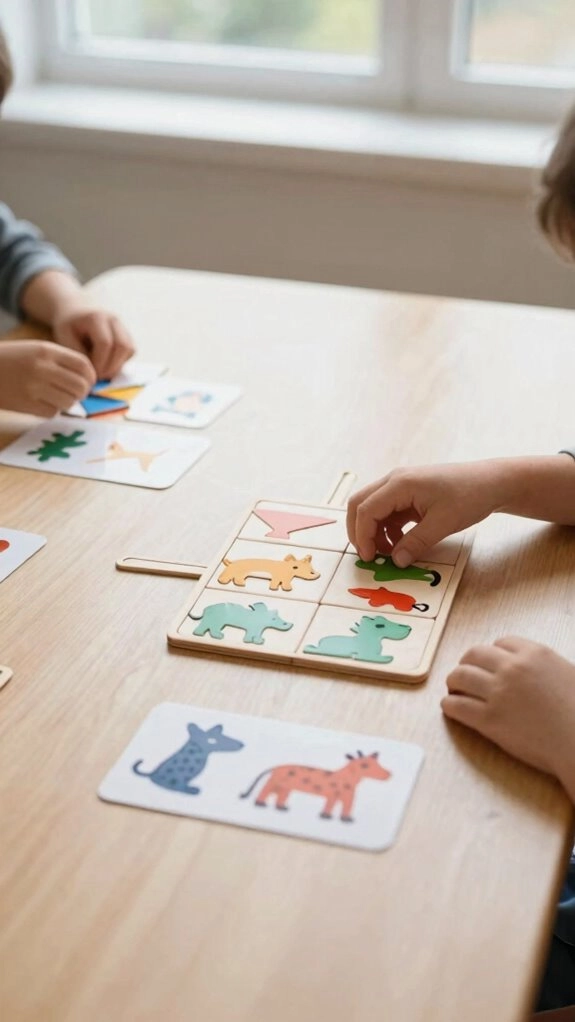
Puzzles and matching games turn careful looking into an exciting problem-solving challenge. You join a community of thinkers each time you test a piece, notice what happens, and try again. Jigsaw and pattern puzzles help you stay patient as small steps create one shared victory.
- Look for shape, size, position, and every color pattern.
- Use stickers matching cards to remember where pictures hide.
- Change your plan when a piece doesn’t fit.
- Explain your idea: “Where could this belong, and why?”
These games build attention, memory, spatial reasoning, and flexible thinking. Each attempt teaches you that mistakes offer useful clues. Hands-on discovery helps children test ideas, revise their plans, and solve problems together.
Sorting and Classification Challenges
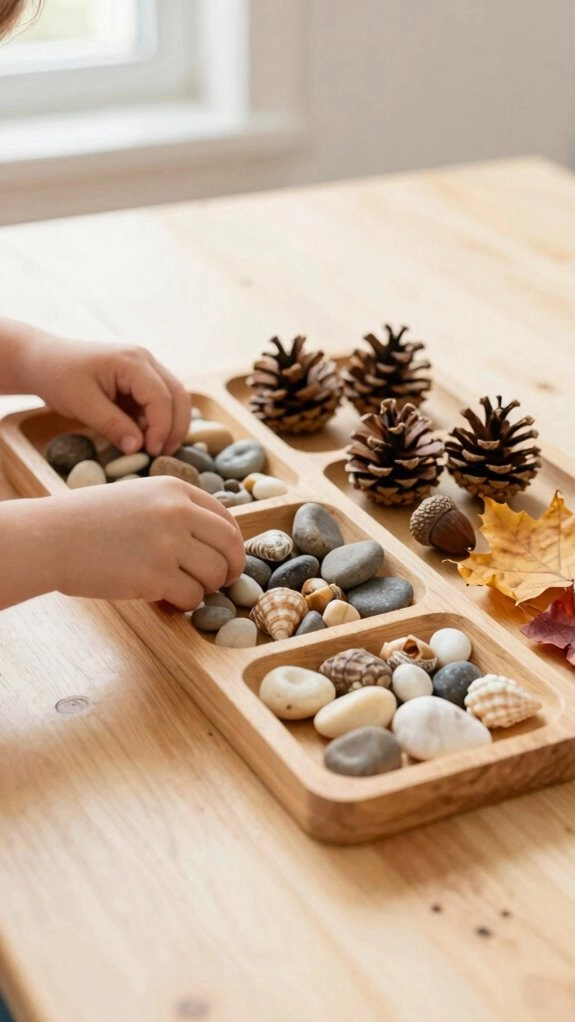
After testing puzzle pieces, you can solve new challenges by sorting objects into groups.
You notice colors, sizes, and shapes, then try rules.
When a piece doesn’t fit, you pause and revise your plan.
Sorting boards, matching pictures, and bins help you stay focused and remember each rule.
Challenge yourself to switch from sorting by color to sorting by shape.
Explain, “These belong together because…” Your reasons build thinking and confident communication.
In pretend scenarios, your Storytelling choices can sort animals, vehicles, or foods.
Ask a grown-up, “What could I try next?” You’ll learn changing strategies helps uncover solutions.
You can also sort picture cards showing the ladybug life cycle from egg to larva, pupa, and adult.
Everyday Problems Children Can Solve Independently
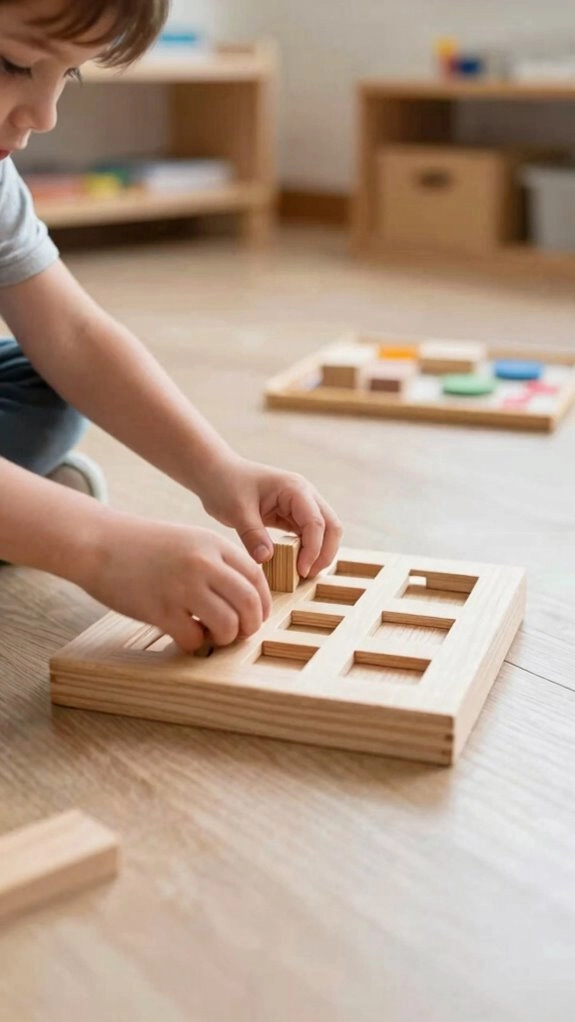
Everyday play gives you chances to solve problems on your own. Each challenge helps you feel like an important part of the group. You can test ideas, notice results, and try again.
- Build a stronger base when your block tower tips.
- Use Role Negotiation to share parts in a pretend game.
- Find creative replacements for Missing Supplies at your shop or clinic.
- Take turns, fix a rule mistake, and choose your next board-game move.
When a puzzle piece won’t fit, turn it or test another space. You learn that setbacks aren’t failures. They’re clues. Your choices keep play moving.
How Adults Can Guide Without Giving the Answer
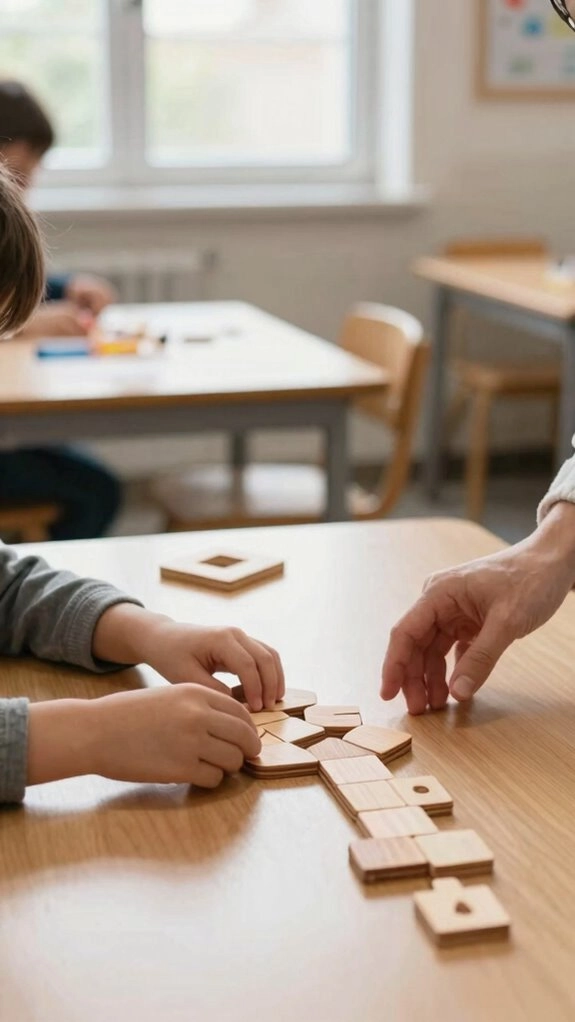
How can adults help you solve a problem without taking over? They can ask open questions, like, “What else could you try?” This shows your ideas belong in the play.
You might hear, “Yes, and what could happen next?” Adults can join briefly, modeling patience as they say, “Hmm, this didn’t work. What can I test?”
They can offer blocks, boxes, or scarves, then step back. By giving waittime and a quiet smile, they leave room for your thinking.
They may suggest, “Try one idea first, then notice what changes.” You remain the leader while support stays nearby too.
Supporting Persistence When Activities Become Difficult
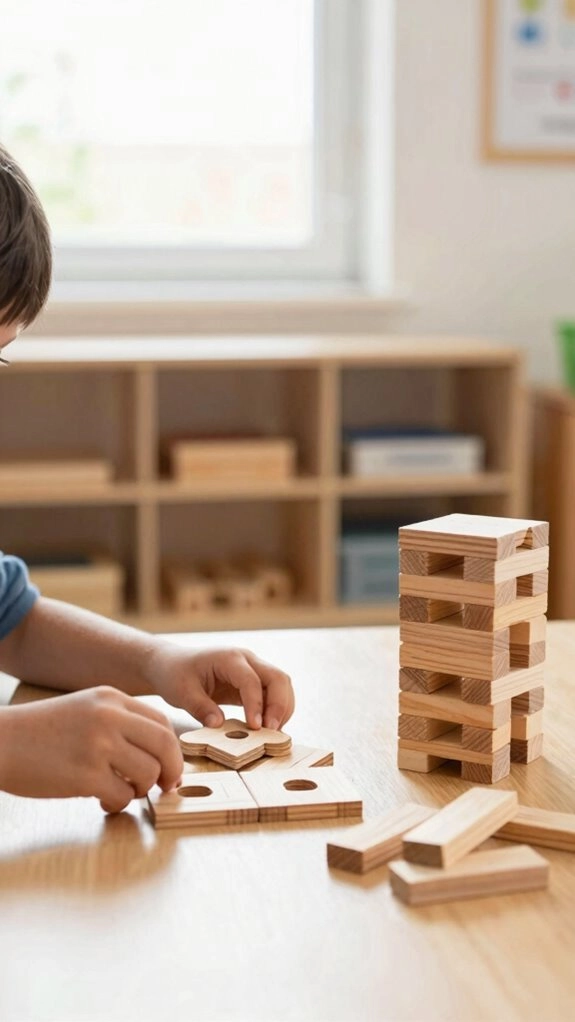
When a game feels hard, you can build persistence by trying one small change.
You belong in the learning process, even when a block tower falls.
Use Emotion coaching to name feelings and stay calm.
Try these steps:
- Pause for stress breaks and breathe slowly.
- Ask, “What else could you try?”
- Test a new plan, then notice what changed.
- Choose gradual challenges that stretch you safely.
Each retry strengthens attention, memory, planning, and flexible thinking.
Mistakes give you useful clues, not proof that you can’t do it.
If play causes extreme distress or avoidance, ask an adult about support.