Preschool Science Activities That Encourage Curiosity and Discovery
- Preschool Science Activities That Encourage Curiosity and Discovery
- Key Takeaways
- Why Science Belongs in Early Childhood Education
- Simple Nature Exploration Activities
- Water and Floating Experiments
- Exploring Light and Shadows
- Learning About Plants
- Weather Observation Activities
- Simple Animal Science Activities
- Questions That Encourage Scientific Thinking
- How Parents Can Support Science Learning at Home
You can turn everyday questions into exciting preschool science activities. Take a nature walk and sort leaves, rocks, or pinecones by color and texture. Predict which objects float, then test them in water. Use a flashlight to make shadows change size. Watch seeds sprout, track clouds, and sketch animal tracks. Ask what you notice, why it happened, and what you could test next. Keep exploring to uncover more simple ways science works around you daily.
Key Takeaways
- Invite children to ask questions, make predictions, observe results, and explain what they notice during every science activity.
- Take nature walks to collect leaves, rocks, and twigs, then sort them by color, texture, size, or shape.
- Use a water bin to test which objects float or sink, comparing predictions with what actually happens.
- Explore light and shadows with flashlights, toys, paper, and clear plastic to see how light changes.
- Track weather, plants, and animal signs with simple charts, drawings, measurements, and daily observations.
Why Science Belongs in Early Childhood Education
Preschoolers are natural scientists because they’re eager to ask questions and investigate. When you welcome that curiosity, every child feels like a member of the learning community.
Science lets you test ideas, notice patterns, and learn that mistakes can lead to answers. You build confidence as you observe, compare, sort, measure, and share what you uncover.
Talking about predictions and results supports vocabulary growth and helps you explain your thinking.
Science also strengthens problem-solving skills, focused attention, math, and geography connections.
Short, regular science moments nurture World curiosity and show you that STEM is a place where you belong.
Through guided play, teachers can offer questions and materials that extend investigation while keeping you in charge of discovery.
Simple Nature Exploration Activities
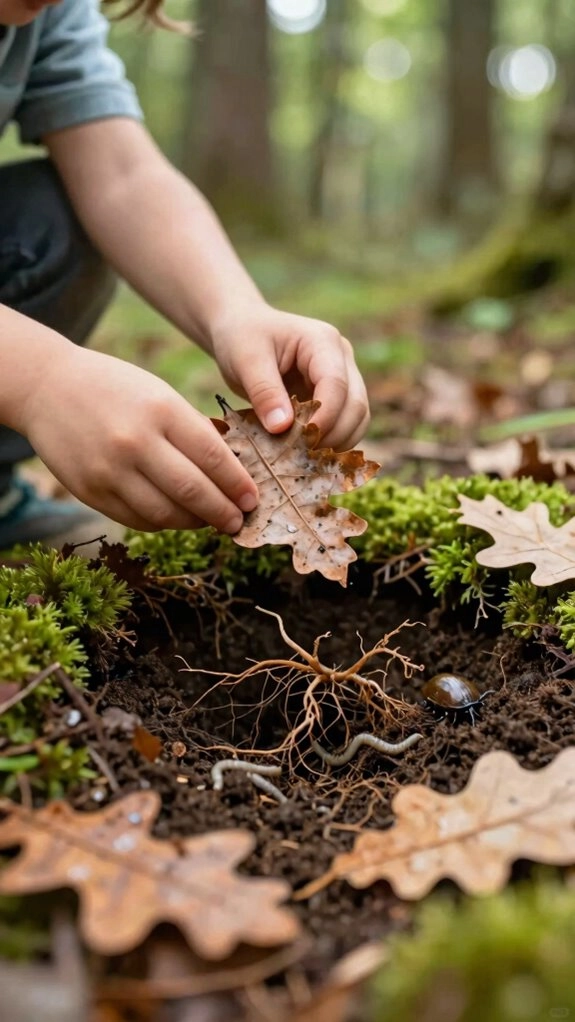
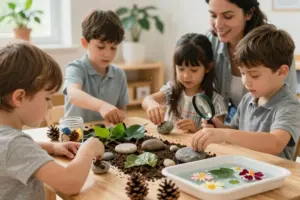
As you venture outdoors, a short nature walk can turn your schoolyard into a science lab. Gather three to five leaves, flowers, or rocks with your friends. Use your senses to notice color, size, shape, and feel. Try seasonal item hunts and color texture comparisons. Then sort treasures by one feature and share what you find. Like scientists, practice noticing changes and asking questions about what you discover.
| Treasure | Look for | Group it |
|---|---|---|
| Leaf | color | bright or dull |
| Rock | texture | rough or smooth |
| Twig | size | big or small |
| Pinecone | home | ground or tree |
Talk about where each treasure lived. Every spot can help plants and animals. You belong helping everyone notice more.
Water and Floating Experiments
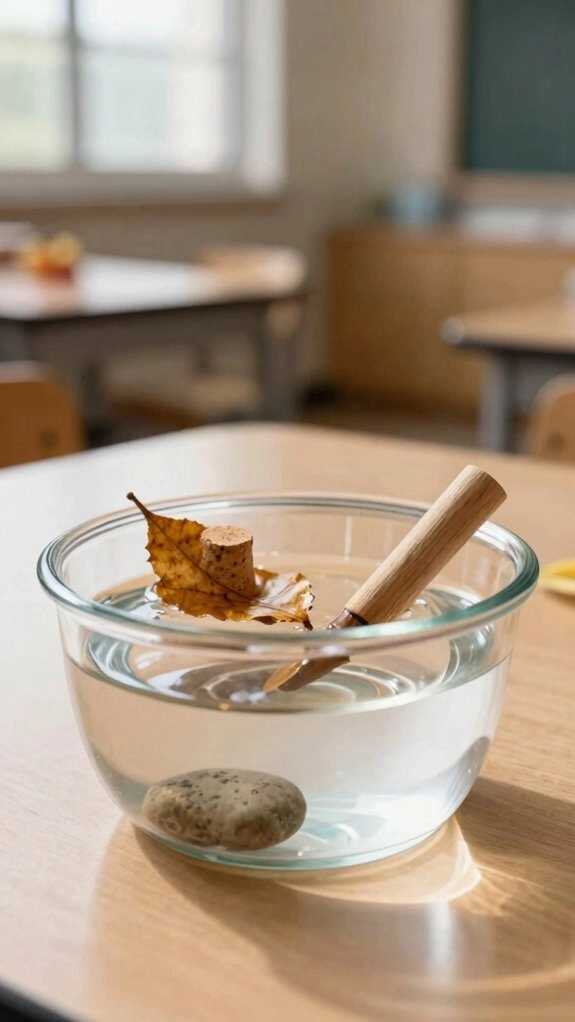
With a clear water bin, you can survey what floats and what sinks.
Invite your group to predict whether a key, wood block, ball, or fruit will stay up.
Then test each item together and compare your ideas.
Explain that toys sink when they’re heavier than the water displacement they create, while floating objects push aside enough water to stay up.
You can also weigh sponges, towels, fabric, and foil after soaking.
For a surprise, an adult can poke a pencil through a water bag.
Finally, test eggs in tap, sugar, and salt water.
You’ll notice saltier water helps eggs float.
Adding salt increases water density, making it easier for the egg to float.
Exploring Light and Shadows
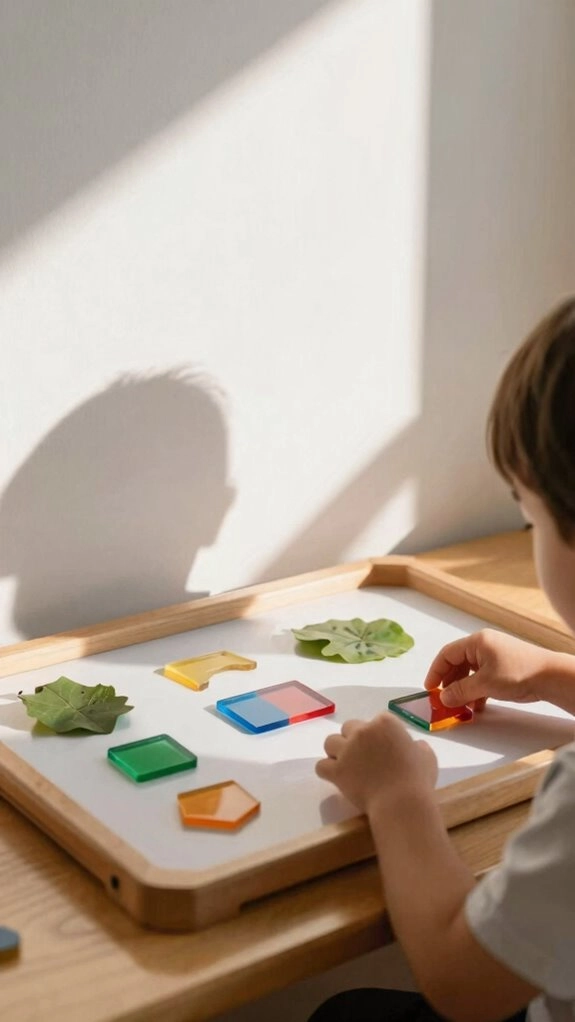
How can a small flashlight turn a plain wall into a science lab? Invite your friends to uncover together.
Shine it through plain paper, tissue, or clear plastic. Notice how the beam becomes dimmer or stays sharp.
Then place blocks or toys before the wall. Move them closer and farther to watch shadows grow, shrink, darken, or fade.
Try two flashlights and see overlapping shapes join.
Cut cardboard puppets, then slide them across the light.
Thin paper slits make bright lines that blur at angles.
Add rainbow colors and sensory textures to your shapes.
Your curious team will explore.
These hands-on experiments engage multiple brain networks, helping children remember discoveries through movement, attention, and play.
Learning About Plants
After making shadows dance on the wall, you can examine the quiet science of plants. Place celery or white flowers in colored water, then watch their stems carry color upward.
Examine plant parts together: roots anchor and drink, stems move water, leaves make food, and flowers make seeds.
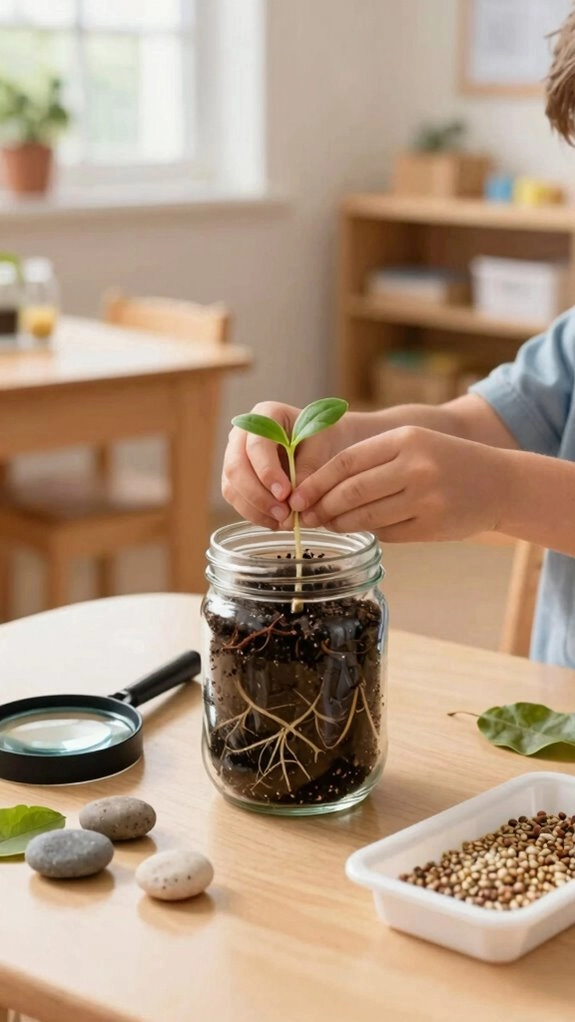
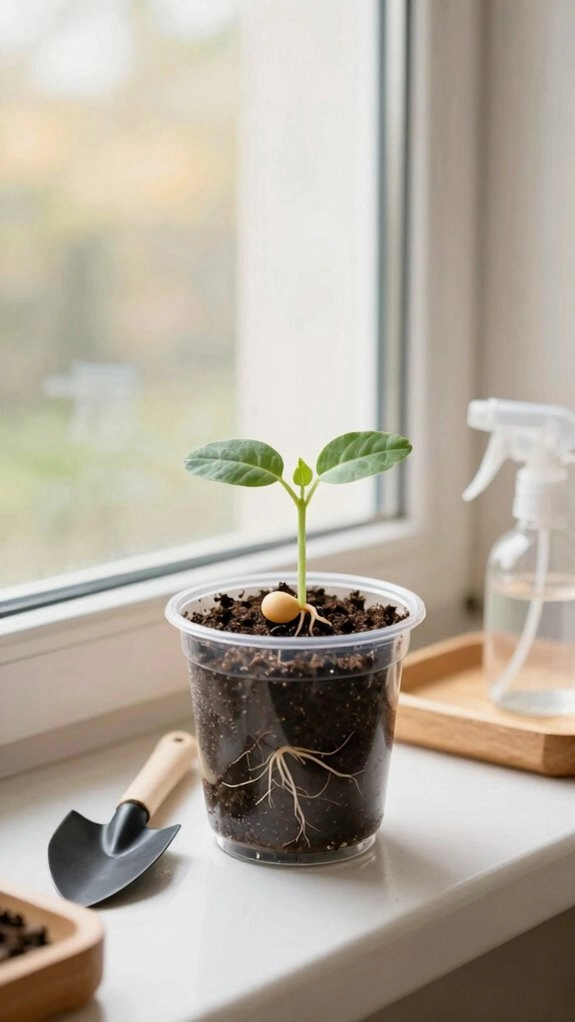
For seed sprouting, plant a bean in a clear cup. Track its changes each day, from swelling to roots, shoots, and leaves.
Give one seedling light and keep another dim, with equal water. You’ll see sunlight helps plants grow greener and stronger.
Use a color wheel to talk about the warm and cool colors you notice in leaves, flowers, and stems.
Notice how gardens, forests, and deserts welcome plant neighbors.
Weather Observation Activities
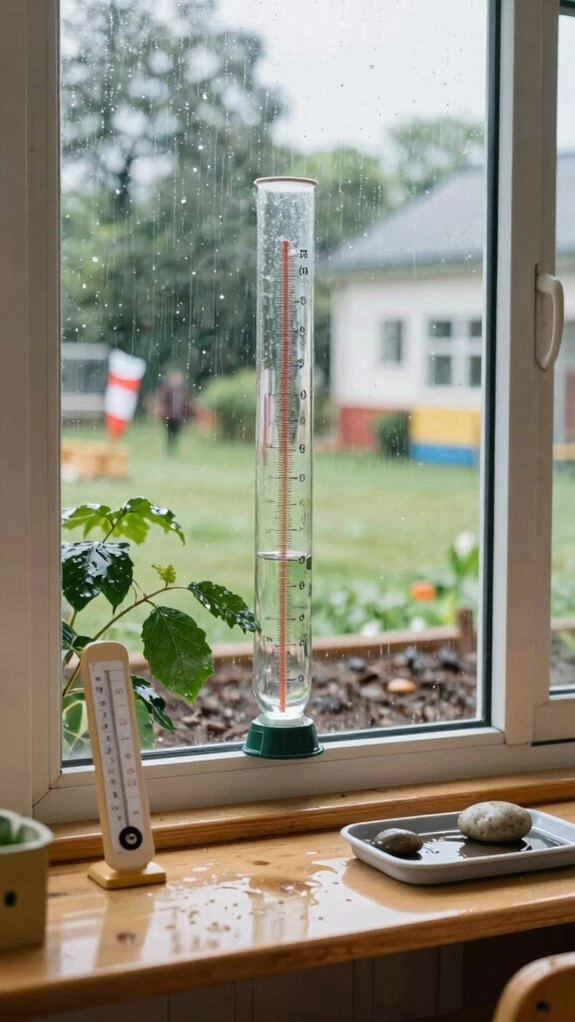
Why does the sky look different each day? You and your classmates can become weather watchers together.
Step outside for a weather senses check. Notice cloud cover, air temperature, moving leaves, and sounds of rain or thunder. Add sunny, cloudy, or rainy pictures to your daily chart. Count clouds or raindrops too.
Set out a clear rain gauge, then measure water height in millimeters.
Test pinwheels or tissues and label wind light or strong.
Track one cloud for fifteen minutes and draw its changes.
Try color mixing to paint sky shades, then enjoy shadow hunts when sunshine returns.
Together!
Simple Animal Science Activities
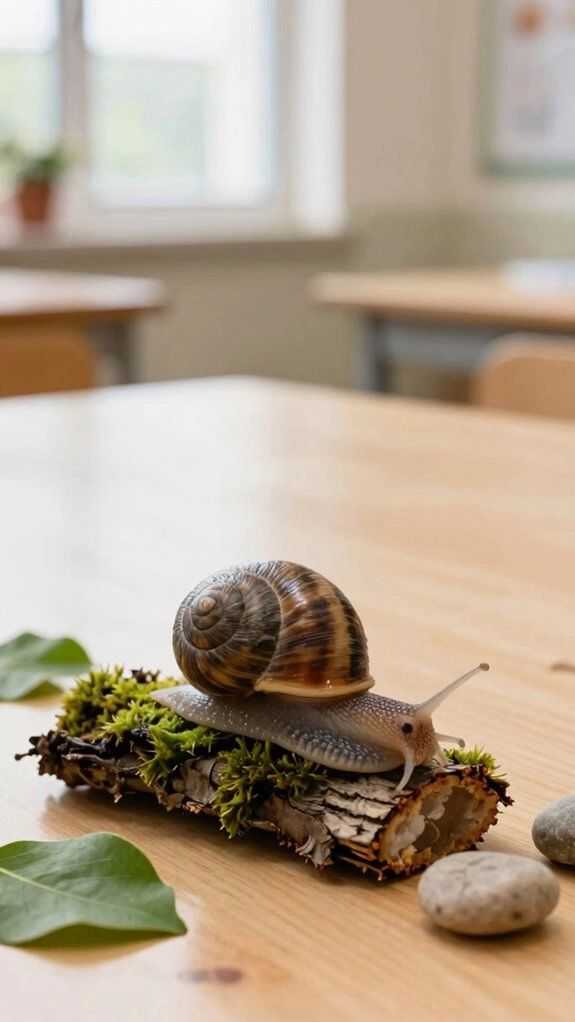
Animals invite you to look closely, ask questions, and notice tiny clues outdoors. Observe animal tracks with your group, then sketch them in a crayon nature log. Draw feathers or safely watched insects too.
Try a bees-at-work game: dab a cocoa-and-cornstarch pom-pom between cupcake-liner flowers. You’ll see how pollen travels and helps plants make seeds.
Practice animal needs by matching toy animals to ocean, forest, or desert homes. Look for water, food, and shelter clues.
Compare moist and dry containers with leaves or cotton. Notice which conditions seem healthier.
You’re learning like a scientist today alongside your curious friends.
Questions That Encourage Scientific Thinking
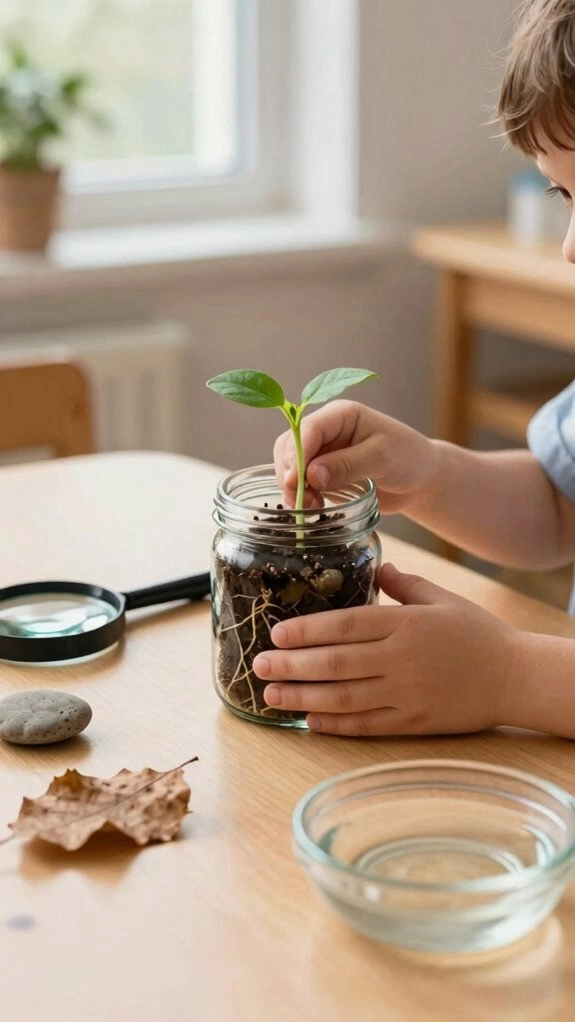
Your curious questions can guide every animal observation and science activity.
Ask, “What do you predict will happen?” before you begin.
Then observe before predict again, noticing color, texture, and movement.
Invite your group to share what everyone sees.
After the result, ask, “Why do you think that happened?”
You can investigate cause and effect together.
Next, ask, “What should we test next?”
Change one thing, such as the liquid or amount of salt.
Keep the rest the same.
When something disappears, ask where it went and how you could check.
Compare evidence together, and let each investigation belong.
How Parents Can Support Science Learning at Home
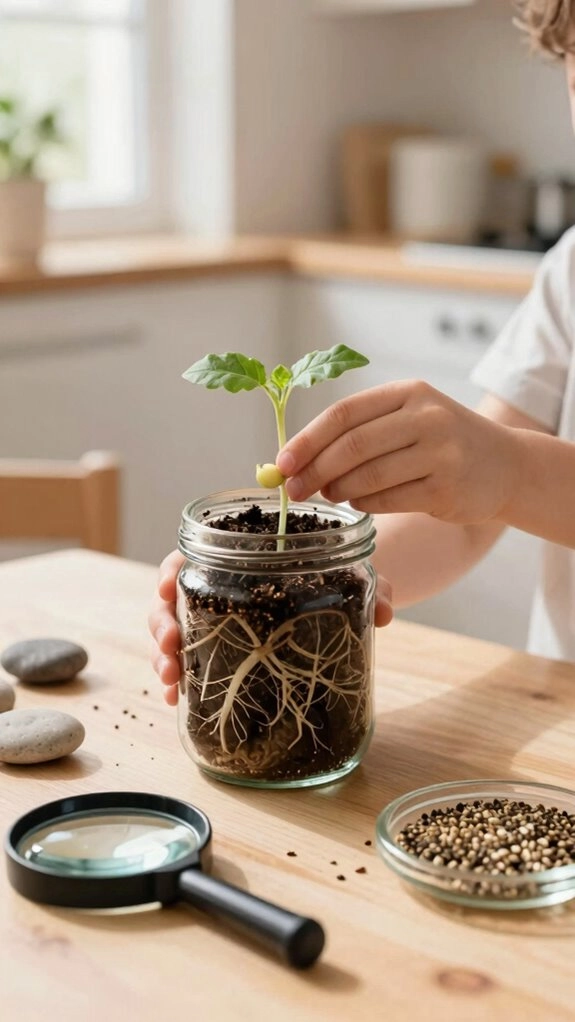
Science can happen at home during simple moments you already share. You and your child belong in the world of finding.
- Try Encouraging Observation: ask, “What might happen if we add water?”
- Practice Following Evidence by watching bubbles, floating objects, or dissolving salt.
- Support Building Vocabulary with words like observe, predict, and dissolve.
- Invite Child Led Experiments. Let your child choose colors, objects, and materials.
Create Weekly Science Rituals with one safe, repeatable activity.
Mix colors or test sink and float.
Make Simple Experiment Logs using photos or drawings.
Then ask, “What happened, and why?”
You’ll grow confidence together.