The Science of Taste and Smell for Curious Kids
- The Science of Taste and Smell for Curious Kids
- Key Takeaways
- How Our Sense of Taste Works
- How Smell Changes the Way Food Tastes
- The Five Basic Tastes
- Why Some Foods Taste Sweet or Sour
- How Texture Changes the Eating Experience
- Why Children Develop Food Preferences
- Simple Taste Experiments for Kids
- Making Mealtime a Fun Science Experience
Your tongue and nose team up to create the flavors you notice. Saliva dissolves food molecules, letting taste buds detect sweet, salty, sour, bitter, and umami. As you chew, aromas travel into your nose and add important clues. Texture also changes what you experience. A stuffy nose can make foods seem bland because smell helps so much. Your preferences grow from senses, memories, and routines. Keep exploring to uncover simple experiments and surprising flavor secrets.
Key Takeaways
- Taste buds detect five basic tastes: sweet, salty, sour, bitter, and umami.
- Saliva dissolves food molecules, allowing them to fit into taste receptors on the tongue.
- Taste cells send electrical signals through nerves to the brain, which identifies the taste.
- Smell strongly shapes flavor because food aromas travel from the mouth to the nose while chewing.
- A blocked nose can make food seem bland because the brain receives fewer smell signals.
How Our Sense of Taste Works
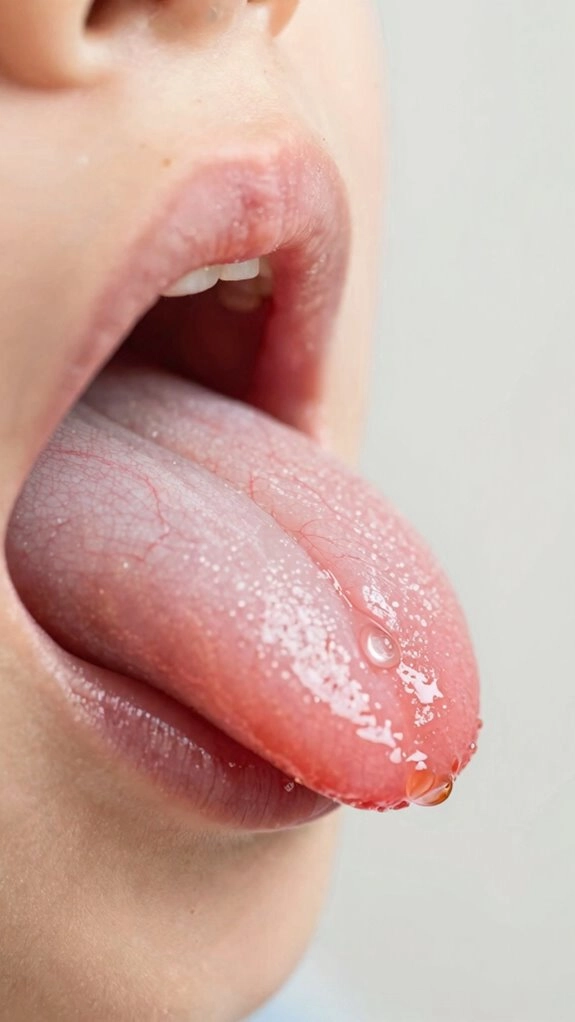
Each bite starts a tiny science experiment on your tongue.
Taste buds hold sensory cells that notice sweet, salt, sour, bitter, and umami.
Saliva and receptors work together: saliva dissolves food molecules, and receptors grab them like tiny locks and keys.
Your cells send electrical messages through nerves to your brain.
These Taste signal pathways help your brain recognize patterns from different tongue areas.
One receptor can react to several related chemicals, so your taste cells build a shared pattern.
You’re part of an amazing team: your taste cells renew about every 10 days, keeping you ready to investigate.
Proteins help form cell receptors, whose shapes let them recognize specific food molecules.
How Smell Changes the Way Food Tastes
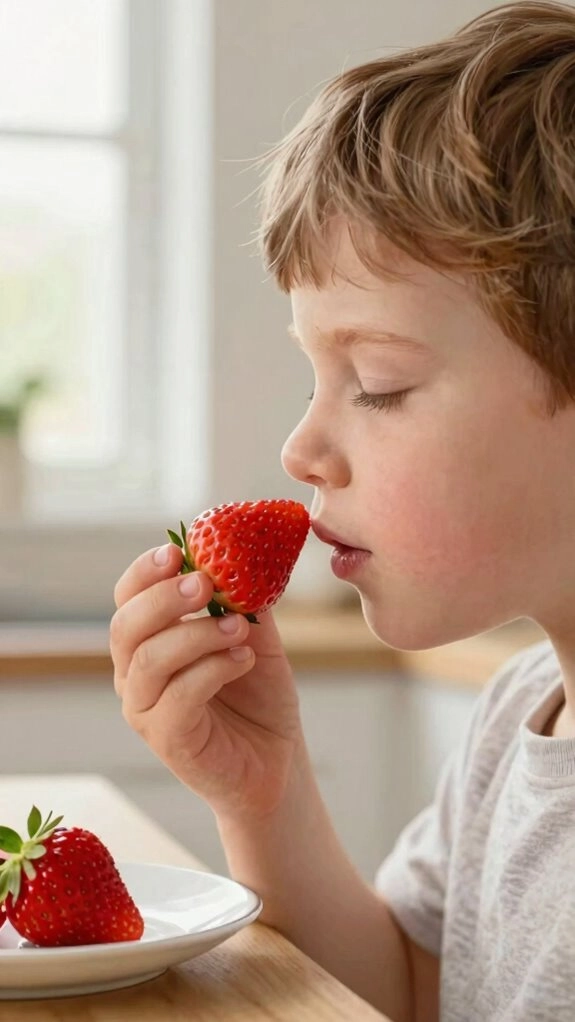
When you chew, food aromas travel from the back of your mouth into your nose.
Tiny odor molecules activate smell receptors there.
Your brain mixes those messages with signals from your tongue and builds a flavor picture.
This brain flavor mapping helps you recognize foods as part of the shared experience of eating.
Try safe Snack aromatherapy: gently smell a food before a bite.
If a cold blocks your nose, food may seem bland.
You might even struggle to tell an apple from an onion.
Smell doesn’t just add a little; it does much of the flavor work.
Together!
Music can also shift your mood quickly, so a calm soundscape may make snack time feel more relaxing.
The Five Basic Tastes
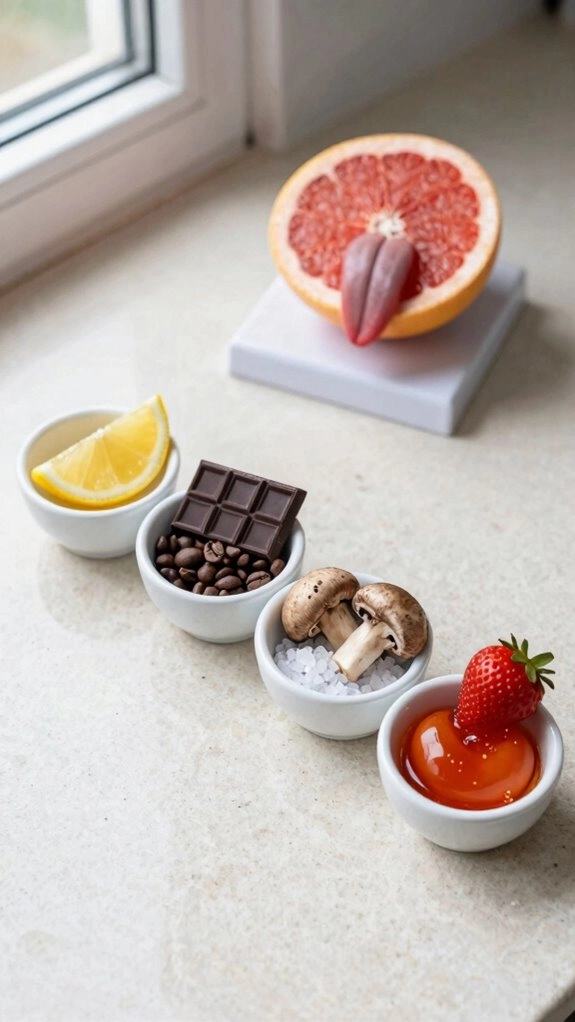
Your tongue detects five basic tastes: sweet, salty, sour, bitter, and umami.
You join everyone else in using taste buds to survey food.
Inside each bud, sensing cells wait for food chemicals to dissolve in watery saliva.
The chemicals fit into receptor pockets like keys fitting locks.
Umami receptors help you notice savory foods, while other receptors create salty sensations.
One receptor can respond to several related molecules.
Taste cells can also react a little to more than one taste.
Together, their activity forms patterns that your brain reads.
That’s why many foods seem complex, even before aromas join experience.
Some chemicals, such as hydrochloric acid, are highly corrosive and should never be tasted or handled without proper safety precautions.
Why Some Foods Taste Sweet or Sour
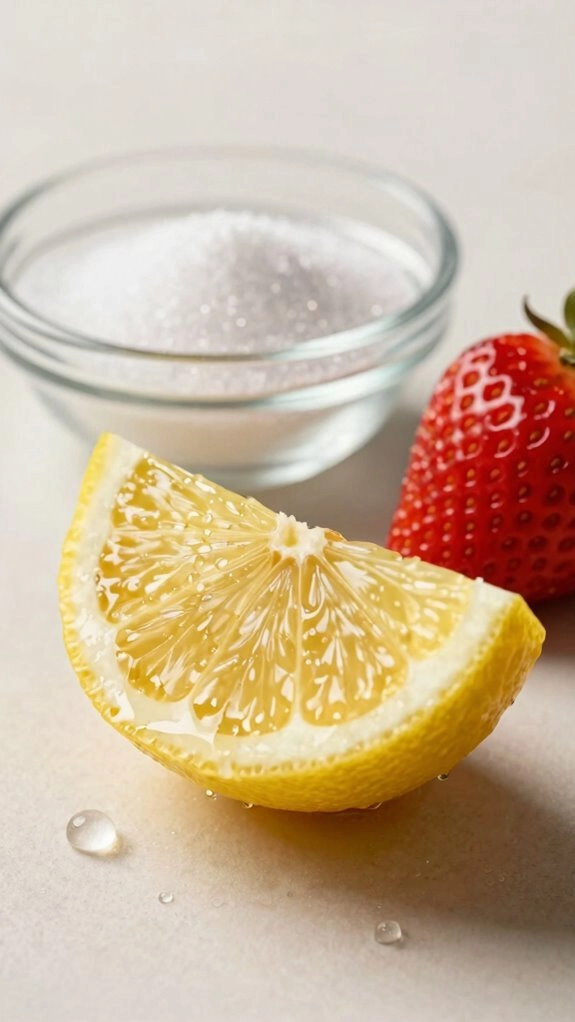
A lemon’s sharp sourness and a cookie’s sweetness begin with tiny dissolved molecules. These molecules join taste receptors in your taste buds, like teammates sending messages.
Citric acid in lemon juice creates sour signals. Sugar in foods activates sweet receptors, creating a sweet taste.
How tongue receptors work helps you understand why flavors differ.
Fine icing sugar dissolves quickly, so more reaches your taste buds.
When you’re congested, food may seem dull because smell helps flavor.
Your taste cells renew about every ten days, keeping you ready to discover.
You’re part of a curious community that notices every signal.
You can explore sourness further with a red cabbage pH indicator, which turns bright reddish pink in acidic liquids such as lemon juice.
How Texture Changes the Eating Experience
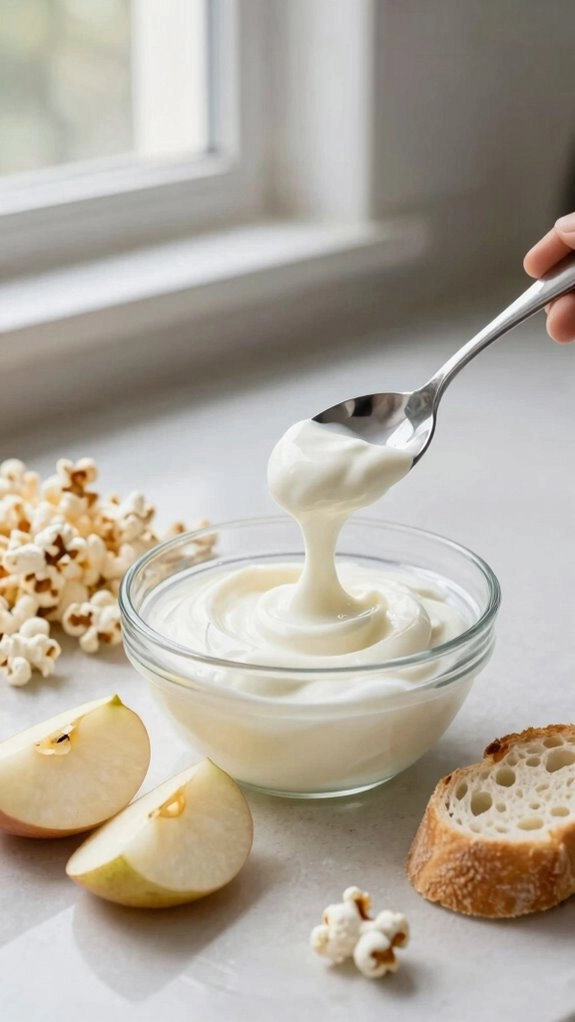
Taste isn’t only about sweet, sour, salty, bitter, and savory signals. Texture helps your brain build the full message.
When you Chew carefully, food breaks into tiny pieces. More surface area lets aromas and flavors escape.
Your saliva strength dissolves them, helping your tongue notice stronger tastes.
Particle size matters too. Fine icing sugar can taste sweeter than big crystals.
Cutting impacts flavor because different surfaces release different molecules.
Finally, texture attention helps you spot details: crisp or smooth foods feel different.
Together, your mouth and brain make every shared bite an adventure. You belong in this tasty science club.
You can explore how tiny particles spread through liquids by watching diffusion in a colorful water experiment.
Why Children Develop Food Preferences
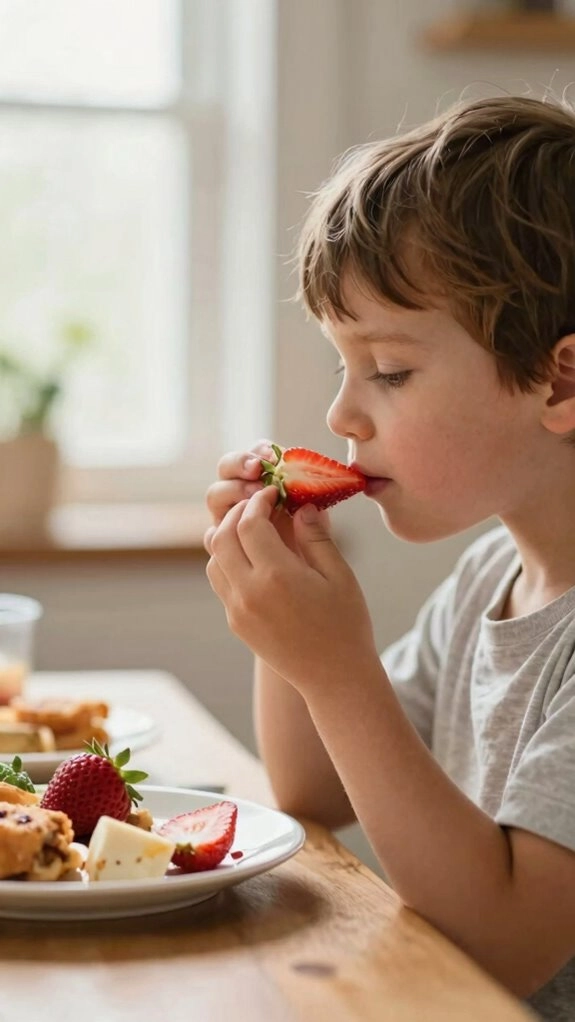
Why do you love some foods but avoid others? Your nose helps decide. It catches aroma molecules, which create much of flavor. When you have a cold, foods seem bland because smells can’t reach well.
Your tongue notices sweet, salty, sour, bitter, and umami. Some kids are supertasters, so bitter foods can feel extra strong.
Your brain links meals with feelings through sensory memories, family routines, and Playground learning with friends. You aren’t strange if your favorites differ from theirs.
Taste cells renew about every 10 days. With gradual exposure, a food may someday taste different. That’s okay, too.
Simple Taste Experiments for Kids

Your senses can test these food ideas with a few safe kitchen experiments. Work with friends and compare results; everyone’s taste memory can differ.
- Pinch your nose, taste a small food bite, then release it. Notice how smell strengthens Classroom flavor.
- Use sensory timers: hold crystal sugar on your tongue five seconds. Compare icing sugar; tiny grains dissolve faster.
- Dry your tongue gently, taste yogurt, wait, then retry. Saliva carries flavor to taste buds.
- Try salt water, sugar water, lemon juice, soy sauce, and cocoa. Record identifications. For tongue spotting, use cotton swabs with safe powders in class together.
Making Mealtime a Fun Science Experience
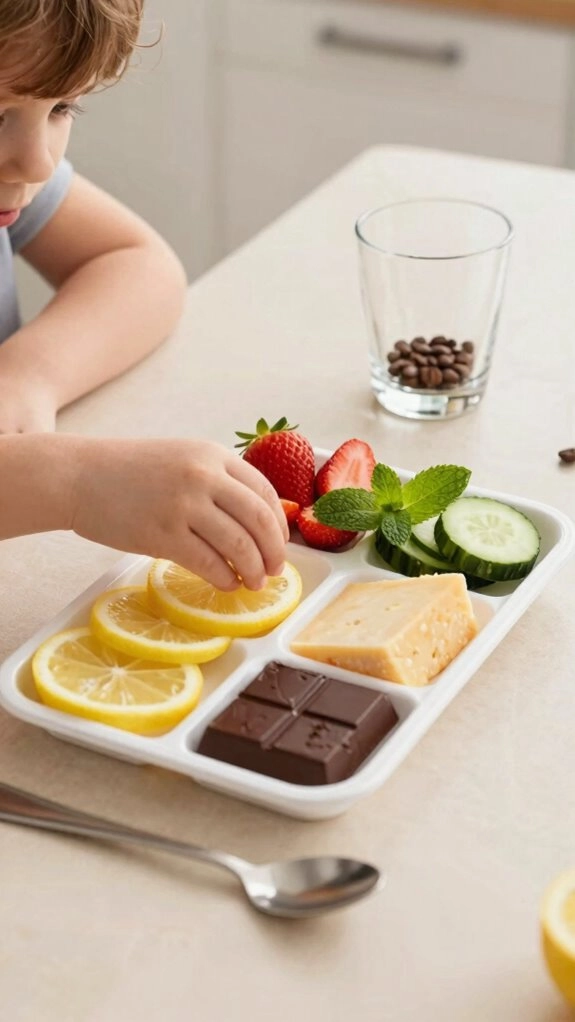
Turn dinner into a mini science lab, and let every bite teach you something. You and your family can uncover flavor together. Pinch your nose, taste a bite, then release it. Smell supplies about 80 percent of flavor, while your tongue still finds five tastes. Chew well because saliva frees food molecules. Try sensory uncovering hunts, and compare cooking methods, like roasting and steaming.
| Test | Notice |
|---|---|
| Nose open or closed | Flavor changes |
| Fine or coarse sugar | Fine tastes sweeter |
Your observations help everyone share discoveries, memories, and safe food choices as a curious team and celebrate each new clue.