Doctor Activities for Preschool That Turn Pretend Play Into Learning
- Doctor Activities for Preschool That Turn Pretend Play Into Learning
- Key Takeaways
- Why Doctor Pretend Play Is Valuable
- Setting Up a Simple Doctor's Office
- Learning About the Human Body
- Doctor Role-Play Ideas
- Checking a Teddy Bear
- Making a Pretend Appointment
- Learning About Healthy Habits
- Doctor-Themed Art and Literacy Activities
- Simple Science Connections for Preschoolers
- Helping Children Feel Comfortable Around Doctors
You can turn a pretend doctor’s office into a learning center for preschoolers. Set up a sign-in desk, waiting chairs, toy tools, and labeled supply trays. Children can check a teddy’s heartbeat, take temperatures, ask what hurts, and choose bandages. Add books, X-rays, height charts, and healthy-habit talks about sleep and food. These gentle routines build body knowledge, caring skills, and confidence for real visits. Keep going to explore activities, art ideas, and science connections.
Key Takeaways
- Set up a simple clinic with a reception desk, sign-in sheet, waiting area, and organized toy medical tools.
- Let children rotate through doctor, nurse, receptionist, and patient roles to practice empathy, teamwork, and communication.
- Use stuffed animals for checkups, asking “What hurts?” and listening carefully before choosing pretend treatments.
- Explore body concepts with toy stethoscopes, thermometers, X-rays, and height charts during playful examinations.
- Build confidence for real appointments by practicing predictable routines, calm breathing, feelings words, and healthy-habit conversations.
Why Doctor Pretend Play Is Valuable
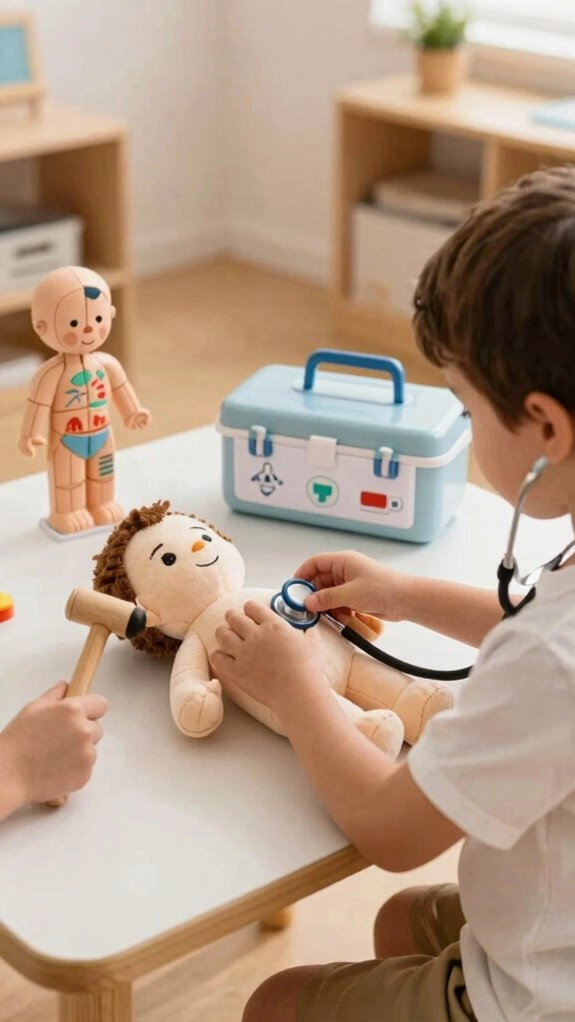
Doctor pretend play helps preschoolers find out real-life experiences in a safe, familiar way.
When you join the play, you can become a caring helper and see things from someone else’s view.
Name label games help everyone feel included in the team.
You practice friendly questioning by asking what hurts and listening closely.
Talking about feelings during visits makes worries easier to understand.
You can repeat checkups and comfort routines, such as deep breaths or holding a hand.
This practice makes unfamiliar moments feel less scary.
It also helps you use new words and share caring responses with friends.
Together.
Role-playing also builds empathy and cooperation as children learn to understand a patient’s feelings and work kindly with friends.
Setting Up a Simple Doctor’s Office
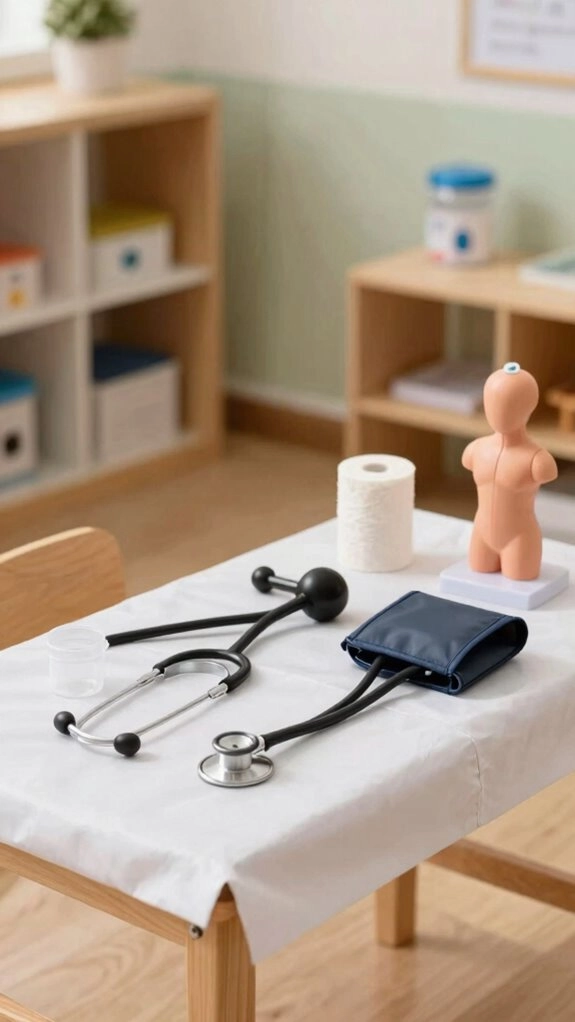
You can turn caring pretend play into a simple doctor’s office with a few supplies.
Create a reception desk with a Hospital sign clipboard pen and sign-in sheet. Add Comfort cues and a visual schedule so everyone feels welcome.
Set chairs and picture books nearby for waiting games and calm breathing.
Hang a backdrop for the exam room.
Label trays for toy tools and bandages.
Include a thermometer cuff height chart and picture X-rays.
Children can record visits on forms measure results and return supplies to picture-labeled bins.
Using tools, writing on forms, and sorting supplies builds hand-eye coordination through playful grasping, releasing, and placing.
This shared space helps your young medical team take turns confidently.
Learning About the Human Body
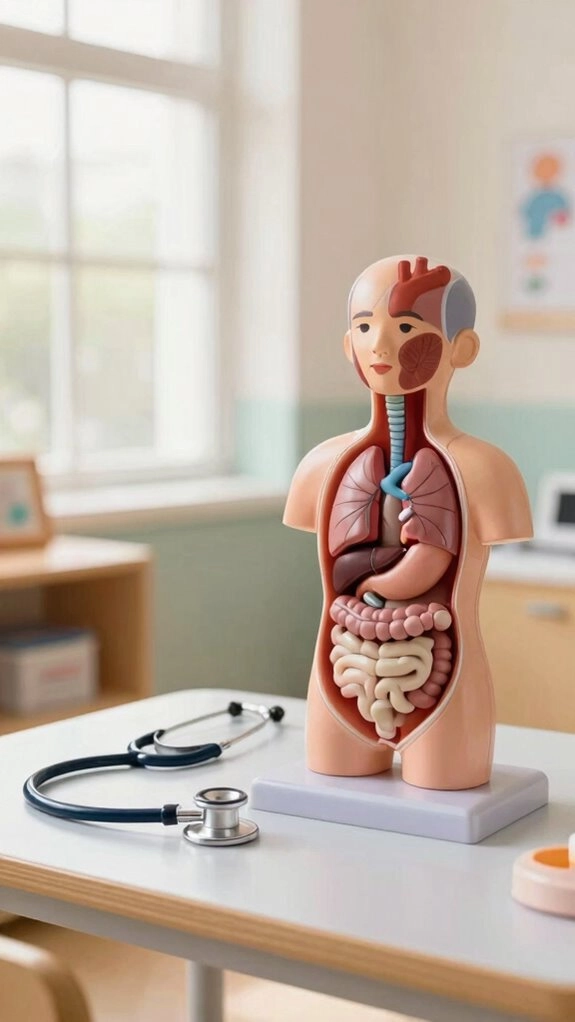
As children examine a stuffed patient, they can figure out how amazing bodies are.
You can let your doctors listen for a heartbeat with a toy stethoscope.
Explain that each beat shows the body is working.
A play thermometer helps your group connect numbers with health and rest.
Show X-ray pictures so they understand how doctors look inside for causes.
Build symptom vocabulary by naming a sore tummy, throat, or ear.
Invite children to practice doctor charting on records.
They can match symptoms with rest, water, or a checkup.
Finally, use a height chart to celebrate differences as bodies change.
Ask children to explain their care choices in their own words to encourage self-explanation and reveal what they understand.
Doctor Role-Play Ideas
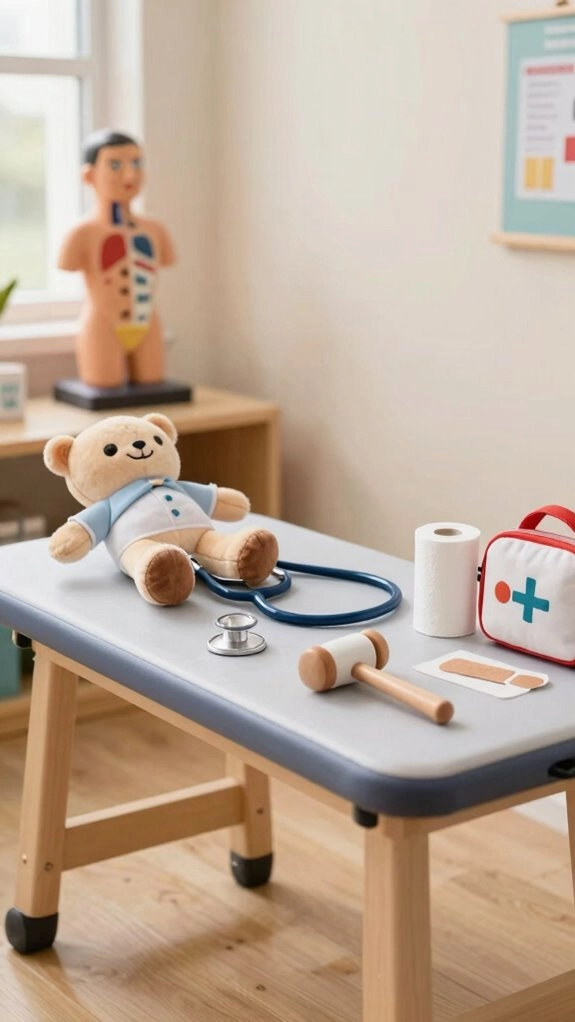
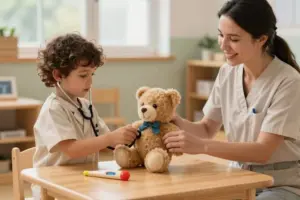
You can check a teddy bear and ask where it hurts.
Make a pretend appointment at your clinic reception desk.
Then examine your patient and choose a bandage or treatment plan.
Encourage your child to explain why they chose each treatment, building true understanding through pretend problem-solving.
Checking a Teddy Bear
Turn a teddy bear into your first patient with a simple pretend clinic.
Gather a toy stethoscope, thermometer, bandage, and labeled trays.
Let Teddy say, “It hurts here,” for symptom roleplay.
You can ask kind questions and repeat what you hear: “You’ve got a bug?”
Take turns being doctor and patient, so everyone feels included.
Check a picture X-ray and Teddy’s temperature.
Practice chart recording on a simple medical form.
Add a bandage and write a pretend prescription with medicine labeling.
End with a caring follow up visit.
You’ll build listening skills, conversation, observation, and confidence together as friends.
Making a Pretend Appointment
How does a pretend doctor visit begin?
You can create a welcoming clinic with a sign-in sheet and a labeled waiting area.
Everyone gets turn taking practice while patients wait for the nurse.
Let your child lead as the patient.
Use Question and answer prompts, such as “What hurts?”
Listen closely and repeat their ideas.
Then check temperature, listen to heartbeat, and add a bandage.
Switch roles so everyone belongs on the care team.
End with a prescription and healthy-habits chat about water, food, and sleep.
A clipboard helps you remember each caring step in order together today.
Learning About Healthy Habits

A healthy habits checkup lets preschool doctors identify what helps bodies grow strong. You can record water, meals, and sleep on a labeled clipboard. Then measure a friend’s pretend height and check a toy thermometer. Explain that fruits, vegetables, clean water, and rest help everyone feel well. Your clinic team can practice healthy routines together. Add a familiar song as a 20-second timer while children pretend to wash their hands.
| Habit | Caring message |
|---|---|
| Wash hands | You protect friends. |
| Drink water | You help your body. |
| Sleep early | You recharge overnight. |
| Eat vegetables | You gain vitamins. |
Try hygiene sorting with picture cards for food, sleep, and cleanliness. Write or trace a daily prescription goal. You belong here.
Doctor-Themed Art and Literacy Activities
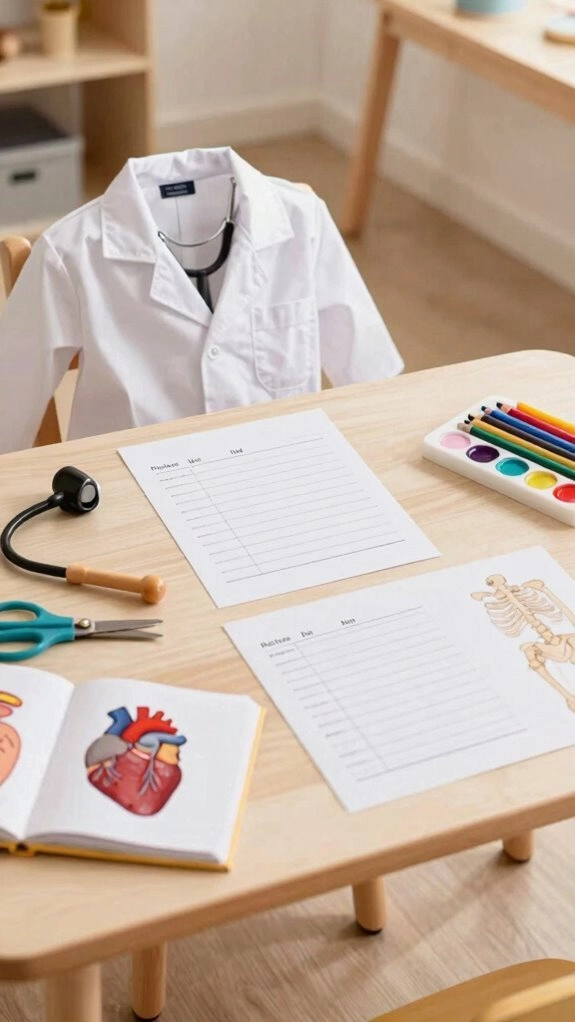
Healthy habits can lead naturally into a busy pretend clinic full of words and pictures.
You can welcome every doctor with sign-in sheets, clipboards, and prescription pads.
Children practice writing names and documenting symptoms during each visit.
Put paper labels and picture-word cards on supply trays, so your team matches tools and cleans up together.
Offer illustrated clinic forms for symptoms, diagnosis, and treatment.
Repeatable prompts help children build sentences.
Add height charts and toy thermometers for short entries.
Finally, let them create X-ray pictures and label what they see.
This shared clinic makes everyone feel included and capable.
Simple Science Connections for Preschoolers
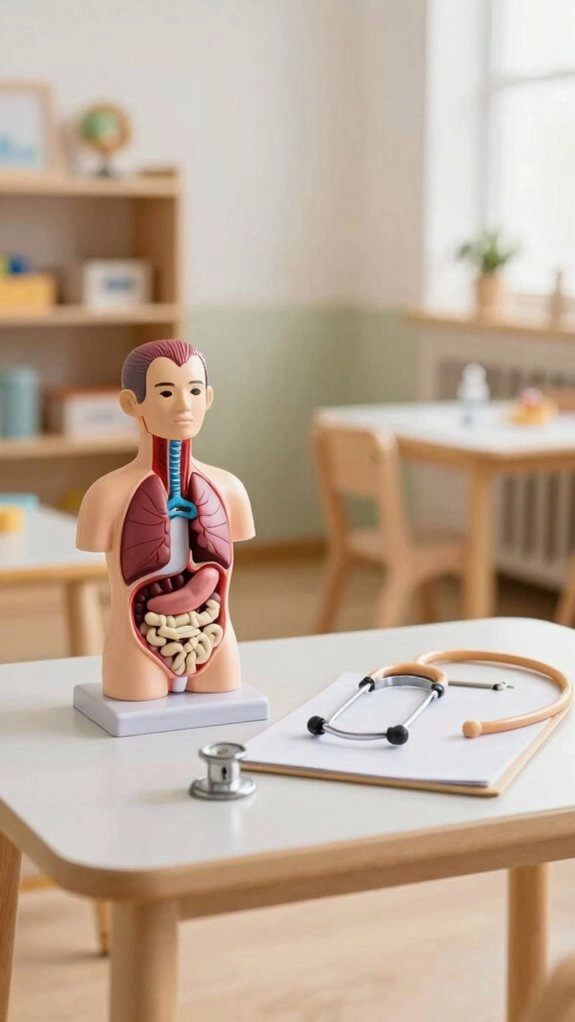
Inside the pretend clinic, children can study science through simple checkups.
You can use color-changing thermometers and make thermometer charts to show temperatures.
Invite your group to listen with toy stethoscopes.
They’ll notice heartbeats and try sound comparisons, such as loud and quiet taps.
Add labeled imaging pictures to a tissue-box light screen.
Children can examine how tools help us see inside without touching.
Measure a doll on a height chart, then count and record its inches.
Cause and effect play also grows during triage: a tummy ache leads to steps that help.
Everyone belongs on your clinic team.
Helping Children Feel Comfortable Around Doctors
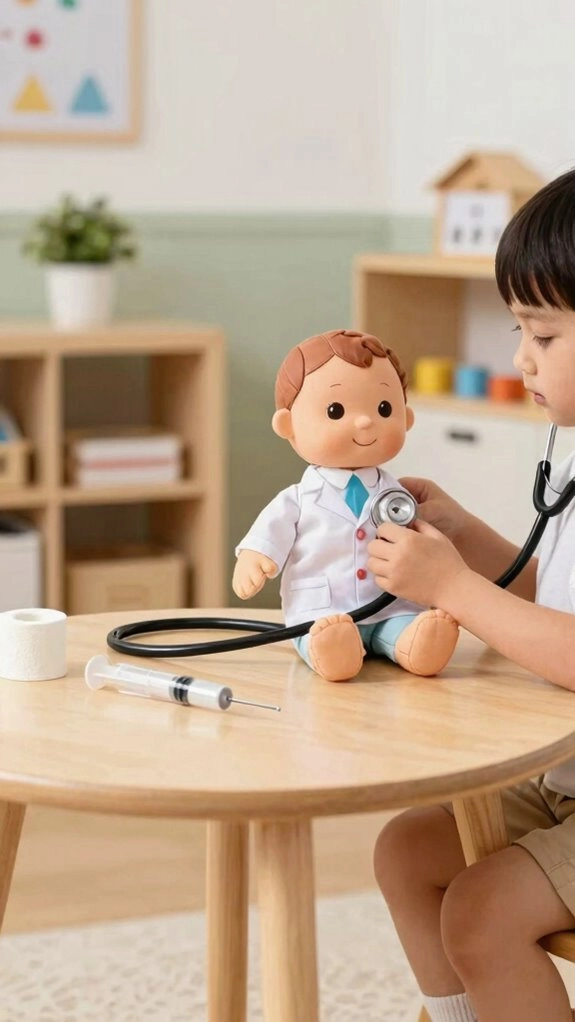
Pretend clinic play can also make real doctor visits feel more familiar. You can build comfort routines that help your child feel brave and included.
- Let them check a heartbeat, use a color-changing thermometer, and write a prescription.
- Follow their lead when they say, “It hurts here.” Mirror their words so they know you’re listening.
- Practice nurse waiting, then enter the exam room. These calm shifts make each step predictable.
- Be the patient and pause for questions. Try playful breathing together, then discover pretend X-rays. Your child can share worries and imagine helpful answers before their next real appointment.