
How Children Begin to Understand the World of Work

- How Children Begin to Understand the World of Work
- Key Takeaways
- Why Career Awareness Can Start in Early Childhood
- How Pretend Play Supports Learning
- The Connection Between Imagination and Problem Solving
- How Children Develop Ideas About Different Careers
- Why Real-World Experiences Make Learning More Meaningful
- Encouraging Curiosity Without Limiting Career Choices
- Simple Ways Parents Can Introduce Different Careers
You begin understanding the world of work by noticing people who help each day. When you visit shops, clinics, or building sites, ask what each worker does. Pretend play lets you try roles like nurse, mechanic, cleaner, or x-ray technician. You learn that workplaces need teamwork, ideas, and problem solving. Seeing many kinds of workers helps you imagine more choices for yourself. Keep exploring, and you’ll uncover how everyday experiences can build future possibilities too.
Key Takeaways
- Children begin forming ideas about jobs early, often by age seven, through family, school, media, and everyday observations.
- Pretend play helps children explore workplace roles, responsibilities, teamwork, and the different people needed to make services work.
- Learning precise job vocabulary, such as mechanic or x-ray technician, helps children understand what workers actually do.
- Real-world experiences, including visits, stories, and noticing workers locally, connect school learning to careers and daily life.
- Diverse role models and stereotype-free discussion help children see that people of any gender or background can pursue many careers.
Why Career Awareness Can Start in Early Childhood
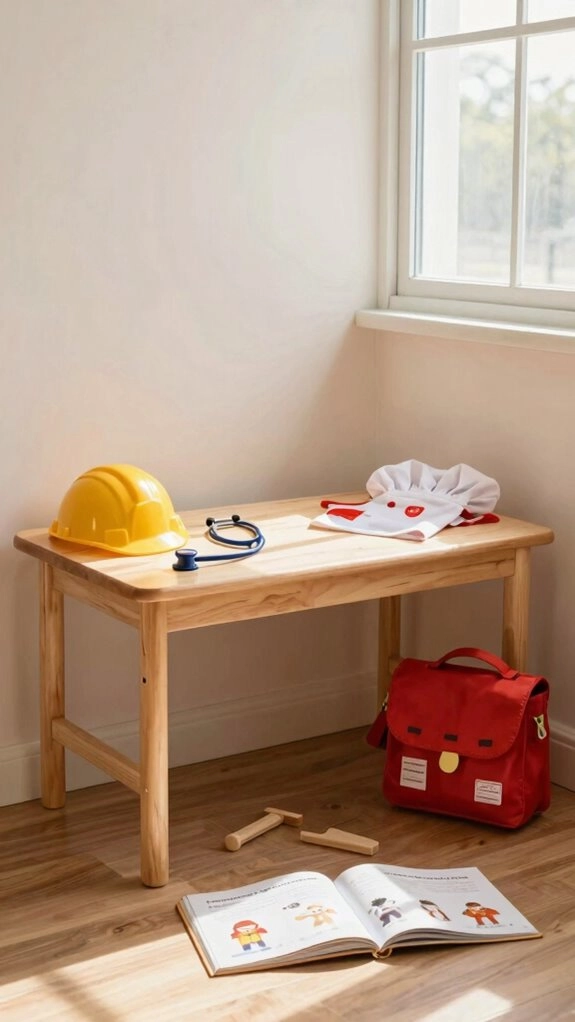
You don’t need to wait until you’re older to start learning about work. By around age seven, you may already hear ideas about which jobs fit boys or girls. Exploring careers early helps you question those limits and feel that you belong.
You aren’t choosing one future job yet. You’re uncovering possibilities and building confidence.
Inclusive rolemodels show you that people from many backgrounds and abilities contribute everywhere. Diverse examples can include scientists, mechanics, artists, nurses, and weather forecasters.
Teachers can connect maths, science, and new words to real jobs. This supports breaking stereotypes and expands your view too.
Seeing how university students balance classes, projects, and society activities can also show you that work involves teamwork, creativity, and meeting new people.
How Pretend Play Supports Learning

During pretend play, you can step into jobs that make the world work.
In a pretend hospital, you might welcome patients, clean rooms, draw blood, or take x-rays.
This Role play vocabulary introduces names like mechanic, phlebotomist, and x-ray technician.
As you join classmates, you see that every workplace needs many people.
You practice sharing ideas and communicating through workplace teamwork.
Trying different roles helps you feel included in your community.
It also builds imagination practice and job confidence.
Regularly exploring varied jobs can keep narrow ideas from forming too early.
You may uncover a place where you belong.
Guided play can help you explore these roles further when an adult asks questions and provides helpful materials without taking control.
The Connection Between Imagination and Problem Solving
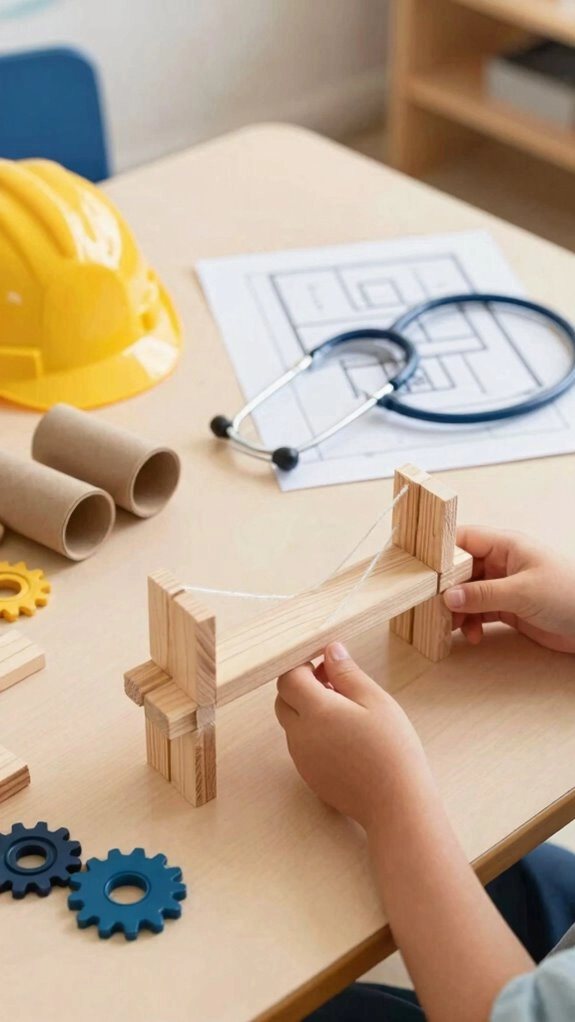
When imagination leads your play, it doesn’t just make things fun; it creates problems to solve.
You might run a pretend hospital and ask what the cleaner should do next. That question invites problem solving.
You try an idea, watch what happens, then adjust your plan and explain it to friends.
Experiments with melting or floating work the same way.
Learning job language, such as mechanic, helps you share sharper questions in your group.
Everyday moments matter.
Weather forecasting can begin when you predict tomorrow’s rain.
These playful challenges help you feel included as you practise making real life choices together.
Through pretend play, you can practise planning, remembering goals, and changing your ideas when the story changes.
How Children Develop Ideas About Different Careers

Children begin building ideas about careers long before they choose a job.
By about age seven, you may start believing certain jobs fit only boys or girls.
These Gender stereotypes can shrink the future you imagine.
You also notice job importance, deciding which workers seem respected or familiar.
Learning job vocabulary helps you see clearer roles: a mechanic repairs vehicles, while an x-ray technician creates images for doctors.
Classroom dramatic play can introduce many helpers and careers.
As you hear diverse examples, you can recognize wider career opportunities and see that every community needs many kinds of skilled people.
Play activities that build hand-eye coordination can also help you practice the careful tool use needed in many kinds of work.
Why Real-World Experiences Make Learning More Meaningful

Real-world experiences show you why school skills matter beyond the classroom. You spot maths when a baker measures ingredients or an electrician plans wiring. These School skill links help answer your questions and help you feel connected to adults around you.
Through workplace storytelling, you can hear how engineers solve everyday problem tasks with teamwork and communication. Art lessons matter too. Colour choices can shape an advert’s message.
When you meet role models nearby or act out jobs with classmates, learning becomes exploration. You aren’t choosing your future yet. You’re uncovering skills, places, and people making community work. Joining clubs or trying small projects can build confidence through practice as you test ideas, learn from mistakes, and work with others.
Encouraging Curiosity Without Limiting Career Choices

Although you may already have favorite jobs, your ideas can keep growing.
Delve workplace language so you can name jobs clearly, like calling someone a mechanic instead of saying they fix cars.
You belong in every kind of workplace, even if people around you mostly do one kind of work.
Challenge gender stereotypes when you hear that a job is only for boys or girls.
Your maths, art, reading, and teamwork can help in many roles.
Keep asking what skills people use.
No job is beyond you, and your curiosity can connect you to a wider community of possibilities.
Simple Ways Parents Can Introduce Different Careers

With a little noticing, your community becomes a map of interesting careers.
Take a “walk and look” together.
Spot shop workers, postal staff, cleaners, and gardeners.
Name each role with clear Job vocabulary: a mechanic, nurse, paramedic, or x-ray technician.
At home, build a pretend hospital or store.
You can survey how cleaners, surgeons, and organisers all help.
Share short stories about people who create, fix, lead, or care for others.
Include people of different genders and backgrounds.
This gender balance helps your child see that every path can welcome someone like them.
Community has room for everyone.