15 Math Activities for Preschool That Make Learning Numbers Fun
- 15 Math Activities for Preschool That Make Learning Numbers Fun
- Key Takeaways
- Why Hands-On Math Works Best in Preschool
- Counting Activities
- Everyday Counting Games
- Nature Counting Walks
- Number Recognition Activities
- Number Matching
- Number Hunts
- Sorting and Classifying Games
- Pattern Activities
- Measuring Through Play
- Simple Graphing Activities
- Shape-Based Math Games
- Building Early Problem-Solving Skills
- Making Math Part of Everyday Routines
You can make numbers fun with hands-on preschool math games. Try tracing numerals in dough, matching cards to dot groups, or rolling a die into a cup of counters. Count snacks, stairs, and toys during the day. Go on a nature hunt for leaves and rocks. You can sort shapes, build patterns, graph stickers, and compare more or less. These playful ideas help you learn fast, and a few more surprises are waiting ahead too.
Key Takeaways
- Use hands-on sensory play like tracing numerals in dough, paint, or sand to connect symbols with quantities.
- Count everyday objects during routines, such as snacks, stairs, socks, toys, and license plates, to make math meaningful.
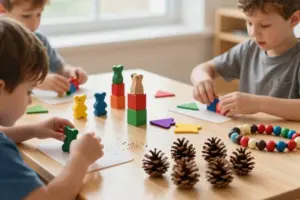
- Try number hunts and scavenger games indoors or outdoors, matching cards to leaves, rocks, blocks, or pinecones.
- Practice number matching, one-to-one counting, and one more/one less with dice, cups, clothespins, and counters.
- Add patterns, sorting, measuring, and simple graphing games to build early math skills beyond counting alone.
Why Hands-On Math Works Best in Preschool
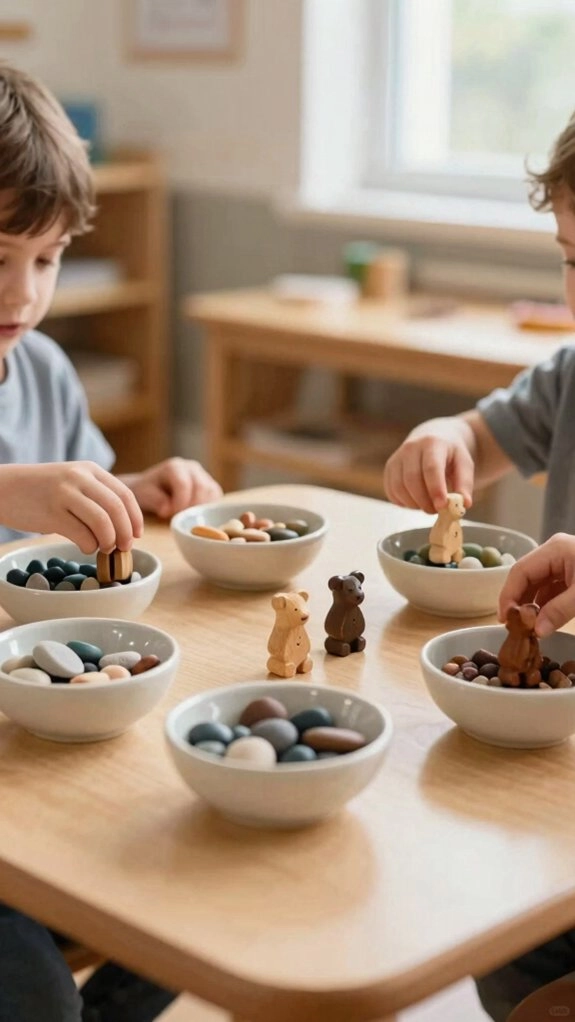
Preschoolers learn math best when they can touch, move, and see numbers in action. You build understanding when you uncover shapes, numerals, and amounts.
Sensory play makes ideas feel real, helping you connect a symbol to what it represents. Tactile learning also supports fine motor skills as you trace numerals in dough or paint.
These playful moments welcome you into math without pressure. Short sessions respect your attention span, so you can stay curious instead of tired.
When you build, sort, and investigate, math becomes something you belong in. You aren’t just memorizing; you’re making sense of numbers together.
Counting Activities
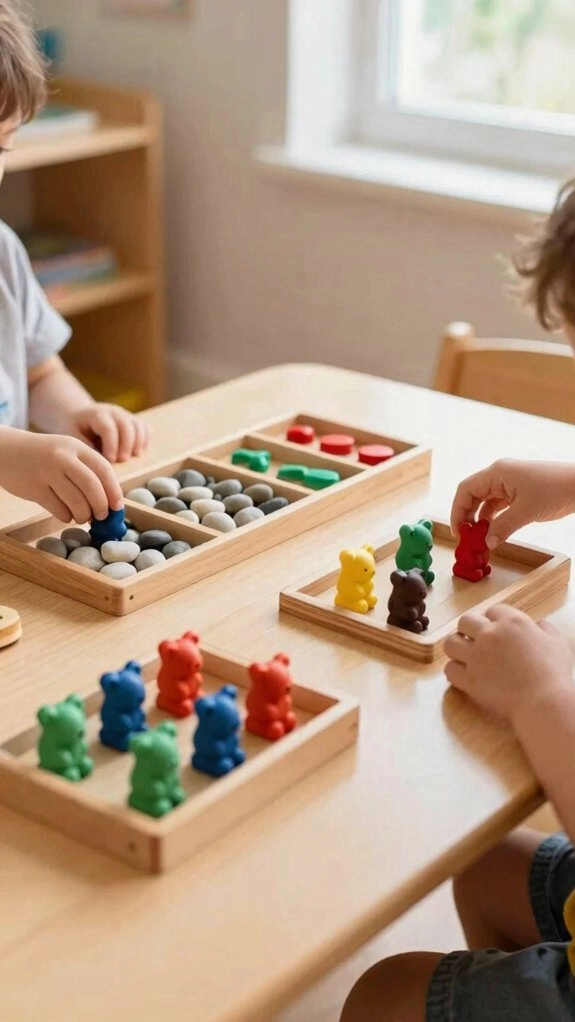
Counting turns numbers into something you can see, touch, and use. You belong in this learning team, so explore together. Start a number scavenger hunt: find cards 1–10 and match them on a chart. Sensory counting grows when you roll a die and fill a labeled cup with pom-poms or blocks.
| Try this | Your mission |
|---|---|
| Chalk numbers | Place pinecones beneath each numeral. |
| Clip cards | Add matching clothespins carefully. |
| Sing and count | Practice counting with songs. |
Each touch helps you count one object for every number. Celebrate your discoveries. You’re building confidence. Small wins show math is a place for you, too.
Everyday Counting Games
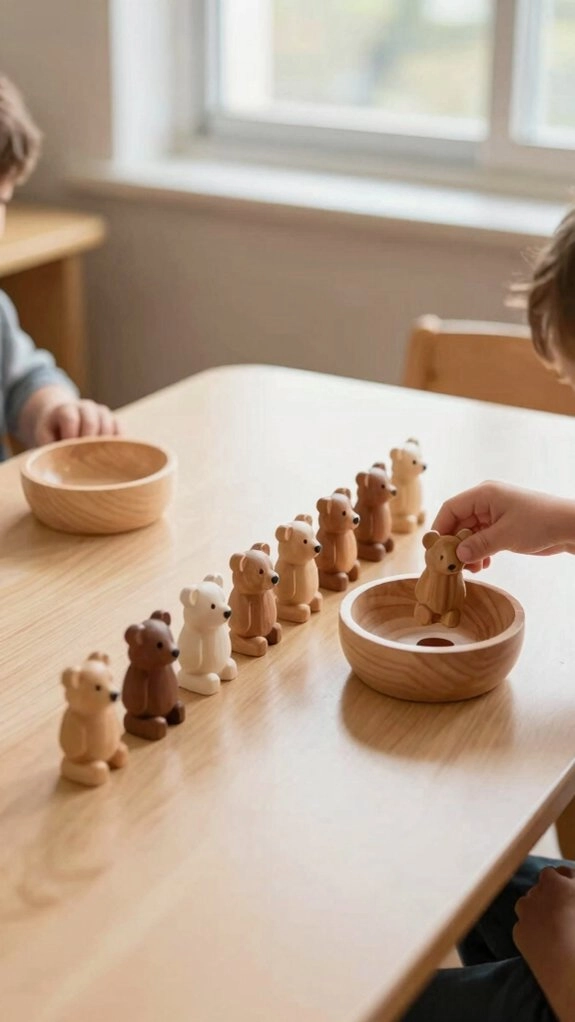
Everyday routines can become exciting counting games when you look for numbers together. You can spot numbers on signs, toys, or license plates and count up to each one. Roll a die, say its number, and fill a cup with matching blocks or crackers.
For a team challenge, hide number cards around your home and match them on a chart. Try clothespins or sock clips on numeral cards for one-to-one practice.
With Pretend store play, use counting coin matching to give each item the right amount.
You can jump or park toys at numbered spots, building confidence together.
Nature Counting Walks
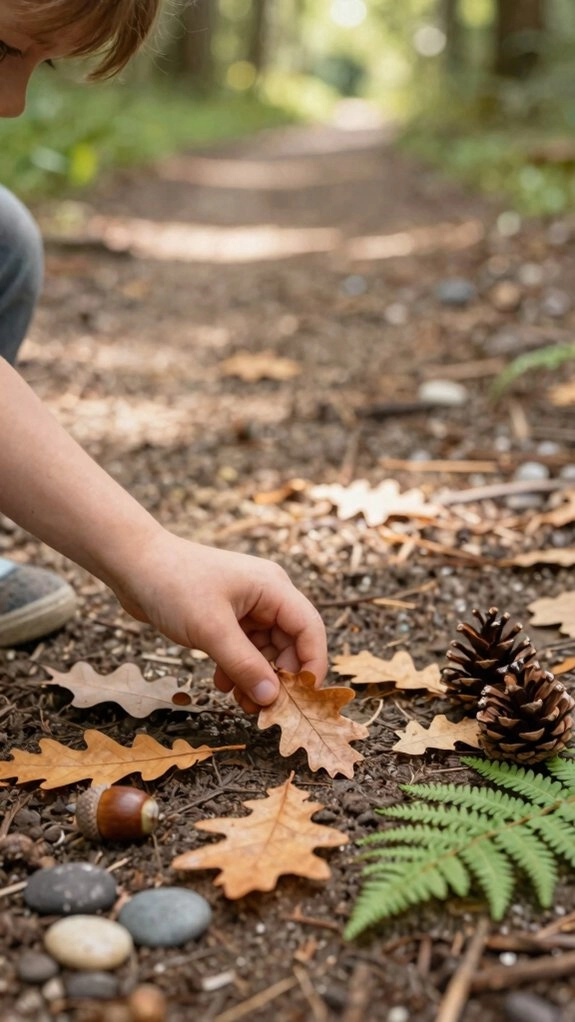
A short walk outdoors can turn numbers into a hands-on adventure. You and your child can join a number scavenger hunt. Call out 0 through 5, then gather leaves, rocks, or pinecones. Place each treasure into a cup, counting once together. Take mindful counting breaks and notice the sky, wind, and Weather word vocabulary. Your little explorer belongs on this learning team.
| Try this | What you do |
|---|---|
| Zero | Find no items |
| One | Collect one leaf |
| Two | Gather two rocks |
| Three | Jump three times |
Repeat the same choices on future walks, increasing amounts only when your child stays eager.
Number Recognition Activities
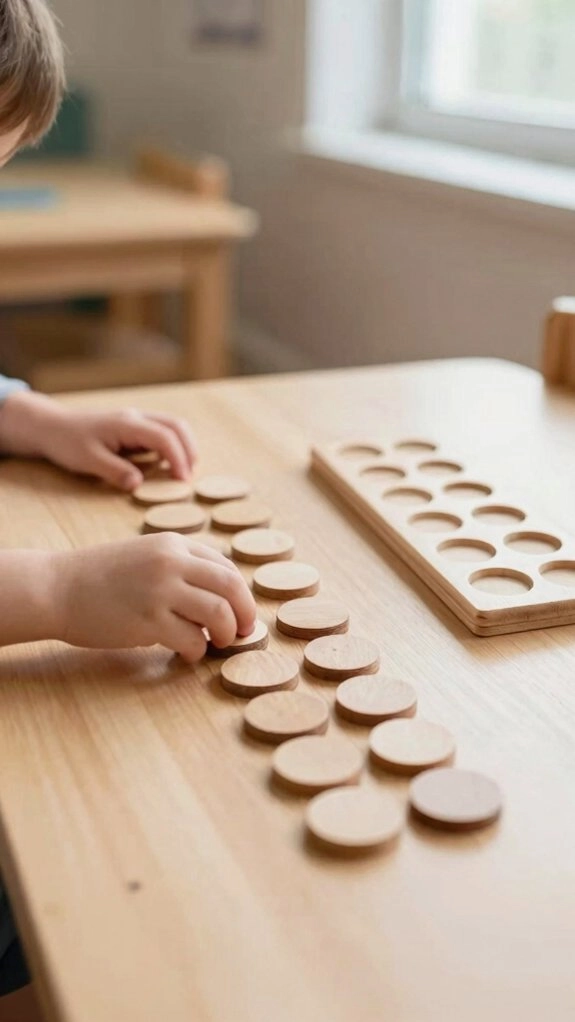
With number cards and small treasures, your child can uncover symbols feel meaningful. Begin with 0–5, saying each number name as you show its numeral and count nearby rocks or beads. Include zero early: “Here is 0. Let’s count and see there are none!”
When your child feels ready, look into 1–10. Try a scavenger hunt by hiding numeral cards and inviting your child to place each one on a number chart.
Add movement with number jumps, or paint and trace numerals. Story based number games and math friendly routines make practice feel like a shared adventure. Celebrate uncovering together.
Number Matching
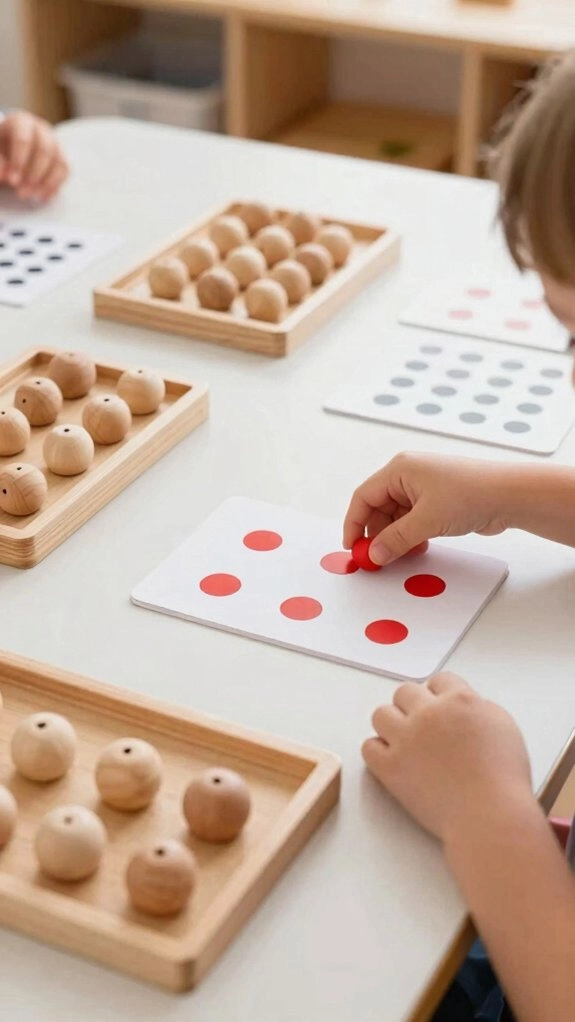
Number matching helps you find that each written symbol stands for an amount. Start with cards numbered 1 through 10, then match each card to dots, blocks, or dice faces. You’ll see how every object gets counted once.
Roll a die and place that many counters on its matching card.
Invite a friend or family member to play, so you can celebrate each correct pair together.
For Playful number recognition, sort stickers into a chart’s numbered boxes.
Try movement based counting with a number parking garage.
Drive cars labeled 1 through 10 into matching spaces.
You’re building number confidence.
Number Hunts
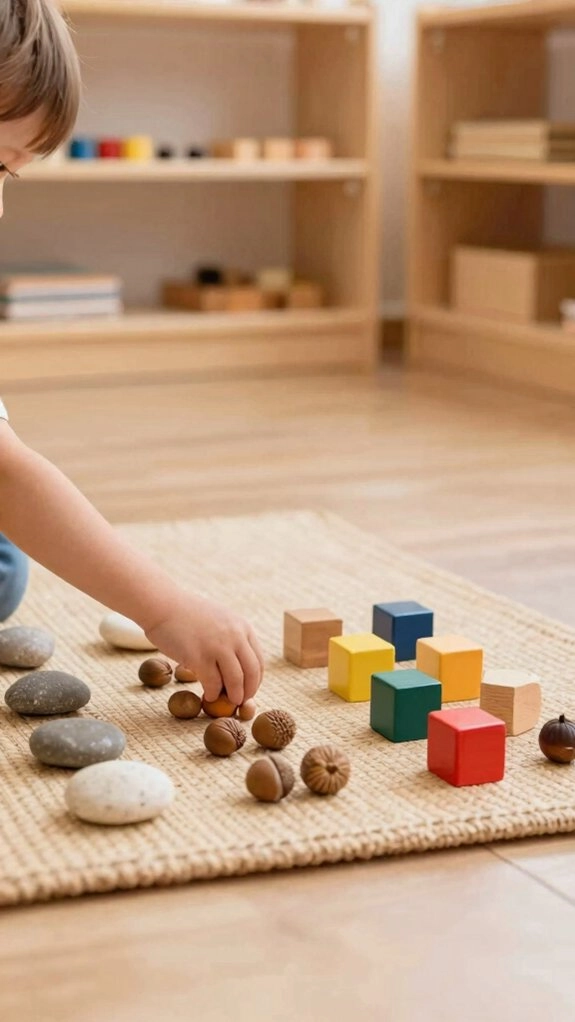
On a number hunt, you’ll search for numerals while turning counting into an active game.
- Create a treasure map and hide number cards around your room.
- Use color coded cards so each number feels to spot.
- Ask, “What number is this?” on car rides, then add the right stickers to your chart.
Finish with a timed hunt. Call numbers from one to ten and help your child find each card in order. You’re building confidence, number sense, and a sense of belonging. Keep cheering together, and celebrate every find so learning feels warm and fun today.
Sorting and Classifying Games
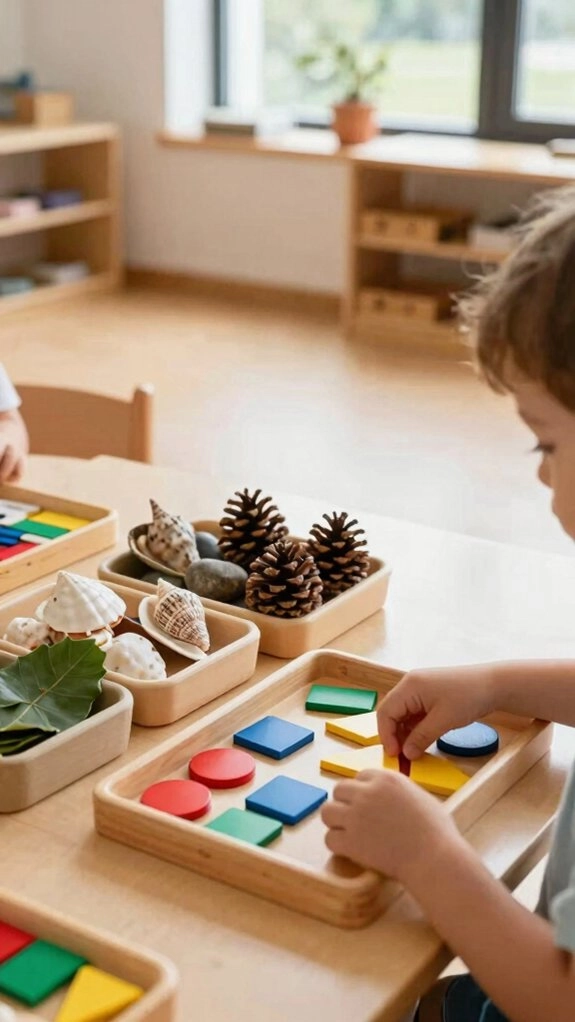
Often, preschoolers learn sorting best when they can touch and move real objects.
You set out socks, pom-poms, or coins and group by color, size, or shape.
Ask your child to follow sorting rules and place each item in the right basket.
Then you’ll label the groups.
On the floor, use a coin grid and sort coins into boxes.
You can also make picture piles or red-green apple groups.
After sorting, count each pile.
This builds predicting outcomes and helps you feel proud.
Try water-bin sorting by removing one color at a time and counting the pile together afterwards.
Pattern Activities
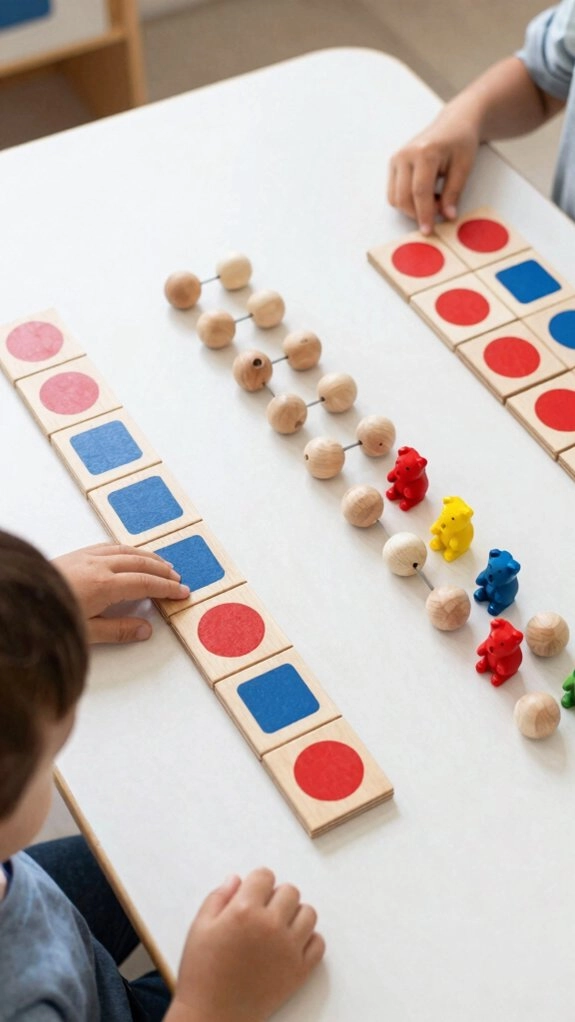
When you want to help your child spot patterns, start with food they know. Try purple-green grapes, then switch to two purple and two green.
Next, set out red and yellow blocks on the floor and ask your child to keep going. You’ll also thread cereal loops or beads in a two-color repeat. Nature collages work too with leaves or flowers.
- Pause and ask, “What comes next?”
- Use Storybook pattern games for cozy practice.
- Add pattern flash card play for quick wins.
These short games build confidence and joy so you both feel proud and ready to learn together.
Measuring Through Play
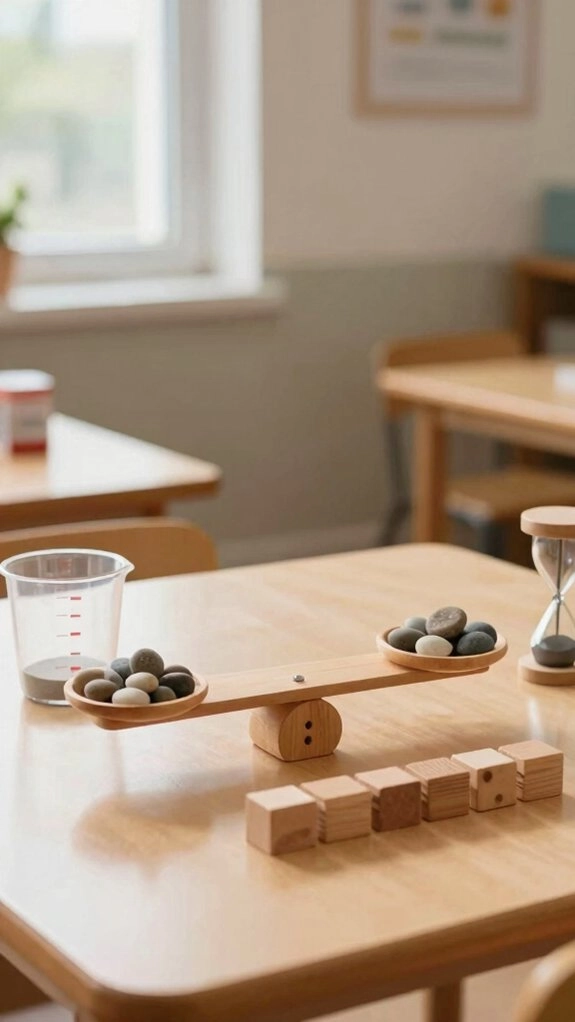
To make measuring feel fun, set up a small measuring station during play.
You can measure play dough snakes, blocks, or sticks with paper strips or a ruler.
Use compare long short vocabulary as you talk about which is longer or shorter.
At snack time, fill measuring cups once, then twice, and count scoops from one to ten.
You can estimate first then measure, too.
Wrap string around an apple, or race to find the longest item in a basket.
Your child will feel proud while learning.
You can also mark toy heights with clothespins and compare more or less.
Simple Graphing Activities
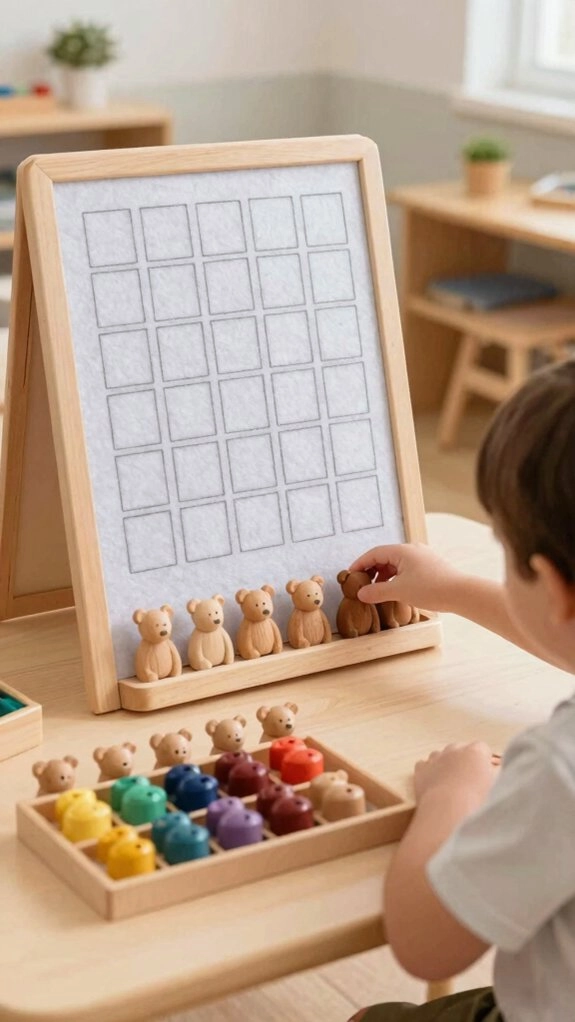
After measuring and comparing, you can help your child show results in simple graphs. You’ll feel like a team as you build together.
- Make a Number picture graph with stickers for leaves or toys.
- Try tally walk games and compare rocks, shells, or flowers.
- At the snack bar, color one block for each favorite choice.
Then play dice record play by rolling ten times and counting the tallest column.
Ask, “Which is more?” and “How many?”
Your child will see patterns, share ideas, and feel proud of every chart.
You’ll both love the clear answers and new number fun.
Shape-Based Math Games
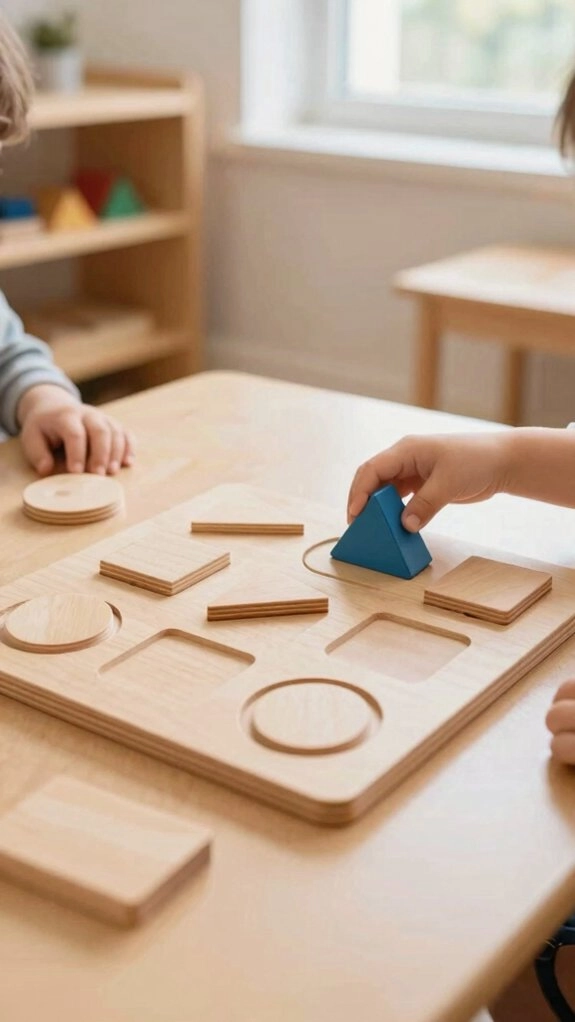
As you play, shape games can turn math into a hands-on adventure.
| Game | What you do | Shape |
|---|---|---|
| Sorter | Match lids | circle |
| Search | Find items | square |
| Move | Jump or crawl | triangle |
| Count | Make piles | mixed |
Try a shape swap game with a cardboard sorter box. Cut slits for circles, squares, and triangles. Then let your child match each lid. You’ll also do a shape scavenger hunt, say “I Spy a Shape,” and sort found items. Add movement, and your child feels included and excited. You’ll count the shapes aloud to share the fun with your preschool math crew today together.
Building Early Problem-Solving Skills
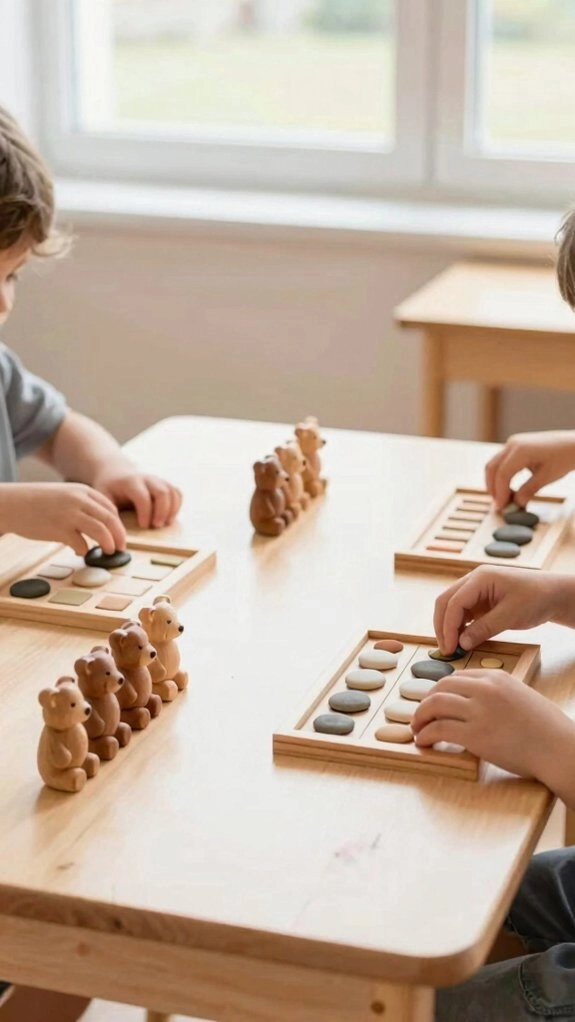
Many preschool math games help your child solve problems while they count. You can use snacks or pom poms in an egg carton for put together and take apart play.
Try these steps:
- Roll a die and add or remove that many toys.
- Ask “What happened” questions while you compare piles.
- Stack cups to show one more or one less.
These games build Visualizing changes, toy takeaways, and counting consequences.
You’re learning together, and your child starts to notice patterns and feels like a clever helper in the math group. You practice sharing ideas in play.
Making Math Part of Everyday Routines
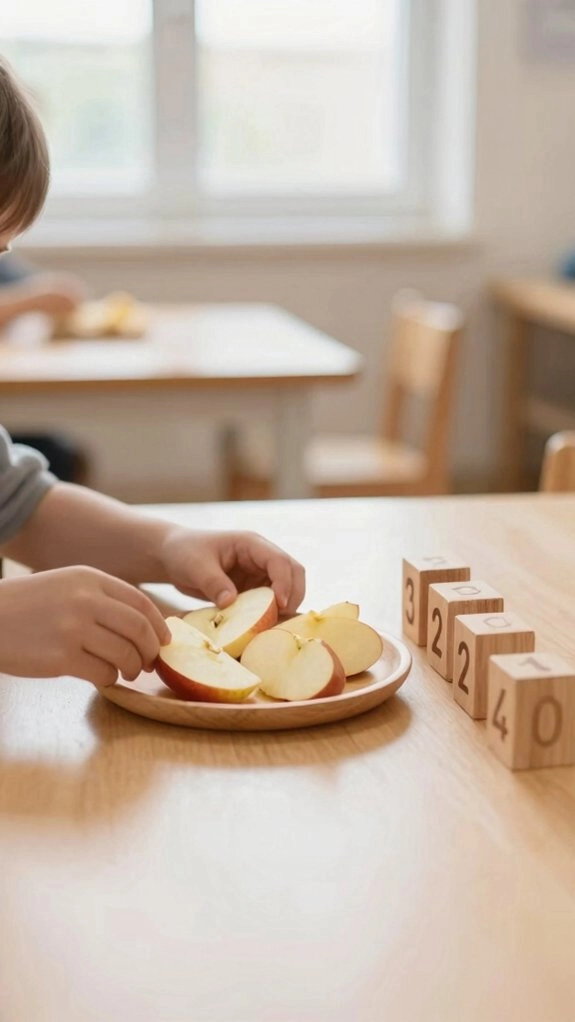
You can keep the math going all day long by noticing numbers in your normal routines.
Count stairs, snacks, socks, and car seats, and point to the numeral each time.
Ask, “How many do you see?” or “Can you bring me 4?” during transits so counting feels natural.
At meals, compare apples and crackers and count leftovers after one bite.
Sort laundry into piles and count each group.
Notice numbers on calendars, page numbers, street signs, and toy labels, then match them to objects at home.
Even with Screen time limits, playful number songs can keep you learning together.