The Best Study Methods Depend More on Energy Than Intelligence

- The Best Study Methods Depend More on Energy Than Intelligence
- Key Takeaways
- Why Energy Beats Intelligence in Studying
- Study When Your Focus Is Highest
- Peak Focus Windows
- Focused Study Blocks
- Energy-First Scheduling
- Build a Study Routine You Can Repeat
- Set Fixed Study Blocks
- Prime Before You Start
- Repeat, Reflect, Rest
- Use Spaced Repetition to Beat Forgetting
- Turn Reading Into Active Recall
- Test While You Read
- Pause And Recollect
- Explain It Simply
- Why Rereading Feels Good but Fails
- Break Big Topics Into Smaller Chunks
- Mix Topics With Interleaving
- Use the Feynman Technique to Spot Gaps
- When to Use Focused Vs. Diffuse Thinking?
- Why Sleep Helps Memory and Problem-Solving
- Sleep And Memory Consolidation
- Sleep Boosts Problem-Solving
- Prime Your Brain Before You Study
- Review What Worked After Each Session
- How Do Top Students Stay Calm In Exams?
- Build a Study Plan Around Energy and Focus
Your study results often depend more on energy and focus than raw intelligence. When you study while your brain feels sharp, you recall more, solve problems faster, and make fewer mistakes. Use short blocks, silence your phone, and save hard work for your best hours. Active recall, spaced review, and sleep help learning stick. If you build these habits, school feels easier, and there’s even more you can learn next.
Key Takeaways
- Study effectiveness depends more on energy, sleep, and focus timing than raw intelligence.
- Use your highest-focus hours for hard problem solving, active recall, and testing.
- Keep study sessions short, repeatable, and distraction-free to protect attention and reduce mistakes.
- Replace rereading with spaced repetition, retrieval practice, and interleaving to strengthen memory.
- Review after sessions, sleep well, and use priming to lock in learning and improve exam readiness.
Why Energy Beats Intelligence in Studying

Think of your brain like a battery when you study. You don’t just need smarts; you need energy.
When you sleep well, your mind can spot easier paths and solve problems better.
If you try to cram, your brain stays busy but can’t lock in learning well.
Short study blocks help you protect focus and cut mistakes.
When recall feels hard, that’s okay. It means you’re building real strength.
Good stress management can lower exam performance anxieties and help you keep going.
You belong in this process, and steady effort beats a tired brain every time.
Study When Your Focus Is Highest
You can find your best focus time by trying short study tests at different hours.
Once you know that window, save your hardest work for it and use 25 to 50 minute study blocks with breaks.
That energy-first plan helps you hold ideas in mind longer and learn them better.
Peak Focus Windows
Usually, your best study time is when your brain feels most awake and steady. That’s your peak focus window. Use sleep scheduling and attention recovery to protect it. Don’t trust motivation myths; energy matters more than willpower.
Check your workload calibration so the hardest ideas fit that time. Study with active recall, problem solving, and testing then.
Keep sessions short, about 25 to 50 minutes, with a break after. Silence your phone so you don’t keep switching tasks. Save easy jobs for low-energy times.
If class is coming, prime first with quick scans and recall.
Focused Study Blocks
Focused study blocks work best when your brain is at its sharpest. You’ll fit in more learning when you protect that bright time.
- Set a timer for 25 to 50 minutes and start with the hardest work.
- Stay in one task. Skip extra tabs, apps, and multitasking so your mind stays light.
- Choose a real study spot, not your bed. That helps you stay alert with friends who care about learning too.
- After the block, take a true break, then switch topics. This helps Interleaving advantages and Test corrections stick better.
Energy-First Scheduling
Now that you’ve got focused study blocks, the next step is picking the right time for them.
Put your hardest topics in your best energy windows.
When you’re fresh, your brain can hold more.
Use 25 to 50 minute bursts, then rest.
That keeps your attention sharp and helps with distraction management.
Save active recall timing for your peak hours, since self-quizzing beats rereading.
Later, use lower-energy time for spaced reviews and interleaving benefits.
This rhythm makes you feel part of a smart study team.
For your exam day routine, skip cramming and protect sleep.
Build a Study Routine You Can Repeat
You can make studying easier by using the same fixed blocks each day.
Before you start, set your goal, clear your space, and get your mind ready to work.
Then repeat your routine, reflect on what worked, and rest so your brain can recharge.
Set Fixed Study Blocks
When your energy changes during the day, fixed study blocks can keep you steady. You don’t need perfect mood to begin. You just need a plan that feels like your group’s shared rhythm.
- Pick study blocks of 25 to 50 minutes.
- Put each class on your calendar in advance.
- Use energy routines and habit automation to start the same way.
- Take breaks right after hard work for focus recovery.
This kind of session consistency helps with attention management and break timing. You’ll waste less energy deciding, and your study time will feel easier to repeat.
Prime Before You Start
Fixed study blocks work even better when you prime your brain first.
Before you begin, spend 5 to 10 minutes scanning headings, diagrams, or images.
Set a few pre reading questions that make you curious.
Try asking, “What do I predict will be tested?”
Then do a quick self-quiz without notes.
These attention warmups help your mind notice the right patterns faster.
If you’re joining a lecture, read the material first so the ideas feel familiar.
Build this same routine at the same time and place each day, and your brain will settle in with less effort.
Repeat, Reflect, Rest
Most of the time, the best study routine is simple: repeat, reflect, then rest. You’re not alone in this. Try this rhythm for exam confidence and stress reduction.
- Study for 25 to 50 minutes.
- Do a blank-page recall check.
- Compare with notes, then take mindful breaks.
- Sleep 7 to 9 hours so your brain can lock in learning.
Review again after 24 hours, then 3, 7, and 14 days. Use Anki or Quizlet to remind you. This return-and-test loop builds attention recovery and makes studying feel steady, not scary.
Use Spaced Repetition to Beat Forgetting
Memory fades fast, so you need to fight the forgetting curve on purpose. You’re not weak; your brain just needs timing. For memory under stress, smart exam preparation habits use spaced repetition. Review after 24 hours, then about 3 days, 7 days, and 14 days.
| Day | Action |
|---|---|
| 1 | Learn |
| 2 | Review |
| 4 | Review |
| 11 | Review |
| 25 | Review |
Each delayed retest makes recall stronger than re-reading. Sleep helps too, so a night’s rest can boost results. Use Anki or Quizlet to schedule reviews and stay with your study group.
Turn Reading Into Active Recall

You can turn reading into a test by pausing after each section and recalling the main ideas.
Try to explain the text in your own simple words before you check it again.
This helps you spot gaps fast and makes the lesson stick better.
Test While You Read
Pause and test yourself while you read. You’re joining smart study habits now.
- Stop after each section and do a quick blank-page recall.
- Turn headings into questions, then answer from memory.
- Use practice questioning in chapter journaling to spot gaps.
- Every 10 minutes, check yourself so rereading doesn’t trick you.
This feels harder than rereading, but it works better. Testing helps you keep facts and ideas.
In Karpicke et al. (2011), tested students remembered more later.
If you use flashcards, lead with question to answer.
That way, you learn what you missed and grow with your study crew.
Pause And Recollect
After you finish a section, stop and write the main ideas from memory first. Close your notes for 2 to 5 minutes and use the blank-page method. This turns reading into active recall, not faux confidence from familiar words.
Then check what you missed and fix it. That’s memory checkpointing. Do quick recall checkpoints every 10 minutes so your brain keeps rebuilding the ideas.
Try recall batching by pairing a short try right after class with reviews within 24 hours, then on days 3, 7, and 14. You’ll remember more and feel part of the work.
Explain It Simply
Often, the best way to learn is to make your brain work a little. When you finish a section, close the page and explain it simply from memory. That turns reading into active recall, and your brain builds stronger links. You’ll feel the difference fast.
- Write a few key ideas first.
- Look back only after you try.
- Use quick flashcards or a blank page.
- Try it after class, even on a walk.
This kind of Active note taking helps you spot gaps.
It also makes Exam stress rehearsal feel easier.
Why Rereading Feels Good but Fails

| Method | What happens |
|---|---|
| Rereading | Feels easy, but you don’t test memory |
| Recall | Feels harder, but builds stronger learning |
| Flashcards | Push you to remember first |
Students who tested themselves kept about 80% after a week. With rereading, they kept about 34%. So pause, recall, then check. You’ll learn more, and you’ll belong in the group that really remembers.
Break Big Topics Into Smaller Chunks
Big topics can feel like giant puzzles, but you don’t need to solve them all at once.
Start with a big picture outline, then break it into small chunks that fit your mind’s working space.
You’ll feel less stuck and more in control, like you belong in the subject.
- Learn one chunk for 40–60 minutes.
- Do active recall checks right away.
- Review it later with spaced repetition.
- For hard classes, group problems by type.
This makes each part easier to hold and remember.
Chunking also supports Interleaving benefits without overload, so you can build confidence step by step.
Mix Topics With Interleaving
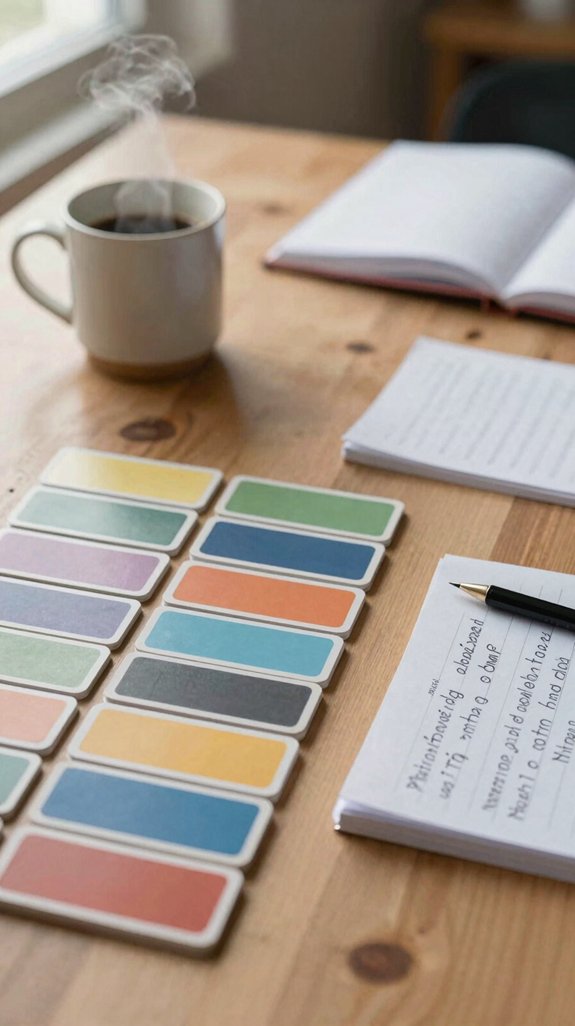
When you mix topics in one study session, your brain has to work harder in a good way.
You rotate between related subjects, so you must choose the right idea each time.
That helps you compare spaced practice and notice what each question really asks.
Try 25 to 50 minute mixed blocks, then take a short break.
Read a bit, solve a few problems, then switch.
This mix-it-up style can reduce rereading addiction because you stop just seeing the page and start using it.
If it feels tricky after a switch, that’s okay.
That effort helps you learn better and belong.
Use the Feynman Technique to Spot Gaps

How do you know what you really understand? You teach it simply, like you’re helping a friend fit in.
- Start with active recall and say the idea in 3–5 short sentences.
- Mark every fuzzy word. That’s error analysis, not failure.
- Go back to the exact spot in your notes, diagram, or book for misconception repair.
- Turn each gap into a tiny question list for concept mapping, retrieval practice, and practice testing.
Then re-run your explanation from memory. This helps your group grow together.
Recheck it after review, and let spaced re-testing lock in the answer.
When to Use Focused Vs. Diffuse Thinking?

After checking what you know with the Feynman Technique, the next step is choosing the right kind of thinking. Use focused thinking when you need to memorize facts or lock in new ideas. It helps your mind stay steady through distraction management. If you’re learning something hard, keep your attention on one task.
When you need a big idea or a solution, switch to diffuse thinking. Take a walk or do a low-stakes task. Those attention resets help your brain connect pieces.
If your mind wanders early, that’s a wrong-mode signal. Return to focus and keep going.
Why Sleep Helps Memory and Problem-Solving

When you sleep, your brain sorts new facts and locks them into memory.
It also keeps working on hard problems, so you may spot a simpler answer the next day.
That’s why a good night’s rest can help you remember more and think more clearly.
Sleep And Memory Consolidation
While you sleep, your brain keeps working on what you studied. That’s why review before bed can help ideas stick.
Late-night cramming may block that helpful work. Try this simple plan:
- Use active recall during testing strategies.
- Check exam performance after a short review.
- Return with spaced repetition within 24 hours.
- Sleep 7–9 hours so memories settle.
When you study this way, you give your brain time to link new facts with old ones.
Friends who do this often feel more confident, and you can too.
Sleep helps your learning team win.
Sleep Boosts Problem-Solving
Sleep doesn’t just help you remember facts. It also helps you solve problems.
When you sleep, your brain replays what you learned and locks it in. That means your spaced recall and active test practice can work better tomorrow.
In one study, students who slept after learning a hard rule found the easier method much more often.
Sleep gives you metacognitive feedback too, because you notice what fits and what doesn’t.
So for study fatigue management, review before bed, then rest.
Good sleep helps your mind connect ideas and think more clearly.
Prime Your Brain Before You Study

Before you start a study session, spend 10 to 20 minutes priming your brain. You’re helping it spot patterns and feel ready. Try this simple routine:
- Skim headings, diagrams, and 1 or 2 example questions.
- Use Active recall strategies by reading first, then saying answers from memory.
- Try Interleaving practice techniques by mixing a few old ideas with new ones.
- Close the page for 60 to 90 seconds and write what you remember.
Keep the same time and place each day. That steady habit helps you settle in, lowers overload, and makes learning feel like you belong.
Review What Worked After Each Session

After you finish studying, take a quick look back at what happened. | What to check | Quick note |
| — | — |
|---|---|
| Exam practice | How many answers you got right without notes |
| Misses | What you couldn’t recall |
| Error logging | The exact points you missed |
| Next step | One change for tomorrow |
| Review plan | First review within 24 hours |
Spend 2 to 5 minutes on this. Use numbers, not vibes, so you know what worked. Compare your recall with your notes right away. That helps the lesson stick. Keep a short weekly log too. Then you can see which methods help your brain remember more, and you’ll feel part of your own study team.
How Do Top Students Stay Calm In Exams?

Why do top students look so calm on exam day? They trust their progress, not perfection.
Their mindset during tests says, “I can handle what I know.”
They also use panic reduction strategies that make questions feel familiar.
- Quiz yourself after learning.
- Review again in 24 hours, then 3, 7, and 14 days.
- Use practice tests instead of rereading pages.
- Sleep well so your brain locks in memory.
This approach helps you feel ready, even when some facts still feel fuzzy.
You belong here, and steady practice can calm your nerves.
Build a Study Plan Around Energy and Focus

When you build a study plan, match it to your energy, not just your clock. You’ll do better in 25 to 50 minute blocks with short breaks.
Pick your hardest work for your best-focus hours.
Save easy review for low-energy times.
Keep the same day and time for each subject so your brain starts faster.
Turn off notifications and put your phone away during deep work.
Use Active recall triggers after each topic, then review again on day 3 and day 7.
That steady rhythm gives you strong Exam day focus prep and helps you belong to the prepared group.