
Study Time Tips That Help Kids Stay Focused Longer

- Study Time Tips That Help Kids Stay Focused Longer
- Key Takeaways
- How to Help Kids Stay Focused at Home
- Set Up a Focus-Friendly Study Space
- Start With Small Study Goals
- Tiny Goals Build Momentum
- Break Tasks Into Steps
- Check Off Small Wins
- Use Timers and Breaks to Build Stamina
- Set Short Work Sprints
- Take Quick Reset Breaks
- Teach Kids How to Refocus Fast
- Cut Device and Noise Distractions
- Use Sleep, Food, and Routines to Support Focus
You can help yourself stay focused longer by setting up a calm, clutter-free study spot. Keep only your book, notebook, and tools nearby, and put your phone away. Start with a tiny goal, like five minutes or one page, then use a timer and a short break. Try 10 minutes first, then build toward 25. If your mind wanders, breathe, point to the page, and start again. There’s more to make this even easier.
Key Takeaways
- Set up a calm, clutter-free study spot with only needed materials and no phones or distractions nearby.
- Start with tiny goals and break homework into small steps so kids can begin easily and build momentum.
- Use short focus sprints, like 10 minutes, then gradually increase to 25 minutes with a 5-minute break.
- Keep a consistent study routine with water, a healthy snack, and the same quiet spot each day.
- When attention drifts, use a quick refocus routine: notice, breathe, point to the task, and start again.
How to Help Kids Stay Focused at Home

Start by setting up a calm homework spot at home. Keep only your textbook, notebook, and tools nearby. Put phones and social media out of reach so distractions stay low.
Before you begin, eat a small healthy snack and drink water.
Then use focus routines: start with 10 minutes, then work up to 25 minutes and take a 5-minute break.
Give yourself one step at a time, or use a checklist. If your mind drifts, try distraction scripts like slow breathing three times and return to the same task.
Keep sleep steady, too, so your brain stays ready.
Set Up a Focus-Friendly Study Space
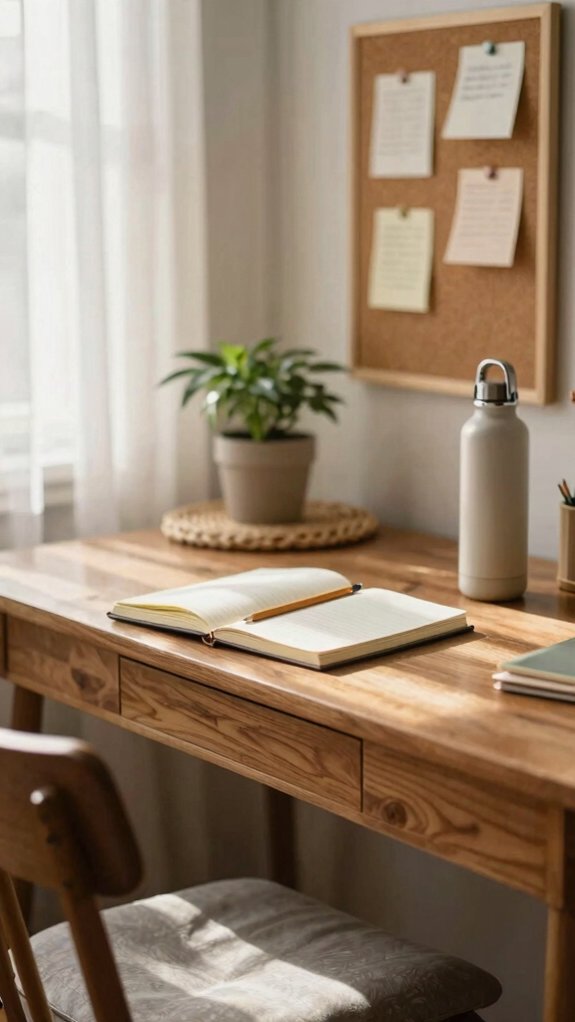
A good study space can help your brain settle down and stay on task.
Set up a clutter-free desk or table as your focus zone, so you study in the same spot each day.
Keep only your notebook, pencil, books, and assignment sheet nearby.
That way, you won’t waste energy searching for things.
Turn off phones and other distracting devices during study time.
Choose a calm, quiet corner away from busy traffic.
Sensory friendly lighting can make the space feel easier on your eyes.
Soft music or white noise may help too.
These positive study routines help you feel ready.
Start With Small Study Goals
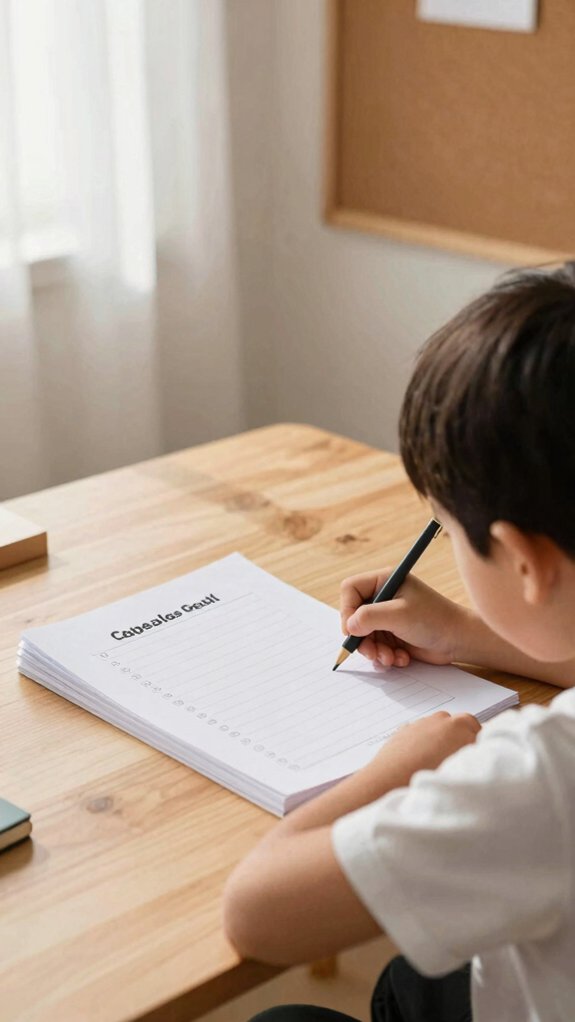
Start with tiny goals, like five minutes or one math page, so you can build momentum fast.
Break big work into small steps, and each step feels easier to begin.
Check off every small win, and you’ll see your progress grow right away.
Tiny Goals Build Momentum
When a big study task feels hard, tiny goals can make it easier. You can start with “read for 3 minutes” and finish proud.
Then you can add time, like 3, 5, then 10 minutes, so progress feels real.
Write 1 to 3 goals on goal checklists each session, and use reward charts to track your wins.
A timer can help too.
Work until it rings, then take a short break.
Keep going, and aim for a bigger target by month’s end.
Those small wins build momentum and help you feel like you belong to your own success team.
Break Tasks Into Steps
Breaking homework into tiny steps can make big work feel much easier. You can turn one assignment into a Visual task by naming each move.
First next, open your book. Then find the problem. After that, write one answer.
Keep your first goal small, like three minutes or one step. When you know exactly what comes next, you feel calmer and more ready.
Give yourself only one direction at a time so you won’t freeze up.
You can also set a timer for ten minutes, then rest briefly. That steady start helps you study with your group and build confidence fast.
Check Off Small Wins
A small win can make a big study job feel much easier. You can start with a tiny goal like read for 3 minutes. Then build to 5 and 10 minutes as you grow. Keep your session to 1–3 goals, like this:
| Goal | Check |
|---|---|
| Finish 5 problems | ☐ |
| Highlight 10 words | ☐ |
| Read one page | ☐ |
Use a 10-minute timer and aim for one win. Check it off right away so progress tracking feels real. Celebrate the list, even if it isn’t perfect. Those motivation rewards help you stay with your group and keep going.
Use Timers and Breaks to Build Stamina
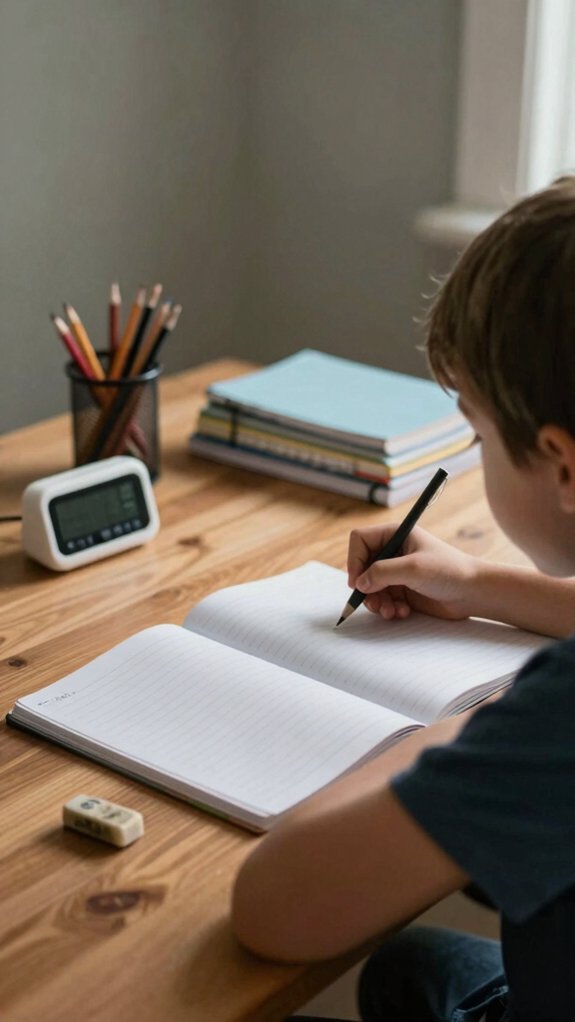
You can set a timer for a short work sprint, like 10 minutes, and focus hard.
When it rings, take a quick reset break to stretch, breathe, or stand up.
Then start again, and each round can help you build stronger focus stamina.
Set Short Work Sprints
Try short work sprints to make studying feel easier and less tiring. Set a timer for about 10 minutes, then focus on one or three small tasks. You’ll build momentum when you know exactly what to finish.
As you succeed, stretch the sprint a little each week. Try up to 25 minutes when you’re ready.
Use motivation games and progress charts to show your wins. That makes you feel like part of a team with yourself.
Keep the pace steady, like training a muscle. Soon, longer focus sessions won’t feel so hard.
Take Quick Reset Breaks
Quick reset breaks can help your brain stay sharp for longer study sessions. Set a timer for 10 minutes and focus hard.
When it rings, take a short break.
You can stand, stretch, or walk around for a minute.
These rewarding microbreaks teach your brain that effort pays off.
Try the Pomodoro method too.
Work for 25 minutes, then rest for 5.
As you use activity resets, your attention can grow stronger.
Keep the schedule predictable so study time feels safe.
Each week, stretch your timed work a little longer.
Teach Kids How to Refocus Fast

When your mind starts to wander, use a fast reset so you can jump back in.
Try the Notice → Breathe → Point → Start routine.
Take 3 slow breaths, point to the problem or page, then begin the next step.
Classroom refocus cues like a hand on your shoulder or a cue word help you switch back fast.
Positive redirect phrases such as “You’ve got this” keep you calm and ready.
Practice during short study blocks so refocusing feels normal.
If you need it, take a quick stretch or sip of water, then return right away and stay with your group.
Cut Device and Noise Distractions

Now that you can refocus fast, it helps to stop distractions before they start.
Put your phone and other devices away for Screen Free Sessions. Try Phone Free Learning so alerts can’t pull your mind off the page.
Clear your desk and turn off extra notifications to build a distraction-free zone.
For noise, choose a Consistent Soundscape like soft white noise or quiet music.
If sounds still bother you, use headphones or earplugs.
Tell your family your Quiet Household Rules, like knocking first and speaking softly.
Predictable quiet helps you settle in and stay with your work longer.
Use Sleep, Food, and Routines to Support Focus

A steady routine can help your brain get ready to focus. You belong in a calm study rhythm that makes work feel easier.
- Keep screen free evenings and a steady bedtime. Good sleep helps you focus, manage frustration, and do better in class.
- Eat regular meals, then have a small healthy snack and water before homework. This can cut fidgeting and keep your mind on task.
- Use morning routines and the same homework time and place each day. Your brain learns what comes next, so starting feels simpler and staying with work feels smoother.