Preschool Learning Activities for Curious Little Scientists
- Preschool Learning Activities for Curious Little Scientists
- Key Takeaways
- Start With Safe Science Play
- Build Curiosity Through Preschool Science
- Hands-On Discovery
- Questions And Predictions
- Safe Science Play
- Ask Predictions Before Each Activity
- Water-Based Preschool Learning Activities
- Sink Or Float Predictions
- Ice Excavation Adventure
- Water Color Experiments
- Make Magical Milk Art
- Try a Sink or Float Test
- Excavate Toys From Ice
- Create Dancing Raisins
- Nature-Based Preschool Learning Activities
- Plant Seeds in a Clear Jar
- Simple Seed Jar Setup
- Watching Roots And Shoots
- Make a Lemon Volcano
- Weather and Light Activities
- Make a Cloud in a Jar
- Trace Shadows Outside
- Explore Rainbows and Measure Rain
You can become a curious scientist with safe, hands-on preschool activities. Ask, “What do you think will happen?” before you test each idea. With an adult nearby, predict whether objects sink or float in water. Make magic milk art with food coloring and soapy swabs. Watch ice melt, trace changing shadows, or measure rain. Try a cloud in a jar and notice what changes. Keep going to uncover more surprising science moments with your grown-up.
Key Takeaways
- Encourage preschoolers to predict, test, observe, and describe what changes during simple, supervised science activities.
- Try sink-or-float tests in a water bin, sorting objects by whether they stay on top or sink.
- Create Magic Milk with food coloring and dish soap to explore movement, color mixing, and surface tension.
- Freeze small toys in ice, then use spoons, warm water, or salt to observe melting and excavation.
- Grow bean seeds in a clear jar and track roots and shoots each day with simple observations.
Start With Safe Science Play
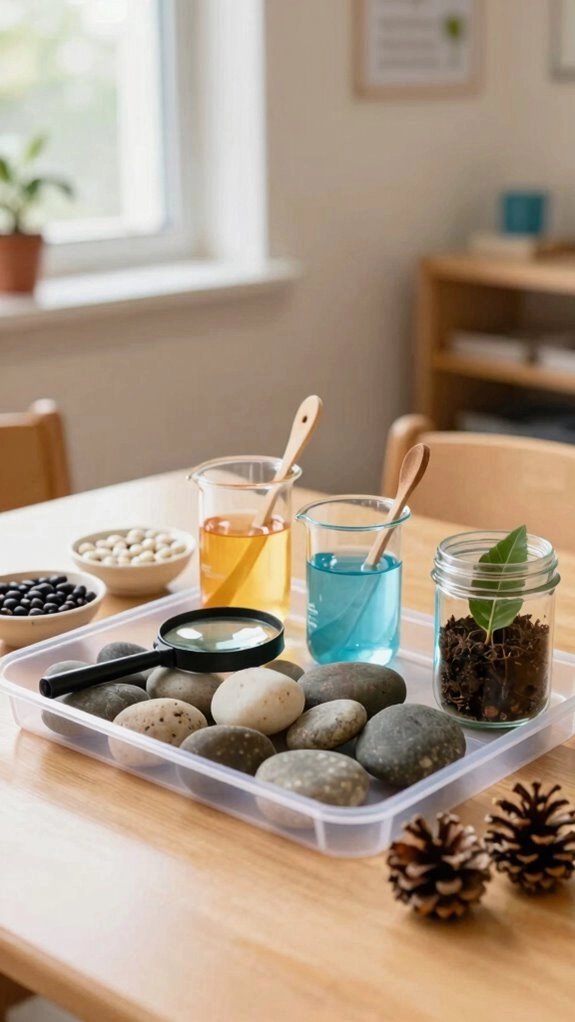
Science starts with safe, hands-on play that lets children learn with confidence.
Safety first: you set up simple, supervised experiments with milk, food coloring, dish soap, paper towels, or other non-toxic liquids.
With adult supervision, everyone can join safely.
Try Magic Milk: add color drops to milk, then touch the center with a soapy cotton swab.
Watch the colors move.
Dish soap reduces surface tension, helping the colors race across the milk.
Offer kid friendly tools, plus goggles or a smock for water play.
In a water bin, test Sink or Float items after making a prediction.
Plan one guided science time each week during floor time or outdoor play together.
Build Curiosity Through Preschool Science
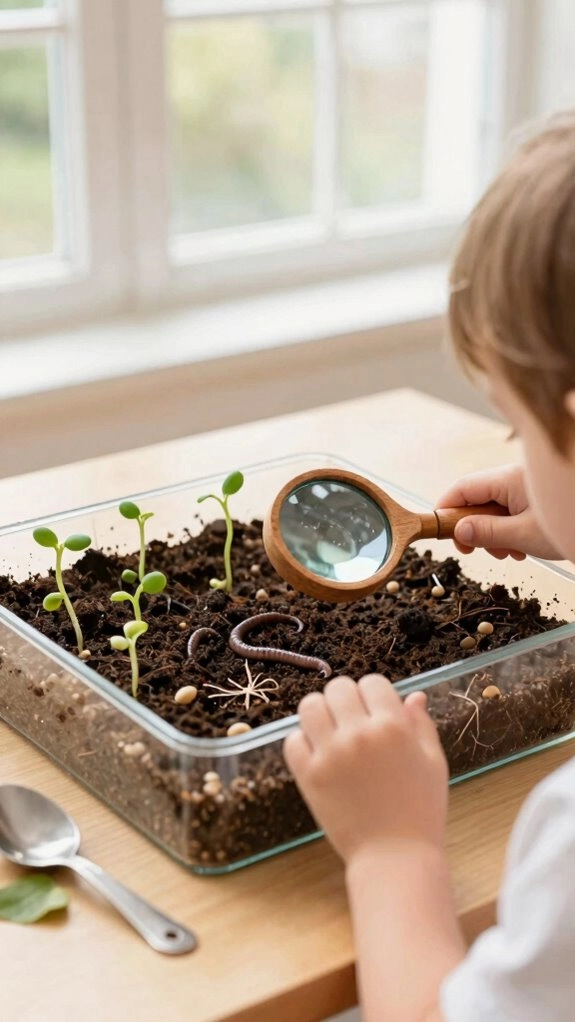
You can explore with your hands, eyes, and safe science tools.
Ask questions, make a prediction, and test what happens.
Each discovery helps you learn like a real scientist.
Try a simple experiment to see how static electricity can make tiny paper pieces move.
Hands-On Discovery
Hands-on exploration turns everyday materials into exciting clues about how the world works.
You and your friends can try Magic Milk with an adult nearby.
Watch food coloring swirl when soap changes the milk’s surface tension.
Then use a water bin to see which safe objects sink or float.
Compare shapes, describe patterns, and share what you notice.
You can free tiny toys from ice with salt, which helps it melt faster.
Draw your results or tell the group your finding.
With milk, vinegar, baking soda, and paper towels, you’ll learn together.
Wear a smock or goggles when needed.
Questions And Predictions
Before you test an idea, pause and ask a question about what you notice.
You might spot a Mystery observation, like colors swirling through magic milk.
Ask yourself, “What do you think will happen next?”
Then make a prediction using something you’ve seen before.
You can predict whether an object will sink or float and share reasoning with your group.
After testing, compare before after results.
What changed?
When did it change?
What may have caused it?
Your prediction doesn’t need to be perfect.
Scientists learn by talking, noticing, and updating ideas.
Your questions help everyone uncover together confidently.
Safe Science Play
Safe materials let your questions turn into exciting finds. You can investigate science rules with an adult nearby and everyday non-toxic supplies. Try Magic Milk Art: add coloring drops to milk, then touch them with a soapy cotton swab.
Watch the colors swirl as soap changes surface tension. For ice excavation, freeze small toys in water. Sprinkle salt and notice how it helps ice melt. Wear goggles or smocks if you’d like.
You can investigate at a table, on the floor, or outside. Wonder, predict, test what happens next. Together, you learn from water, plants, and simple chemistry safely.
Ask Predictions Before Each Activity
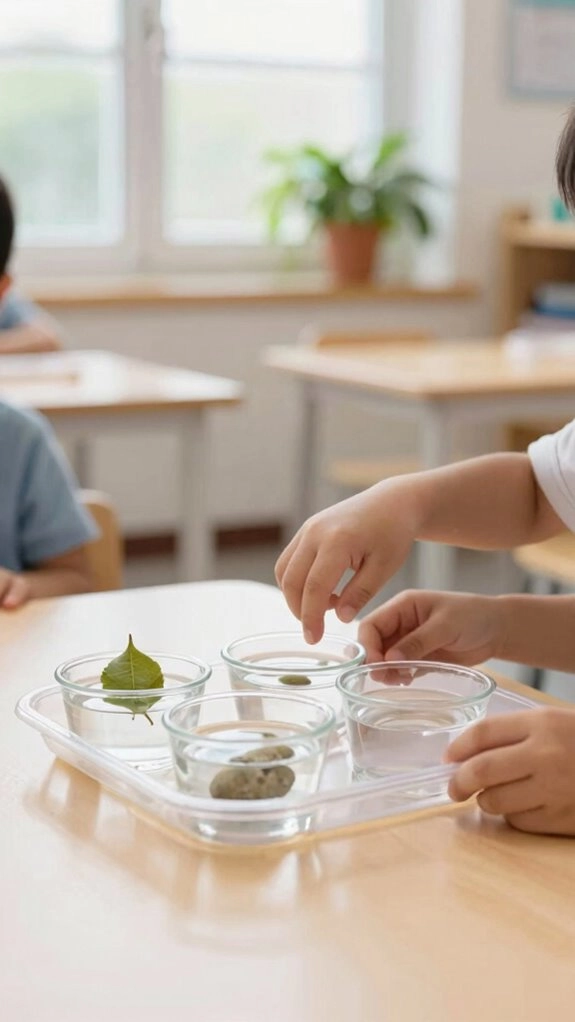
What do you think will happen? Ask that before every science activity. You’re part of a team of curious thinkers, and your ideas matter.
Model sentence starters, such as “I think it will…” Then invite a reason: “It feels light” or “It feels heavy.” Use observation prompts to help you notice what happens next.
During Sink or Float, you can guess which objects will go down or stay up, test them, and compare results. Ask, “Was your guess right?” You can change your thinking after you observe.
Try making taste-safe play dough with edible ingredients, then predict how changing the water or cornstarch will affect its texture.
These prediction moments help you spot cause and effect all week together.
Water-Based Preschool Learning Activities
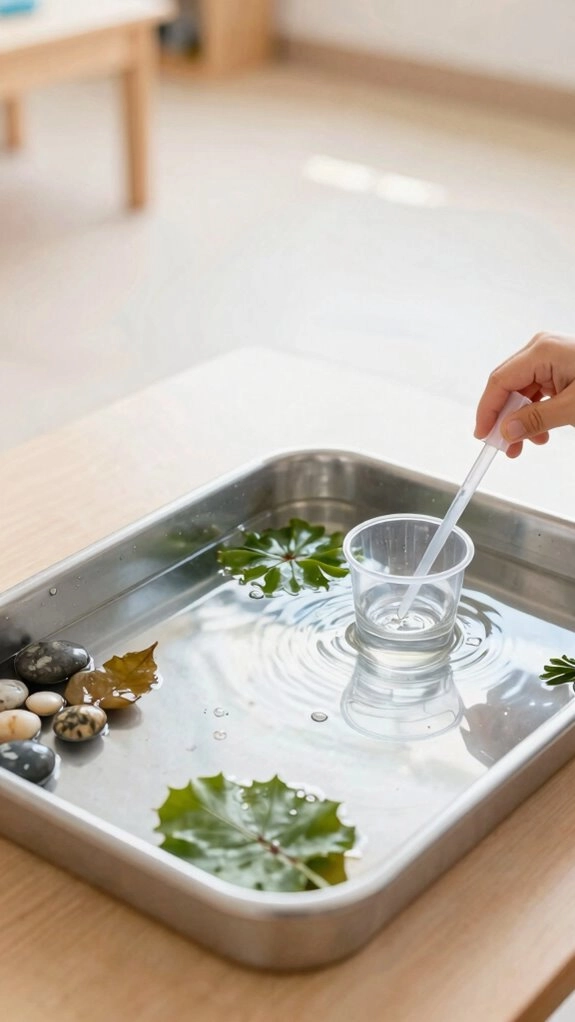
You can predict whether objects will sink or float before testing them in water.
You can free tiny treasures from ice and watch melting change the scene.
You can mix water colors and see new shades swirl into view.
You can also explore surface tension by touching soapy water and watching pepper scatter across the surface.
Sink Or Float Predictions
Before testing, make a guess about which objects will sink or float. You and your friends can choose toy boats, plastic spoons, coins, and sponges.
Drop each item gently into a clear water bin. Watch closely as the water supports some objects while others travel to the bottom.
This gives you a Tangible cause and effect lesson about buoyancy. Mark each result on a simple float or sink checklist. Draw pictures if you prefer.
Then compare predictions with what really happened. Try the items again, including larger or smaller versions.
As your group gathers evidence, your guesses can become smarter.
Ice Excavation Adventure
After exploring floating objects, you can uncover treasures trapped inside ice.
Freeze small toys in an ice tray or bowl of water.
When the block is solid, take it out for your excavation challenge.
With an adult nearby, use spoons, small hammers, or warm water to dig carefully.
Try sprinkling salt and watch it speed melting by lowering water’s freezing point.
Practice predicting temperatures before you test each tool.
Keep noticing changes as cracks grow and toys loosen.
Talk with your fellow scientists about what caused each treasure to drop.
Then adjust your plan and try again together today.
Water Color Experiments
How can water, color, and simple supplies create surprising science right at your table? You can discover volume and mixing with friends while you watch bright color change reactions.
- Make Magic Milk. Add coloring to milk, then touch soap to the center. The soap lowers surface tension, so colors race and swirl.
- Build a cloud-in-a-jar. Warm water meets ice, and cooling vapor condenses into tiny droplets.
- Test colored water with paper towels. You’ll see a rainbow climb through capillary action. Then compare absorption in sponge, fabric, foil, and towels. Predict together, test, and share what you explore as scientists.
Make Magical Milk Art
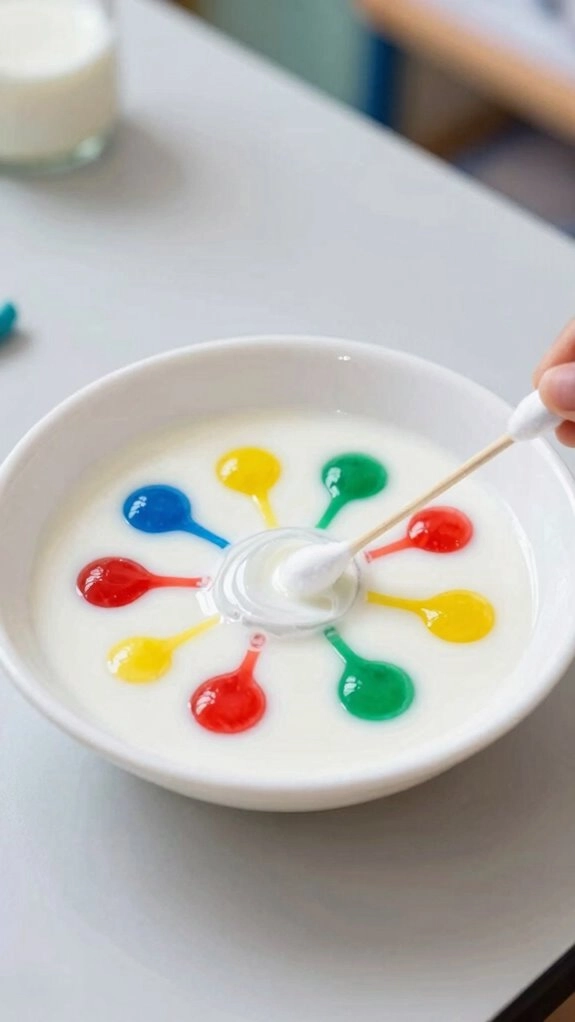
Magical milk art lets you watch colors race and swirl like tiny storms. Pour whole or 2% milk into a shallow dish. Its smooth surface gives the colors room to travel.
Add small food-coloring drops near the center, but don’t let them touch.
Dip a cotton swab in dish soap and touch the middle gently. You’ll see soap effects as colors burst outward. Soap lowers surface tension, so the color moves.
This experiment shows how surface tension changes when soap is added to a liquid.
Try new shades together for color mixing.
What do you predict will happen with more drops or a swab touch near the edge? Share your observations with friends.
Try a Sink or Float Test
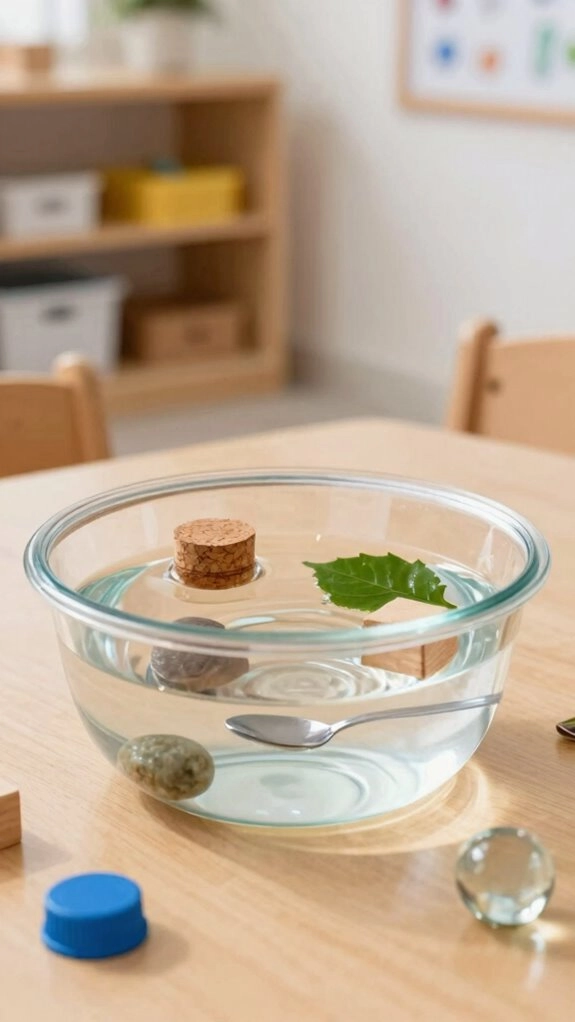
With a bowl of water, you can investigate what sinks and what floats.
Invite your science team to predict each item before testing it. Record guesses on paper or a simple chart.
Then try:
- Drop a small toy, plastic piece, or fruit into a clear tub.
- Watch closely for bubbles and notice whether it floats or sinks.
- Change one variable, like size or shape, and test again.
Use buoyancy language, make evidence talk, and share what you see.
Objects less dense than water often float, while denser objects sink.
Say “heavy,” “light,” “bubbles,” and “because” together.
Excavate Toys From Ice
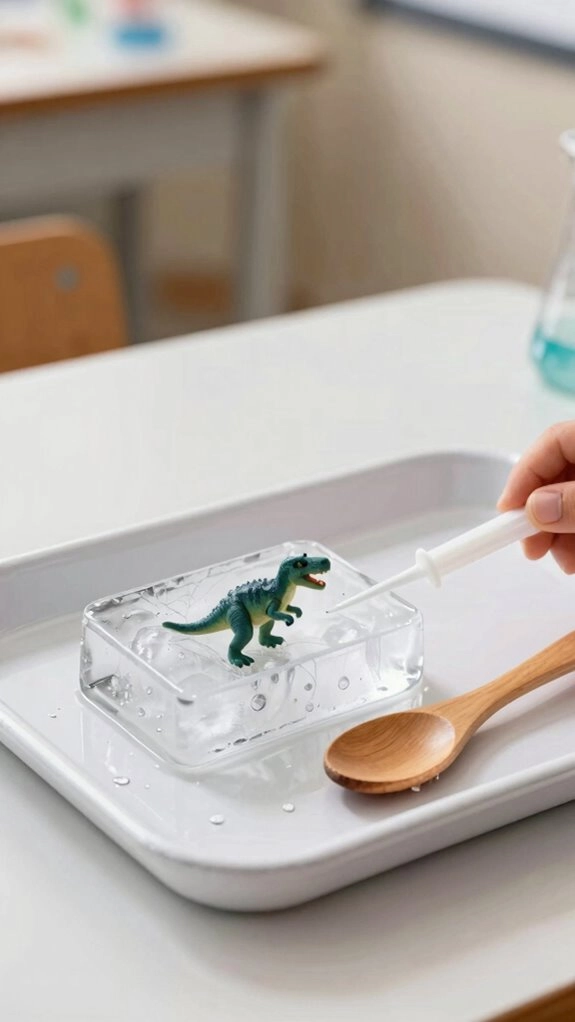
Inside a block of ice, tiny toys become exciting treasures to find.
You can freeze small objects in water using a bowl or ice tray.
After the block hardens, invite friends or family to excavate together.
Tap gently with a small hammer or dig with spoons.
Add warm water to speed melting.
With adult help, sprinkle salt and watch it melt paths through the ice.
Notice the sensory texture as solid ice turns into liquid water.
Predict which tool will free each toy first.
Compare results and share discoveries.
This experiment builds reasoning through a Sink or float connection.
Create Dancing Raisins
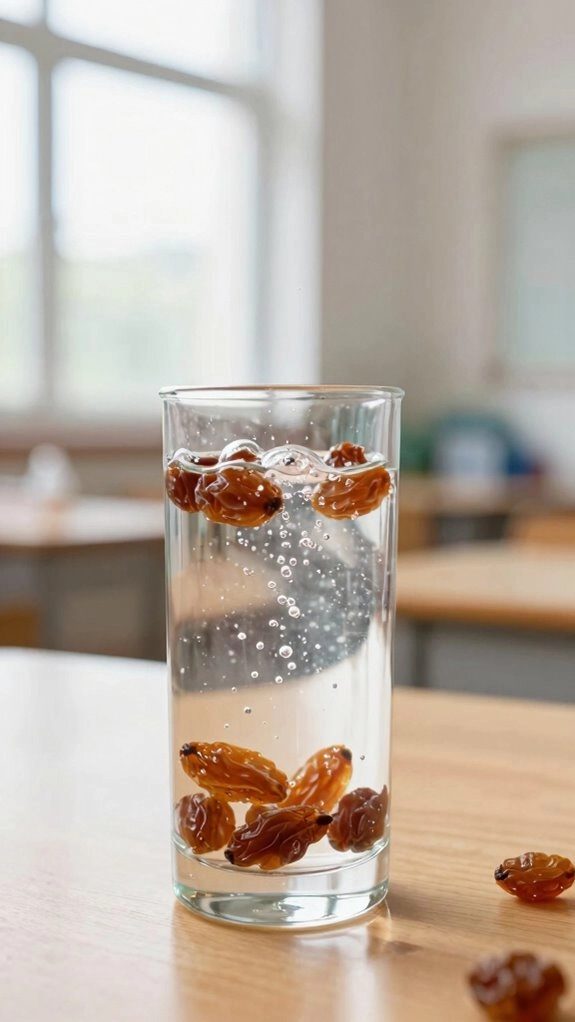
When you drop five to ten raisins into a clear bowl of seltzer, they begin to dance. You and your little science team can observe carbon dioxide bubbles stick to each raisin. The bubbles make tiny rafts that lift raisins upward. Then bubbles pop, and raisins sink again.
- Gently swirl the bowl and notice the motion effect.
- Compare sparkling-water brands to examine the bubble cause.
- Test cold and warm seltzer. Which makes raisins move faster?
Ask, “What do you see?” and “When do they move most?” Your observations help everyone connect gas, bubbles, and movement as a shared finding.
Nature-Based Preschool Learning Activities
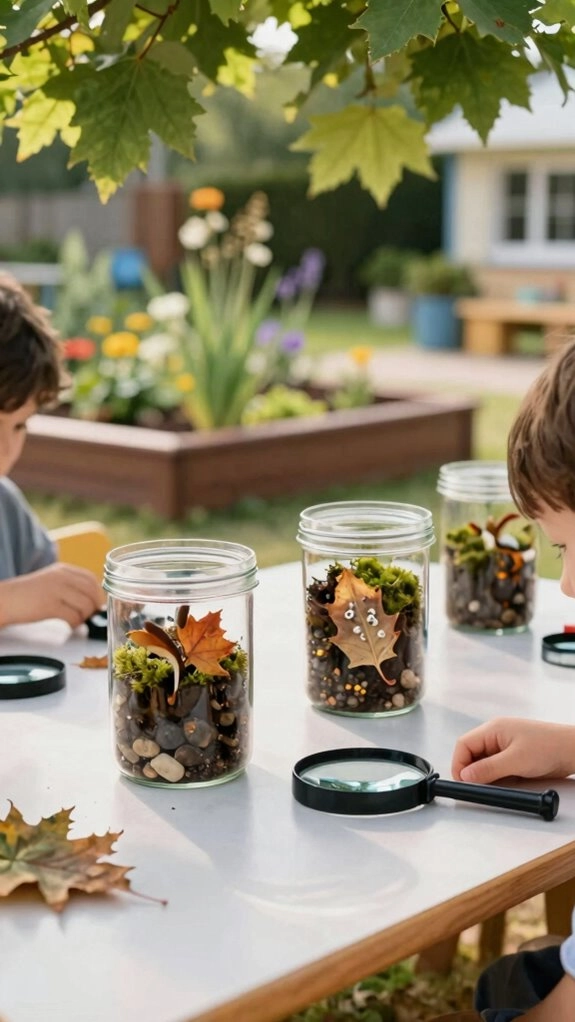
Nature turns everyday outdoor moments into exciting science findings. On a walk, you and your friends can touch Leaf texture, compare colors, spot leaf patterns, and try size sorting. Your observations help everyone feel like a real science team.
| Try this | What you notice |
|---|---|
| Trace shadows | Light angles change |
| Use a rain gauge | Rain has a measurable depth |
| Shine sunlight through a prism | Colors appear in a rainbow |
Ask, “What changed?” Then share your ideas. You don’t need perfect answers. You just need curious eyes, careful hands, and friends who discover alongside you. Keep discovering together every day outside.
Plant Seeds in a Clear Jar
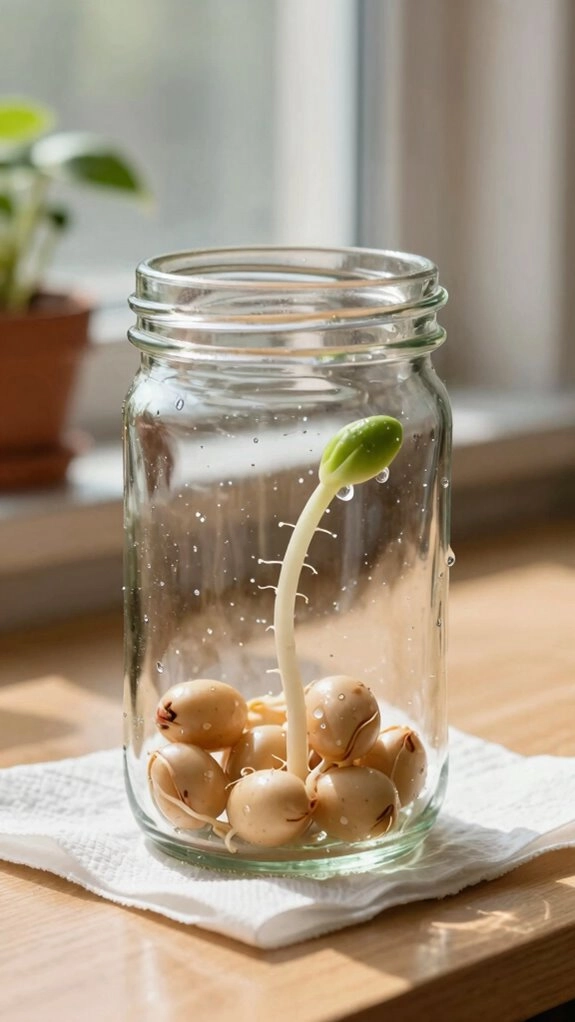
Place bean seeds between a damp paper towel and a clear jar wall.
Set your jar in a warm, bright spot and keep the towel lightly moist.
You’ll soon watch roots and shoots grow right before your eyes.
Simple Seed Jar Setup
A clear seed jar lets you watch a tiny bean begin its plant life. You’ll make a welcoming little science station with everyday supplies.
- Choose a clear jar or plastic cup. Line it with damp paper towels.
- Tuck a few bean seeds between the towel and the container wall. Keep them visible.
- Add a small amount of water, so towels stay moist, not soggy.
Place your jar in a warm, sunny window spot. Check the towels each day and add water when needed. Seed sprouting needs moisture.
Invite a family member or classmate to join your daily growth journaling.
Watching Roots And Shoots
As your bean seed wakes up, you can watch its hidden parts begin to grow.
Each day, gather around the jar and look closely.
Talk about roots as they appear first and spread downward.
Say, “Roots drink water.”
Then talk about shoots as they rise upward.
Say, “Shoots grow upward.”
Observe water needs by checking that the towel stays damp, not soaked.
Notice light direction when the shoot leans toward the bright window.
Mark new growth on the jar daily with a washable marker.
You’ll learn together that plants need water and light to grow strong.
Keep watching together.
Make a Lemon Volcano
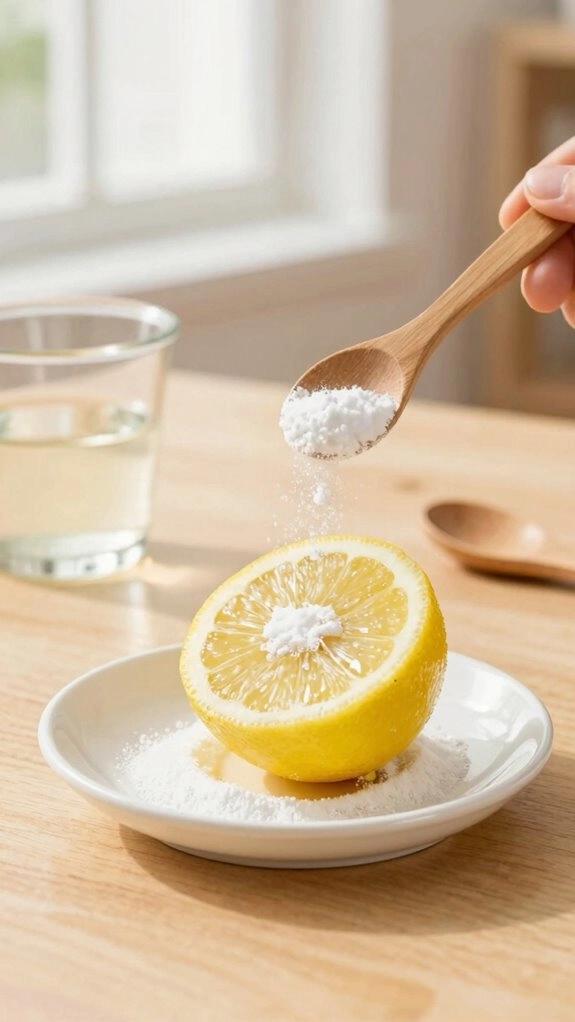
When you mix lemon juice and baking soda, you can create a fizzy mini volcano. This Lemon volcano lets you join fellow little scientists in safe kitchen science.
- First, pour lemon juice and a small splash of water into a clear bowl.
- Next, add baking soda slowly and watch foam rise, bubble, and spill.
- Notice the carbon dioxide bubbles trapped in the foam.
The acid base reaction begins right away. It keeps fizzing until the ingredients run low. You can ask what changed, when it changed, and why. With an adult nearby, you’ll uncover cause and effect together today.
Weather and Light Activities
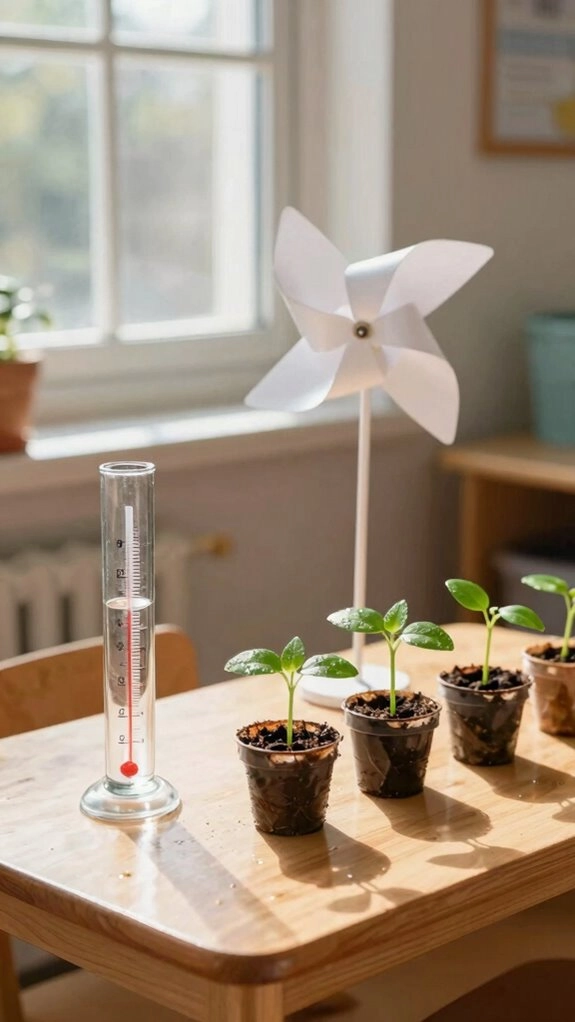
Weather and light turn everyday moments into science you can uncover. You belong in this team of careful observers. Try Cloud watching, then trace your shadow in morning and afternoon. You’ll see Earth’s rotation change its direction and length.
| Activity | What you notice | Science idea |
|---|---|---|
| Prism light | Colors spread on paper | light reflection |
| Rain gauge | Compare safe rainfall amounts | Weather patterns |
Aim sunlight through a prism toward paper. Share the colors you find. With an adult, check a safe rain gauge after different weather. Ask questions, record results, and celebrate each uncovery together. Your ideas help our team grow.
Make a Cloud in a Jar
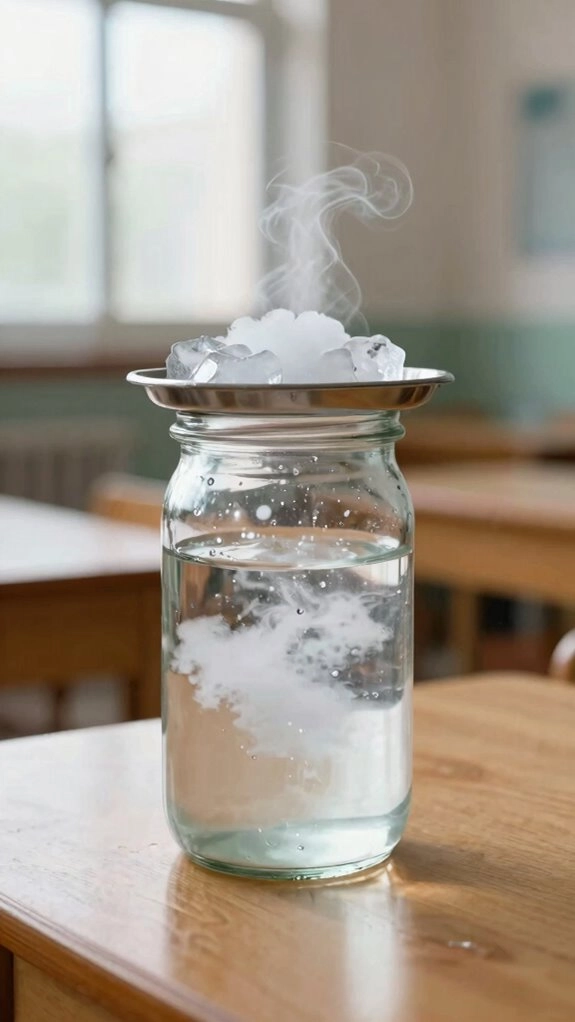
Your sky observations can lead to a tiny cloud you make indoors. You’re part of a community of weather adventurers as you watch vapor change.
- Fill a clear jar with warm, not boiling, water.
- Place fresh ice cubes across the lid or top.
- Check inside every minute and share what you see.
Cold air near the ice cools the water vapor. It condenses into liquid droplets, forming a cloud.
Ask Weather watching questions: Does it grow, fade, or shift?
Notice Tiny cloud changes as the temperature difference works.
Your jar shows how clouds can form in the sky, too.
Trace Shadows Outside
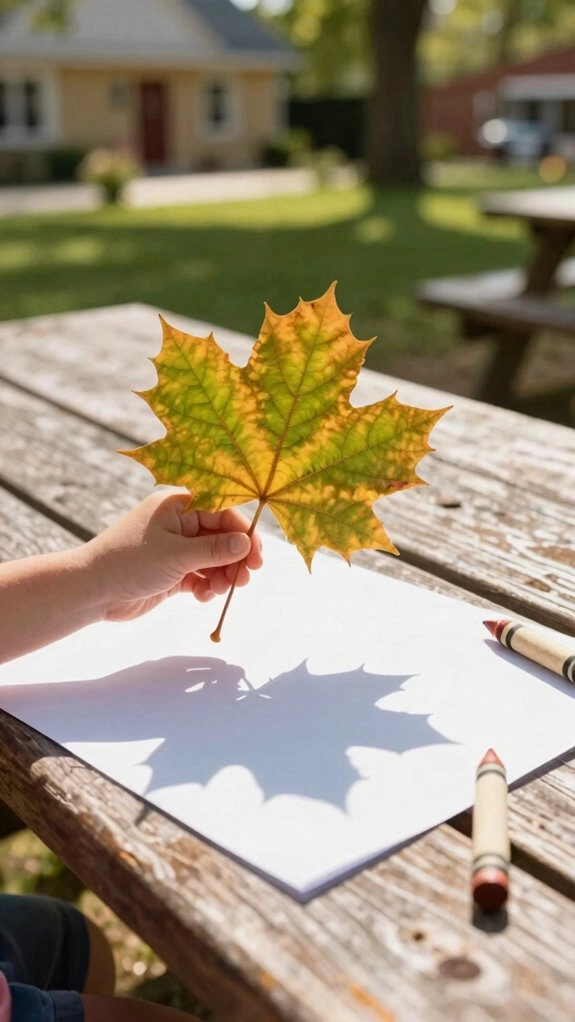
How can a shadow help you track the Sun’s path across the sky? On a sunny day, place a toy on paper or pavement.
Trace its shadow with pencil or chalk. Return in the morning, at midday, and afternoon to trace it again.
Your Shadow outline comparison shows how its length and position change.
Ask your science friends which outline is longer or shorter than before. These Sun angle observations reveal why shadows seem to move.
Earth’s rotation changes the Sun’s angle while your toy stays still.
Try cars and blocks too. Each makes a different shadow for your group.
Explore Rainbows and Measure Rain
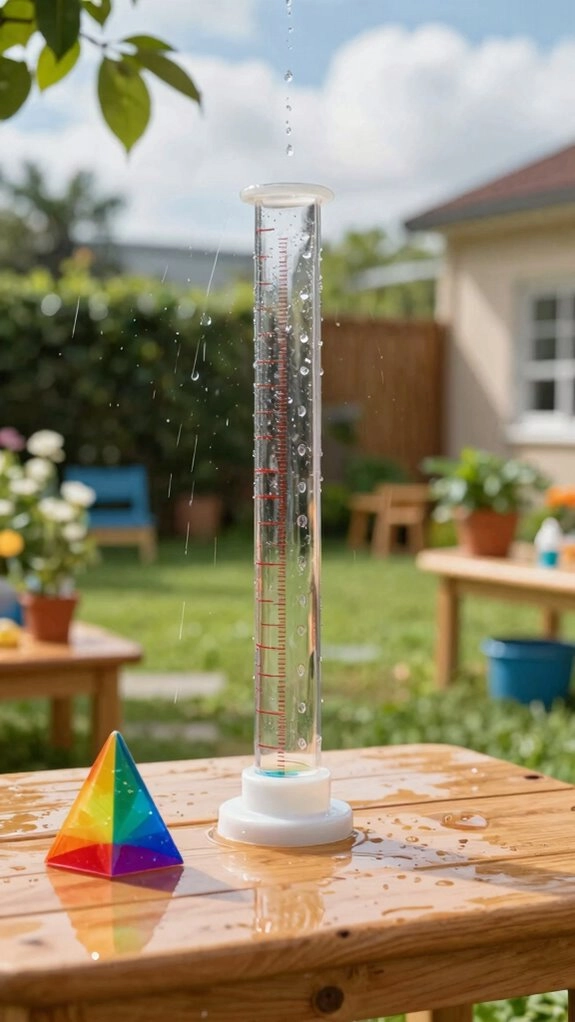
On a sunny day, a prism can turn white light into a bright rainbow. Hold it toward sunlight with an adult, and watch colors appear as light bends. Follow rainbow safety rules: never look at the sun. Your group can share Color mixing fun by naming bands and noticing light and shadow.
- Put a marked clear rain gauge outside.
- Check it daily and measure water with a ruler or washable marker lines.
- Add each level to weather charting and predict more or less rain tomorrow.
You’ll see how sunshine helps rainbows, while rain collects for comparison.