Easy Science Experiments for Kids That Make Science Come Alive
- Easy Science Experiments for Kids That Make Science Come Alive
- Key Takeaways
- 12 Easy Science Experiments for Kids
- Easy Rainbow Water and Color Experiments
- Rainbow Walking Water
- Layered Density Jar
- Easy Density Experiments With Layered Liquids
- Easy Oobleck and Slime Science Activities
- Making Classic Oobleck
- Testing Slime Properties
- Comparing Solid And Liquid
- Easy Fizzing Chemical Reactions for Kids
- Easy Invisible Ink Experiments for Kids
- Lemon Juice Secret Messages
- Safe Heat-Reveal Methods
- Oxidation Makes Ink Visible
- Easy Balloon Rocket and Air Experiments
- Easy Static Electricity Experiments for Kids
- Easy Weather Experiments for Kids
- Easy Plant Science Experiments for Kids
- Easy STEM Building Challenges for Kids
- Science Safety Tips for Kids at Home
You can make science come alive with colorful, hands-on experiments at home. Create fizzing bubbles with baking soda and vinegar. Watch rainbow water travel through paper towels and mix colors. Build a density tower with honey, soap, water, oil, and alcohol. Make oobleck that feels solid when you squeeze it. Launch a balloon rocket to explore forces. Ask an adult to help with heat or messy materials. Keep going to uncover even more experiments and explanations.
Key Takeaways
- Make baking soda and vinegar volcanoes to create carbon dioxide fizz while introducing simple acid-base reactions.
- Reveal lemon-juice invisible ink with gentle adult-supervised warming to observe browning caused by oxidation.
- Build a density tower by slowly layering honey, dish soap, water, oil, and rubbing alcohol.
- Launch a balloon rocket along a string to demonstrate motion and Newton’s third law.
- Create walking-water rainbows with colored water and paper towels to explore capillary action and color mixing.
12 Easy Science Experiments for Kids
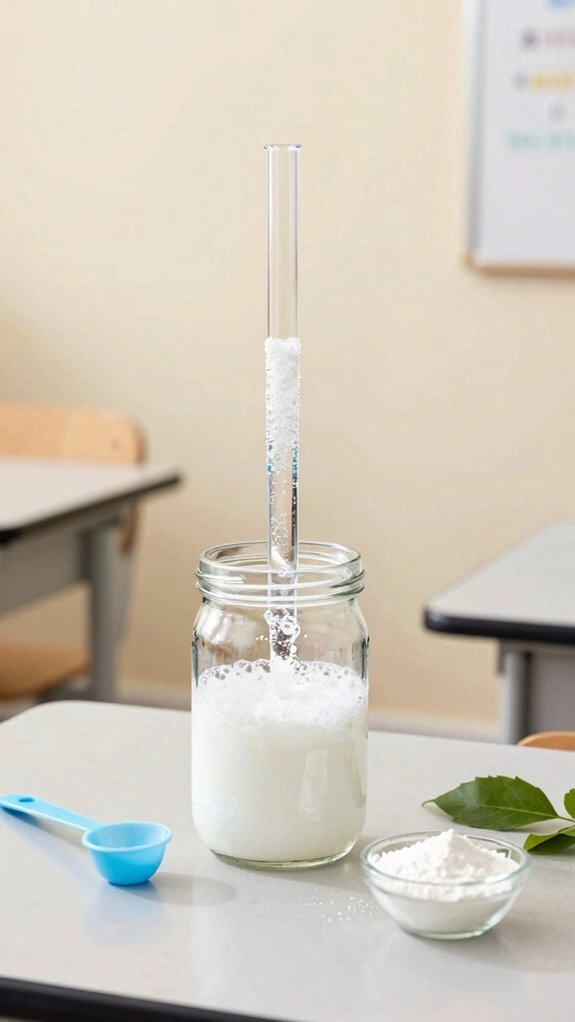
Ready to become a scientist at home? You can join curious kids everywhere by trying simple experiments together.
Write invisible ink messages with lemon juice and water. Heat them gently with adult help to reveal brown letters.
Create fizzing colors with baking soda, food coloring, and vinegar.
Build a balloon rocket to see Newton’s third law in action.
Make a lava lamp with oil, water, coloring, and Alka-Seltzer.
Try a red cabbage indicator to see how pH levels can change liquids from pink to purple, green, or yellow.
These activities support classroom experiment planning and teamwork.
Ask questions, share results, and celebrate surprises.
Always use adult guidance, especially with heat and rubbing alcohol.
Finish with safe science cleanup so everyone can discover again.
Easy Rainbow Water and Color Experiments
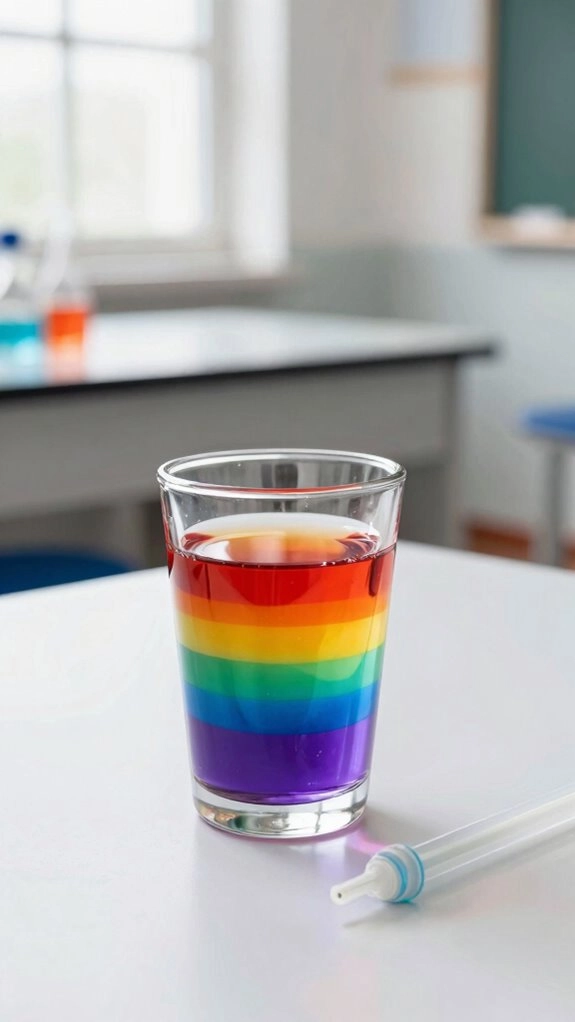
You can make rainbow walking water with cups, food coloring, and paper towel wicks. Watch the colors travel and meet as the water moves through the towels.
Then build a layered density jar to see liquids stack in bright bands. Pour slowly so density differences keep the colorful liquid layers distinct.
Rainbow Walking Water
With a few cups, paper towels, and food coloring, you can create a moving rainbow.
Arrange clear cups in a ring. Fill some with water and add red, yellow, or blue coloring. Leave nearby cups empty. Place paper towel strips between each cup so the ends touch the water.
Now your group can watch capillary motion pull water through the towels. Over 30 to 60 minutes, the colors travel into neighboring cups. Try red beside blue and notice the middle water turn purple. That’s Color mixing in action.
Change the towel thickness, water level, or cup spacing. Compare what happens and share your colorful findings.
Layered Density Jar
A layered density jar turns ordinary liquids into a bright rainbow experiment. You’ll feel like part of a team of young scientists as you build it.
Add food coloring drop by drop to honey, dish soap, water, vegetable oil, and rubbing alcohol.
Pour honey into a clear jar first.
Then slowly pour each liquid down the inside wall.
Honey stays lowest, while alcohol floats highest.
This color separation happens because each liquid has a different density.
Water absorption helps explain other rainbow experiments, but this one focuses on floating layers.
Keep your hands steady.
If colors blur, let the jar rest, then try pouring more gently.
Easy Density Experiments With Layered Liquids
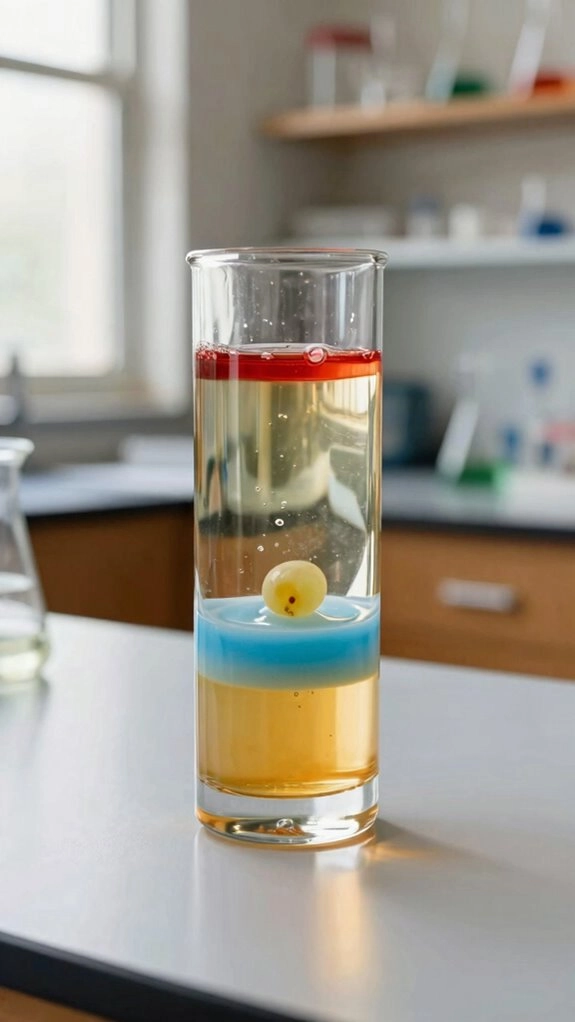
Although these liquids may look similar, they can form a colorful density tower. You’ll join scientists by predicting which liquids sink or float. Use a clear glass and pour slowly.
- Add honey first. It’s the heaviest.
- Gently layer dish soap, then water.
- Pour vegetable oil thinly, followed by rubbing alcohol.
- Let the glass rest 10–30 minutes.
Fast pouring mixes layers, so take your time.
In your Science journal, use observation notes for data recording.
Try hypothesis testing by ranking each liquid before you begin.
You’ll see honey below the soap and water, oil above them, and alcohol on top.
Make a simple chart in your journal to compare your prediction with the results, building data collection skills like scientists use to spot patterns.
Easy Oobleck and Slime Science Activities
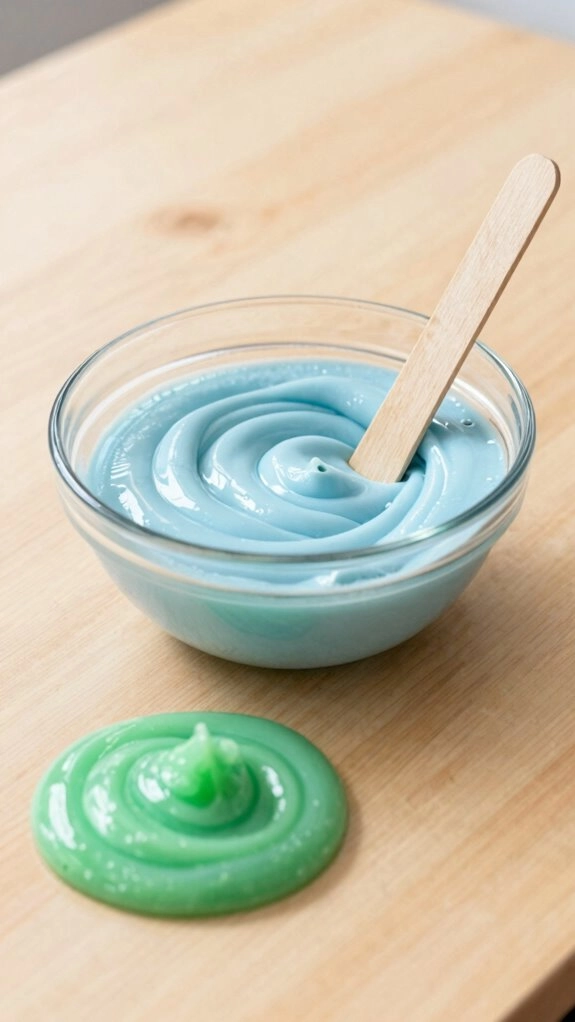
Mix cornstarch and water to make classic oobleck, then press it quickly.
You’ll see it feel solid under force but flow slowly like a liquid.
Make slime next and test how it stretches, bounces, and changes under stress.
Try making durable bubbles to explore how surface tension helps create and hold a bubble’s shape.
Making Classic Oobleck
With just cornstarch and water, you can create classic oobleck at home. Put on safety goggles and invite everyone to share materials with balance and fairness.
- Mix 1 cup cornstarch with 1/2 cup water.
- Stir until it becomes a thick paste that flows slowly.
- Add cornstarch if runny or water if too firm.
- Let it rest, then pour or tip the container gently.
A quick poke makes oobleck feel solid because particles resist sudden force. Gentle movement lets it flow again. In your science journaling, note what you see and feel.
You’ll discover how a simple mixture can act in surprising ways.
Testing Slime Properties
Now you can test how oobleck and slime change when you handle them differently.
Invite a friend or family member to join your science team.
Use the same tasks for both mixtures: pour, stir slowly, poke quickly, and squeeze.
Watch closely and write down what happens to each shape and spread.
Compare texture pull by stretching each mixture slowly, then giving it a quick tug.
Measure stretch time, too.
Count how long each one keeps stretching before it breaks or flows back.
Notice whether oobleck or slime becomes firmer after fast movement.
Your careful observations help everyone see amazing texture changes.
Comparing Solid And Liquid
Oobleck and slime can both act like solids and liquids in surprising ways. You can test them together and share your findings with friends.
- Mix cornstarch and water until your Oobleck looks cloudy and drips slowly.
- Pour it gently. It flows like a liquid because particles slide easily.
- Squeeze or punch it quickly. The particles lock together and resist movement.
- Stretch slime fast, then let it rest. Notice how it lengthens, then spreads.
Try the same tests on both materials. Record changes in shape and thickness. Molecule mixing helps create their unusual behavior. Use density comparisons to discuss why materials may flow differently.
Easy Fizzing Chemical Reactions for Kids
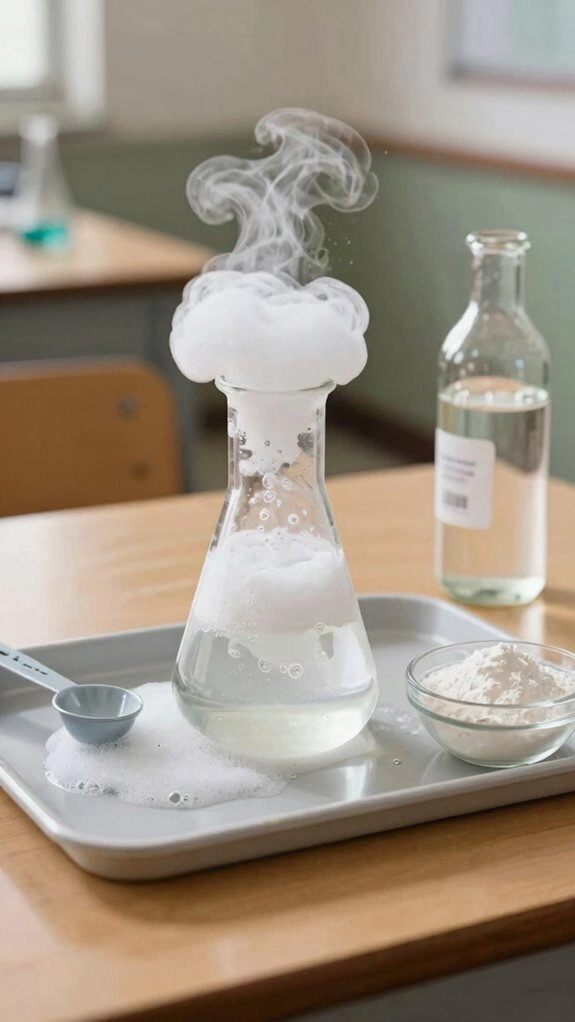
Fizzing reactions let you watch gases form right before your eyes. With adult supervision, you can make a baking soda volcano using vinegar. Carbon dioxide bubbles out and creates an exciting eruption.
You can also inflate a balloon without blowing by mixing those same ingredients in a bottle.
Try a lava lamp with water, oil, and antacid tablets. The bubbles travel up and down through the layers.
For elephant toothpaste, yeast helps hydrogen peroxide release oxygen foam.
Use kitchen science gear like bowls, bottles, and trays.
Safety first: keep mixtures away from faces and clothes.
Follow cleanup tips by wiping spills quickly.
After experimenting, refuel your science team with a snack that combines fruit and yogurt for steady energy.
Your science team can investigate together!
Easy Invisible Ink Experiments for Kids
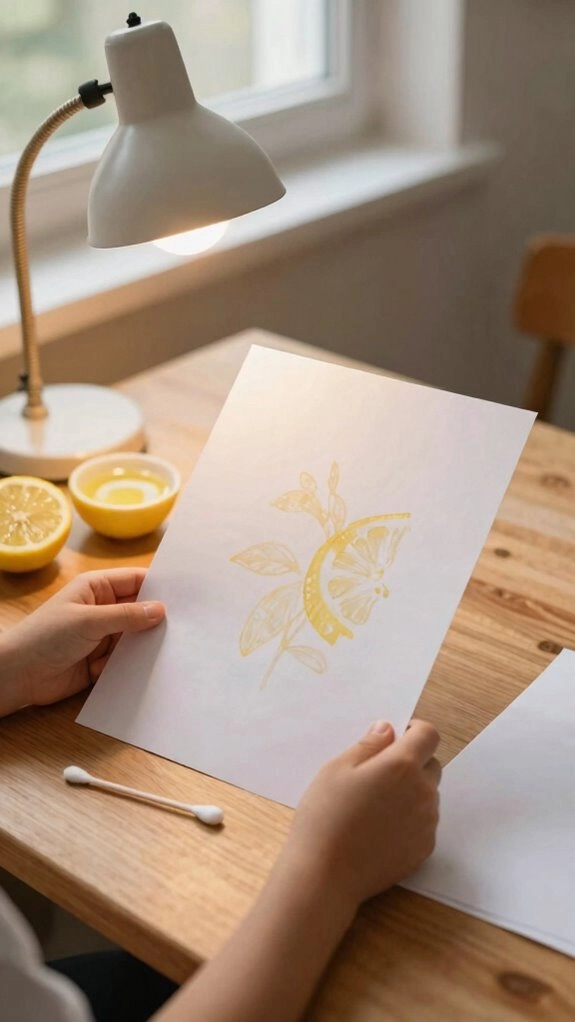
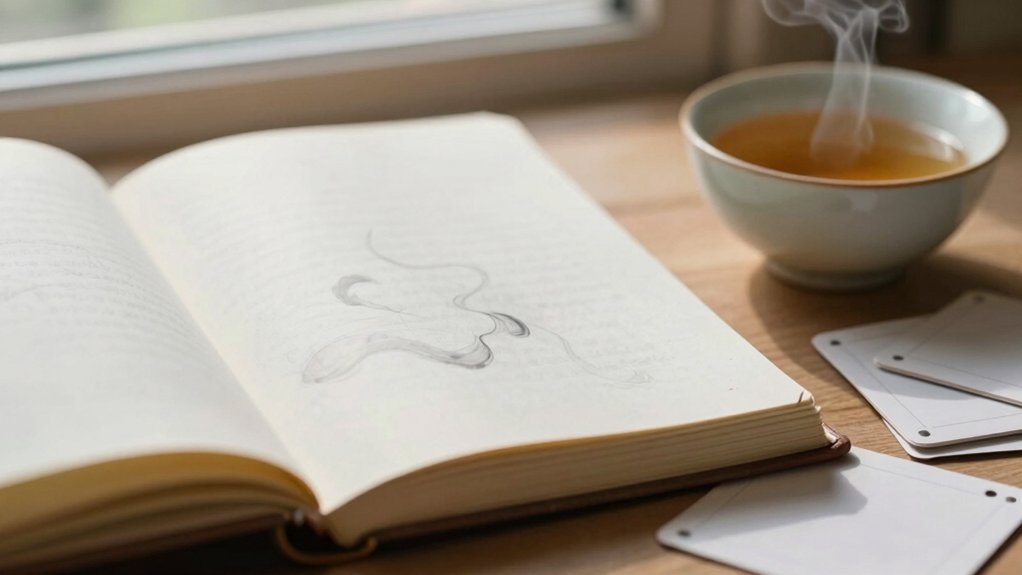
Make a secret message by mixing lemon juice with water and writing with a cotton swab. Let it dry, then ask an adult to gently warm the paper near a safe light.
You’ll see the writing turn brown as oxidation makes your hidden ink visible.
Lemon Juice Secret Messages
Lemon juice can help you write a message that seems to disappear. You’ll feel like part of a secret science club as you test this simple reaction.
- Mix lemon juice with a little water.
- Use a cotton swab to write on white paper.
- Let the paper dry completely. The juice soaks in without a strong stain.
- Compare light and thick strokes. Thicker lines create stronger results.
Lemon juice contains citric acid. It changes when warmed and creates brown letters through oxidation. Like paper chromatography and food coloring separation, this experiment helps you notice hidden changes in everyday materials.
Ask an adult to help reveal it safely.
Safe Heat-Reveal Methods
Once your secret message is fully dry, gentle warmth can make it appear. Ask an adult to help you hold it near a warm lamp. Never use flames. Watch the thick lemon-juice lines slowly turn brown. Your science team can celebrate the reveal together.
| Safe choice | Why it helps |
|---|---|
| Warm lamp | Gives controlled heat |
| Adult nearby | Keeps everyone safe |
| Dry paper | Prevents smudges |
This edible chemistry activity shows how heat changes materials. Save pH testing for another experiment, then compare what you learn with friends. You’re practicing careful observation like real scientists.
Oxidation Makes Ink Visible
Now you can investigate why your hidden message turns brown with heat. You’re part of a science team exploring oxidation.
- Write with lemon juice and water using a cotton swab.
- Let the paper dry completely. The juice soaks in and disappears.
- Warm it briefly with adult help for safe observation.
- Watch the acidic juice speed up papier oxidation and brown the strokes.
The acid encourages chemical changes in the paper, making your secret writing visible. Try stronger lemon juice or longer drying times.
You may see a darker image. Heat carefully, because too much warmth can scorch your page.
Easy Balloon Rocket and Air Experiments
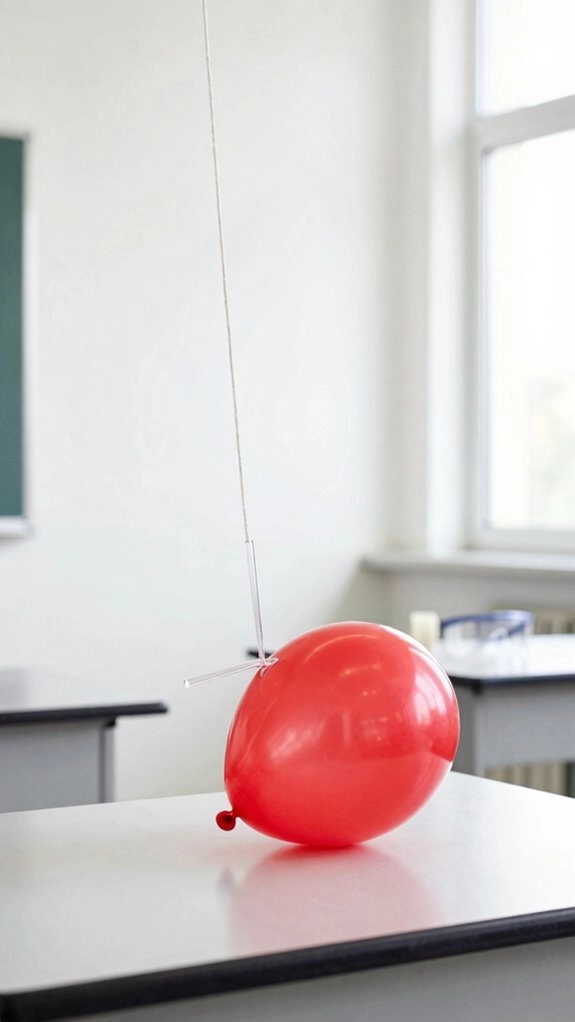
With a balloon rocket, you can watch air create motion in seconds.
Thread a straw onto a long string and pull it tight.
Tape the straw firmly, then attach an inflated balloon.
Release it and cheer as your rocket zips forward.
You can discuss Newton’s laws by noticing air rush backward while the balloon moves ahead.
That action and reaction show Newton’s third law.
Experiment with motion by watching its speed change.
It starts fast, then slows as air runs out.
Keep the string taut to prevent wobbling.
Ask an adult to help tie and tape materials.
Never use sharp objects near balloons.
Easy Static Electricity Experiments for Kids
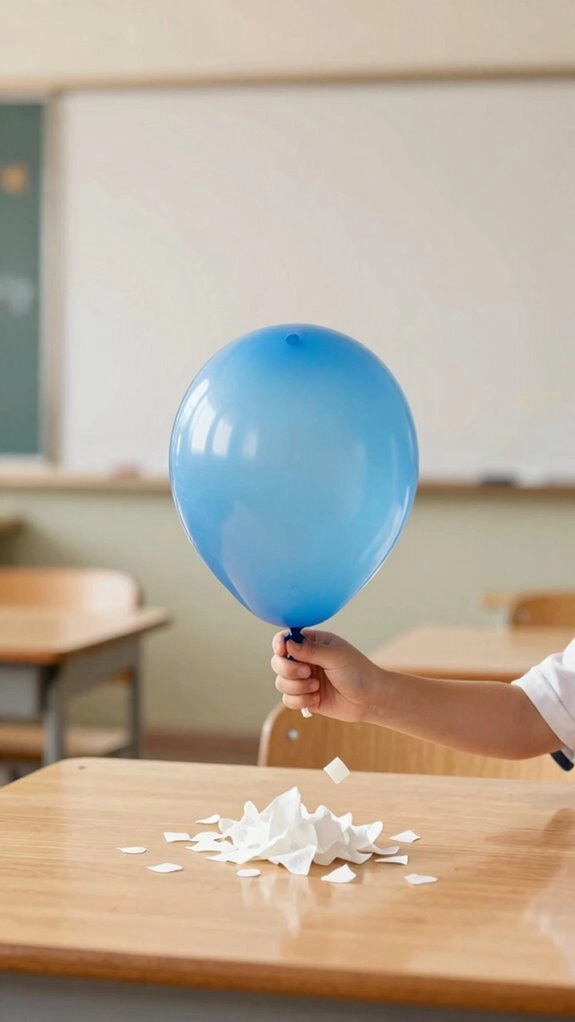
Static electricity can make ordinary objects seem to move by magic. You and your friends can investigate this surprising force together.
- Rub a balloon on dry hair or wool for 30–60 seconds.
- Hold it near tissue cutouts and watch them lift toward it.
- Tape one end of each shape down for steady static-lift practice.
- Compare hair and cotton, then measure the lift distance in centimeters.
This isn’t Magnet gravity, though it may feel similar. Record your results and see which material creates the strongest charge.
A paper clip can mark your measuring spot. Keep balloons away from faces, electronics, and flammable vapors.
Easy Weather Experiments for Kids
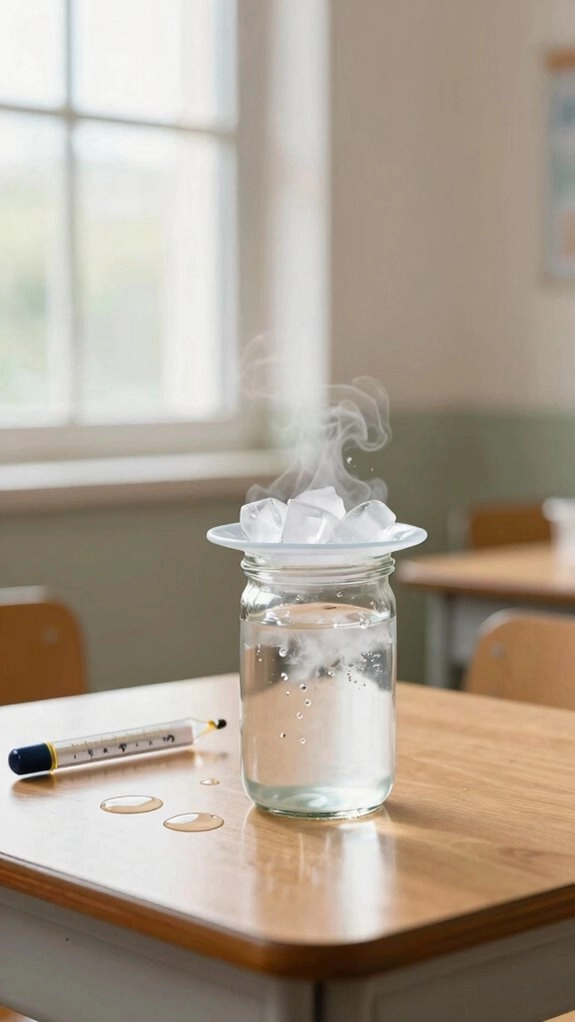
Weather experiments help you investigate rain, wind, clouds, and changing air right at home. Make a cloud in a jar by using warm water and a cool surface.
Watch droplets form, grow, and fall like rain. Build a tornado bottle with two connected bottles and swirl the water.
You’ll see a spinning funnel like a small storm. Create a rainbow in a jar by layering colored liquids with different densities.
Try the air-pressure card trick to see trapped air hold water in place. Your family or classmates can compare results together.
These activities help you notice weather science everywhere.
Easy Plant Science Experiments for Kids
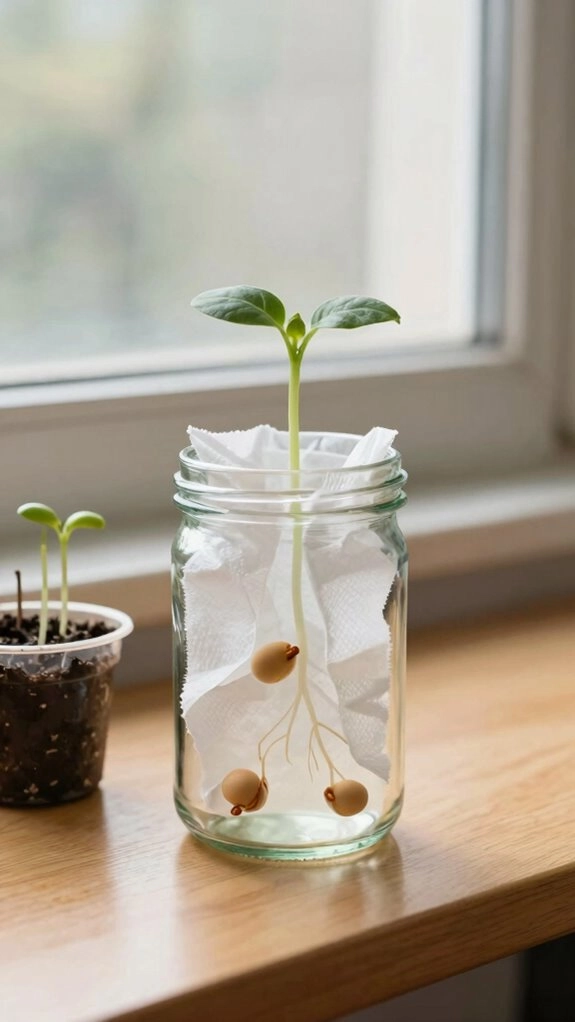
Plants do amazing science work every day as they drink, grow, and respond to their surroundings. You can investigate these processes with friends and compare what you notice.
- Layer honey, soap, water, oil, and alcohol in a jar. Density helps explain plant liquid movement.
- Create a rain jar to watch evaporation, condensation, and precipitation. Plants need this water for root absorption.
- Let colored water climb paper towels. This models xylem carrying water and soil nutrient upward.
- Test liquids with cabbage indicator. Soil pH affects plant growth, leaf transpiration, and stomata function.
You’ll see how plants connect water, air, and nutrients.
Easy STEM Building Challenges for Kids
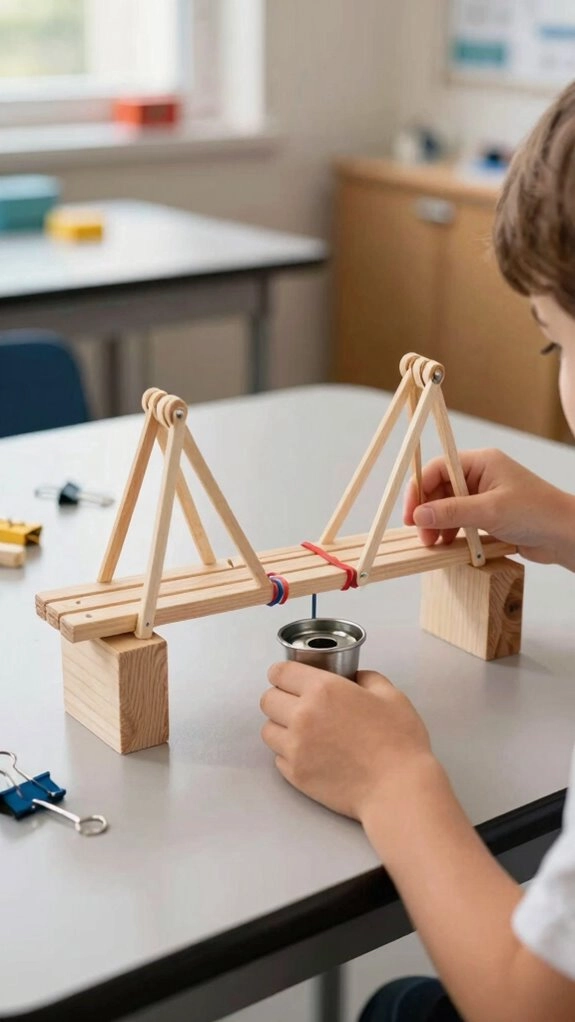
After investigating how plants move water and use sunlight, you can build challenges that show forces in action.
Keep everyone involved as you test a ping pong float with fast-moving air.
Create a balloon rocket on a string and watch thrust send it forward.
Then roll a toy car down ramps of different heights.
Measure each distance to investigate gravity, friction, and momentum.
Rub a balloon on your hair to lift tissue shapes with static charge.
You can also connect projects to Solar system models, movement exploration, magnet games, and water filtration designs.
Compare results with friends.
Your team’s observations help every challenge feel like real engineering.
Science Safety Tips for Kids at Home
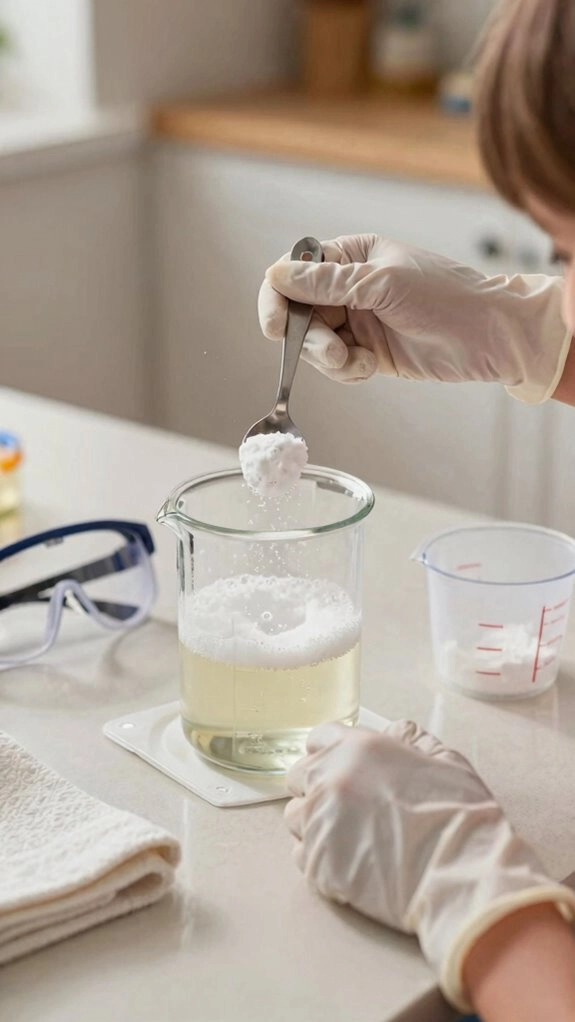
Before you begin a home experiment, make safety part of your science plan. You’re a valued member of your science team, so protect yourself and others.
- Ask an adult to supervise heat, sparks, batteries, and reactions. Keep flammable items away.
- Wear eye protection for vinegar, baking soda, peroxide, acids, or colored liquids. Never taste supplies.
- Tie back hair, secure loose clothes, and clean spills quickly. Rinse your hands after food experiments.
- Follow labels and store scissors or needles safely. Nature observation logs and bathroom safe experiments still need careful choices.
Use stable surfaces, keep materials away from faces, and enjoy uncovering safely together.