Little Chef Activities for Kids That Make Learning Delicious
- Little Chef Activities for Kids That Make Learning Delicious
- Key Takeaways
- Why Cooking Is a Great Learning Experience
- Simple No-Cook Activities for Young Children
- Measuring and Counting in the Kitchen
- Mixing and Following Simple Instructions
- Exploring Colors, Textures, and Smells
- Healthy Food Preparation Activities
- Fruit and Vegetable Sorting
- Build-Your-Own Snack Activities
- Kitchen Safety for Young Children
- Cooking Activities That Build Fine Motor Skills
- Turning Everyday Cooking Into a Learning Opportunity
Little chef activities turn simple snacks into hands-on learning you can taste. You’ll count scoops, measure ingredients, and follow recipe steps in order. Try fruit kabobs, layered sandwiches, or no-bake energy bites with an adult nearby. Mixing and decorating strengthen your hand control, while colors, textures, and smells inspire curious questions. Wash your hands, choose safe jobs, and help clean up afterward. Keep going to uncover more tasty ways to learn in your kitchen today.
Key Takeaways
- Set up a safe little chef station with kid-sized tools, handwashing routines, and age-appropriate jobs for confident participation.
- Use no-cook recipes like fruit kabobs, layered sandwiches, and energy bites to explore colors, textures, smells, and tastes.
- Turn measuring into math by counting scoops, comparing more and less, and filling cups to marked lines.
- Build listening and sequencing skills with simple recipe routines: pick, pour, scrape, mix, taste, and vote.
- Encourage teamwork through shared kitchen cleanup, chef reward charts, and celebrations for every small cooking success.
Why Cooking Is a Great Learning Experience
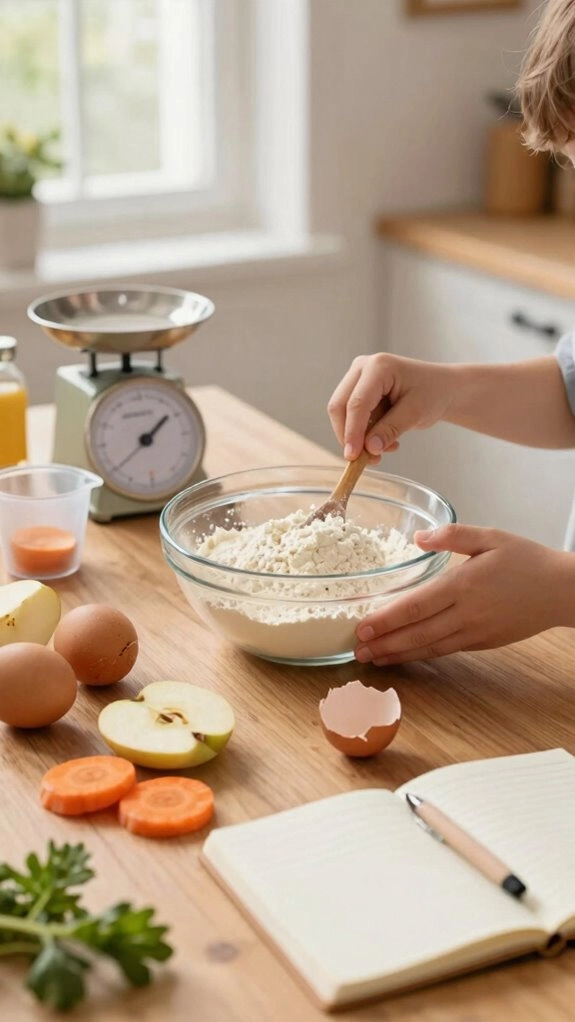
Cooking turns your kitchen into a hands-on classroom filled with tasty rewards. You learn math by counting scoops and seeing how two halves make one whole.
Recipes help you read steps in order and build a Growth mindset when practice feels tricky. Mixing, pouring, and decorating grow fine motor confidence.
You can take age-ready jobs and celebrate each success. Helping choose and prepare colorful produce may make you enthusiastic to taste it.
Share kitchen time to create family bonding and memories. Follow hygiene routines by washing hands before and after food prep.
Guided play in the kitchen lets you make choices while an adult asks questions and offers help without taking over.
With guidance, you become a capable chef.
Simple No-Cook Activities for Young Children
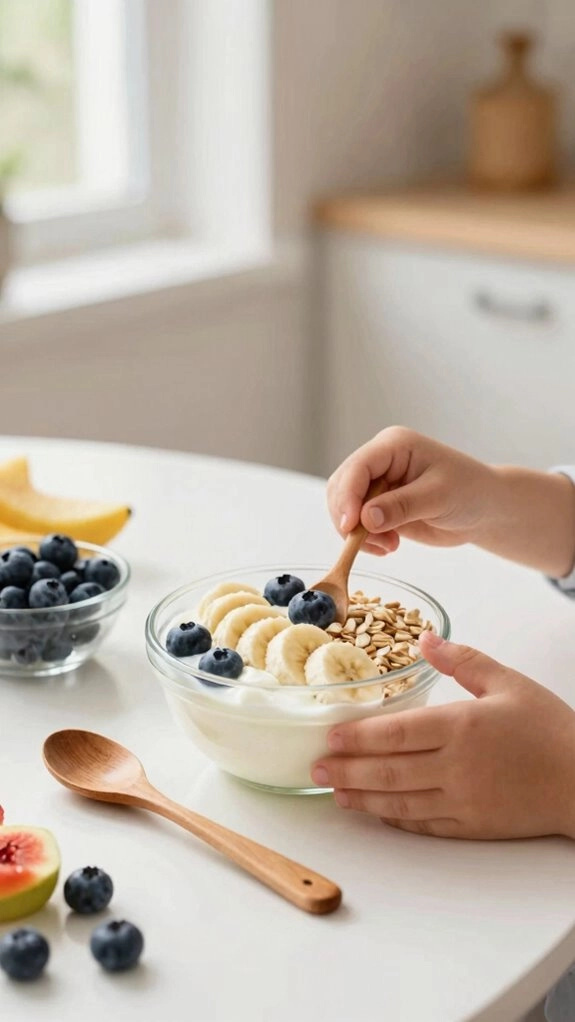
No-cook activities let you create tasty snacks without using the stove or oven.
Set up a little master chef station where everyone can join safely.
Try fruit kabobs, popsicle molds, or yogurt-dipped fruit skewers.
Washing produce, tearing bread, and stirring cold foods build confidence and fine-motor skills.
Create rainbow veggie tray art or layer sandwiches with colorful choices.
For Sensory Play, roll no-bake energy bites with oats and sunflower butter.
You can also shake ice cream in a bag with a partner.
Practice handwashing before and after cooking.
Sing the Alphabet Song while washing hands to help children scrub for about 20 seconds.
Allergy Awareness: check ingredients and keep sharp tools out of reach.
Measuring and Counting in the Kitchen
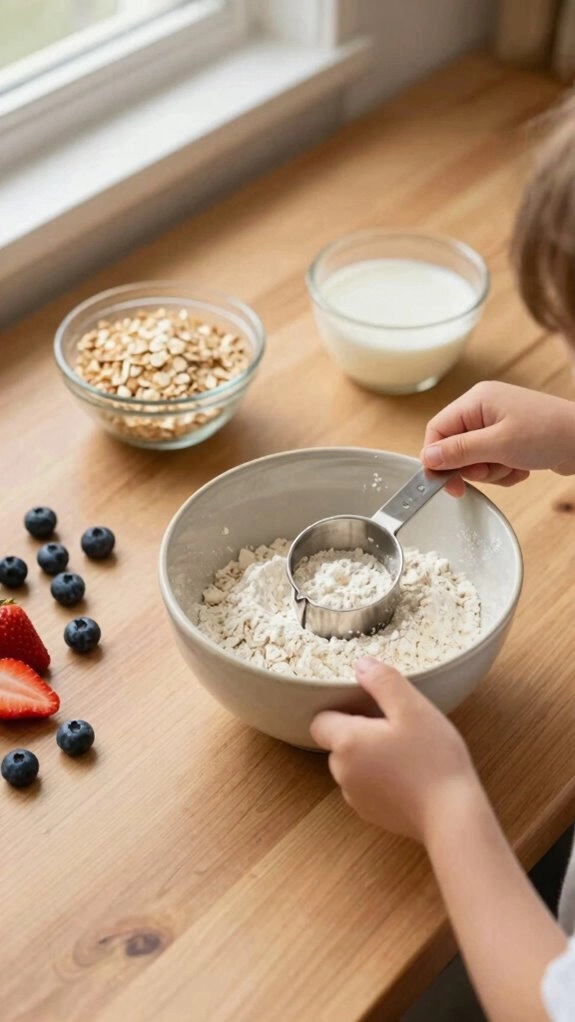
As you measure ingredients, you can detect that kitchen tools are math tools. Use kid-sized cups and spoons to fill each one to the right line.
Count scoops as you add them, then see how many remain.
Pour ingredients into a bowl or muffin tin and compare more with less.
For Ingredient Estimation, predict whether a cup will be full or packed. Check your guess before you pour.
Notice that two halves make one whole when you portion fruit or dough.
Try Snack Scoring by counting each portion.
You’ll build confidence and belong with every kitchen math detect today.
If the recipe feels like a lot, use a tiny next step such as measuring just one ingredient first.
Mixing and Following Simple Instructions
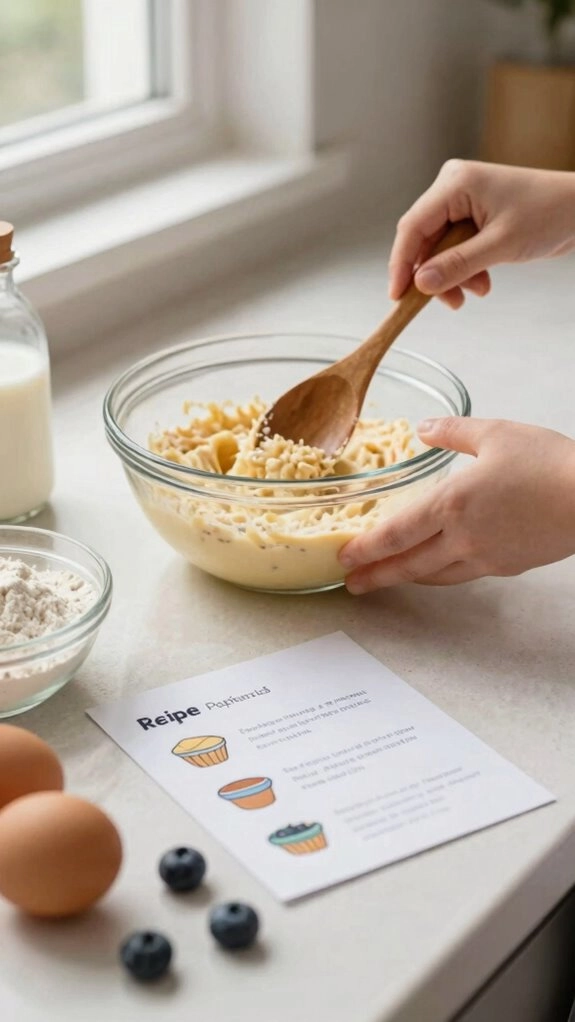
Once you’ve counted and measured, it’s time to make those ingredients work together.
You can try no-bake energy bites or a smoothie challenge with your kitchen crew.
Follow three steps: add, mix, then taste and vote.
For measure-and-dump fun, an adult fills your cup or spoon, and you tip it into the bowl.
Use separate bowls if spills happen.
They’re chances to practice.
Listen for short directions: scrape the bowl, add the next ingredient, then fold or mix.
Kitchen Teamwork means everyone has a helpful job.
Recipe Patience helps you wait, listen, and finish each step together with care.
Gentle stirring helps prevent extra foam, just like it does when making stronger bubbles.
Exploring Colors, Textures, and Smells
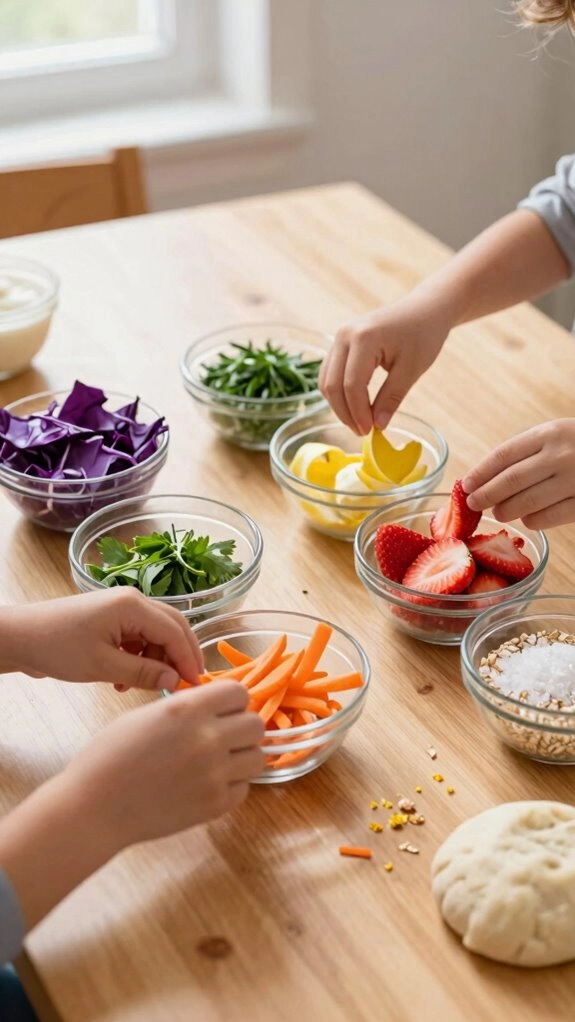
Your kitchen can become a sensory lab full of color, texture, and smell.
Invite everyone to join a Color swap: sort strawberries, pineapple, blueberries, and kiwi into red, yellow, purple, and green piles.
Then build fruit kabobs together.
For texture comparisons, mix oats, honey, and sunflower butter into no-bake bites.
Share sensory vocab: crumbly, sticky, smooth, or lumpy.
Try smell games by safely sniffing vanilla, citrus zest, cocoa, and fruit one at a time.
Vote for the strongest, sweetest, or most surprising.
Make layered Popsicles with yogurt, juice, or coconut milk.
Finish with a match card: orange, creamy, fruity.
Use vivid imagery to help kids remember each food’s color, texture, and scent.
Healthy Food Preparation Activities
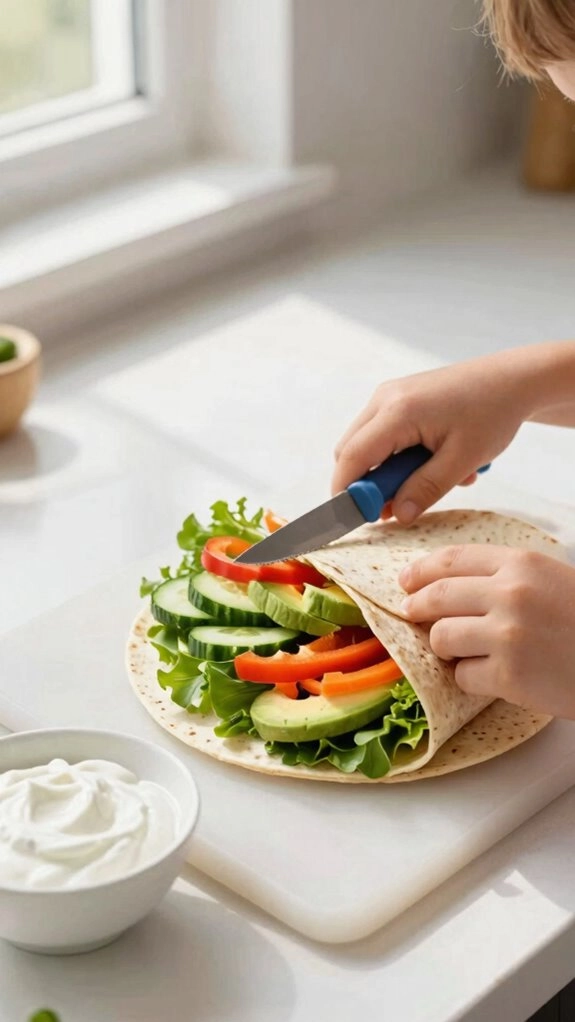
Sort colorful fruits and vegetables to learn which foods grow in each group. Then build your own snack with fruit, yogurt, or crunchy veggie toppings. You’ll make healthy choices while creating something tasty to eat.
Fruit and Vegetable Sorting
Before the colorful food fun begins, wash your hands and rinse the produce.
Together, you’ll sort Favorite fruits and vegetables into color categories: red, orange, green, and purple.
Place cherry tomatoes, carrot sticks, broccoli florets, and purple cabbage in labeled bowls.
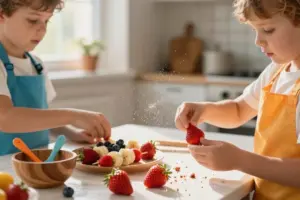
You can tear lettuce or use a kid-safe knife for strawberries with tops removed and banana slices.
Count each bowl and simple compare groups using “same/different” and “more/less.”
Invite everyone to notice how each helper belongs.
Try pattern play with tomato–broccoli–tomato–broccoli sequences.
When you’re done, wash hands again and celebrate your team’s colorful work at the table together.
Build-Your-Own Snack Activities
Now that the colors are sorted, turn those healthy foods into a snack creation.
Wash your hands and gather clean utensils first.
At your Build-Your-Own Snack Bar, choose from labeled bins of fruit, crunchy toppings, yogurt or hummus, and whole-grain bases.
Pre-portioned foods help you work independently and keep the space neat.
Try a Picnic Energy Stack or a Sunshine Surprise.
Your Snack Decisions build sequencing and fine-motor skills.
Use Toppings Practice to measure and layer carefully.
For Healthy Choices, pick one fruit, one crunchy food, and one protein or dip.
Finish with Team Plating, so everyone shares proudly.
Kitchen Safety for Young Children
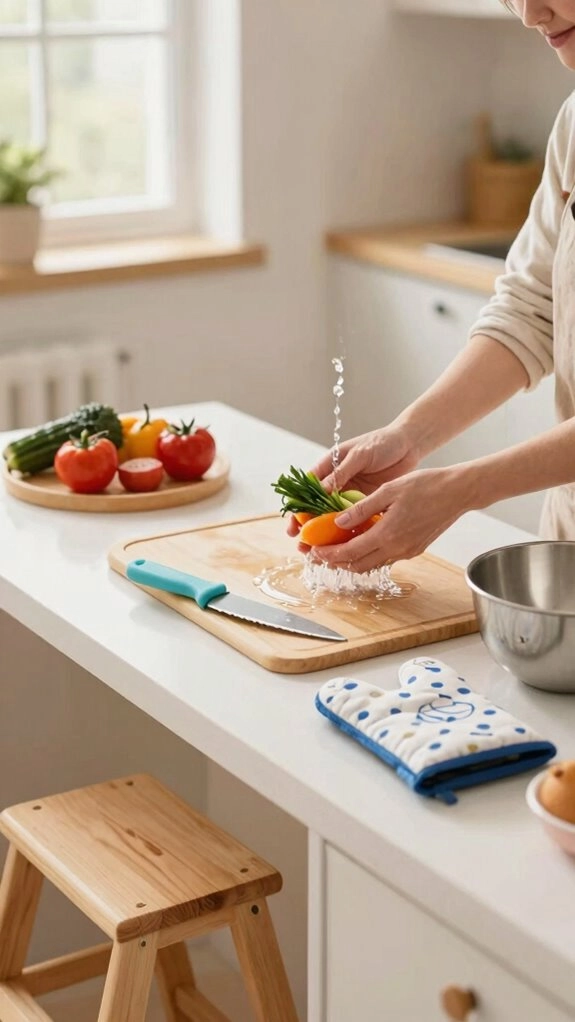
Cooking feels more exciting when you know how to stay safe. You’re part of the kitchen team, so an adult stays nearby. Ages three to five need constant supervision, while older kids receive close guidance or periodic check-ins.
Use a non-slip stool, apron, and child-sized mitts.
Practice Knife Safety: keep sharp tools away, use rounded safety knives, and never wave a knife or place fingers ahead of its blade.
Follow Hot Surface Rules by avoiding stoves and hot pans.
Wash hands before and after handling food.
Use separate cutting boards.
With adult guidance, you can add noodles or stir.
Cooking Activities That Build Fine Motor Skills
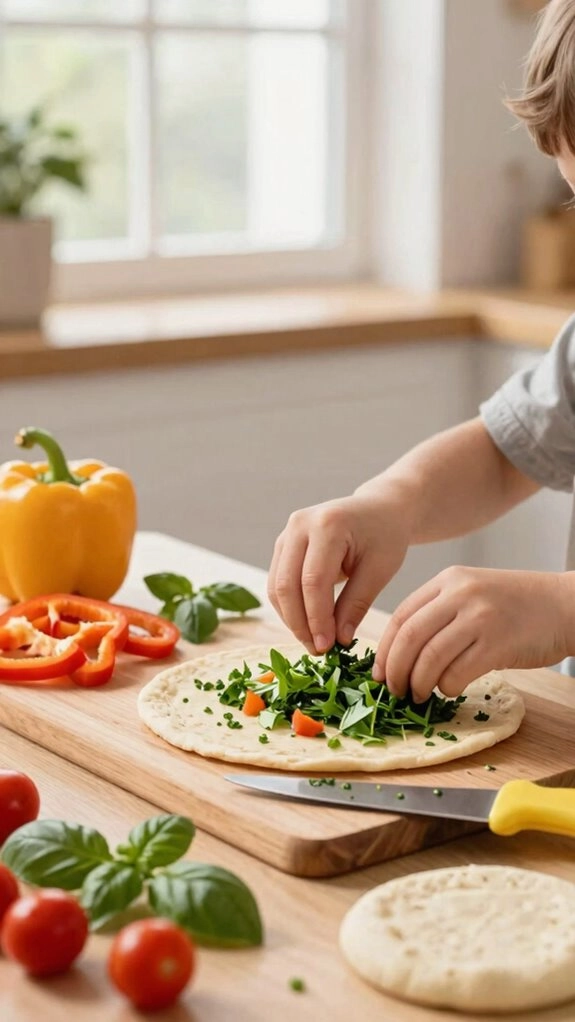
With an adult nearby, you can turn simple kitchen jobs into hand-strength practice. You’re part of the kitchen team when you pour from small cups, scoop ingredients, and dump them carefully. Bowl scraping, cookie dough stirring, and rolling energy bites build strong fingers and steady wrists. Try safe tools on a stable surface.
| Kitchen move | Your hands practice |
|---|---|
| Tear lettuce or add parfait toppings | Grasp and careful placement |
| Use a rounded knife to cut soft dough | Control and two-hand teamwork |
Each small motion helps you feel capable, connected, and proud beside your fellow little chefs. Keep trying new moves.
Turning Everyday Cooking Into a Learning Opportunity
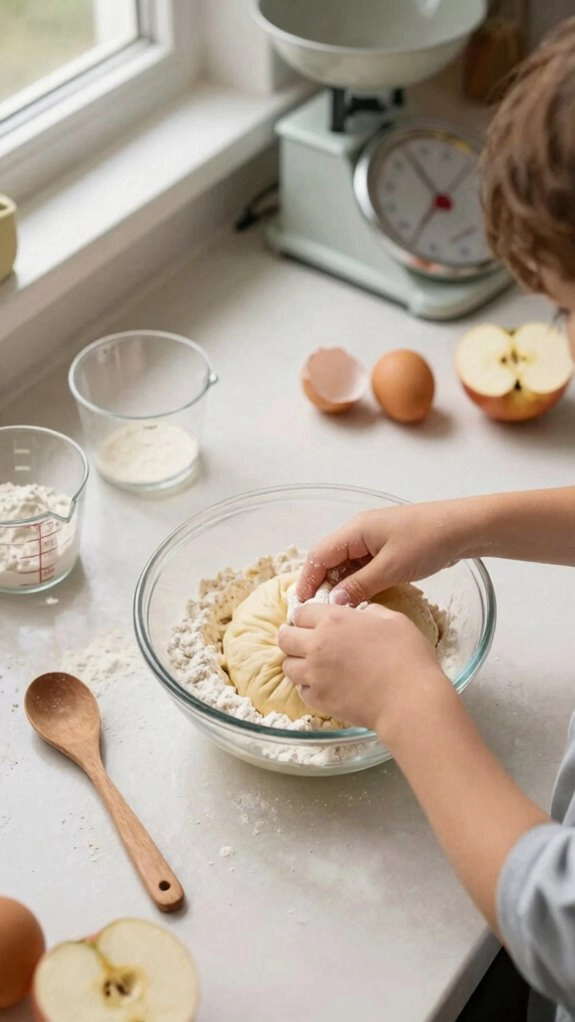
Everyday kitchen jobs can become exciting lessons when you take on a helpful role.
Choose Role based tasks like washing produce, tearing lettuce, or stirring with guidance.
You’ll practice handwashing, count scoops, compare more and less, and follow each recipe step.
No-bake parfaits, fruit kabobs, and energy bites make Snack routine building feel safe and fun.
Pick, pour, scrape, and decorate to strengthen steady hands and focus.
Finish with Kitchen cleanup so everyone helps the team.
Try a mystery-ingredient mini challenge for sequencing and smart choices.
Track progress on “Chef” reward charts and celebrate every small success together.