Martin Luther King Jr. Activities That Make Learning Meaningful

- Martin Luther King Jr. Activities That Make Learning Meaningful
- Key Takeaways
- Why Martin Luther King Jr. Still Matters
- Teach an MLK Day Reflection Lesson
- Reflect On Dr. King
- Turn Reflection Into Action
- Read and Write Dear Dr. King Letters
- Dear Dr. King Letters
- Share Your Dreams
- Gratitude And Questions
- Create MLK Painted Poems of Peace
- Build an MLK Dream Quilt Together
- Make a King’s Quotes Mosaic
- Choose A Powerful Quote
- Design Meaningful Portrait Pieces
- Assemble The Classroom Mosaic
- Display a Dream Tree in Class
- Invent for Justice
- Justice-Inspired Inventions
- Sharing Dr. King’s Message
- Hold an MLK Timeline Parade
- Compare MLK Then and Now
- Study MLK’s Nobel Peace Prize
- Play an MLK Trivia Kahoot
- Study “I Have a Dream
- Plan a Class Peace Action Project
You can make Martin Luther King Jr. Day meaningful with activities that help you think, create, and act. Write a “Dear Dr. King” letter, make an MLK poem or dream quilt, and reflect on fairness and kindness. You can also study his Nobel Peace Prize, join a trivia game, and compare his work to today. Then, plan a class peace action that shows respect, hope, and justice in your school and community, and more ideas are just ahead.
Key Takeaways
- Use MLK reflection activities like “Dear Dr. King” letters to connect his message to fairness, justice, and gratitude.
- Turn learning into action with peace promises, kindness goals, and class service projects that support inclusion.
- Build creativity with MLK art projects such as poems, quilts, mosaics, and hope trees.
- Explore civil rights history through timelines, speeches, boycotts, marches, and nonviolent leadership lessons.
- Share learning through invention challenges, gallery walks, and trivia that connect MLK’s legacy to today.
Why Martin Luther King Jr. Still Matters
Martin Luther King Jr. still matters because he showed how brave people can change the world without violence.
You can still learn from his peace leadership and civil rights impact today.
He led marches, boycotts, and speeches that helped move the nation toward fairness.
When you study his life, you see equality learning in action.
He taught that skin color, faith, and background should never block justice.
The Nobel Peace Prize honored his work in 1964.
Nonviolence today still echoes his message, and you can join that hopeful path by choosing respect, courage, and calm action in your own community.
Teach an MLK Day Reflection Lesson
You can start by reflecting on Dr. King as a leader who inspired both hope and action.
Then you can write a “Dear Dr. King” letter or a dream speech to share your own voice.
Finally, you can turn your thoughts into a peace promise or kind action for your class.
Reflect On Dr. King
On MLK Day, start by inviting students to reflect, celebrate, and take action. Use reflection prompts from Dr. King’s “I Have a Dream” speech. Ask students to write or draw about classroom fairness and justice today. Then invite them to write a “Dear Dr. King” letter. They can share thanks, questions, or a dream for justice.
Briefly discuss his peaceful protests, the Southern Christian Leadership Conference, and his Washington speech. This helps students connect ideas to real life.
End with a class peace promise so everyone feels included. His nonviolent actions still guide your community today.
Turn Reflection Into Action
After students reflect on Dr. King, guide them into action. Ask them to answer two quick prompts: What obstacle did people face? What change did Dr. King demand? Then help them move from reflection to action with a vision focus and resilience practice.
Students can write a “Dear Dr. King” letter and name one peaceful step they’ll take for justice and kindness at school or in the community.
Use an acts of service checklist so they can track their plan by date.
End with a share-out where they explain what they’ll do, when, and for whom.
Read and Write Dear Dr. King Letters
You can write a heartfelt “Dear Dr. King” letter and share your dreams for justice.
Use your words to show gratitude, ask questions, and think about what should be fairer in your life.
A simple writing template can help you organize your greeting, message, and closing.
Dear Dr. King Letters
Writing a “Dear Dr. King” letter lets you discuss civil rights history from a classroom perspective.
You can connect justice lessons to your own life and share personal commitments for fairness.
Use the letter to thank Dr. King, ask thoughtful questions, or describe a dream you want to see.
Free printable paper can help you plan your thoughts and format your response.
When you revise and read your letter aloud, you turn writing into respectful action.
You also show what you learned and what you hope to do after studying MLK and the Civil Rights movement.
Share Your Dreams
Your “Dear Dr. King” letter can help you share the dreams you carry inside. You can write about justice, kindness, and equal chances for everyone.
Use classroom goal setting to name one change you want to help create at school.
Free printable paper can guide your date, greeting, and body.
If you need ideas, lean on peer support circles and talk with classmates first.
Then write your thoughts in your own voice.
You’re not just practicing writing. You’re joining a caring conversation on paper.
When you finish, your words can inspire hope, courage, and belonging in your classroom.
Gratitude And Questions
What do you want to ask Dr. King? In your Dear Dr. King letter, you can share gratitude and wonder.
You might thank him for peace, justice, and nonviolent action. Then you can ask about his dreams for equality.
Use a simple structure:
- Greet Dr. King.
- Say what you’re thinking or feeling.
- Share a question or thank-you.
This helps your voice shine. It also supports community connections and classroom dialogues.
When you write like you’re talking to someone, your words feel real.
Your letter can show respect and help you belong while learning his legacy.
Create MLK Painted Poems of Peace
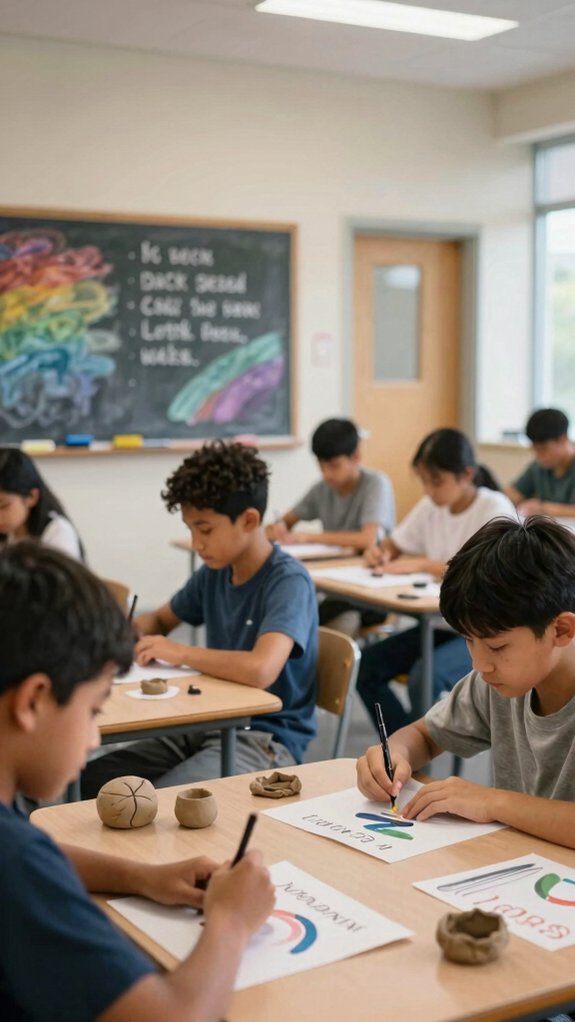
Create an MLK Painted Poem of Peace by turning Dr. King’s name into an acrostic poem. Use the letters in “Martin Luther King Jr.” on a printable worksheet, and write one line for each letter. Think about what peace looks like in your classroom and community. Then paint each line with colors or images that match your words. Add a Dr. King quote on your artwork to show a strong peace symbol. When you share your poem, explain one line and its classroom impact. Finish by displaying everyone’s poems together in a bright class gallery.
Build an MLK Dream Quilt Together
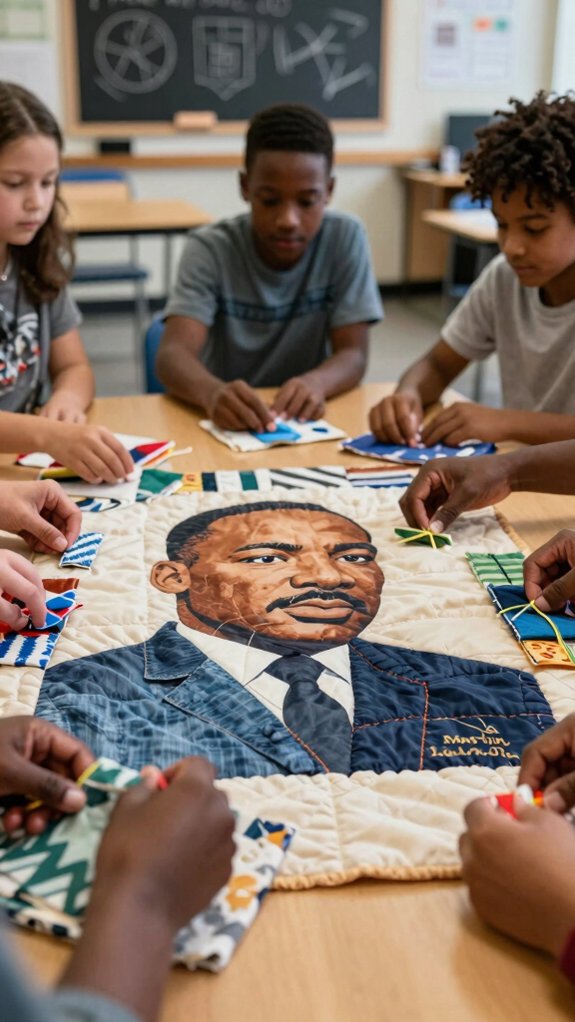
As you build an MLK Dream Quilt together, each square can share one strong hope. You design your square, color it, and write a sentence about change you want in school or town. Then you join every piece into one big class quilt. This shows how many small dreams can grow into community fairness and nonviolent action.
- Draw a dream inspired by Dr. King.
- Add a sentence about equality or peace.
- Present your square and listen for shared themes.
When you reflect, notice what connects you. Then choose one small action that helps your class live that dream.
Make a King’s Quotes Mosaic
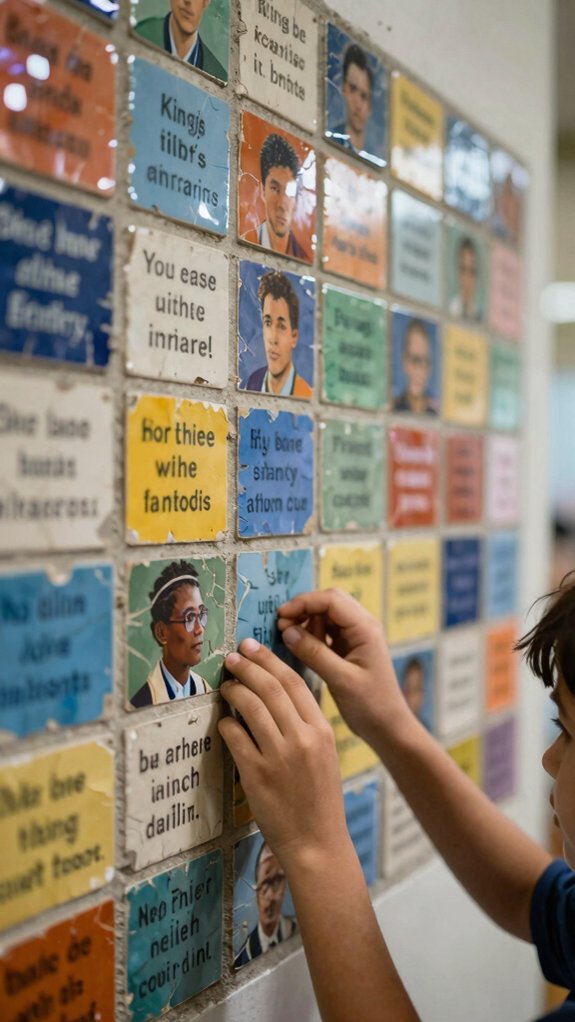
You can pick a strong MLK quote that fits your grade and ideas. Then you’ll design a meaningful poster or tile that turns those words into art.
When you put every tile together, your class creates a bright mosaic that shows how many voices can share one message.
Choose A Powerful Quote
Which Martin Luther King Jr. quote should lead your mosaic? Choose one that fits your class theme, like justice, peace, or equality. You’ll turn it into the center of your artwork and help everyone feel included.
Use these steps:
- Pick an age-appropriate quote or short excerpt.
- Add a small illustration that shows the idea.
- Share student word choice reflections that explain quote meaning connections.
When you gather the tiles, you’ll help build one shared portrait with many voices. That’s how your class can learn together and celebrate belonging.
Design Meaningful Portrait Pieces
On your turn, you’ll design one meaningful portrait piece for the class mosaic.
Start by reading your assigned Martin Luther King Jr. quote and thinking about its quote meaning.
Use the guided prompt to find a theme connection like peace, justice, equality, or nonviolent action.
Then draw a picture that shows that idea clearly.
Keep your portrait guide nearby so you know where your square tile belongs in Dr. King’s face.
Cut out your artwork with care, then listen when classmates share theirs.
Each piece helps everyone feel included, and your voice matters too.
Assemble The Classroom Mosaic
Once everyone finishes their tile, it’s time to bring the whole Martin Luther King Jr. mosaic to life. You’ll work together, and each person can take student mosaic roles like sorter, placer, or checker.
First, underline key words in the quote. Then draw an image that matches the meaning. Finally, place each tile so Dr. King’s portrait grows from many voices.
- Read your quote carefully.
- Connect the words and picture.
- Join the class display and share gallery walk feedback.
When you stand back, you’ll see how your piece belongs in one strong, shared message.
Display a Dream Tree in Class
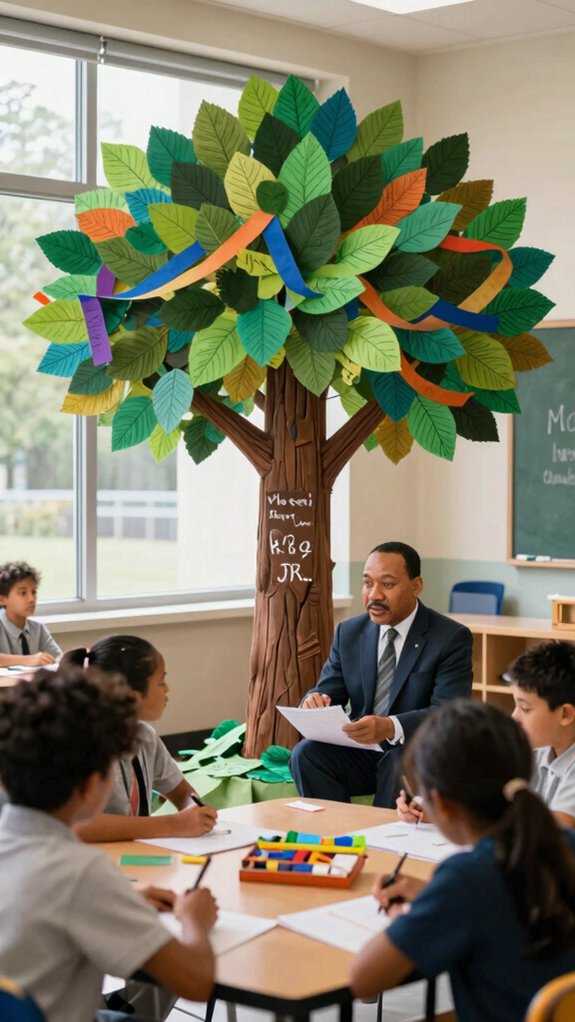
One great way to honor Dr. King is to display a Dream Tree in class. You’ll help build a shared space where everyone belongs.
| Leaf Prompt | MLK Link | Class Action |
|---|---|---|
| My dream for my school is… | fairness | choose one kind step |
| My dream for my community is… | peace | make peace goals |
| My dream for my world is… | equal opportunities | revisit and reflect |
You can cut paper leaves and add one per student. Use a tree on a wall, mural, or board. Each leaf shows hope, justice, and belonging. During the week, your class can pick one dream and turn it into a simple goal.
Invent for Justice
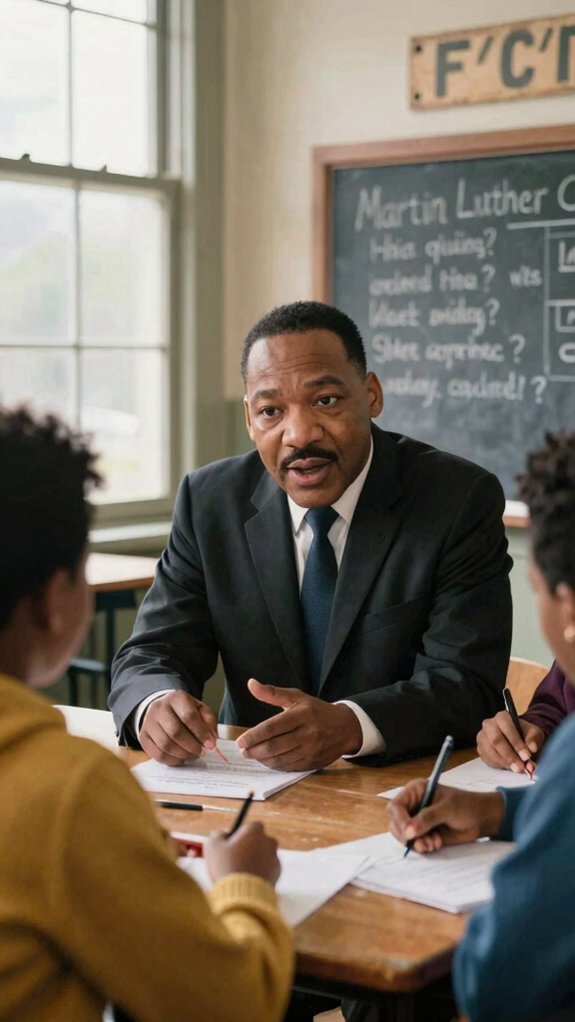
You can invent a tool that shares Dr. King’s message of fairness and peace.
Maybe your peace machine, equality robot, or unity van will help a school, neighborhood, or community show more respect and inclusion.
Then you can give a short pitch, label the parts, and explain how your invention connects to marches, speeches, or other peaceful action.
Justice-Inspired Inventions
As you examine justice-inspired inventions, think about how an idea can help people treat others fairly. In this activity, you design something that supports Nonviolent Problem Solving and Community Empathy.
You might sketch a peace-spreading machine, an equality robot, or a mobile unity van. Then fill out your invention sheet:
- Your idea
- How it works
- Who it helps
Your plan should show how it answers an unfair problem at school or in your community. Finally, share your creation in a justice invention gallery.
Your class will celebrate your creativity and your care for others.
Sharing Dr. King’s Message
Now that you’ve investigated justice-inspired inventions, let’s use that creativity to share Dr. King’s message.
You can present your peace-spreading machine, equality robot, or unity van to the class.
On your worksheet, label the problem, explain how it works, and show its justice feature.
Then give a short pitch that connects your idea to fairness and peaceful respect.
During the classroom conversation, practice listening respectfully and invite classmates to ask questions.
Your invention can also support peer mediation and help solve fairness challenges.
When you speak up, you help Dr. King’s dream feel real for everyone today.
Hold an MLK Timeline Parade
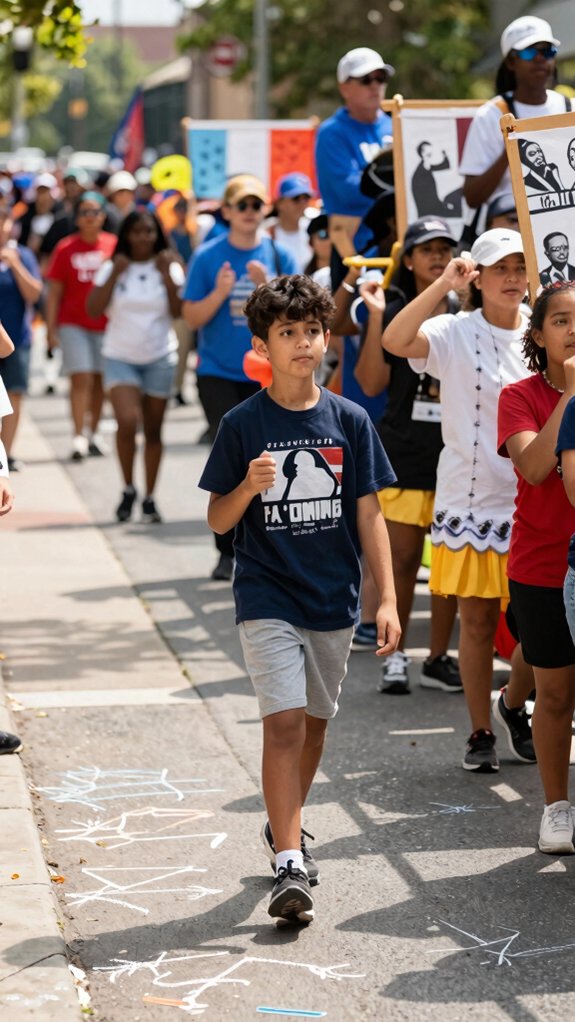
To bring Martin Luther King Jr.’s story to life, hold an MLK timeline parade. You’ll create small floats that show big moments in his path. Use labels to connect timeline learning, and Discuss civil rights today as your class moves together.
- Show his 1963 Freedom Walk with 125,000 people.
- Add jail-related sit-ins and boycotts.
- Include the “I Have a Dream” speech in Washington, D.C.
Then parade the floats through school. Students walk beside them while each display stays in place. This helps you hear the story in order and feel part of it.
Compare MLK Then and Now
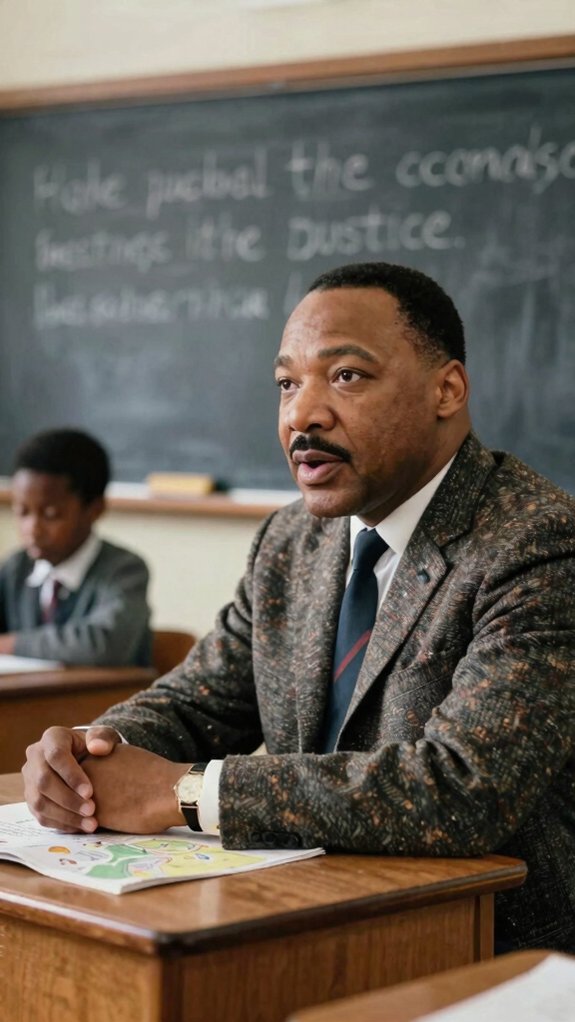
While Martin Luther King Jr.’s dream stayed the same, the world around it changed a lot. You can compare Civil rights history then and now by making a simple Then/Now chart.
In the 1950s and 60s, people used marches, boycotts, sit-ins, and speeches. Today, you might see social media campaigns and fast news sharing.
You can also notice how organizing change looks different because phones, cars, and travel are easier now. Pick one MLK moment and imagine it today.
Then reflect on obstacles and how peaceful change still brings people together for justice and equality.
Study MLK’s Nobel Peace Prize
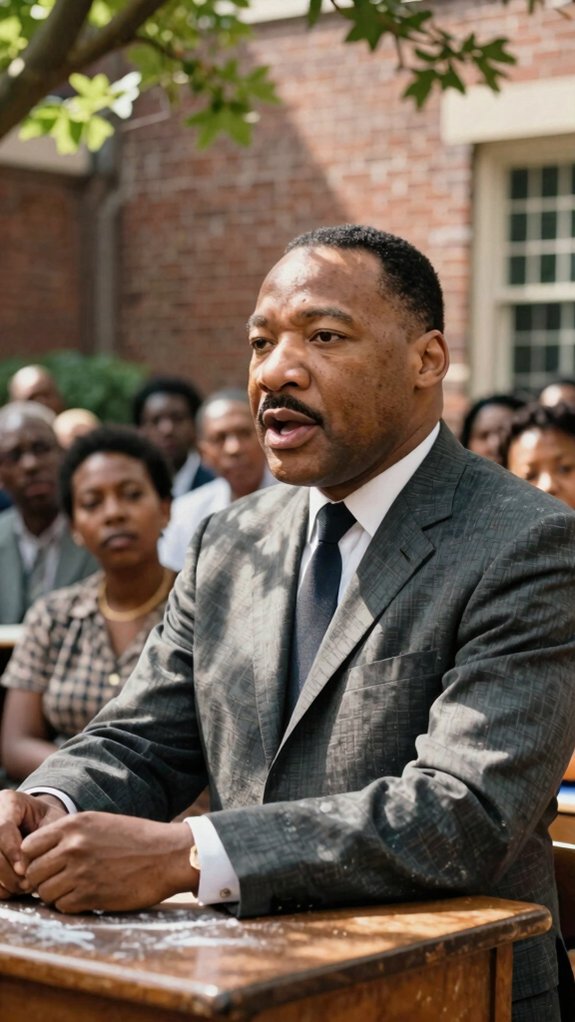
Because Martin Luther King Jr. believed in peaceful change, his Nobel Peace Prize tells an important story. You can study how he won the 1964 prize on December 10, 1964, for nonviolent civil rights work. Try this:
- Create a fact card about his boycotts, marches, and peaceful protests.
- Compare him with other Nobel Peace Prize winners to spot justice and human rights.
- Write how his example can guide student empathy and conflict resolution today.
When classroom conflicts happen, you can practice peaceful solutions. Then, your class can even nominate a peer who shows true peace-making.
Play an MLK Trivia Kahoot
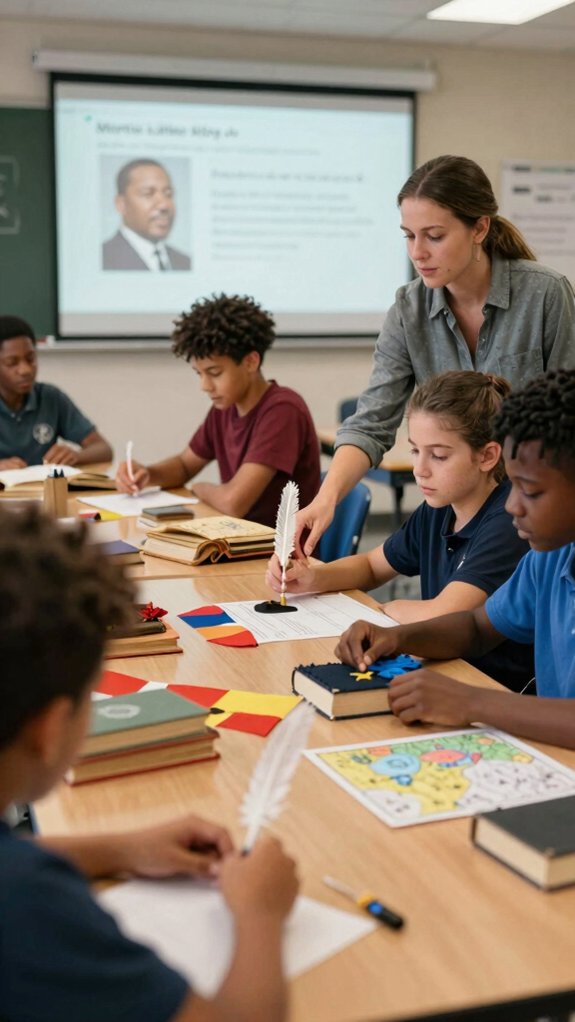
Want a fun way to test what you know about Martin Luther King Jr.? Play a Kahoot! trivia game with your class.
You can use a ready-made quiz or build one with your teacher.
Answer questions about his SCLC work, the 1963 Freedom Walk, peaceful sit-ins, boycotts, and his Nobel Peace Prize.
Older students can tackle harder prompts about tone and purpose.
Younger students can use guided help.
After each question, talk about the correct answer so you see the meaning behind it.
This keeps your group learning together and shows how Nonviolent strategies molded his Speech impact and lasting legacy.
Study “I Have a Dream
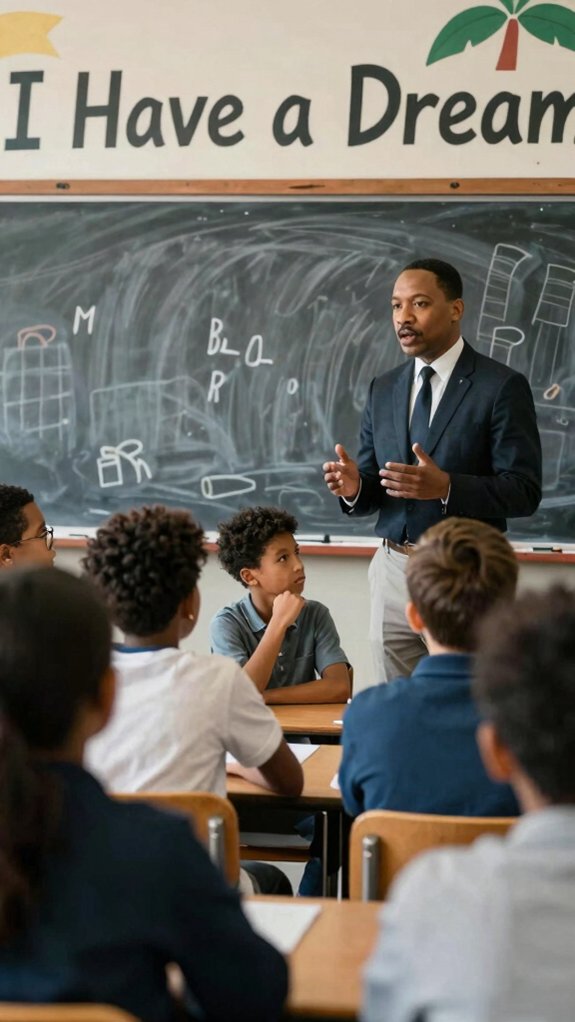
After the Kahoot, you can keep learning by studying Martin Luther King Jr.’s “I Have a Dream” speech.
You’ll hear his words from August 28, 1963, and feel why they mattered.
Use these steps to compare repetition effects and identify theme progression:
- Spot phrases like “I have a dream.”
- Notice how “Let freedom ring” builds hope.
- Trace themes about ending segregation, voting rights, and equal chances for all.
Then try writing your own anaphora lines.
You can draft a dream speech with your class.
Your voice belongs here, and King’s message can guide you too.
Plan a Class Peace Action Project
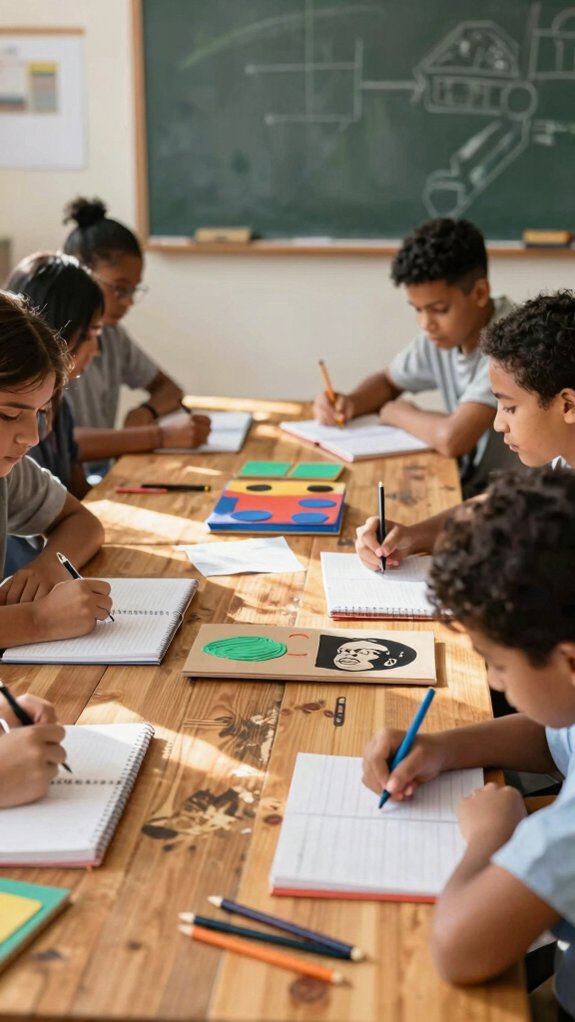
While you celebrate MLK Day, you can turn Dr. King’s ideas into action with a Class Peace Action project.
Pick one helpful task, like making kindness cards, collecting books, or sharing snacks.
These nonviolent actions show that peace needs effort.
Use an Acts of Service sheet to track each good deed and add dates.
Then talk about how you can help others instead of staying silent.
If you can, join a partner class to make a peace message.
End with a class peace promise display and short reflections on what you learned and changed.