Bee Activities for Preschool That Make Science Fun
- Bee Activities for Preschool That Make Science Fun
- Key Takeaways
- Why Bees Are Fascinating for Young Children
- Learning About the Bee Life Cycle
- Egg to Adult Bee
- Simple Life Cycle Activities
- Bee-Themed Counting Activities
- Bee Alphabet and Vocabulary Games
- Bee Art and Craft Projects
- Bee Pollination Activities
- Outdoor Bee Observation for Preschoolers
- Simple Bee Sensory Activities
- Bee Books and Storytelling Ideas
- Helping Children Protect Pollinators
- How Bees Help Plants and Ecosystems
- What Bees Do for Flowers
- How Pollination Works
- Why Bees Are Important to Food Production
- Different Types of Bees
- How Bees Communicate
- What Happens Inside a Beehive
- Why Pollinators Are Declining
- Simple Ways Families Can Help Bees
- Teaching Children About Pollinator Conservation
Make bee science exciting by letting preschoolers uncover like tiny nature detectives. You can roll dice and count pom-pom pollen, then match letters in a bee alphabet garden. Show the four life-cycle stages with simple picture cards. Watch bees from a safe distance and notice flowers they visit. Create fuzzy paper bees to show how pollen sticks. Talk about waggle dances, hives, and native flowers. Next, you’ll find easy ways to help bees at home.
Key Takeaways
- Create a pollination game using pom-poms as pollen and artificial flowers to show how bees help fruits and vegetables grow.
- Practice bee life cycle sequencing with picture cards for egg, larva, pupa, and adult bee metamorphosis.
- Set up a scent investigation with safe flower scents and let children predict which “flowers” bees might choose.
- Build counting skills by rolling dice and placing matching numbers of toy bees or pom-poms into honeycomb cells.
- Take a quiet outdoor bee watch, observing flowers bees visit while staying on paths and never touching insects.
Why Bees Are Fascinating for Young Children
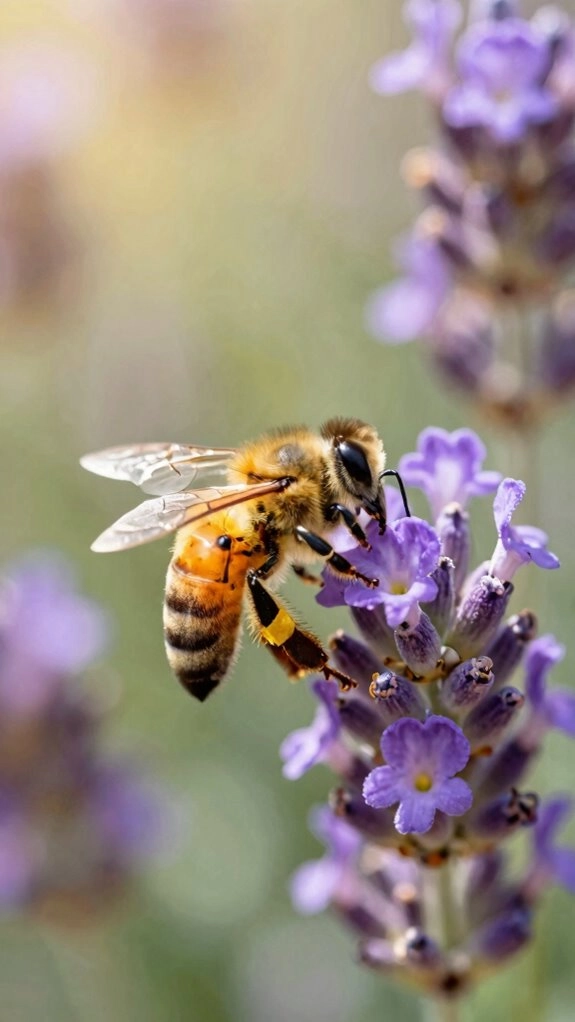
Bees may look tiny, but they do amazing jobs that help our world grow. When you investigate bees, you join a busy team that supports plants and people.
Bee senses help them find flowers, especially their strong smell. Through scent recognition, they identify blossoms and welcome hive mates.
Their waggle dance gives clear directions when a worker finds nectar. This hive communication helps the colony share food sources.
Bees pollinate fruits and vegetables you may eat every day. Each bee makes only about a teaspoon of honey in its life.
Together, bees prove that small helpers can create more. Learning bee facts with memory hooks, such as a rhyme or song, can help young children remember what bees do.
Learning About the Bee Life Cycle
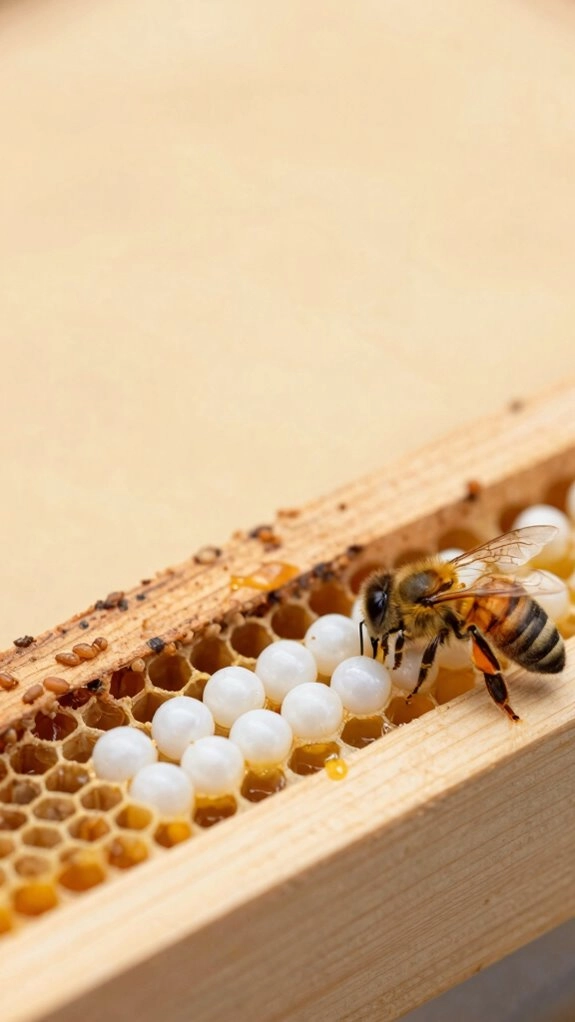
You can follow a bee’s amazing ride from egg to adult. First, the queen lays eggs, then larvae grow, pupae change, and adult bees emerge.
Try a simple four-stage sorting activity to put each life cycle step in order.
Like ladybugs, bees go through complete metamorphosis with four distinct stages.
Egg to Adult Bee
Inside a busy honeycomb cell, a bee’s life begins as a tiny egg.
You can wonder, “What Do Eggs become?”
Soon, the egg hatches into a larva, a small grub.
Nurse Bee Jobs include feeding larvae special bee food.
Different meals can help shape each bee’s future role.
Next, workers seal the cell, and the larva becomes a pupa.
Inside, it transforms into an adult.
When ready, it chews through wax and joins its colony.
You’re part of the wonder as you learn how living things grow in stages.
Adult workers may gather nectar and pollen beyond the hive.
Simple Life Cycle Activities
With a few simple materials, you can find the bee life cycle easy to see. Shape tiny eggs, worm-like larvae, resting pupae, and buzzing adults from paper or clay. Place each in a honeycomb box, then match cards together in order.
| Stage | Picture to imagine |
|---|---|
| Egg | Tiny dot |
| Larva | Wiggly worm |
| Pupa | Still cocoon |
| Adult | Flying worker |
Act it out with friends: cuddle, wiggle, freeze, then buzz. Your group will learn that adults emerge fully formed and forage. Watch Bees in flowers afterward, and add pollinator games to celebrate your colony’s teamwork. Everyone gets a role in this finding.
Bee-Themed Counting Activities
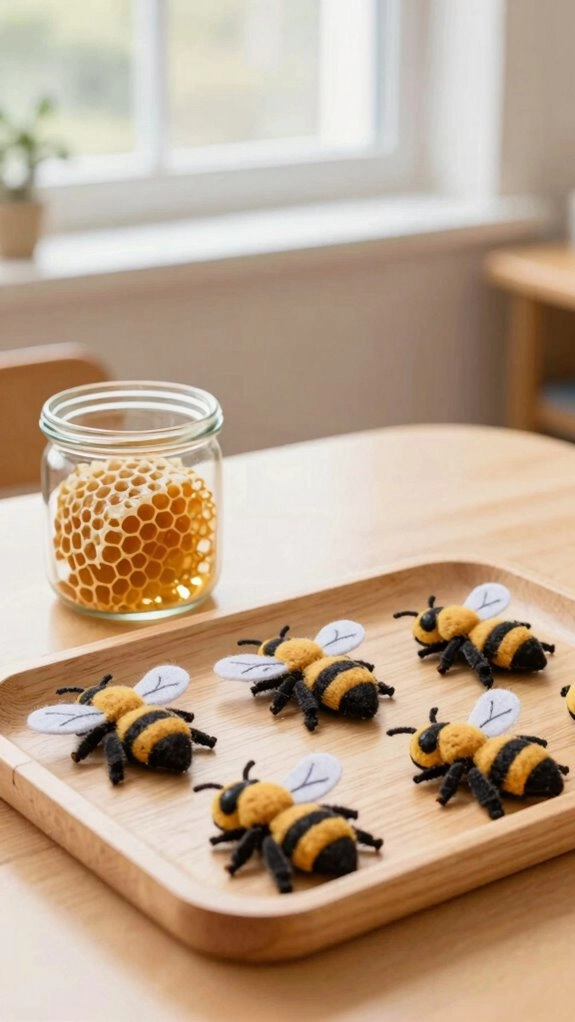
Bee-themed counting activities make early math feel like a busy day at the hive. You can join the learning team and help every bee find a home.
- Roll a die, count tiny bees, and fill each ice-tray hive cell. This Bee hive sorting game builds one-to-one counting.
- Use tweezers to move yellow pom-poms into egg-carton hives. Pollen number matching strengthens your fingers and counting skills.
- Shape play-dough bees and place them on numbered mats. Count nectar cubes in cups.
Try counting and patterning cards too. You’ll sort pictures, answer “how many?” questions, and celebrate each new number skill together. Add practice questions such as “How many bees are in this hive?” to build active recall and reinforce counting skills.
Bee Alphabet and Vocabulary Games
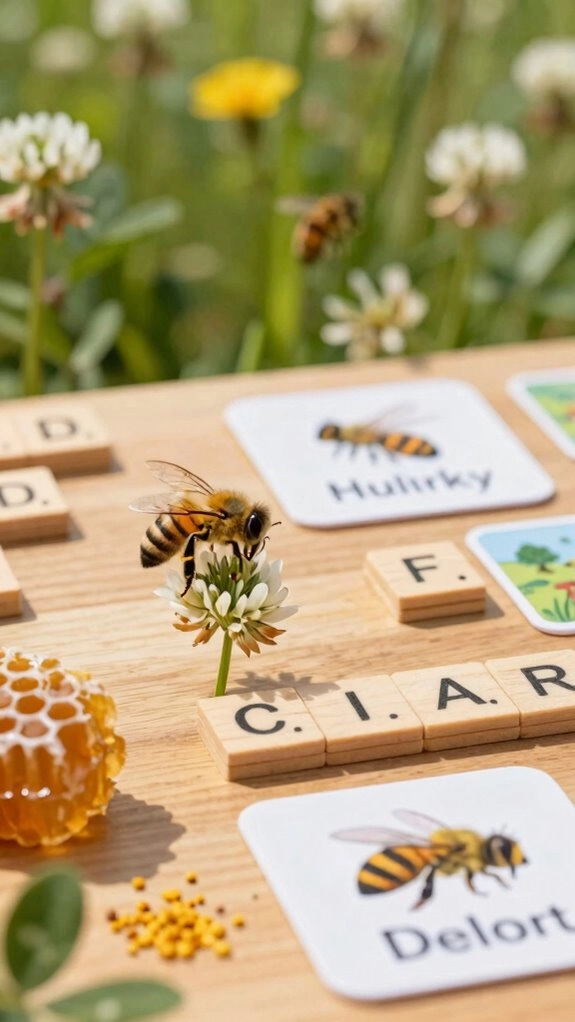
After counting busy bees, you can search the letters and words of the hive.
Create a Bee Alphabet Garden, where you match uppercase and lowercase flower letters.
Then play Bee Buzz Vocabulary with friends.
Act out nectar, pollen, hive, and waggle dance during turn-and-tell rounds.
For Bee listening games, hear a word and point to its beginning sound.
Use a Bee Trail to spell bee, honey, and flower with tokens.
Try Pollinator vocabulary bingo, then count pollen and share a bee sentence.
Add a memory matching game by flipping flower cards to find pairs of bee words.
Every player’s ideas help your hive learn together.
You’ll feel proud as new words begin to stick.
Bee Art and Craft Projects
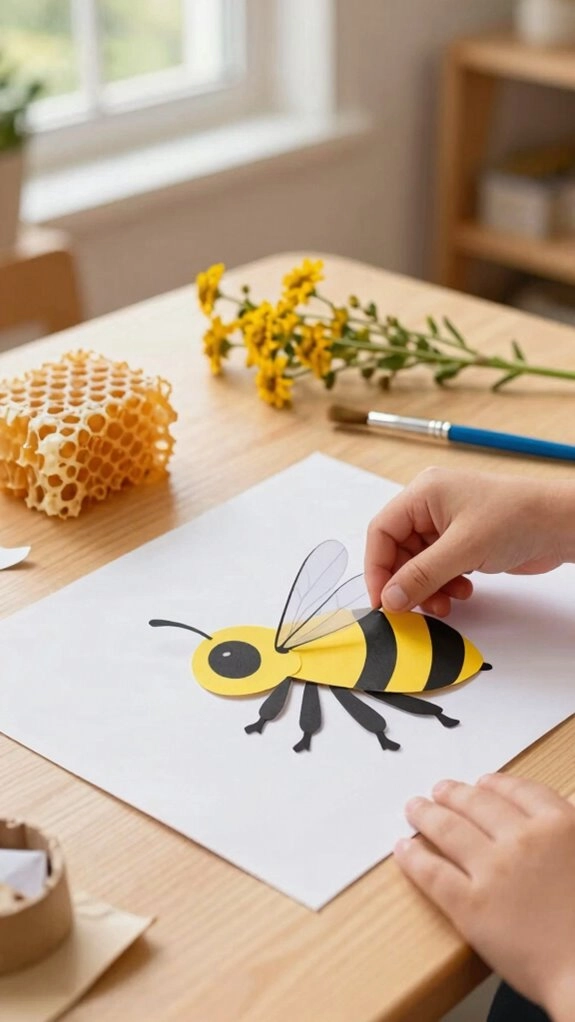
Art time lets you turn what you know about bees into colorful creations. Your group can investigate Bee Color Mixing with a watercolor bumblebee on construction paper. Add tissue wings big eyes and a smile.
- Honeycomb Texture Play starts when you press bubble wrap onto felt cut hexagon-like pieces and add felt bees and paper leaves.
- Tear yellow and black paper layer it glue it and finish your bee with googly eyes.
- Build a bee house to give resting bees a safe backyard shelter.
You can shape clay eggs larvae pupae and adults in a honeycomb life cycle diorama.
Try handprint flower bouquets by tracing colorful paper hands, decorating them, and arranging them as cheerful bee-garden blooms.
Bee Pollination Activities
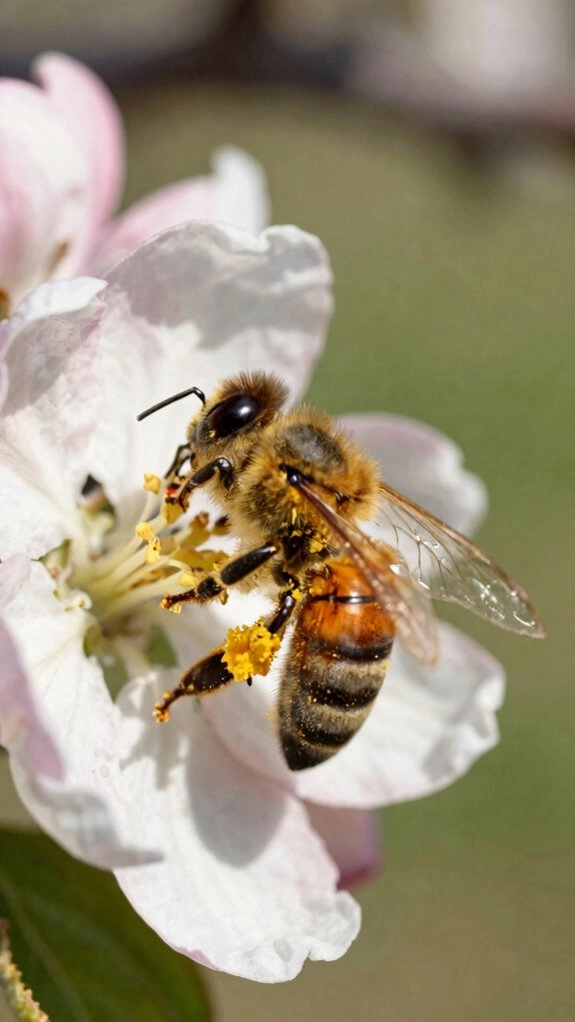
Once your bee creations are ready, you can show how bees help flowers grow.
Set out ice cube trays as flower gardens and small cups of water nectar. Let your group move nectar between blooms for nectar garden tracking.
Next, give each child a pipe cleaner “bee” with craft pollen on its legs. They can visit one paper flower, then another, and watch pollen move.
Share pollen transfer stories as everyone takes turns. Explain that this simple trip helps flowers make seeds.
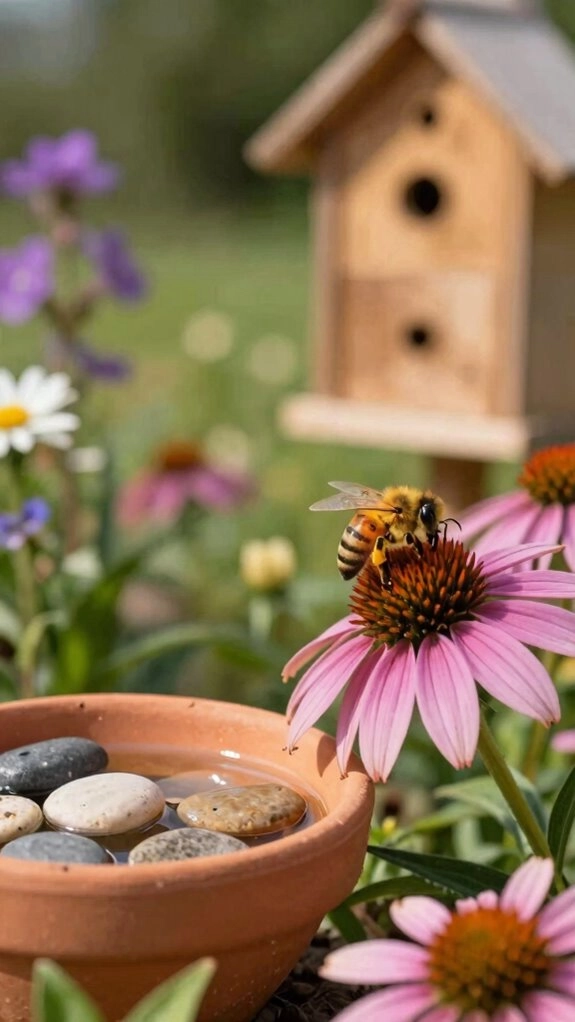
You can also add a shallow bee bath with smooth rocks. It shows all pollinators need water.
Outdoor Bee Observation for Preschoolers
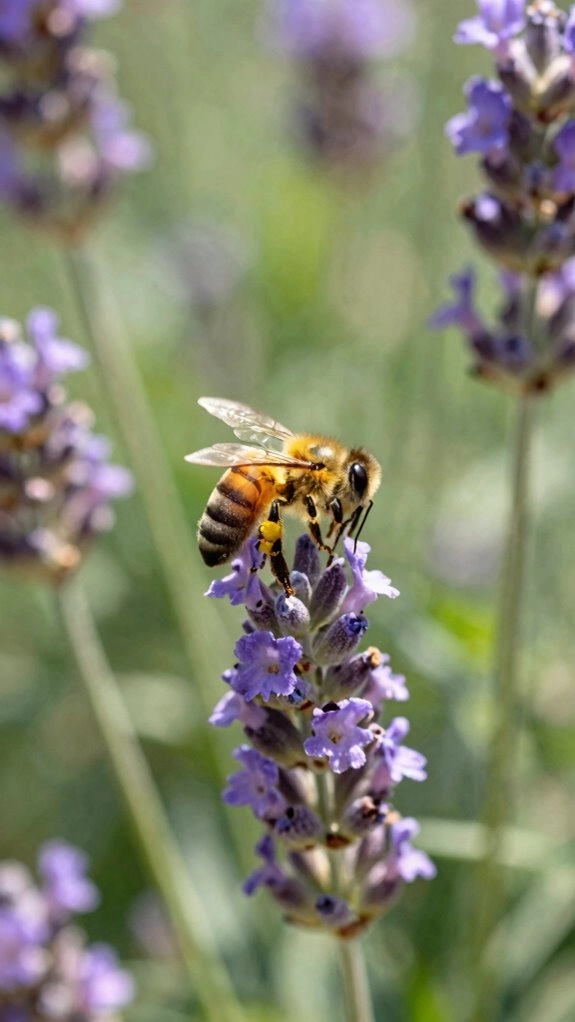
Often, the best bee findings happen during a short, quiet walk outside.
You can become a science team.
Stay on paths and watch bees from a distance.
Notice Pollinator behavior: Which flowers do they visit?
Does flower color seem to matter?
- Find one flower a bee visits.
- Spot one bee without touching it.
- Point to a patch of blossoms.
Choose a few local flowers and predict each bee’s favorite.
Then compare your guesses with what you see.
Back inside, use picture prompts to retell the bee’s trip from flower to flower.
Your observations help everyone build science words together.
Simple Bee Sensory Activities
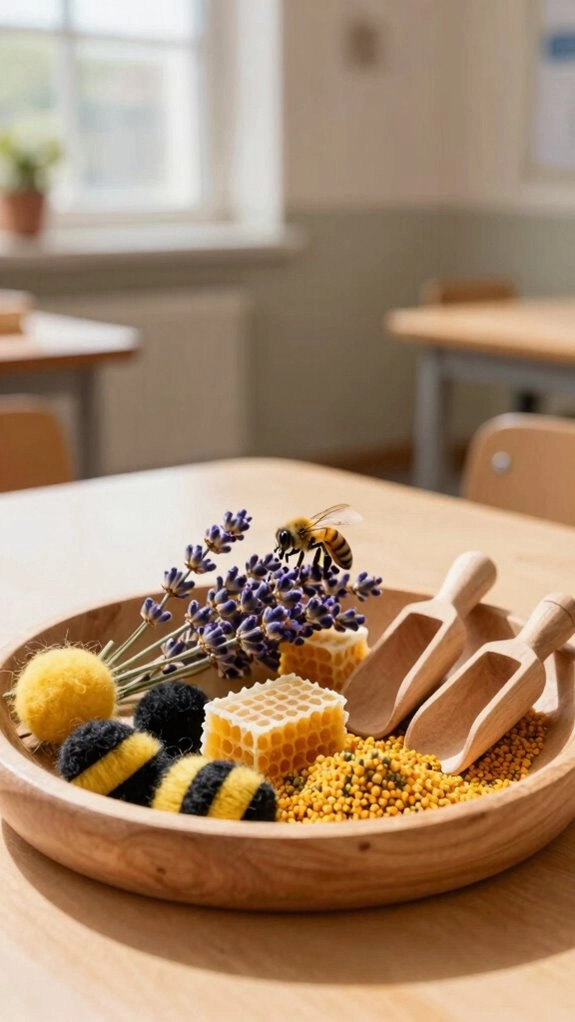
Simple sensory play helps you investigate how bees find food and care for their hive. Build a bee bin with green rice, yellow pom-poms, flowers, and hive pieces. You can scoop and pour pollen as your group practices pollination.
At a light table, sort yellow sand, black beans, bees, and hive parts. Use Beewatching prompts to guide noticing.
Make a bee bath with rocks and a little water to model cooling.
Then race droppers to collect nectar in cups. If an adult approves, taste a tiny bit of honey. Share a sensory description of its color, smell, and flavor.
Bee Books and Storytelling Ideas
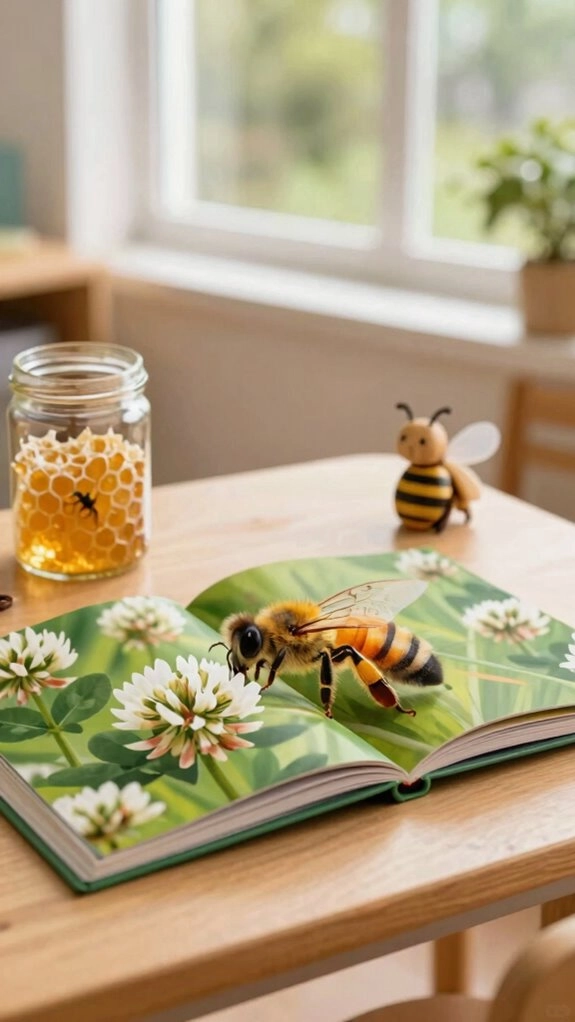
- Show a Waggle dance to explain colony communication and nectar locations.
- Add buzzing, bird sounds, and bee poses as you read.
- Pick story stones with flowers, bees, or butterflies, then tell a short tale.
Try *Are You a Bee?*, *The Very Greedy Bee*, or *Explore My World: Honey Bees*. You’ll share findings about pollen, nectar, and honey with the learning community.
Helping Children Protect Pollinators
Stories can spark curiosity, and your class can turn that curiosity into care.
Bee safety lessons teach you to watch bees from a respectful distance.
Choose native, pollinator-friendly blooms for your garden.
Sunflowers offer nectar and pollen through the season when you water them.
Your garden flower choices help protect the plants kids rely on for food.
Bees follow flower scents and use a waggle dance to guide their colony.
Add a small bee house or leave a safe natural corner for shelter.
With close supervision, taste honey and notice its flavor.
Talk about nectar and thank bees together.
How Bees Help Plants and Ecosystems
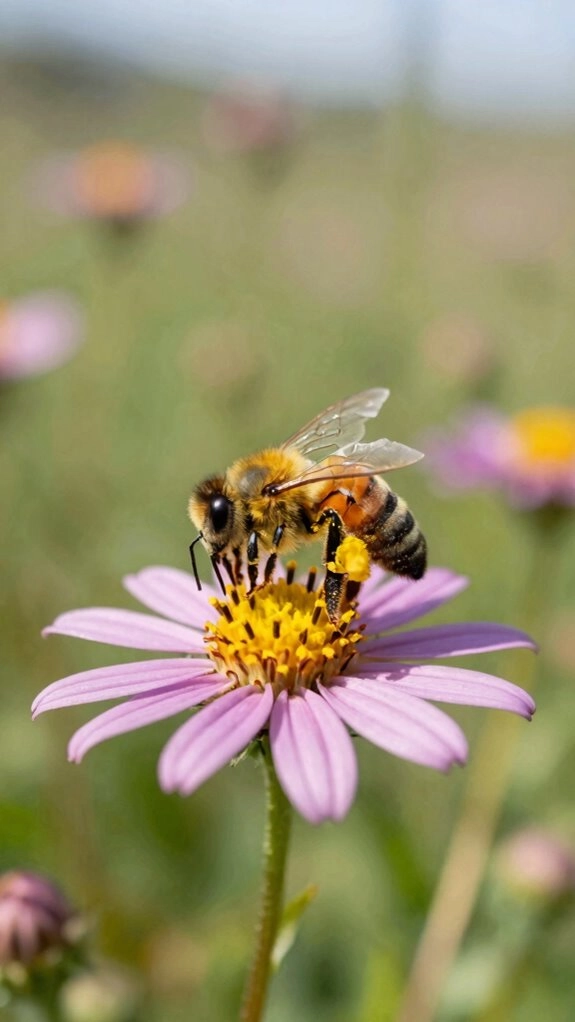
When a bee visits a flower, pollen sticks to its fuzzy body. You can imagine it as a helper traveling through your neighborhood. Bees use smells and shapes to find familiar Flowers and habitats. Their waggle dance tells hive friends where rich nectar waits. Together, bees help their community stay strong by supporting plant growth and wildlife.
- More plants give insects places to live.
- Birds and other animals find food nearby.
- Food web support helps ecosystems stay balanced.
When you notice bees outside, you’re seeing teamwork in action. Your garden, park, or schoolyard becomes part of a shared home.
What Bees Do for Flowers
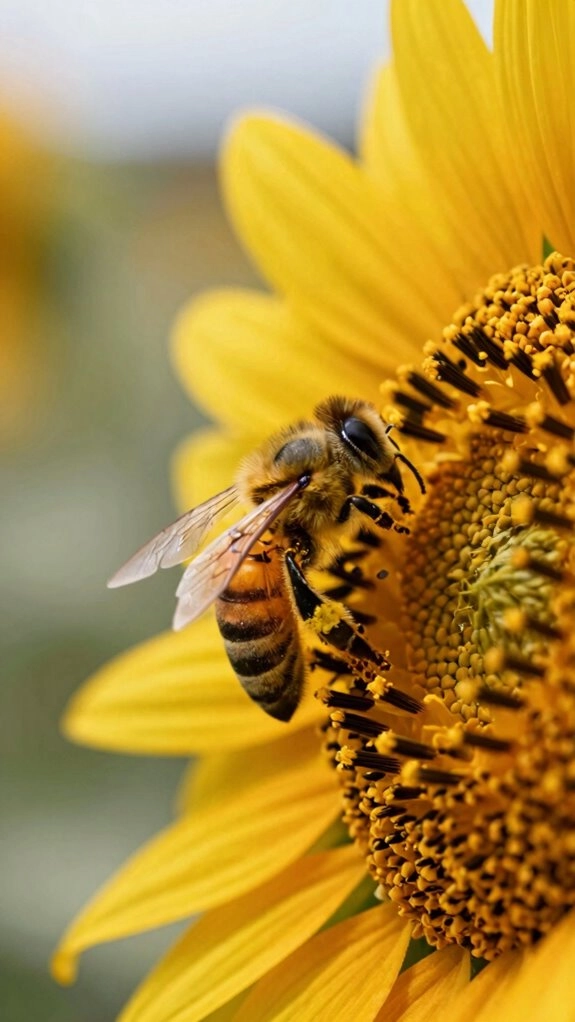
Bees give flowers an important helping hand through a process called pollination.
When you watch bees visit different flowers, you can see a helpful partnership.
Bees make smell based choices and notice flower shapes, helping them find blooms that suit them.
Their visits support plants as they grow fruits and seeds for your family’s food.
These pollen transfer impacts reach gardens, farms, and wild spaces where everyone depends on healthy plants.
Bees also gather nectar for their hive.
The flowers they choose can change the honey taste later.
You’re part of this nature team when you protect flowers home.
How Pollination Works
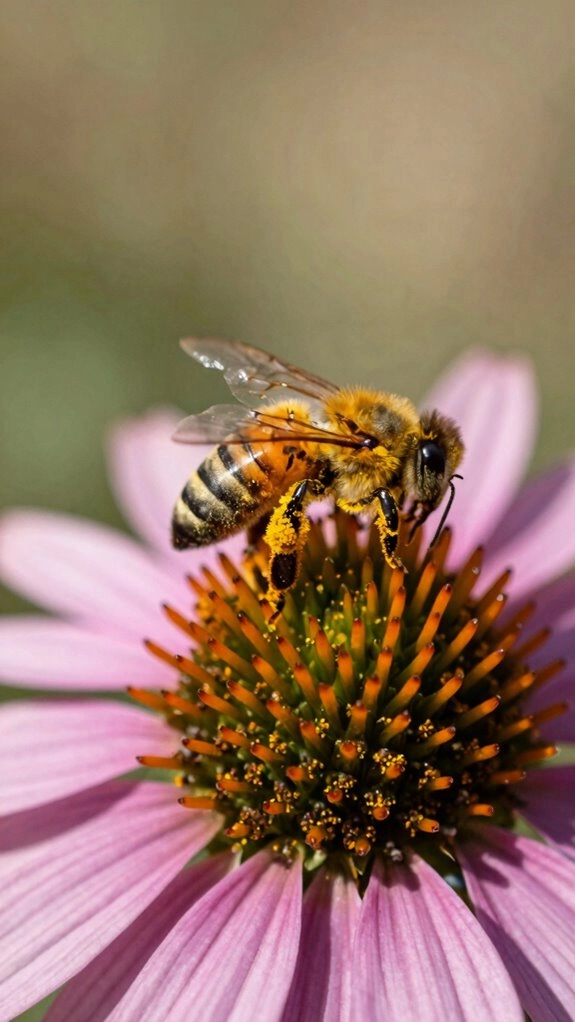
A bee begins pollination each time it lands on a flower for a sweet drink of nectar. You can imagine pollen grains sticking to its fuzzy body.
When it visits another matching bloom, some pollen rubs off. These Pollen transfer facts help you see nature’s teamwork.
- Flower color choices guide bees toward blooms.
- Nectar rewards learning helps bees return to easy flowers.
- Hive dance signals tell colony friends where nectar waits.
You belong in this discovery team. Watch bees travel between flowers. Bloom variety helps the hive stay fed through seasons all year.
Why Bees Are Important to Food Production
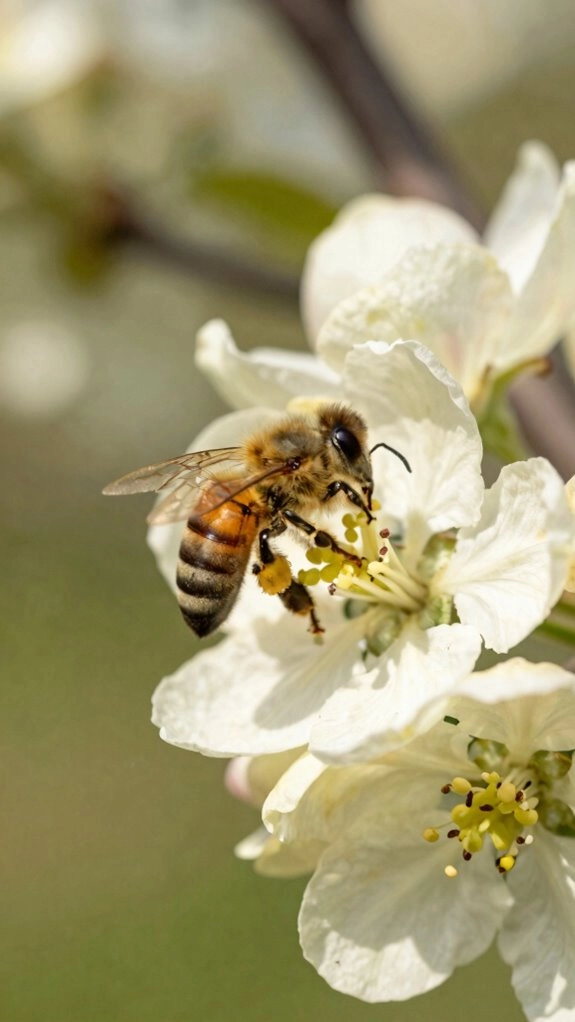
Although they’re small, bees help grow many foods you enjoy every day. When bees move pollen between flowers, plants can make fruit, seeds, and nuts. Your berries, apples, and almonds depend on this teamwork. Bees strengthen the Farm to table connection, linking gardens, farms, and your family’s meals. Learning food security basics shows why every helpful creature matters. You and your classmates belong to a community that can care for flowers and food.
| Bee’s work | Your shared reward |
|---|---|
| Pollinates crops | More colorful foods |
| Visits flowers | Hope for family meals |
Together, you can notice and thank bees near blooming plants.
Different Types of Bees
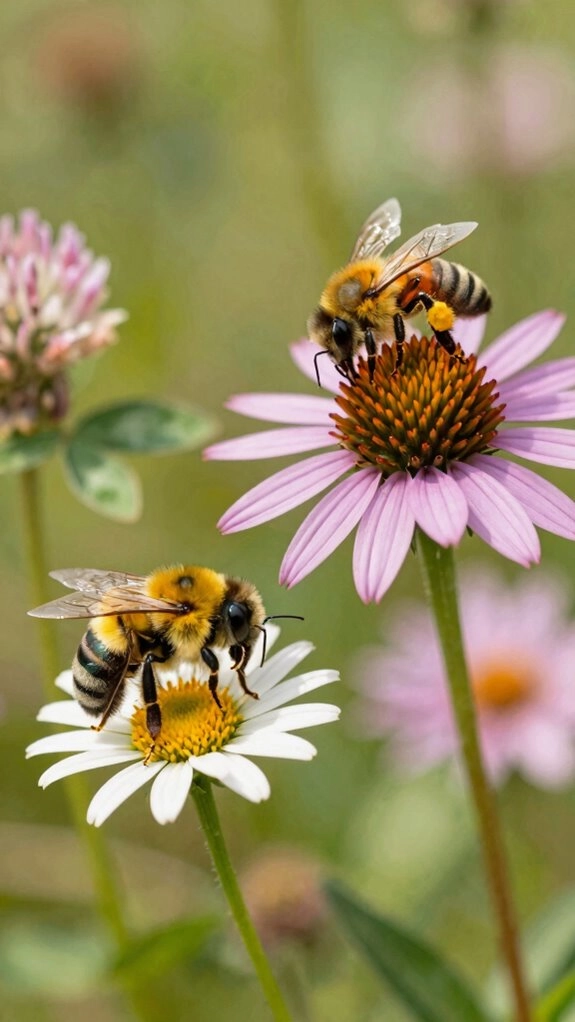
Not every bee looks or lives the same way. When you examine bees, you join a busy pollinator community. Honey colony roles include one queen, many workers, and drones. Save waggle dance basics for another activity.
- Bumblebees are rounder, with smaller colonies. Bumblebee weather foraging lets them visit flowers on cool, cloudy days.
- Carpenter bees live alone. Carpenter bee nesting means they tunnel into untreated wood.
- Tiny sweat bees seek salty perspiration and rarely sting. Leafcutter bees use cut leaves to line nests and protect young.
You can welcome each bee as a helpful part of nature’s neighborhood today.
How Bees Communicate
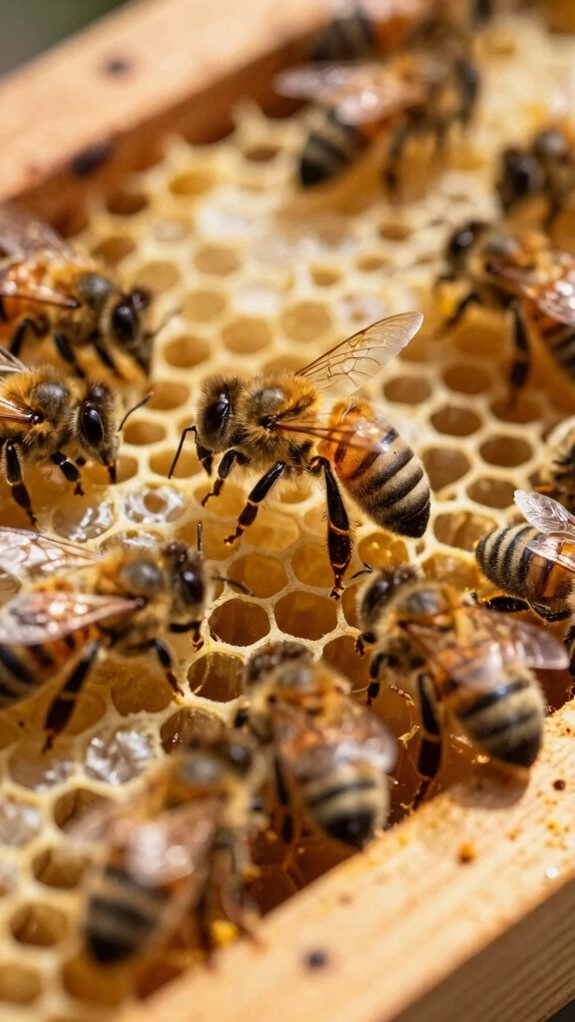
Inside a busy hive, bees don’t need words to share important news. You can imagine a scout finding sweet nectar outside. She returns and performs a Bee dance for her hive mates.
The dance angle points toward the food using the sun. Its waggle length shows how far the flowers are. This helps the group reach great nectar instead of searching alone.
Bees also use scent signals to recognize their community. Their strong noses notice flower scents and guide others to promising food. As you learn about bees, you’ll see how each bee helps the colony succeed together.
What Happens Inside a Beehive
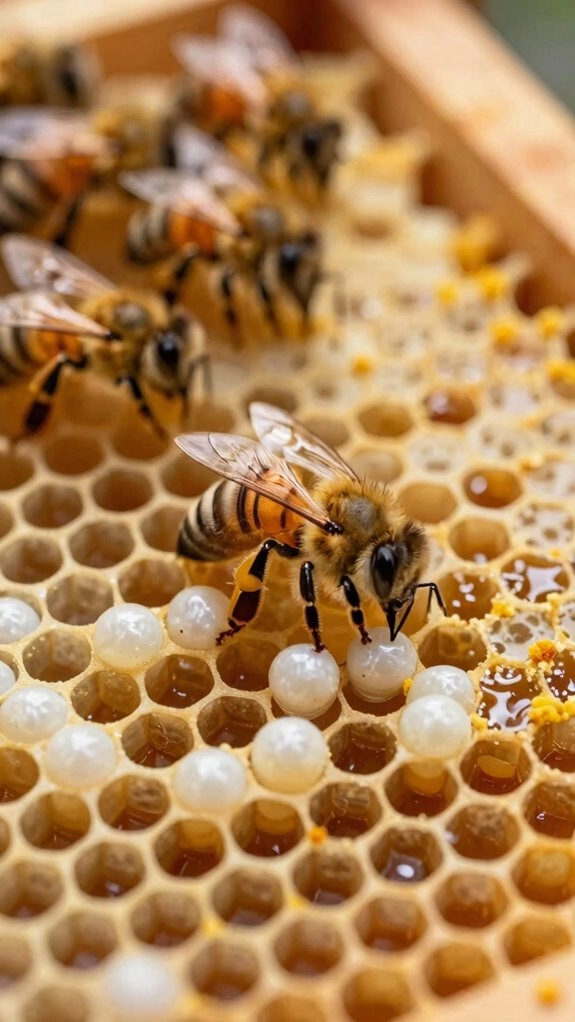
When you peek into a beehive, you’ll find a busy home with many jobs. You can imagine joining the colony and seeing Beehive teamwork in action. These hive roles help everyone grow:
- Nurses feed larvae in hexagon wax cells, where the queen lays eggs.
- Builders make comb, while foragers bring nectar and pollen home.
- Workers pass nectar mouth-to-mouth, turn it into honey, and cap it with wax.
Bees store pollen as bee bread for young bees. They also fan wings or cluster together to control temperature and humidity.
That keeps eggs, larvae, and pupae safe inside their shared home.
Why Pollinators Are Declining
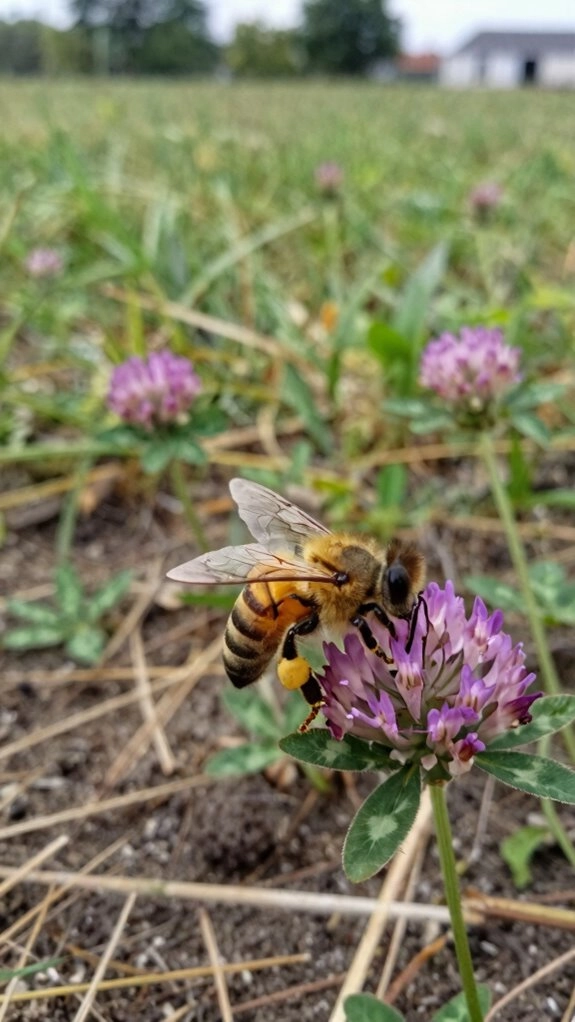
Although pollinators work hard, many bees and other flower visitors are declining in many places.
You can think of their world as a busy neighborhood that’s changing fast.
Habitat loss happens when cities grow, farms expand, and wildflowers disappear.
Without enough flowers, bees can’t find steady food.
Pesticide risks also matter.
Some chemicals can confuse bees, making it harder to navigate, gather food, and survive.
Diseases and Varroa mites weaken honey bee colonies.
Climate change can shift bloom times, so flowers and bees miss each other.
When you learn, you join others who understand why pollinators need attention.
Simple Ways Families Can Help Bees
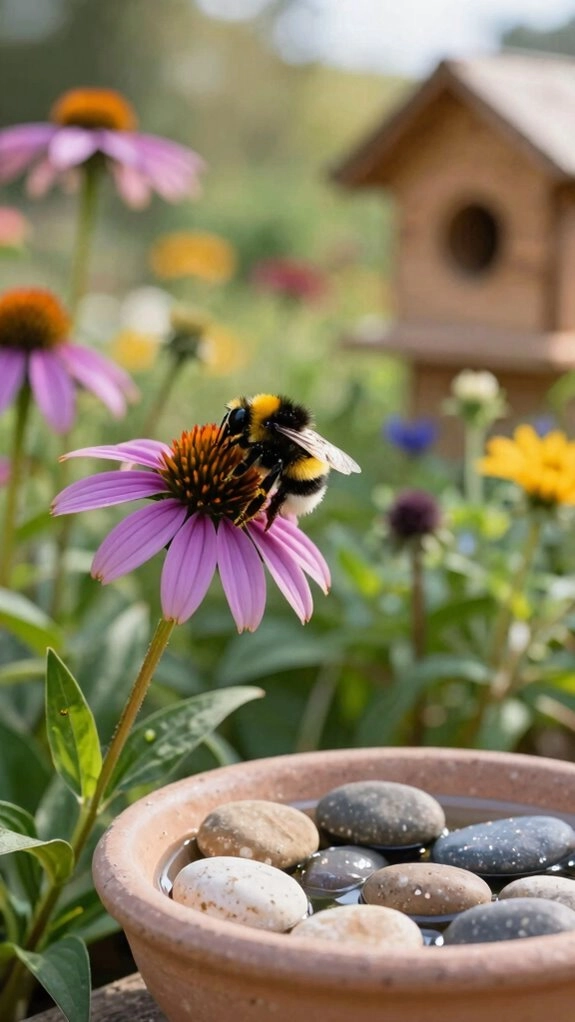
Your family can help bees by making small, caring choices each day. Build a Bee friendly garden in pots or your yard. Native flowers, including sunflowers, offer nearby nectar and pollen. Water them regularly.
- Put out a shallow dish with smooth rocks and fresh water for hot days.
- Make safe pesticide choices. Avoid chemicals when you can, or use bee-safe, label-verified products.
- Leave leaf litter or a tiny wildflower patch for shelter and nesting.
You’re part of a caring neighborhood when you support local beekeepers. Check planting schedules and rules. Together, you can give bees steady food each season.
Teaching Children About Pollinator Conservation
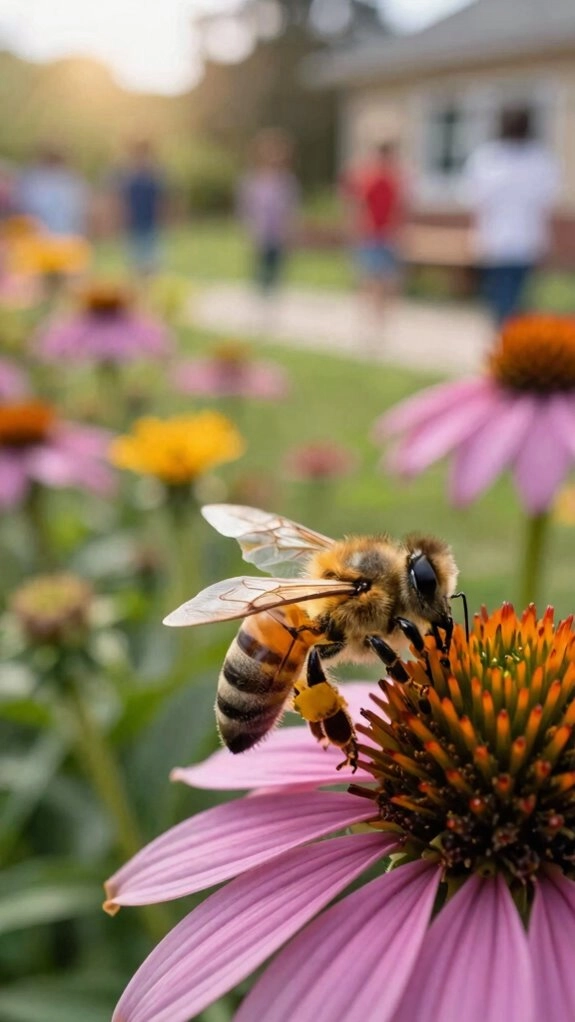
Bees do more than make honey; they help plants grow new seeds, fruits, and vegetables.
You can show your child that pollinators support the foods and habitats your whole community needs.
Try Planting diversity with native flowers such as sunflowers.
During nectar observation, watch bees collect food from each bloom.
Then run a nectar race using water cups and ice-cube trays.
Children see why many flower choices help a colony gather enough food.
Build a bee house craft for resting and nesting spaces.
Taste honey or examine honeycomb.
You’ll find out together how varied flower diets help bees stay healthy.