Math for Kids Made Simple and Fun to Understand
- Math for Kids Made Simple and Fun to Understand
- Key Takeaways
- What Makes Math Fun for Kids?
- Start With Counting and Number Sense
- Counting Basics
- Number Sense Skills
- Read And Write Numbers
- Use Shapes and Sizes Kids Can See
- Shape-Based Learning
- Size Comparisons Kids See
- Turn Measurement Into Simple Games
- Make Time-Telling Easy to Learn
- Practice Addition and Subtraction Playfully
- Build Multiplication With Hands-On Activities
- Build Arrays Together
- Practice Multiplication Facts
- Show Fractions With Pizza Slices
- Add Math to Daily Routines
- Use Printable Math Activity Sheets
- Printable Practice Pages
- Hands-On Skill Building
- Easy Home Activities
- Watch Math Videos for Clear Help
- Choose Math Games by Age
- Build Math Confidence With Easy Wins
- Set a Short Daily Math Routine
You can make math simple and fun by playing short games, spotting patterns, and using real things around you. Count snacks, cards, or shells one by one to build number sense. Sort shapes by size and edges. Try estimate-and-check measurement games with rulers or cups. Use a toy clock for time-telling practice. Short videos and age-based games can give you easy help, and there’s even more waiting just ahead.
Key Takeaways
- Use low-pressure math games like dice races, bingo, and scavenger hunts to make practice feel playful.
- Build counting and number sense by matching objects one-to-one and reading or writing numbers up to 100.
- Explore shapes and sizes with sorting, comparing, and finding real-world examples at home.
- Practice measurement and time with toy clocks, rulers, estimation, and check-your-answer activities.
- Connect math to daily life through cooking, shopping, fractions, and simple story problems.
What Makes Math Fun for Kids?
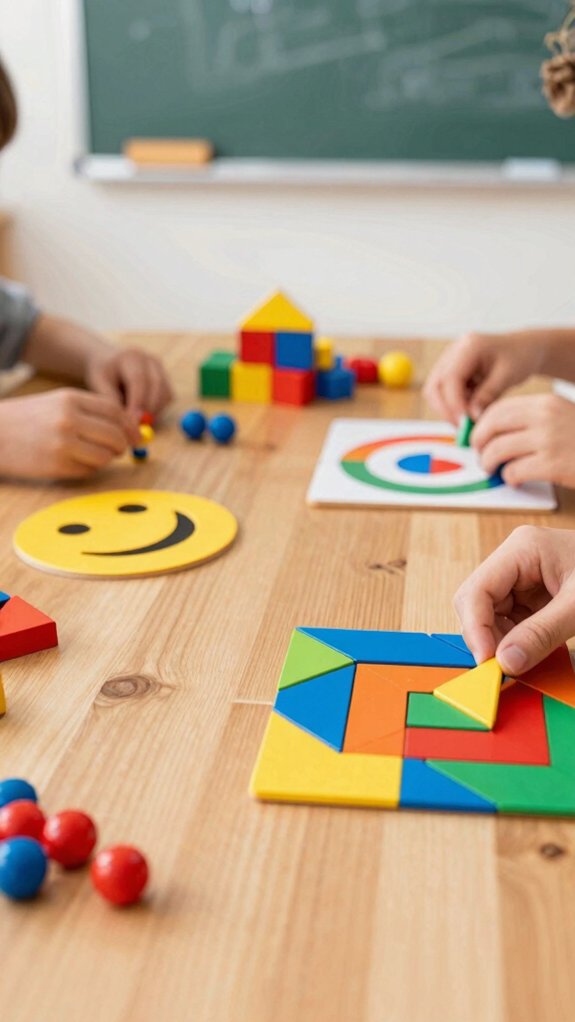
With the right games, math can feel more like play than work.
You stay involved when you try low pressure games that let you test ideas.
Playful mindsets help you see mistakes as clues, not failures.
That makes mistake friendly learning feel safe and welcoming.
You can sort objects, build patterns, or roll dice to practice facts.
Short scavenger hunts and time-telling races connect math to your day.
These activities spark curiosity building because you want to find out more.
When math feels real, you grow confident, calm, and ready to keep going.
Start With Counting and Number Sense
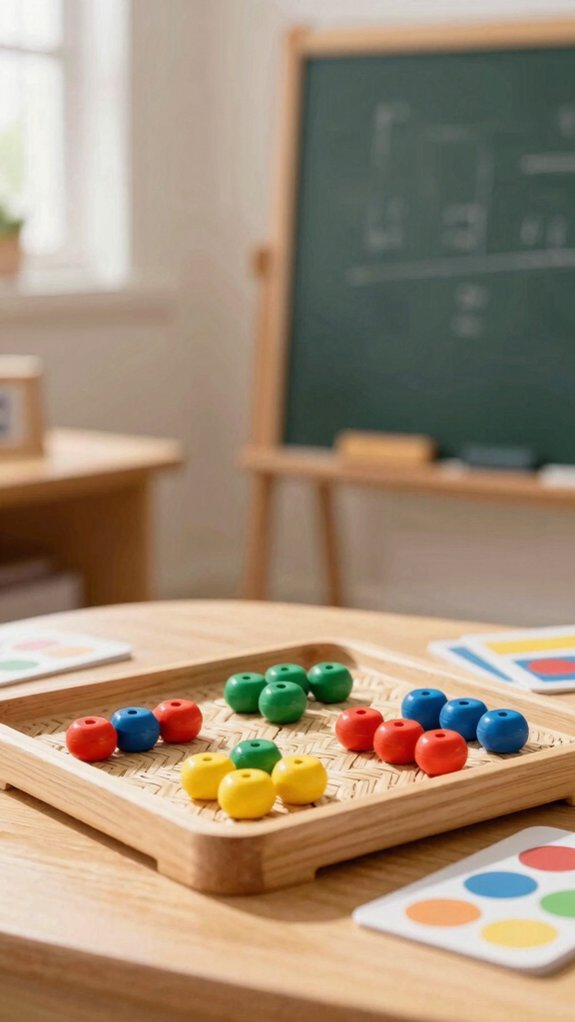
You start with counting because it helps you see how many things are really there. You’ll also build number sense by matching each item to one number and by reading and writing numbers up to 100.
As you practice, numbers will feel less like memorized words and more like useful tools.
Counting Basics
Counting is like building the first floor of math, one step at a time. You can start with counting games using 1–10, then 1–20, so each word matches one object. Try number storytelling and pattern noticing with blocks, snacks, or coins. Use this table during number hunts:
| What you see | What you say |
|---|---|
| 3 apples | “three” |
| 7 cards | “seven” |
| 12 stickers | “twelve” |
| 20 shells | “twenty” |
You can also practice numeral writing in short rounds. Add skip count practice, compare more/less, and group small sets to build early math confidence together.
Number Sense Skills
Now that you can count objects one by one, it’s time to understand what numbers really mean. You can build number sense by touching each item as you count to 20.
Try real life counting with snacks, toys, or steps. Compare piles to see which has more or less, bigger or smaller.
Play Number sense games like a Number Hunt with cards or sticky notes. These daily math challenges help you connect spoken numbers with symbols.
Share number stories out loud, and explain how you found 7. Repeating these games makes counting feel natural and fun.
Read And Write Numbers
With number sense in place, reading and writing numbers starts to make sense. You belong in this math trip, and each small win counts.
- Count objects one by one, then move from 1–10 to 1–20.
- Use everyday number labels on cards or sticky notes to match numerals and quantities.
- Play a Number Hunt, then try skip counting worksheets to teach number vocabulary and spot patterns.
When you can read numbers to 100, practice writing with stickers, paper, or a whiteboard.
Write each numeral the same way every time. Keep it playful, and you’ll grow confident fast.
Use Shapes and Sizes Kids Can See
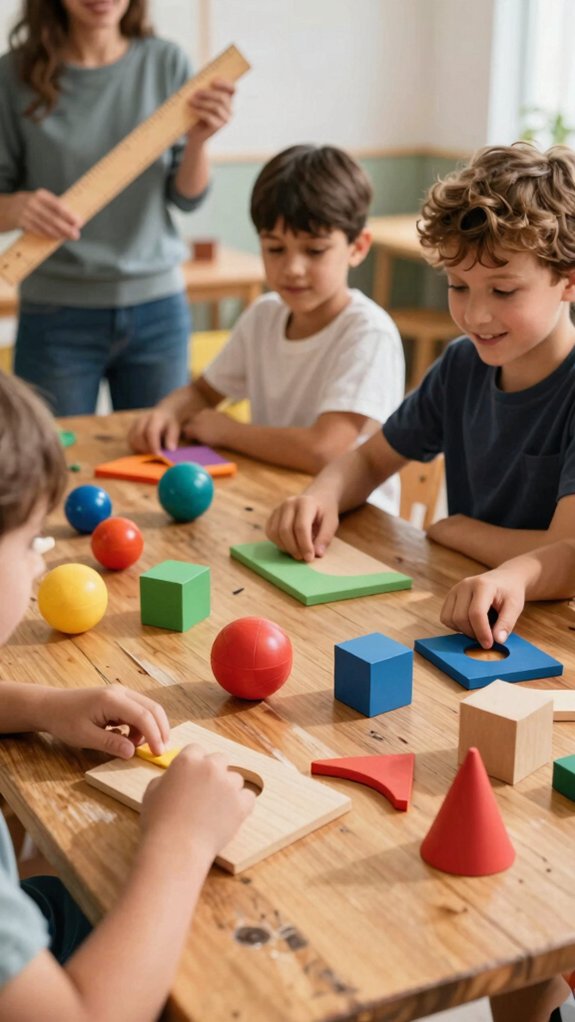
You can spot math in the shapes all around you, from cubes to cones and spheres.
When you compare their sizes, edges, and corners, you start to see how each shape works.
Try finding objects at home and name the shape you notice first.
Shape-Based Learning
Shapes are everywhere, and that makes math feel real and fun. You can join in with Everyday shape games using see-and-touch objects like cubes, cones, and cylinders.
- Sort objects by edges and corners.
- Explain shape fits with a circle, square, or prism.
- Try rotating 3D models and check the name again.
When you compare edges corners, you start to notice how shapes behave. You can also point to polygons like rectangles or hexagons and talk about boundary length in units.
That helps you feel confident, included, and ready to learn with your class.
Size Comparisons Kids See
Two simple objects can teach a big idea about size. Grab blocks, cups, or books, and compare them by sight and touch. Start your Size words game with bigger and smaller, then try more and less. Keep each round focused on one thing: length, height, or volume. That keeps shape from sneaking in.
Next, try the Sorting toys challenge with two baskets labeled larger and smaller. Explain your choice using edges, corners, or faces. Estimate with a ruler, then check.
Celebrate your thinking, because your ideas matter too.
Turn Measurement Into Simple Games
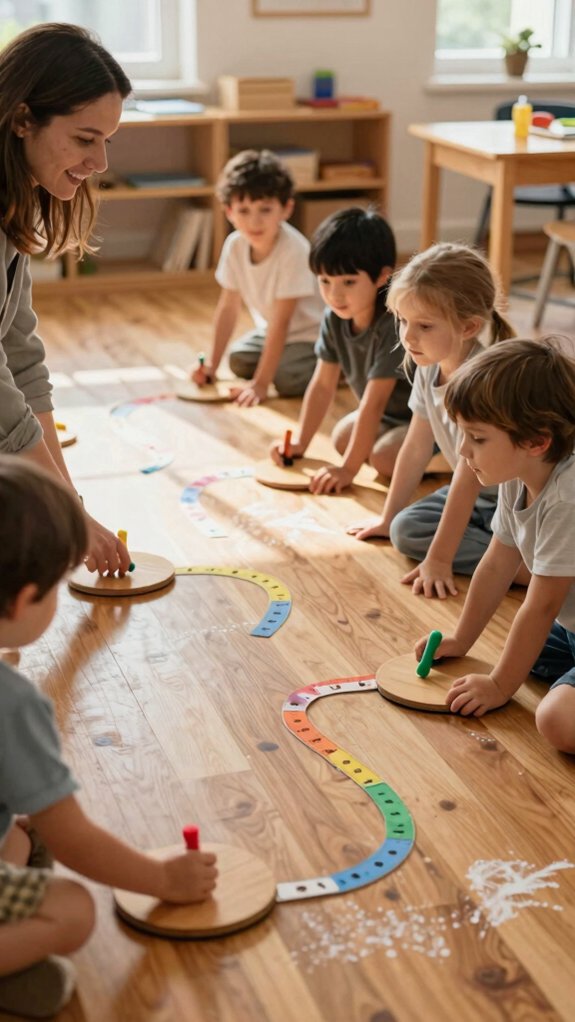
- Guess and measure: Estimate a toy, book, or ruler length, then check the real number.
- Unit conversion fun: Switch inches to centimeters and feet to meters. Watch the numbers change.
- Closeness contests: Compare guesses after measurement conversion and see whose answer is nearest.
Use words like length, distance, and unit transformation as you play.
These quick tasks help you belong in the math game and build skill fast.
Make Time-Telling Easy to Learn
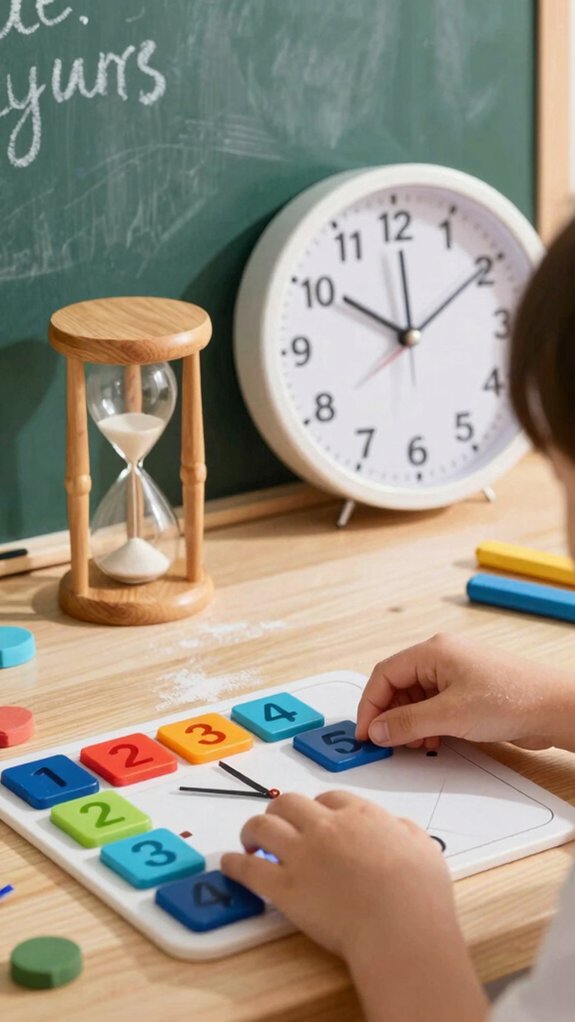
After measuring lengths and distances, you can bring math into your daily schedule too.
Try everyday routines with a toy clock or paper-plate clock.
Set the hands to 3:45, then ask someone to check you.
Switch roles so you answer both ways.
Use flashcard practice for quick set-and-check rounds in Grades 1–3.
Ask, “Which hand points where?” so you learn hour and minute words.
Keep it fun with a timer or light scorekeeping.
Then add small challenges like, “What time will it be in 15 minutes?”
You’ll build confidence step by step and feel part of the learning fun.
Practice Addition and Subtraction Playfully
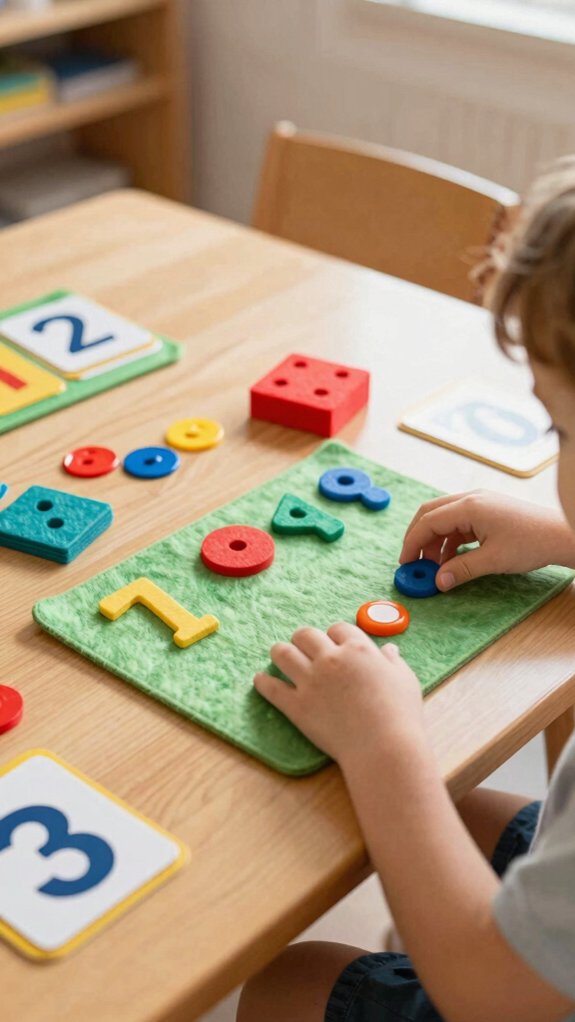
When you make addition and subtraction into games, math feels less scary and more fun. You can join the team with Math Bingo, dice races, and family scavenger hunts.
- Call out facts like 15 − 7 and cover the answer with tokens.
- Roll two dice and race to solve each sum or difference.
- Take a math walk at the store and total prices or change.
Robot based learning can give you extra practice, and Reward charts, help you see progress. You’ll build confidence, learn from mistakes, and keep growing with your math friends.
Build Multiplication With Hands-On Activities
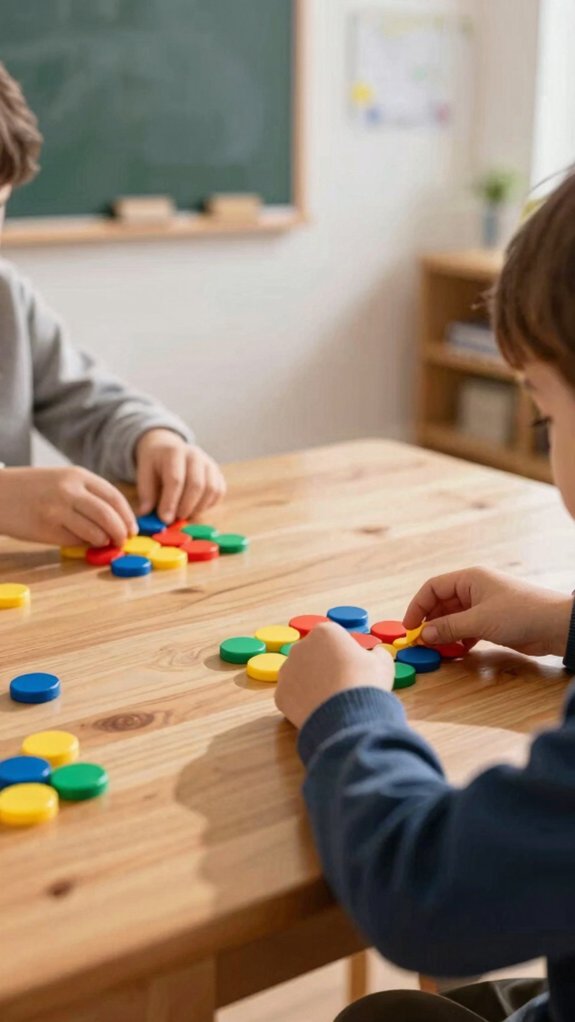
You can build arrays with coins, blocks, or buttons to see equal groups obviously.
Then you can count rows and columns together and notice how multiplication helps.
After that, you can practice facts with quick games so they start feeling easy and fun.
Build Arrays Together
Building arrays together makes multiplication easy to see and touch. You can build a math team with buttons, coins, or blocks.
- Make rows and columns with 2×2, 2×3, or 3×4 shapes.
- Ask, “How many are in each row?” and “How many rows do you have?”
- Count the total to link the pattern to the product.
When you compare arrays quickly, you notice which has more or less. Order matters always, so rows × columns changes the answer. Keep extending the pattern together, and you’ll feel confident.
Practice Multiplication Facts
Practice multiplication facts with quick games that make numbers feel alive. Try multiplication games like Dice Roll Equations, where you build facts from rolled numbers and explain your thinking.
You can also play Math Bingo with family and mark answers as you go.
Card War turns two cards into a fast challenge that sharpens your mental math.
These quick fact drills keep practice lively and focused. If it feels easy, add more dice or parentheses.
That keeps low stress practice challenging, but still friendly, so you stay confident and ready to solve more.
Show Fractions With Pizza Slices
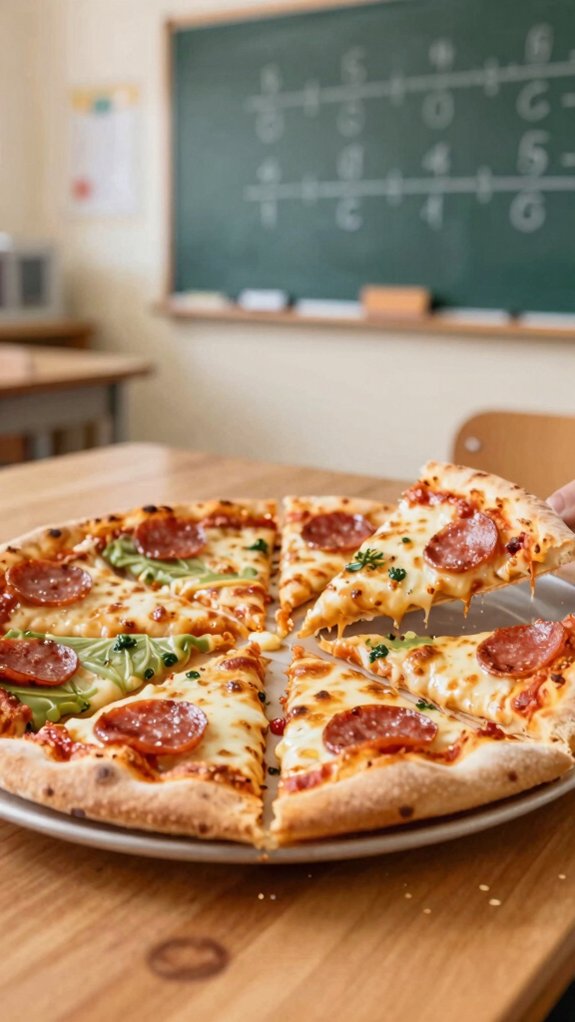
When you draw a pizza on paper plates, fractions start to make sense fast. You can feel like part of the math crew right away.
- Cut the plate into halves, thirds, fourths, or eighths.
- Add pizza slice labeling so each piece shows 1/2 or 1/4.
- Play fraction equivalence games by combining slices until you make one whole.
You’ll see that two 1/2 slices fill the pizza, and four 1/4 slices do too. Try asking how many slices finish the whole. Compare different sets on one pizza party plate. You’ll spot which groups give more or less.
Add Math to Daily Routines
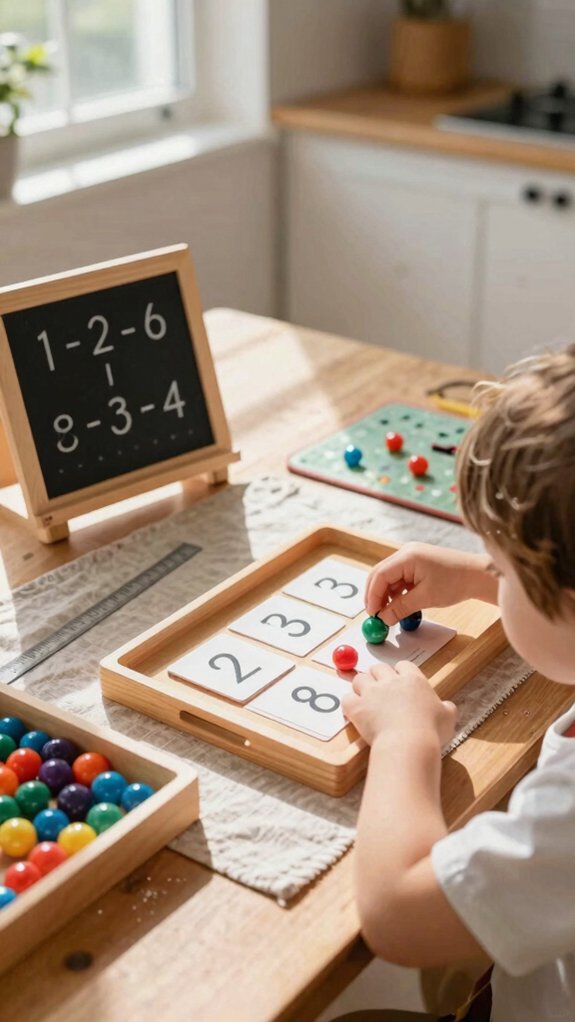
You can use math all day long, not just during lessons.
Try story problems together while you cook, shop, or pack for a trip.
Ask, “We need 12 apples and have 7. How many more?” That builds addition and subtraction fast.
Use math in errands by counting items, adding costs, and checking change at the store.
In the kitchen, measure flour and talk about halves and cups.
On the road, count forward from your start time to guess arrival.
Keep it light.
You solve, then compare answers and cheer each other on.
Use Printable Math Activity Sheets
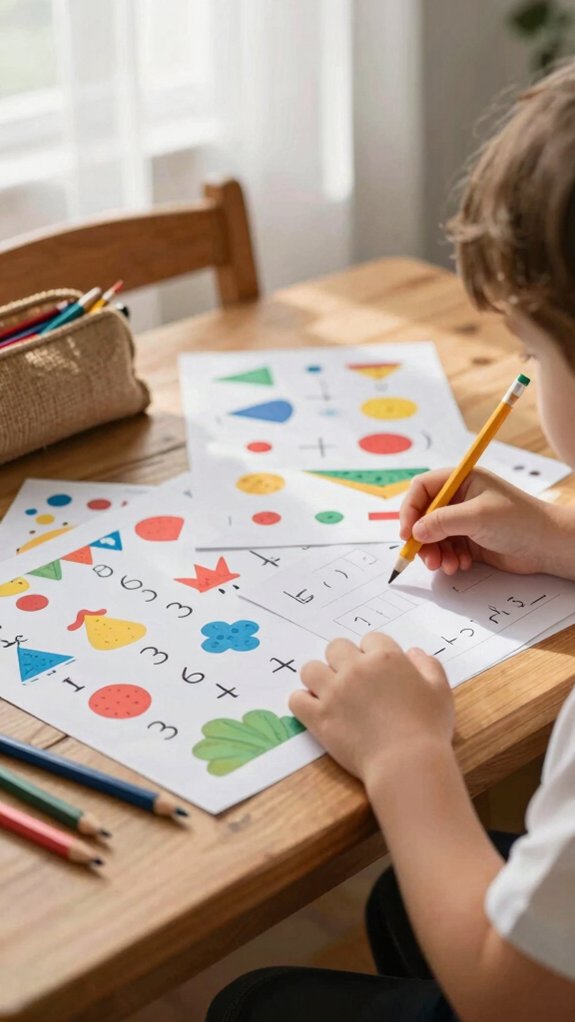
Printable math activity sheets let you practice skills at home in a fun, easy way.
You can build real math skills by measuring objects, naming shapes, or rounding numbers.
Pick pages that match your level, and keep each session short so math feels exciting.
Printable Practice Pages
One easy way to practice math is with printable math activity sheets. You can join the crew of learners who use them for quick wins. They fit math center rotations and classroom game ideas, too.
- You can practice addition, subtraction, fractions, decimals, and place value.
- You can try drills on money, time, geometry, data, rounding, and unit conversion.
- You can print only what you need for review or enrichment at home or in class.
Some pages match strong standards coverage, so you build skill with confidence. Pair them with low-pressure games, and you’ll feel ready to keep going.
Hands-On Skill Building
Turn math pages into mini experiments that kids can touch, draw, and solve.
You can use printable math activity sheets to make abstract ideas feel real.
Start with counting, number reading, and numeral writing.
Then move to patterns, shapes, measurement, and fractions.
For real life measurement, estimate with a ruler or tape, then check your answer.
Try classroom math games with fraction pizzas you cut into equal parts.
These sheets fit daily math routines and support math confidence building.
Choose the right level for your age, and each page helps you learn with less stress and more success.
Easy Home Activities
At home, you can keep that hands-on math feeling going with easy printable activity sheets. You’re not alone; lots of kids learn best this way. Try these quick ideas:
- Use rulers, coins, or paper plate fraction pizzas to make answers feel real.
- Start with K–2 sheets on counting to 100, shapes, and patterns, then move to rounding, perimeter, and unit conversion.
- Add math scavenger hunts and story problem practice, or watch free videos that match your sheet.
Keep sessions short. Celebrate each try. Your math skills can grow with calm, fun practice.
Watch Math Videos for Clear Help
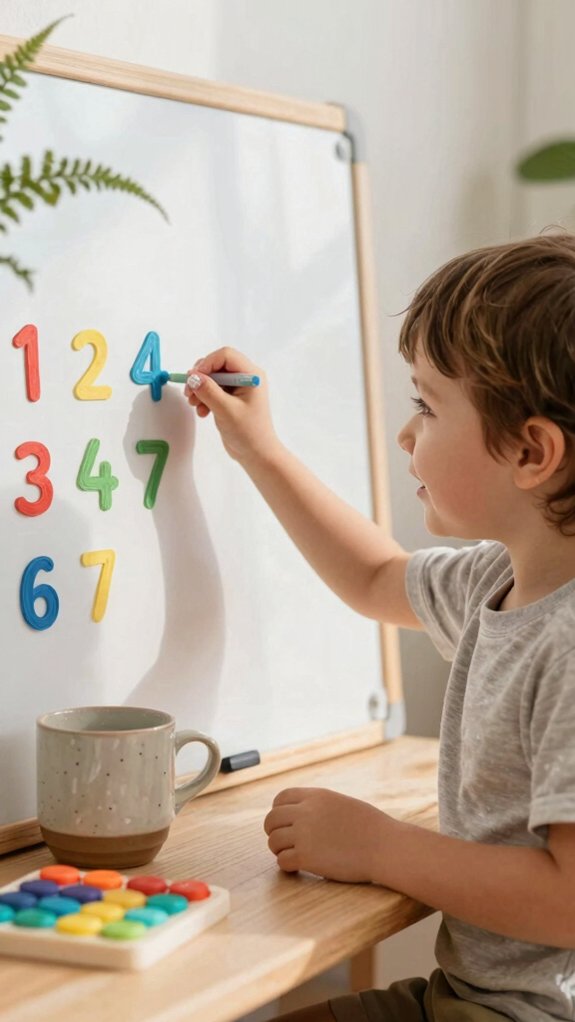
Sometimes, math makes more sense when you can see it in action.
Watch the site’s 5 free math videos for clear, step-by-step help with ScienceMathELA lessons.
You don’t need an account, so you can jump right in with your group.
Use the grade and subject menus to find lessons for K–2, 3–5, or 6–8.
Try real life math examples like unit conversion, perimeter, 3D shapes, rounding, and statistics.
With parent led video help, you can follow along and feel supported.
The platform also connects with standards, so your practice stays on track.
Choose Math Games by Age
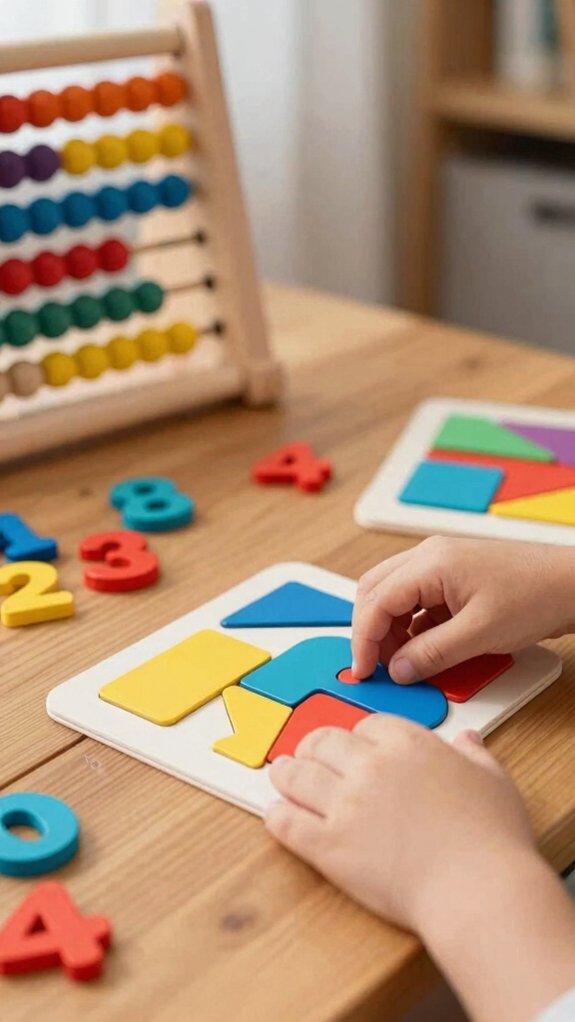
One easy way to pick the right math game is to match it to your age and skill level. You’ll feel more at home when the game fits you.
- For K–2, choose counting, shapes, patterns, and simple sums within 10.
- For grades 1–3, try addition, subtraction, time, money, and early multiplication.
- For grades 4–6, look for fractions, decimals, multi-digit work, and geometry.
These Age appropriate challenge levels help you learn without feeling lost. Many browser games offer free, responsive practice, so you can keep motivation high while finding games that truly fit you.
Build Math Confidence With Easy Wins
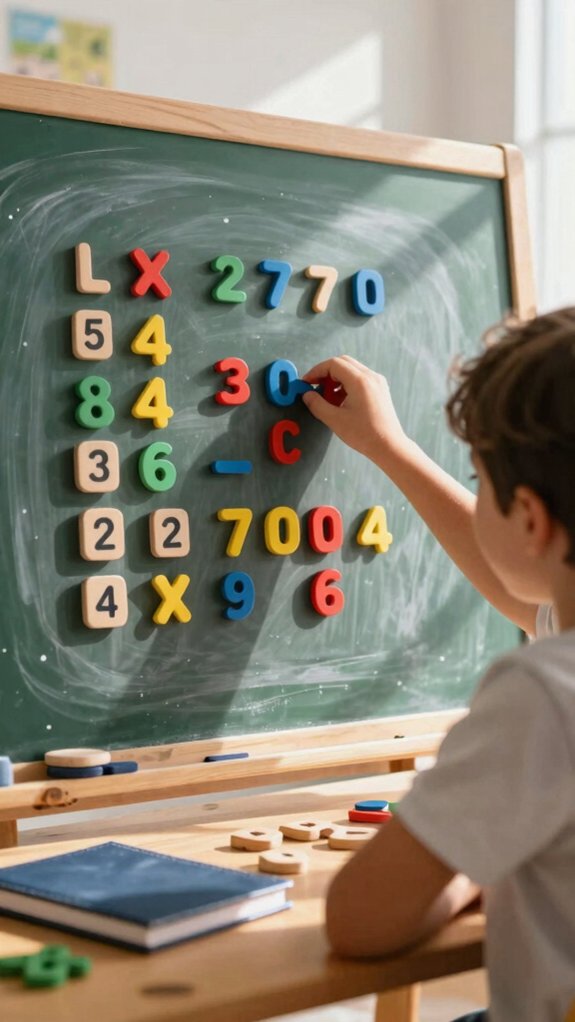
Math can feel much easier when you start with small wins.
You can celebrate small successes with quick games that feel safe and fun.
Try sorting shapes, hunting numbers, or estimating then measuring objects.
These simple tasks help reduce math anxiety because you get answers fast.
When you progress step by step, you notice real growth without pressure.
Games with levels let you keep improving and build positive habits as you go.
If you need extra support, guided practice can help you feel proud, included, and ready for more.
Set a Short Daily Math Routine
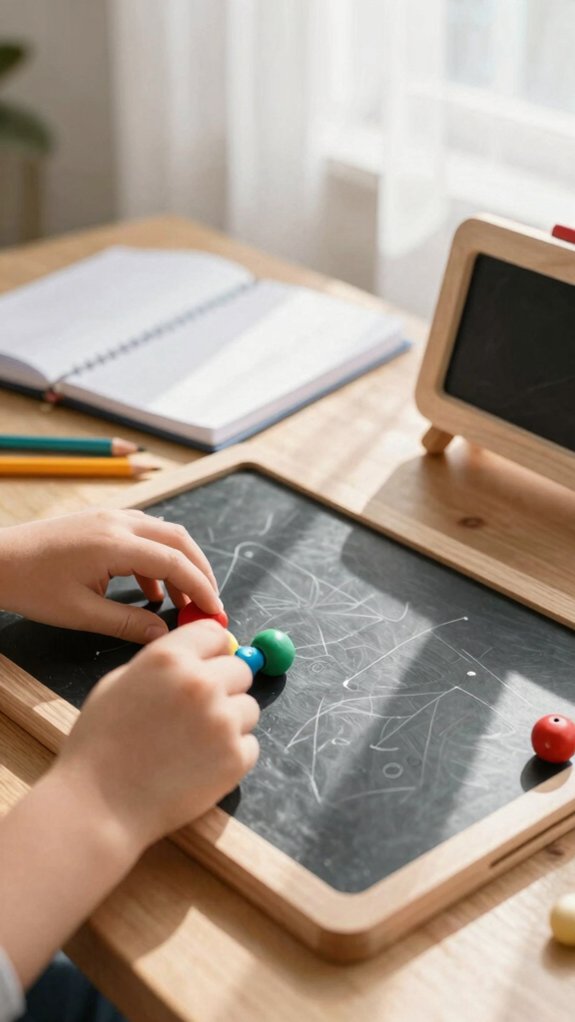
Each day, a short math routine can make learning feel steady and easy. You can spend 5 to 15 minutes on play-based tasks that fit your day. Try these:
- Match shapes or spot numbers around your home.
- Use real life connections by measuring lengths, adding grocery items, or setting a toy clock.
- Switch skills by grade so you stay interested and keep growing.
Use Math talk prompts to explain why an answer works. That helps you feel included and confident.
Keep score with stickers or tokens. Small wins build strong math habits fast.