
Storytelling Skills for Kids That Build Confidence and Creativity
- Storytelling Skills for Kids That Build Confidence and Creativity
- Key Takeaways
- What Skills Do Kids Learn Through Storytelling?
- Why Storytelling Builds Confidence
- Speaking With Confidence
- Expressing Ideas Clearly
- Building Self-Assurance
- How Storytelling Sparks Creativity
- How Stories Improve Listening and Language
- Builds Active Listening
- Expands Vocabulary Naturally
- Strengthens Speaking Confidence
- Personal Storytelling Activities at Home
- Storytelling Games for Family Fun
- Round-Robin Story Building
- Picture Prompt Adventures
- Reverse Story Challenges
- Storytelling Activities for Emotional Growth
- Creative Storytelling With Puppets and Boxes
- Performance Storytelling for Kids
- How to Make Storytelling a Daily Habit
Storytelling helps you share ideas in order, choose strong words, and sound clear. You also build confidence each time you speak. As you retell a beginning, middle, and end, you practice listening, memory, and teamwork. Stories help you notice feelings too, so you can understand others better. They also spark creativity by asking what happens next. Keep going, and you’ll find even more ways stories can shape your voice.
Key Takeaways
- Storytelling helps kids organize ideas with a clear beginning, middle, and end.
- Retelling stories strengthens listening, memory, and sequencing skills.
- Sharing stories builds confidence, clearer speaking, and self-assurance.
- Storytelling grows creativity, vocabulary, and empathy through imagination and character feelings.
- Fun activities like puppets, prompts, and family story games make practice engaging and consistent.
What Skills Do Kids Learn Through Storytelling?
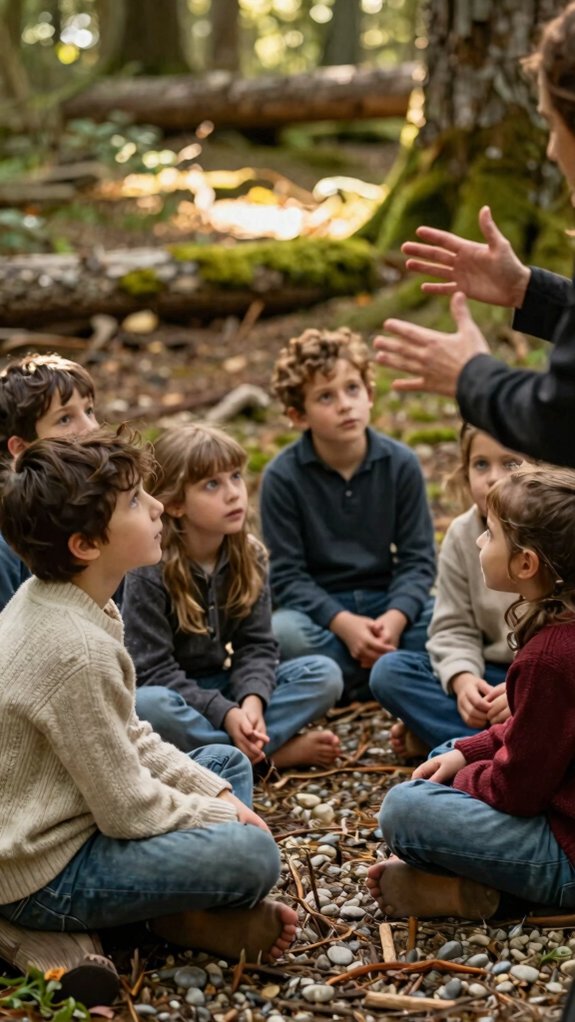
When kids tell stories, they learn much more than just how to entertain others.
You build communication by linking ideas in order and choosing words that fit your tone.
You also sharpen listening as you track details and remember scenes.
Storytelling helps you notice character emotions and practice perspective thinking, so you understand how others feel.
It also invites you to ask what happens next and what choices work best.
With each tale, you grow vocabulary, creativity, and empathy.
You’re not just talking; you’re learning to think, connect, and share in ways that help you belong.
Why Storytelling Builds Confidence
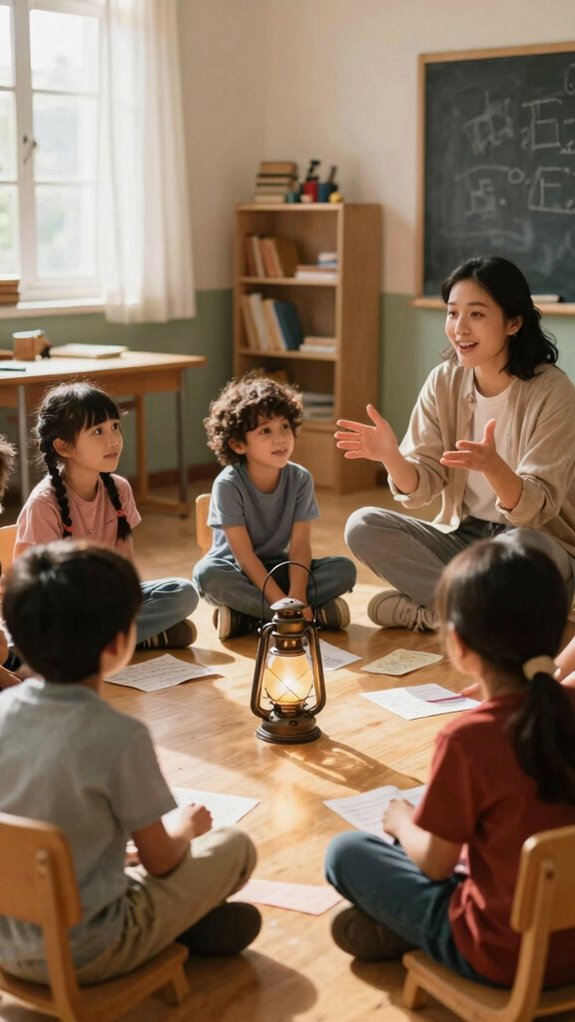
Storytelling helps you speak with confidence because you get to share ideas in a safe way.
It also teaches you to express thoughts clearly with a strong beginning, middle, and end.
Each time you tell a story, you build self-assurance and feel braver sharing your voice.
Speaking With Confidence
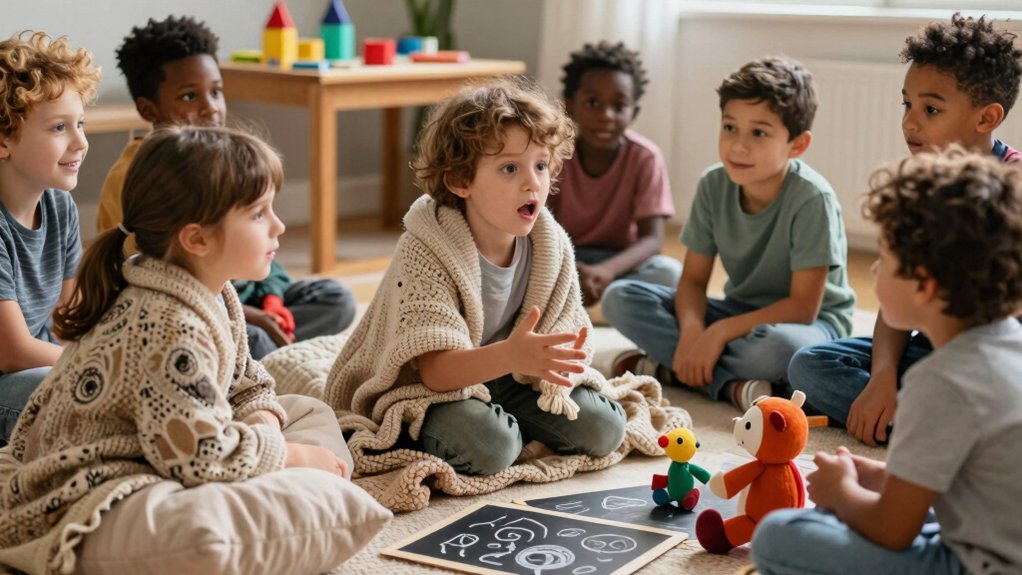
A good story gives you a clear path to follow. You know where to begin, move, and finish, so speaking feels safer. In storytelling routines, you practice peer turn taking and hear a friendly rhythm from others.
| Confidence Builder | What It Does |
|---|---|
| Retelling | Helps you say familiar words out loud |
| Added details | Gives you more chances to trust your voice |
| Story circle | Lets you share with less pressure |
When you listen, you notice tone, pace, pauses, and feeling. Then you try them yourself. That’s how you grow braver, belong with the group, and speak with more ease.
Expressing Ideas Clearly
Stories can often help you say what you mean in a clear, simple way. With story structure, idea linking, you line up events in a beginning, middle, and end.
That gives your thoughts clear explanations, logical order. When you retell what happened, you use words like then, after that, and because. Those small links help others follow you easily.
You also practice tone and emotion, so your message feels real. You can name feelings like fear or excitement more точно? Need 99 words exactly.
Building Self-Assurance
When you tell a story, you do more than share events. You practice confidence cues with every sentence you speak.
In safe speaking spaces, you try beginning, middle, and end without much pressure. That helps you trust your voice.
When you retell a character’s choices and feelings, you also understand your own better.
Peer support in a story circle makes each turn feel easier. You learn error tolerance when mistakes happen and you keep going.
Listening first and retelling next sharpens memory and attention.
Each small success builds self-assurance and helps you feel ready to share again.
How Storytelling Sparks Creativity
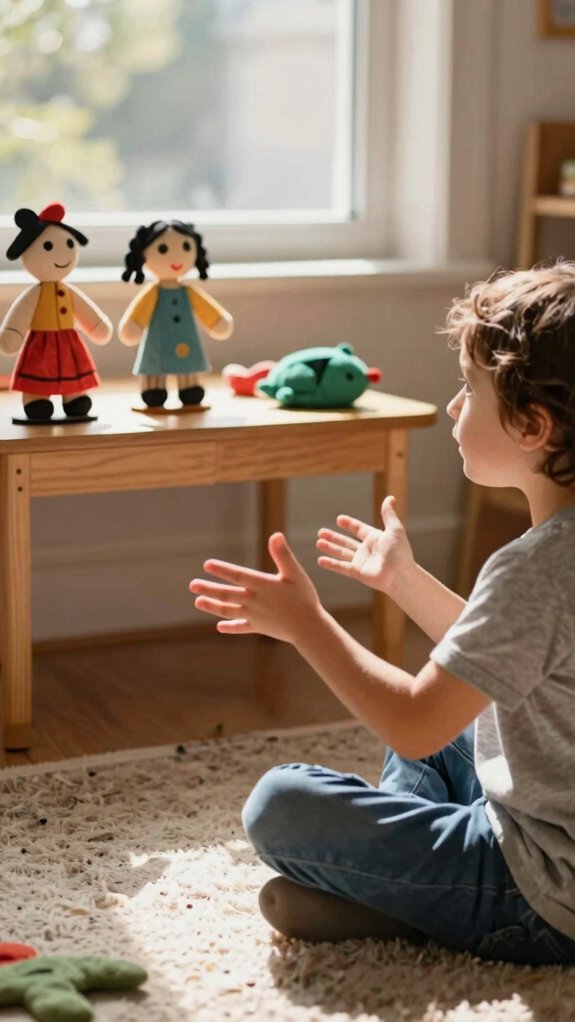
Storytelling sparks creativity because it lets your mind build a world without pictures. You picture characters, places, and surprise endings on your own. That grows Kid imagination and helps you trust your ideas.
As you follow each event, Emotional processing helps you notice feelings and turn them into new thoughts.
Your brain works in many ways at once, so you can imagine fresh plots and bold choices.
Try puppets or story boxes, and you’ll reshape scenes with friends. Then you can ask, “What if?” and keep creating together.
How Stories Improve Listening and Language

When you listen to a story, you pay close attention to each event and detail.
Stories also introduce new words in a natural way, so you learn them more easily.
As you hear and retell stories, you build speaking confidence and share your ideas better.
Builds Active Listening
How do stories turn quiet ears into sharp listeners? You follow Story Sequencing from beginning to middle to end, so your mind stays focused.
You notice tone, pauses, and facial expression, and Emotion Mapping helps you link feelings to events.
That makes it easier to remember what happened and why.
When you listen well, you can retell the story with confidence and join in turn-taking talks.
You wait, respond, and build on others’ ideas.
Story time helps you make meaning, not just hear words.
Expands Vocabulary Naturally
A good story can stretch your vocabulary without feeling like a lesson. You hear words in scenes, so they stick with meaning.
As you follow the plot, you meet descriptive verbs, vivid adjectives, and phrase patterns again and again. That repetition helps you remember them.
When you discuss each page or audio part, you also connect tone and pauses to word meaning.
Word jar activities make this fun, and better word practice helps you swap plain words for stronger ones.
Because you track beginning, middle, and end, you use new words in order and build fluency naturally.
Strengthens Speaking Confidence
Stories don’t just build your word bank; they also help you speak with more confidence.
When you listen, you picture events and feelings, so your answers make more sense.
You learn to tell ideas in order: beginning, middle, and end.
You also practice linking thoughts with words like because and then.
That makes classroom answers sound stronger.
Story retelling gives you turn taking practice, too, so you know when to listen and when to speak.
You hear tone and pauses, then copy them.
Soon, you sound clearer, friendlier, and ready to join any group.
Personal Storytelling Activities at Home

At home, you can turn ordinary moments into great stories.
Start with a best moment prompt, like a favorite present from last Christmas.
Ask who was there, where it happened, and what happened next.
Let your child tell a hero story, such as finding a lost family item.
Keep it pressure-free and listen for one to three minutes without interrupting.
Then say, “That sounds exciting—how did you feel?”
Use photos or small objects as cues.
This sensory storytelling works well with screen time limits.
Finally, ask what-ifs to spark creativity and help your child choose new story paths.
Storytelling Games for Family Fun
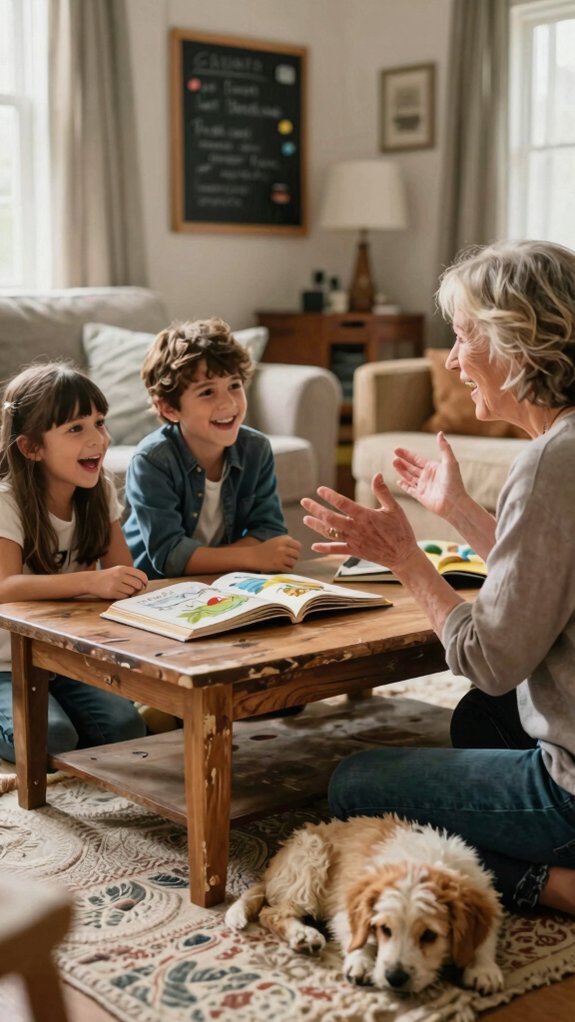
You can turn story time into a fun family game with round-robin story building, where each person adds one line.
Try picture prompt adventures by picking a random photo and guessing what happens next.
For a reverse story challenge, you can retell the ending first and work backward in a new way.
Round-Robin Story Building
When your family wants a quick game, round-robin story building is a fun choice. You take turns adding one sentence, so everyone joins in and feels included.
- Start with a strong hook, like a giant dragon at the mall.
- Use role play, turn taking, listening cues, and story prompts to guide each voice.
- Ask the next player to add what happens next, then finish with an ending.
This low-pressure game builds patience and listening skills.
You can play it while traveling or waiting, and you only need a starting line.
Each story grows from your ideas into shared family fun.
Picture Prompt Adventures
Picture prompt adventures make storytelling feel like a game of uncovering.
You choose a random photo, then begin with, “I wonder what happened right here…”
That simple photo choice turns a still image into a live story.
Try family turn taking with one sentence each.
Everyone adds one line that matches the picture, so nobody feels stuck.
Use a beginning, middle, and end.
One person names who’s there.
The next adds a problem.
The last one finishes the moment.
Ask, “What does the character want?”
Rotate pictures often to build confidence and imagination.
Reverse Story Challenges
Even better, reverse story challenges turn storytelling into a fun puzzle. You start with the ending, like “So the problem got solved!” Then you work backward together.
You ask what happened right before and notice character feelings.
- Take turns adding one sentence for each earlier scene.
- Use a photo or prompt card to guide each round.
- Try alternative endings if someone forgets a detail.
Keep each round short, about 3–5 minutes, so everyone stays involved.
If you get stuck, say, “Maybe something surprising happened.” Then retell the full story forward.
You’ll build sequencing, confidence, and a stronger family storytelling crew.
Storytelling Activities for Emotional Growth

How can stories help your heart grow? You can listen for feelings in every beginning, middle, and end.
Notice fear, excitement, or disappointment when characters choices change the plot.
Try quick feelings check ins before and after each story.
Ask why the character felt that way. Then ask how you’d react there.
This helps you name emotions and practice calm responses.
You also build empathy when you imagine different viewpoints.
When you solve story problems, you learn choices have results. That makes you feel stronger.
Story time can become a safe place where you belong and grow.
Creative Storytelling With Puppets and Boxes
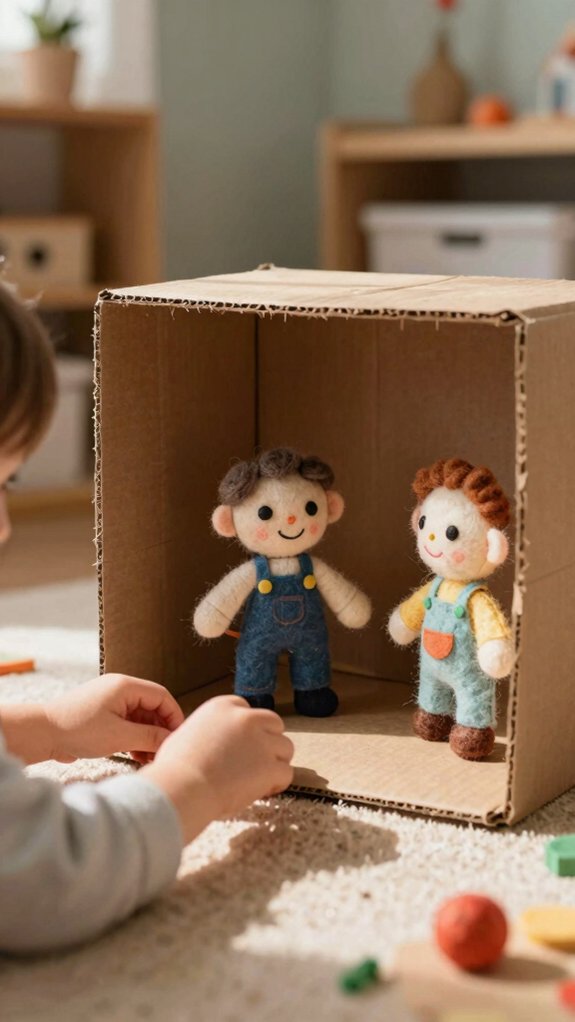
When you use puppets and story boxes, the story starts to feel alive in your hands. You don’t just hear the tale; you join it.
After reading, you can build an engaging box scene with animals, grass, and skies. Then you retell the story with movable figures and Roleplay prompts.
- Add counting in English and Swahili.
- Use hands-on props to help memory and feeling.
- Share your box with friends for community storytelling.
You might make a Serengeti box with blue sides, raffia grass, and paper ground. Then you can invent your own story and feel proud.
Performance Storytelling for Kids
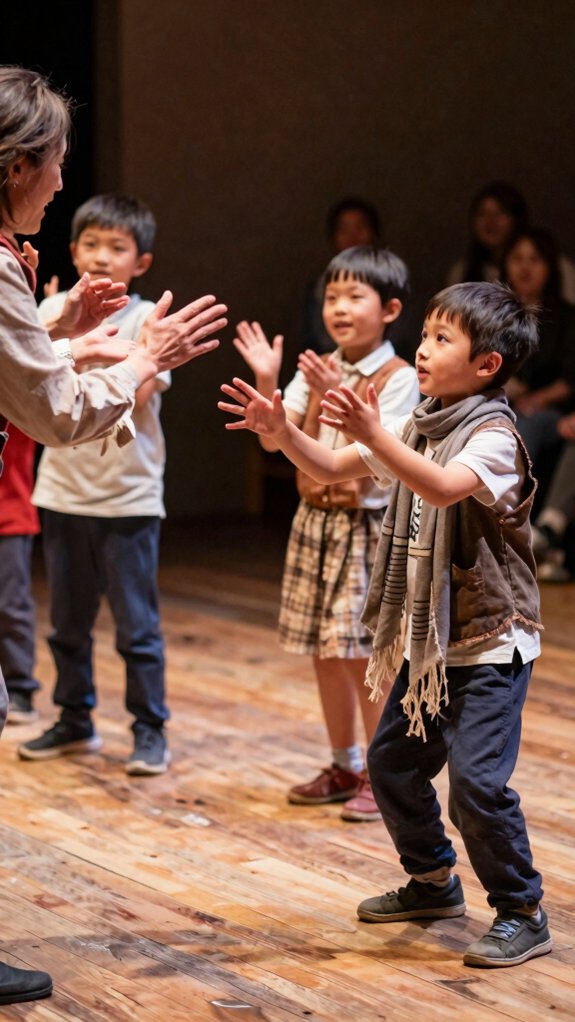
Performance storytelling lets you bring a story to life with your voice, face, and body.
You can practice tone, pacing, and gestures as you speak.
Start with a comic strip, a voice recording, or a short script.
Add drama cues for pauses and strong words.
First rehearse alone, then tell a trusted person, and later share with a bigger group.
Family, peer feedback circles, and stage fright support can help you feel seen.
You can also make a short video and watch it again.
Each step builds confidence, and you’ll grow braver with every performance.
How to Make Storytelling a Daily Habit

After you’ve tried telling a story out loud, the next step is making it a daily habit.
Pick one story time each day, even for 5 minutes, and keep it in your daily routines.
You’ll feel more confident when you retell a day with a clear beginning, middle, and end.
- Use Story prompts like, “What was the funniest part?”
- Try a Story Circle or photo story so everyone belongs.
- Keep a Word Jar with strong words and reuse them tomorrow.
Record one short story each week and celebrate effort, not perfection.
That’s how you grow.