Rosa Parks Story for Kids That Teaches Courage and Change

- Rosa Parks Story for Kids That Teaches Courage and Change
- Key Takeaways
- Who Was Rosa Parks?
- Rosa Parks’ Early Life in Alabama
- How Rosa Parks Learned About Racism
- Rosa Parks and School on Foot
- Walking Miles to School
- White Bus, Black Footsteps
- Learning Courage on Foot
- What Happened on Rosa Parks’ Bus Ride?
- Why Rosa Parks Refused to Move
- How the Montgomery Bus Boycott Began
- How Rosa Parks Helped Change Civil Rights
- Bus Boycott Begins
- Courage Changes Laws
- Rosa Parks’ Legacy and Honors
- Why Rosa Parks Still Matters Today
Rosa Parks was a brave woman who helped change history. You can see her courage in 1955, when she stayed seated on a Montgomery bus instead of giving up her spot. That peaceful choice led to her arrest and the Montgomery Bus Boycott. She grew up in Alabama, learned about unfair Jim Crow rules, and kept standing strong. Her story shows that one calm act can spark big change, and there’s more to uncover ahead.
Key Takeaways
- Rosa Parks was a brave civil rights hero who stood up to unfair treatment by staying seated on a Montgomery bus in 1955.
- She grew up in Alabama, where she learned about racism, hard work, and the unfair rules of segregation.
- Rosa Parks’s peaceful arrest helped start the 381-day Montgomery Bus Boycott.
- Her courage helped bring Jim Crow bus laws into public attention and led to a Supreme Court victory in 1956.
- Rosa Parks is remembered with honors like the Presidential Medal of Freedom and the Congressional Gold Medal.
Who Was Rosa Parks?

Who was Rosa Parks? You can think of the Rosa Parks name as a symbol of courage. She was a civil rights hero who stood up to unfair treatment.
On December 1, 1955, she chose not to give up her seat on a Montgomery bus. That brave choice led to her arrest and helped start the Montgomery Bus Boycott.
For 381 days, many people joined together to demand fairness. Rosa Parks worked with groups like the NAACP to challenge separation rules.
Her actions show you that one person can help change the world for everyone.
Rosa Parks’ Early Life in Alabama

Rosa Parks was born in 1913 in Tuskegee, Alabama, but her early life changed when she was very young.
Your Tuskegee childhood would’ve felt different after she moved to Pine Level with her mother. There, her Pine Level grandparents welcomed her and taught useful skills. You’d learn farming, cooking, and quilt-making, just like Rosa did. Her mother worked as a teacher and visited on weekends.
- You can picture her small Alabama home.
- You can feel the comfort of family care.
- You can see her learning by doing.
- You can notice her strong support system.
- You can recall that every skill built confidence.
How Rosa Parks Learned About Racism
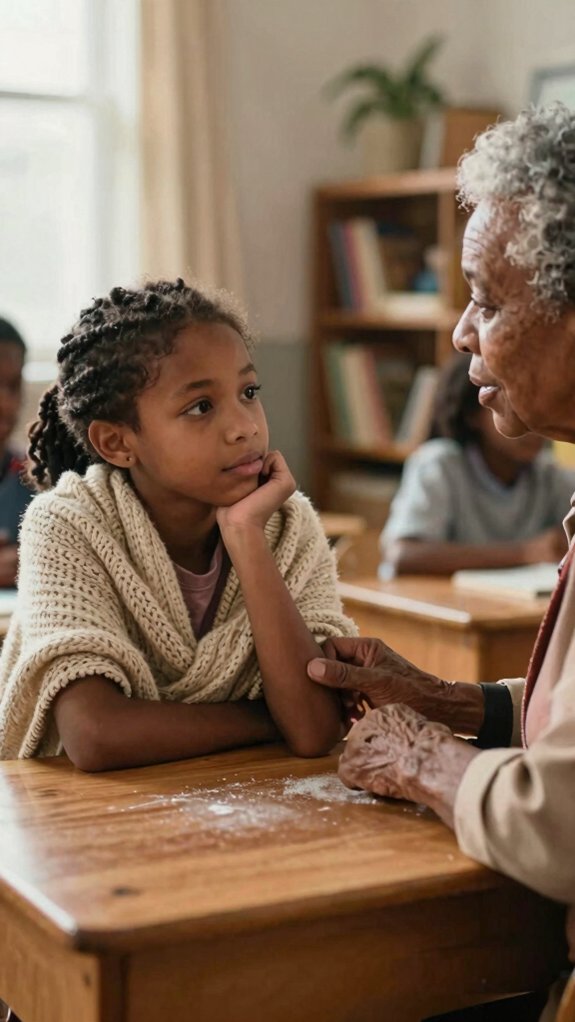
As Rosa McCauley grew up in Pine Level, she learned that life wasn’t fair for everyone.
Your elders can help you see why.
Rosa’s grandparents shared Jim Crow lessons about separate entrances, fountains, schools, and hospitals.
They explained that “separate but equal” still meant unfair treatment.
She also heard about attacks on Black families and saw her grandfather board up windows for safety.
Later, she walked to school while white children rode buses.
When some threw things at her, Rosa understood the hurt.
Those experiences gave her courage inspiration to stand up for justice.
Rosa Parks and School on Foot

You can imagine Rosa Parks walking miles to school in Pine Level, Alabama, each day.
While white children rode the bus, she and other Black children kept going on foot.
Those black footsteps helped Rosa learn courage, and they showed her what fairness should look like.
Walking Miles to School
In Pine Level, Alabama, young Rosa McCauley often walked miles to get to school. You can picture her tired feet and steady heart.
Those school day struggles came from unfair transportation rules that helped white children but not her. Even with long roads, she kept going and stayed alert.
- You’d feel proud of her grit.
- You’d notice how far she walked.
- You’d see unfairness every day.
- You’d learn she stayed calm.
- You’d understand courage starts small.
Rosa didn’t lash out. She learned care and control. Those steps helped shape her brave future and taught you to keep moving.
White Bus, Black Footsteps
While Rosa Parks was growing up in Alabama, school could feel unfair before the day even began.
You might’ve seen White children ride a bus while Black children walked miles.
That wasn’t just about distance.
It was one of the segregation lessons kids lived with every day.
Sometimes White bus riders even threw things at Rosa and other students.
You can imagine how hurtful that felt.
Rosa learned to stay calm and strong.
She understood bus stop safety wasn’t equal for everyone.
Those early hardships helped shape the brave choice she made years later.
Learning Courage on Foot
As Rosa Parks walked to school in Pine Level, Alabama, she faced unfairness every day. You can picture her steady steps on a long road.
White children rode a bus, but Rosa and her friends walked. Sometimes kids on the bus threw things at them.
Her grandparents explained segregation, so you’d know the rules were unjust.
Rosa chose quiet bravery. She didn’t lash out. Instead, she kept going with dignity.
That was everyday resistance.
- Long walks built strength
- Mean bus riders couldn’t stop her
- Family taught truth
- Rosa stayed calm
- Courage grew little by little
What Happened on Rosa Parks’ Bus Ride?
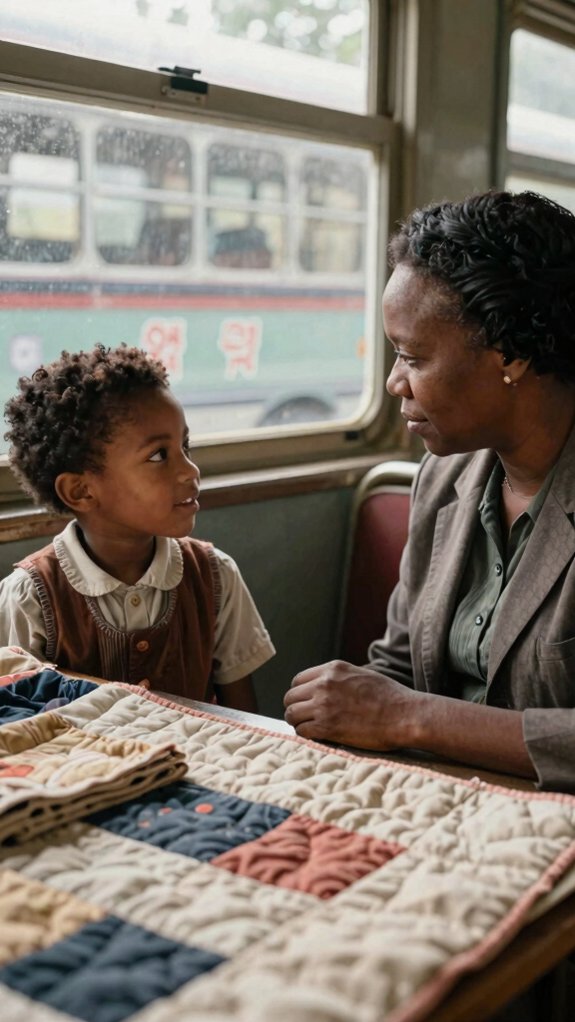
On December 1, 1955, Rosa Parks made a brave choice on a Montgomery bus. You can picture the bus with bus segregation rules in place.
The front seats were for white riders and the back seats were for Black riders. When the white section filled up, Black passengers had to move.
Rosa Parks, a member of the NAACP, stayed seated. Her Rosa Parks protest was a clear stand against unfair treatment.
Police arrested her in Montgomery, Alabama. That moment helped wake up her community.
Soon, many Black residents joined the Montgomery Bus Boycott and rode together toward change.
Why Rosa Parks Refused to Move

- She stayed brave.
- She chose dignity.
- She challenged unfair rules.
- You can respect her.
- Her choice inspires change.
How the Montgomery Bus Boycott Began

After Rosa Parks was arrested, many people in Montgomery knew something had to change. On December 5, 1955, you would’ve seen neighbors choose not to ride the buses. They stayed home together and sent a strong message.
This was the Montgomery Bus Boycott, and it grew from community organizing. People met, talked, and planned to stand up for Fair seating rules. Their actions showed that your voice matters when your group works as one.
For 381 days, they kept going with patience and hope. Their unity helped challenge unfair bus segregation and inspired others.
How Rosa Parks Helped Change Civil Rights

Rosa Parks showed great courage when she refused to give up her seat.
Her arrest helped start the Montgomery Bus Boycott, and many people stopped riding buses.
You can see how one brave choice helped change unfair laws.
Bus Boycott Begins
How did one brave choice spark a huge protest? You can see it in Montgomery.
On December 1, 1955, Rosa Parks was arrested for staying seated.
Soon after, community organizers called for a peaceful protest.
On December 5, the Montgomery Bus Boycott began.
- Black riders had faced unfair bus rules for years.
- You’d sit in the back under Jim Crow laws.
- White riders used the front seats.
- Many African Americans stopped riding for 381 days.
- You can feel their unity and strength.
Their stand showed that people belong together when they fight injustice.
Courage Changes Laws
Because one bold choice can change history, Rosa Parks helped change the law. You can see how her bravery mattered.
On December 1, 1955, she kept her seat on a Montgomery bus. She knew the rules were unfair, but she stood steadfast.
Her arrest helped start the Montgomery Bus Boycott, and many African Americans joined together for 381 days. That strong action led courts to strike down Alabama’s segregated bus laws in 1956.
When you consider fairness in daily life, remember that brave choices count. Rosa’s stand helped many people push for civil rights and dignity.
Rosa Parks’ Legacy and Honors

After the Montgomery Bus Boycott showed her courage, Rosa Parks earned major honors for changing history.
You can see why Rosa Parks awards still matter.
In 1996, she received the Presidential Medal of Freedom.
In 1999, she earned the Congressional Gold Medal.
TIME also named her one of the 20th century’s most influential people.
Her civil rights legacy grew through more than one brave day.
In 1987, she co-founded the Rosa and Raymond Parks Institute for Self Development.
- Her stand sparked change.
- The boycott lasted 381 days.
- The Supreme Court ruled for justice.
- Her honors celebrated courage.
- You belong to that story.
Why Rosa Parks Still Matters Today

Rosa Parks still matters today because her brave choice changed more than one bus ride.
When you hear her story, you see how one act of everyday bravery can spark big change.
She stayed seated on a Montgomery bus in 1955, and her arrest helped start the 381-day boycott.
That peaceful resistance pushed unfair Jim Crow laws into the spotlight.
In 1956, the Supreme Court said Alabama’s bus laws were unconstitutional.
Her courage reminds you that you can stand up with kindness, too.
Long after, people honored her strength with the Presidential Medal of Freedom and the Congressional Gold Medal.