Activities for Kids That Turn Everyday Moments Into Learning
- Activities for Kids That Turn Everyday Moments Into Learning
- Key Takeaways
- Start a 15-Minute Learning Activities Routine
- Turn Morning Routines Into Learning Activities
- Count and Compare at Breakfast
- Practice Colors While Getting Dressed
- Build Name and Letter Skills
- Use Household Chores for Learning Activities
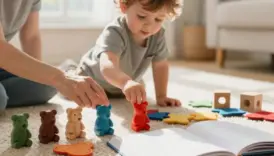
- Make Cleanup a Sorting Game
- Match Colors and Pairs With Laundry
- Build Shapes With Household Objects
- Shape Building With Household Items
- Everyday Objects, Endless Creations
- Turn Grocery Shopping Into Math Activities
- Explore STEM Learning While Cooking
- Measure, Mix, And Discover
- Observe Changes With Heat
- Practice Fractions While Measuring Ingredients
- Ask Questions During Everyday Routines
- Spark Curiosity With Questions
- Encourage Thoughtful Daily Conversations
- Use Storytelling to Build Vocabulary
- Play Word and Number Games in the Car
- Take Nature Walk Learning Activities Outside
- Nature Scavenger Hunts
- Weather Watching Activities
- Backyard Science Discoveries
- Try a Sink-or-Float Science Activity
- Create Art Activities With Recycled Materials
- Cardboard Box Creations
- Bottle Cap Art
- Choose Interactive Screen Learning Activities
- Keep Learning Activities Fun and Low-Pressure
Turn everyday moments into learning adventures with a 15-minute timer challenge. Count pancakes at breakfast and compare which bowl holds more. Name colors while getting dressed and hunt for letters on signs. Sort socks, measure ingredients, or predict what sinks in water. Build art from clean boxes and bottle caps. Choose short screen games that teach skills. Keep questions curious and pressure low. You’ll find more easy ideas to try next.
Key Takeaways
- Turn mornings into 15-minute learning games by counting, sorting, naming colors, and spotting shapes while getting ready.
- Build math skills at meals by counting food, comparing amounts, setting the table, and measuring ingredients.
- Practice letters and vocabulary by finding signs, tracing names, reading together, and asking “What do you notice?”
- Make cooking a STEM activity with fractions, sequencing, timers, and observations about mixing, melting, and changing textures.
- Use walks, cleanup, and bath time for simple science through predictions, sorting, nature observations, and sink-or-float tests.
Start a 15-Minute Learning Activities Routine
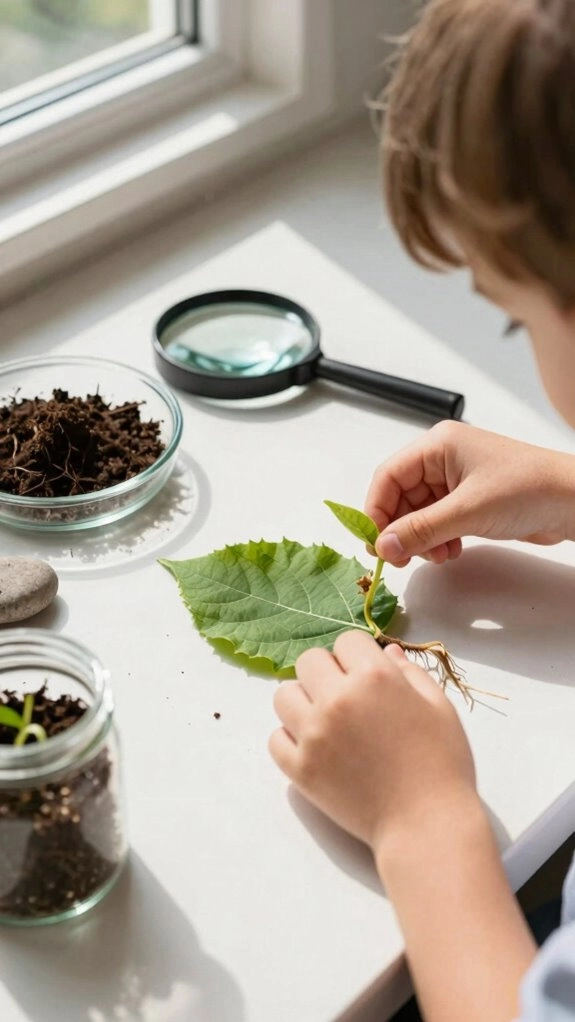
Start a 15-minute learning challenge at the same time each day.
Set a timer and choose one small activity you can enjoy together.
Count to 10 while washing hands.
Hunt for letters on signs.
Sort 10 groceries by color.
You don’t need worksheets or perfect answers.
Let your child lead and share what they notice.
Try daily “what if” questions to spark new ideas.
Encourage mindful “why” talks so everyone feels heard.
Connect learning to familiar moments, like reading in a cozy corner.
If a child feels overwhelmed, use tiny next steps such as naming one color or finding one letter before continuing.
If you miss a day, simply begin again tomorrow.
Your steady routine builds confidence, curiosity, and a sense of belonging.
Turn Morning Routines Into Learning Activities
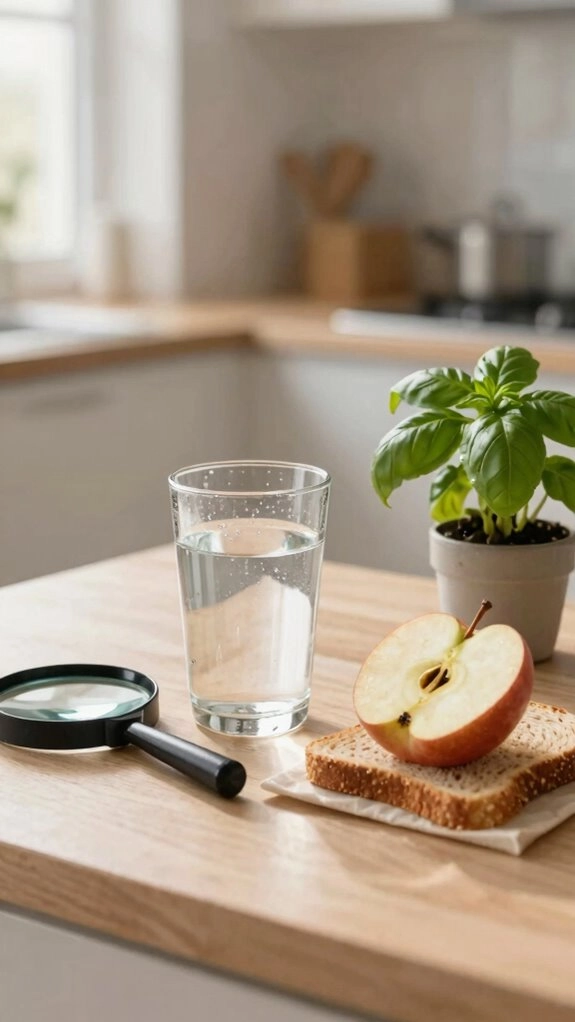
Morning routines can become mini learning adventures before your day even begins. While you wash hands, count to 10, then try 15 or 20.
Getting dressed? Name clothing colors and spot simple shapes together. As you pack bags and shoes, sort items by type, size, or owner.
Describe where everything belongs so everyone can help. Before you head out, take two minutes to talk as a team.
Ask “best part” questions and talk about “feelings today.” Share “new word” stories from yesterday or this morning.
Then connect “plans for later” so your child feels prepared, included, and ready to learn.
Keep the morning simple by choosing two must-do tasks that help everyone leave calmly and on time.
Count and Compare at Breakfast
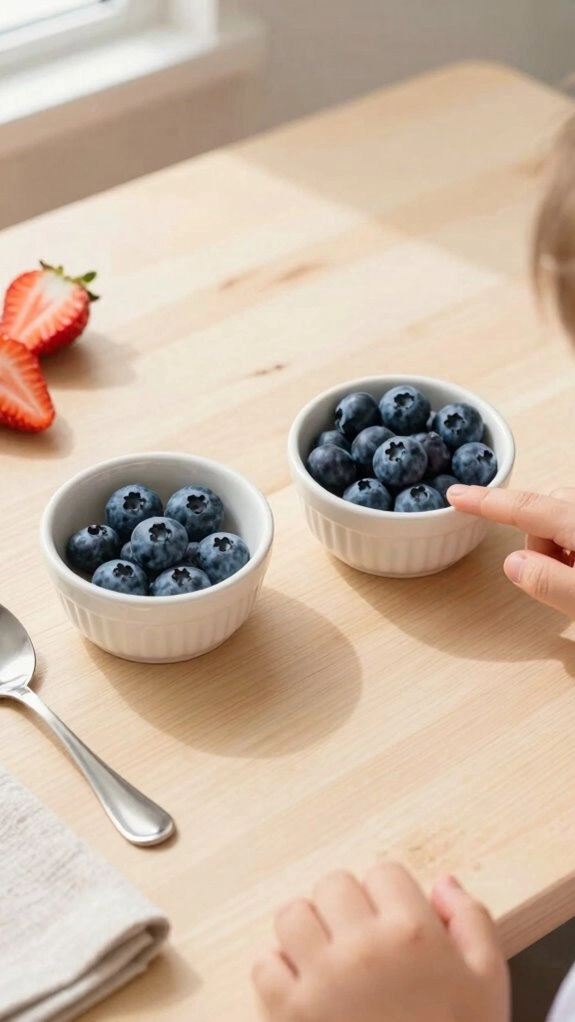
Breakfast gives you another easy chance to practice numbers and noticing differences.
Count together: one bowl, two eggs, three pancakes. Stop at 10, then try 15 or 20. You’re building number confidence with foods your family already enjoys.
Ask, “Which bowl holds more?” as you serve cereal or fruit.
Talk about taller versus wider plates while setting the table.
Add two more bites or five more sips, then ask which has less food.
Compare sips and bites to notice changing amounts.
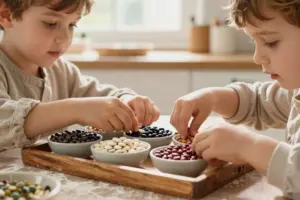
Sort berries, toast triangles, banana slices, and cereal circles by shape or size.
Try matching each piece of fruit to one number for one-to-one counting practice.
Keep it simple, warm, and shared for about 15 minutes.
Practice Colors While Getting Dressed
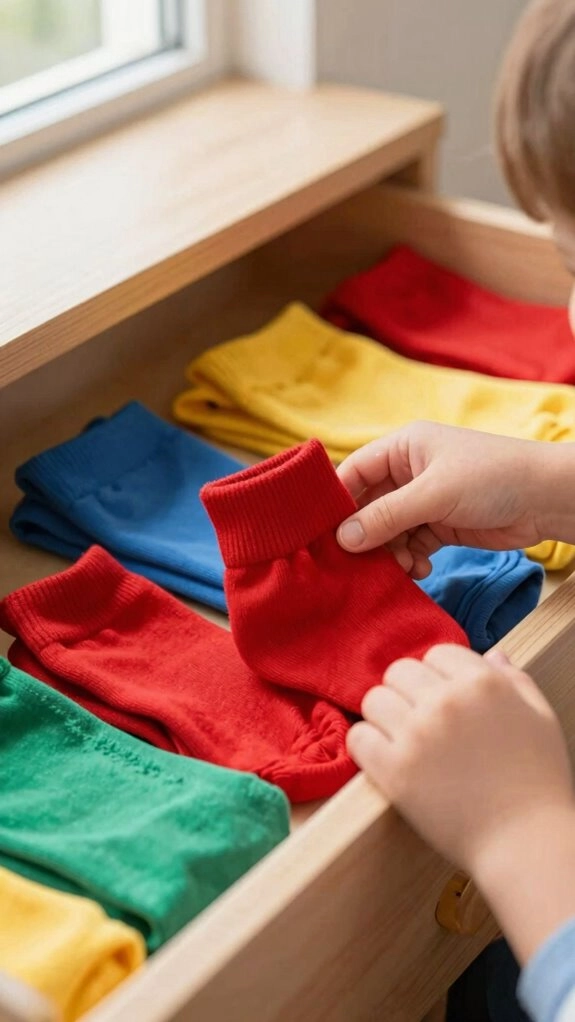
Getting dressed can become a quick color game before you head out. You and your child can learn together while building a routine that feels like your own.
- Name each item: “red shirt,” “blue socks,” and “yellow shorts.” Invite your child to repeat the colors.
- Make color piles before dressing. Put green clothes together and red clothes together. Then play match the sock. Ask, “What matches your shoes?”
- Try a fast color hunt. “Find something black.” “Show me a white button.” Ask, “Which is brighter, this orange?” Finish by having your child name two colors in their outfit.
Later, extend the color lesson with a bubble activity and talk about how surface tension helps bubbles hold their shape.
Build Name and Letter Skills
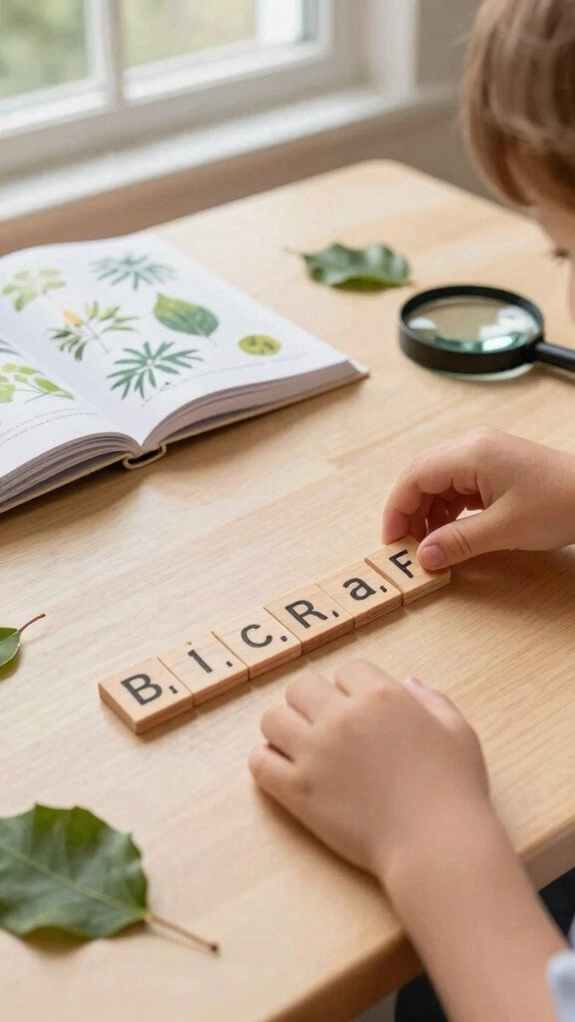
Once clothes are on, your child can keep learning with the letters in their name. Help them write it on paper, sand, or dirt.
Then let them trace each letter with a finger or crayon.
During reading routines, point to letters and name their sounds. Say, “A is the first letter in your name.”
Try letter hunts on cereal boxes, signs, and book covers. Count the letters left to right as they copy them.
For playtime learning, offer magnets, stickers, or colors to match name letters.
Try a sight word scavenger hunt by hiding name-letter cards around the room and asking your child to find them.
These shared moments support School age goals and answer common parent questions.
Use Household Chores for Learning Activities
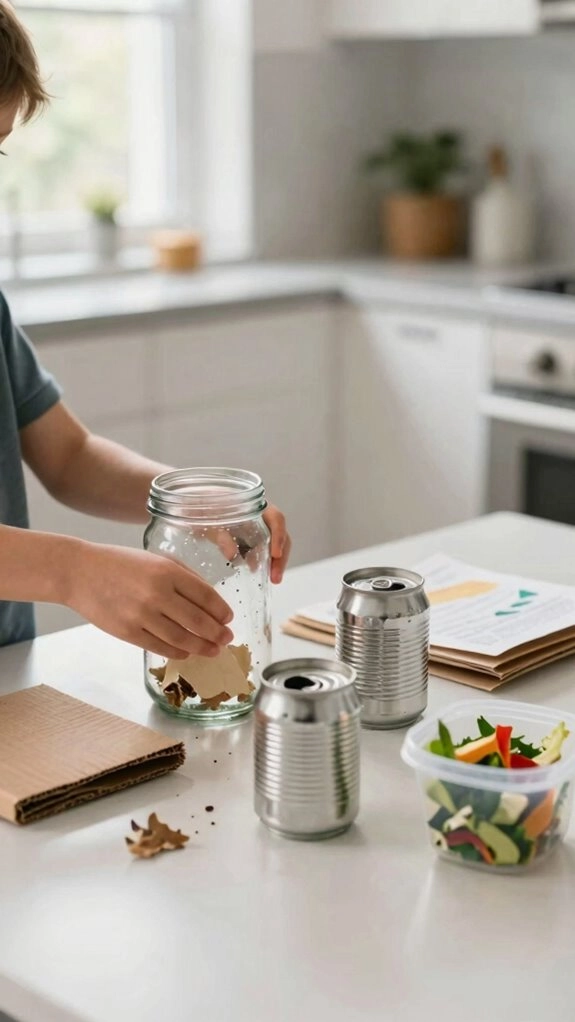
Household chores can become fun learning activities when you invite your child to help. You’re building skills together while showing they belong on the team.
- Wipe tables together. Ask “what do you notice?” during chores. Talk about “feel” and “texture” words while cleaning, such as sticky, smooth, rough, or soft.
- Wash dishes or toys. Count bubbles and rinses. Practice “first next then” sequencing: first soap, next rinse, then dry.
- Set the table with forks, cups, and napkins. Encourage “why do you think” questions about where each item belongs. Your child learns directions, space, and confidence while helping your home run smoothly.
Make Cleanup a Sorting Game
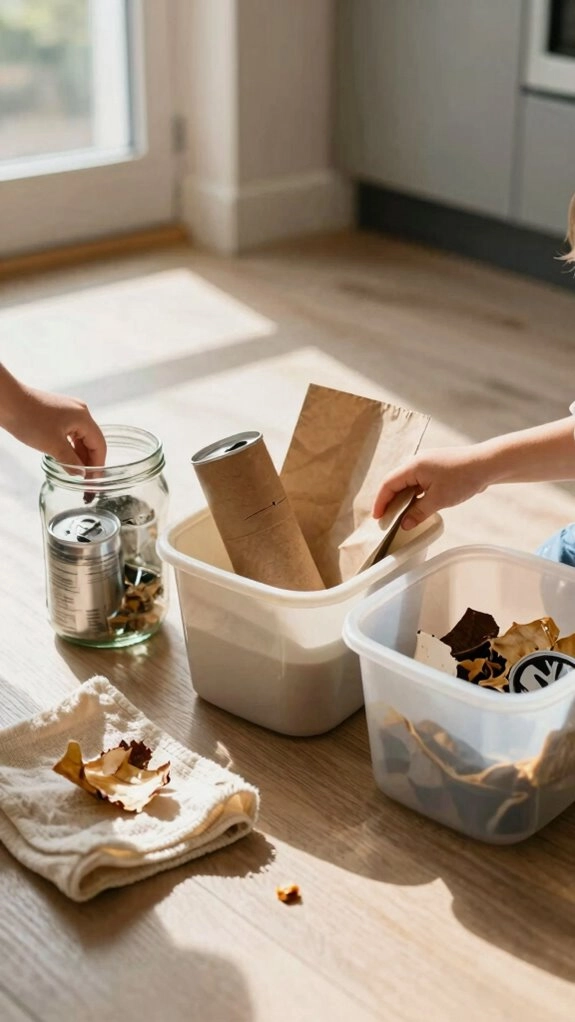
| Rule | Bin One | Bin Two |
|---|---|---|
| Size | Big items | Small items |
| Type | Blocks | Cars |
Start simple, then add more items if your child stays interested. Moving, placing, and counting make cleanup feel useful and fun.
Match Colors and Pairs With Laundry
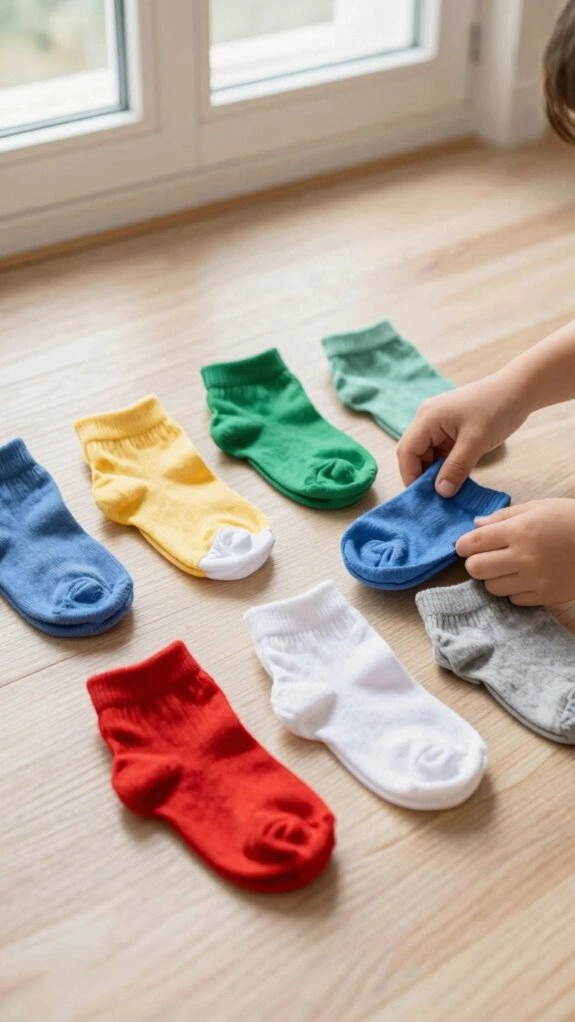
Laundry time can become a simple matching game for your child. You can work together and make every sock feel like part of the team.
- Ask, “Which colors match?” Create piles for whites, lights, and darks. Use red and blue baskets for an extra color clue.
- Match socks and small clothes by stripes, shapes, or plain designs. Talk about what looks the same and different. Ask, “How many types do you see?”
- Set a 10-minute timer to find matching colors. Then count pairs aloud: “You found three blue pairs!” Make finished rows by color before folding. Your child builds confidence while helping your household.
Build Shapes With Household Objects
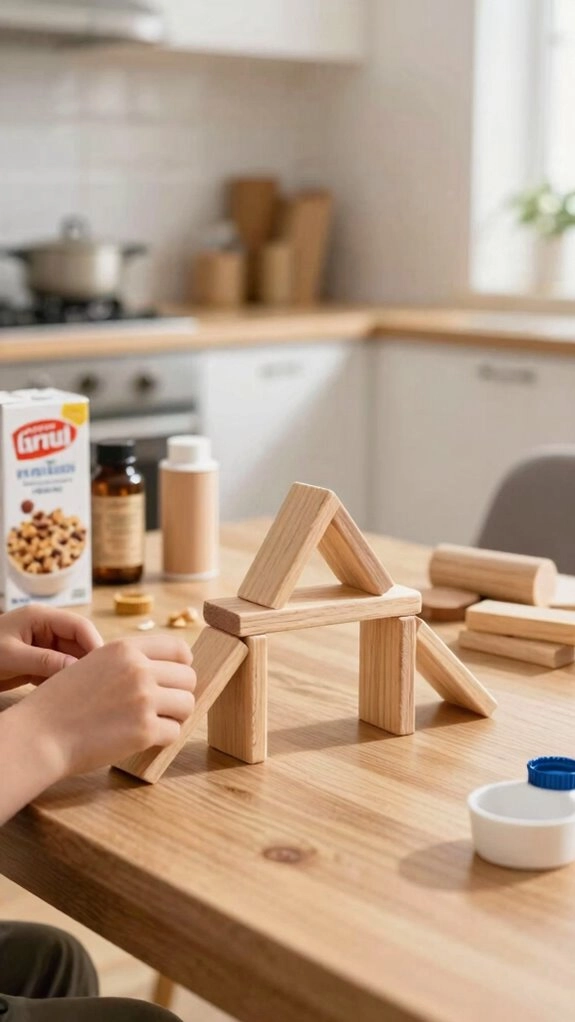
You can turn paper towel rolls, cereal boxes, and plates into a shape town.
Match each object to a circle, rectangle, or triangle spot around your room.
Then build new creations and describe what goes under, next to, or on top.
Shape Building With Household Items
Everyday objects can become a fun shape-building kit in minutes. You and your child can study together.
- Arrange three cereal boxes into a triangle. Use books for a square or rectangle. Ask your child, “What shape do you see?” during play.
- Make color-and-shape groups with red and blue cups. Sort them into circle and rectangle piles afterward.
- Tape shape outlines on the floor for cleanup. Ask your child to find a matching tissue box or picture frame. Compare sizes and say, “same or different?” while organizing toys.
Then invite your child to create a house with a square body and triangle roof.
Everyday Objects, Endless Creations
Once your child builds a house shape, the same objects can become something new.
Invite everyone to use boxes, paper rolls, caps, buttons, and string.
Offer open ended prompts such as “Build a bridge” or “Create a road.”
Ask which pieces make circles, squares, or triangles.
Try Shape sorting by grouping objects, then copying a pattern together.
Notice big and little pieces and what looks the same or different.
Encourage experiments: Does a triangle stand better than a square?
During cleanup, place pieces in labeled cups or bags.
Your child keeps learning while helping the family space feel organized and shared.
Turn Grocery Shopping Into Math Activities
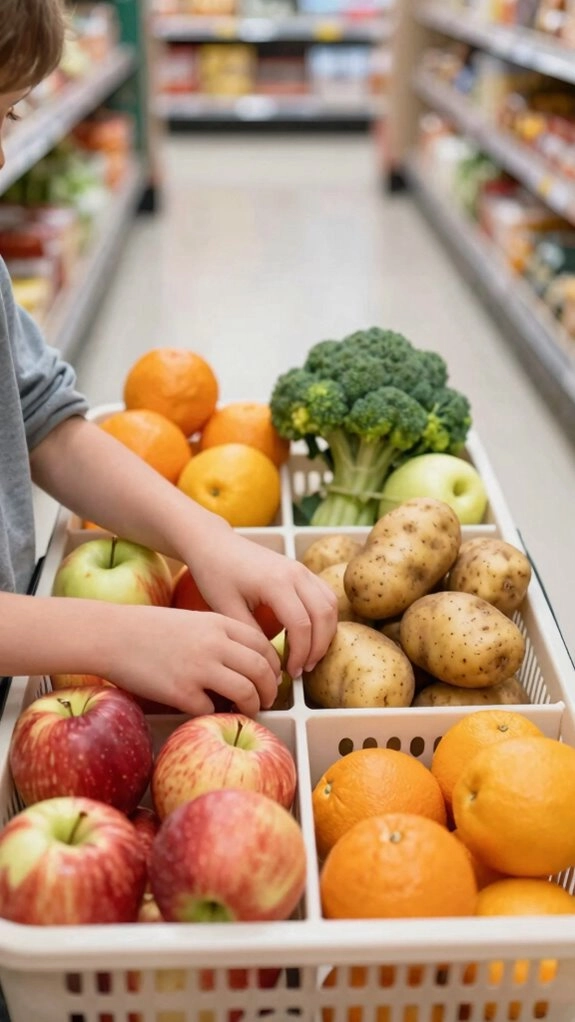
Although grocery shopping may seem routine, it’s full of quick math challenges. You and your child can learn together while choosing Favorite foods.
- Give counting practice: ask them to find five apples or count yogurts. Try number order and ask for one more or one less.
- Sort groceries by color or shape. Group red peppers, green bananas, and round tomatoes before bagging.
- Play price guessing with whole dollars, then check the total. Ask which cereal is heavier and compare sizes between boxes. You’ll build measurement words while helping your child feel like a valued shopping teammate.
Explore STEM Learning While Cooking
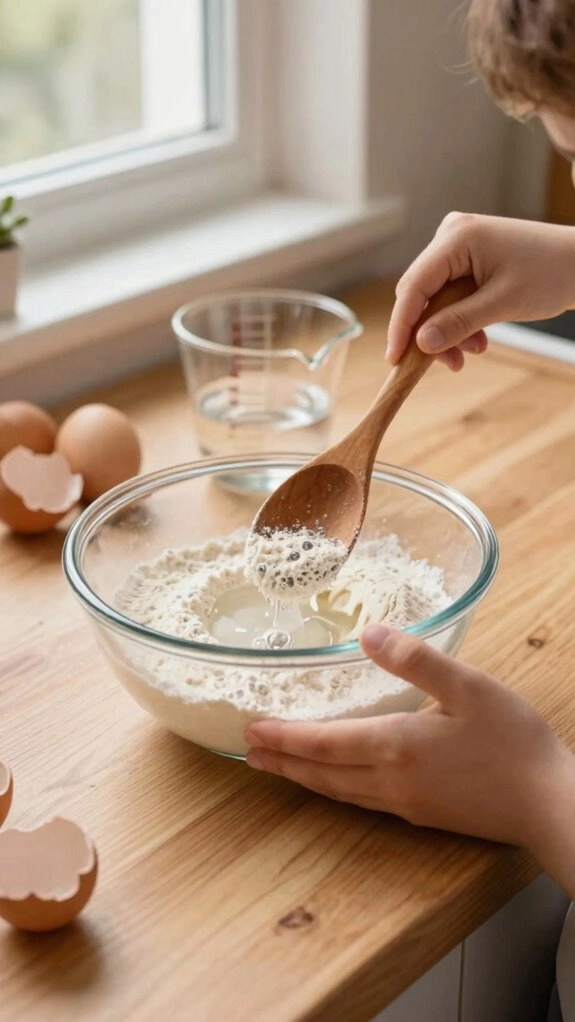
You can measure ingredients to practice fractions, counting, and kitchen vocabulary. Mix dry and wet items, then notice how the batter changes.
Watch food heat up and use a timer to track each minute.
Measure, Mix, And Discover
The kitchen can become a mini science lab when you cook together. You’re part of a team where every scoop and stir matters.
- Use 1/4, 1/2, and 1-cup tools. Practice Fraction talk as you turn scoops into cups and count each measure.
- Whisk ingredients and ask Cause questions: “What happens when we stir longer?” Notice thickness, texture, and color.
- Set a timer for two, five, or 10 minutes. Say “first, next, after that” to build sequencing skills.
After cooking, record totals together. Add 3/4 cup flour and 1/2 cup water. You’ll see how careful measuring helps recipes work reliably.
Observe Changes With Heat
As ingredients warm, your kitchen becomes a place to watch matter change. Invite your child to make temperature guesses as butter melts or chocolate softens.
Take before-and-after photos and describe textures, from grainy to smooth.
Time how long pancake batter cooks, then notice how air bubbles help it rise.
Heat water gently to dissolve sugar, then watch steam form as it gets hotter.
These small experiments help your family feel like a science team.
Keep safety first: hot pans and steam can burn, so observe from a safe distance.
Save paperfolding surprises for cooling time while you talk about what changed.
Practice Fractions While Measuring Ingredients
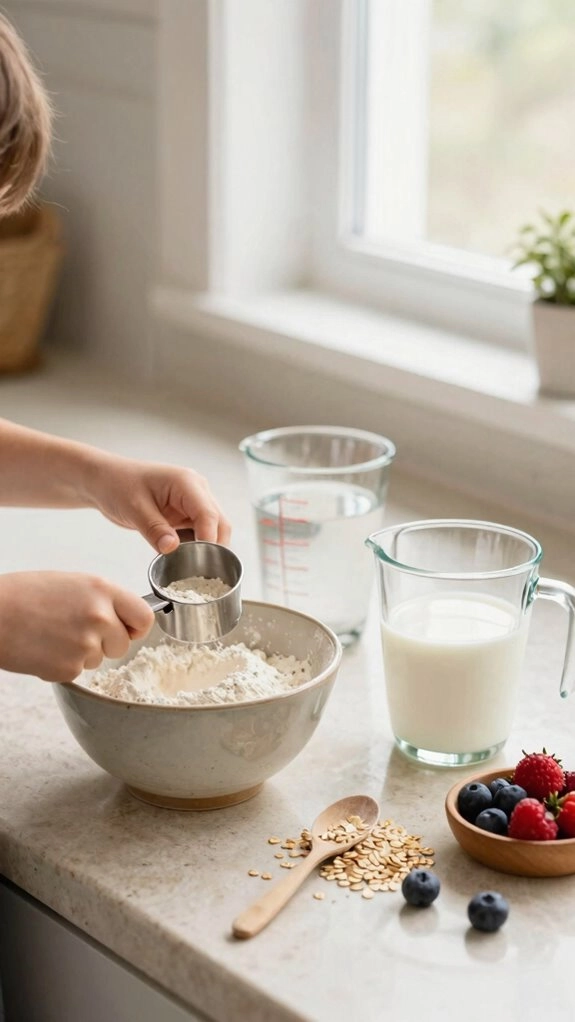
Cooking turns measuring cups into simple fraction tools your child can uncover. Invite them into the kitchen team as you measure.
- Ask about half while filling a cup. Talk about whole cups, then show how two halves make one.
- Compare cup lines for one-half, one-third, and one-fourth. Your child can watch which line holds more or less.
- Count spoonfuls or quarter cups together. Three one-fourth cups build three-fourths of a cup.
You can also build recipes: one-fourth plus one-fourth equals one-half. When you double or halve ingredients, explain how amounts change. Each pour gives your child a hands-on way to belong in cooking.
Ask Questions During Everyday Routines
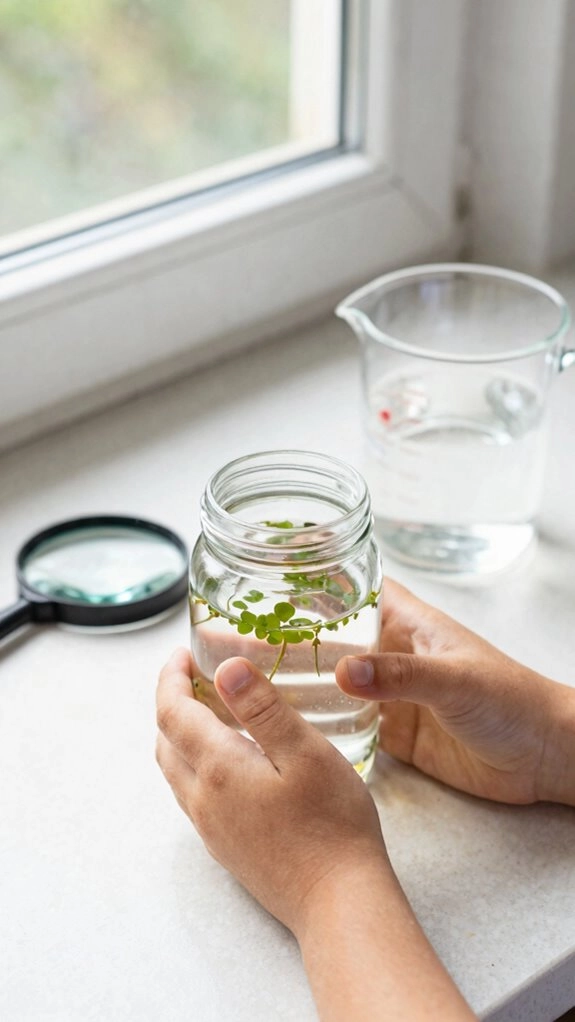
You can turn everyday routines into learning moments by asking simple, curious questions.
While you cook, clean, or shop, ask what your child notices and why.
These small conversations help them think, share ideas, and investigate the world.
Spark Curiosity With Questions
Why wait for a lesson when questions can turn routines into findings? You and your child already share moments worth exploring. Notice and compare as you wash, shop, walk, and tidy together.
- At the sink, ask, “What do you notice?” Which soap bottle is bigger? Name each step: first rinse, then dry.
- While setting the table, ask, “How do you think we should do this?” Let your child explain why.
- On a walk, count signs with letters or spot the most common color. Afterward, ask what changed or felt favorite.
Your questions show your child that their ideas belong in everyday learning.
Encourage Thoughtful Daily Conversations
Everyday routines can become rich conversations when you pause and ask what your child thinks.
While cooking, say, “Let’s measure,” then ask what happens when ingredients mix.
In the car, use why questions about clouds, signs, or where you’re going.
Ask your child to predict next steps while you clean or prepare dinner.
These small chats build a shared word bank and help clear ideas grow.
At bedtime, read together and ask which part they liked most and why.
Invite them to share feelings too.
Your curious questions show that their thoughts matter in your family’s everyday learning.
Use Storytelling to Build Vocabulary
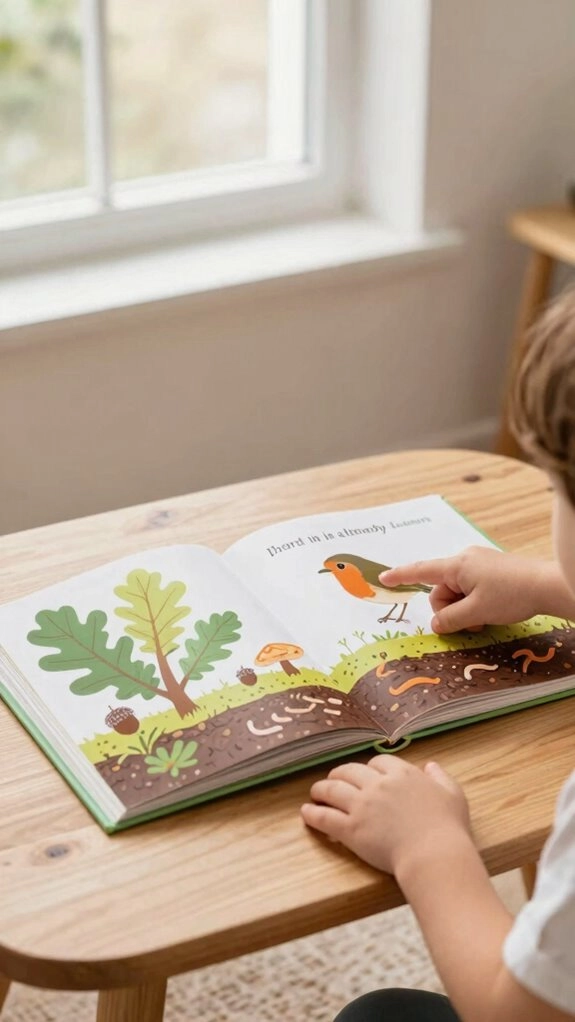
Stories can turn simple routines into exciting chances to learn new words. You and your child can build a shared word bank through everyday adventures.
- While shopping, tell a short story: “We found shiny red apples and chose our favorites.” Add colors, sizes, and feelings.
- Read picture books together. Point to objects and actions, then Ask open ended questions: “What do you think will happen next?”
- Retell a familiar day with fresh details. Encourage mini stories during play by asking, “Tell me about your drawing.”
Each story helps your child use fuller sentences and feel like a confident part of the conversation.
Play Word and Number Games in the Car
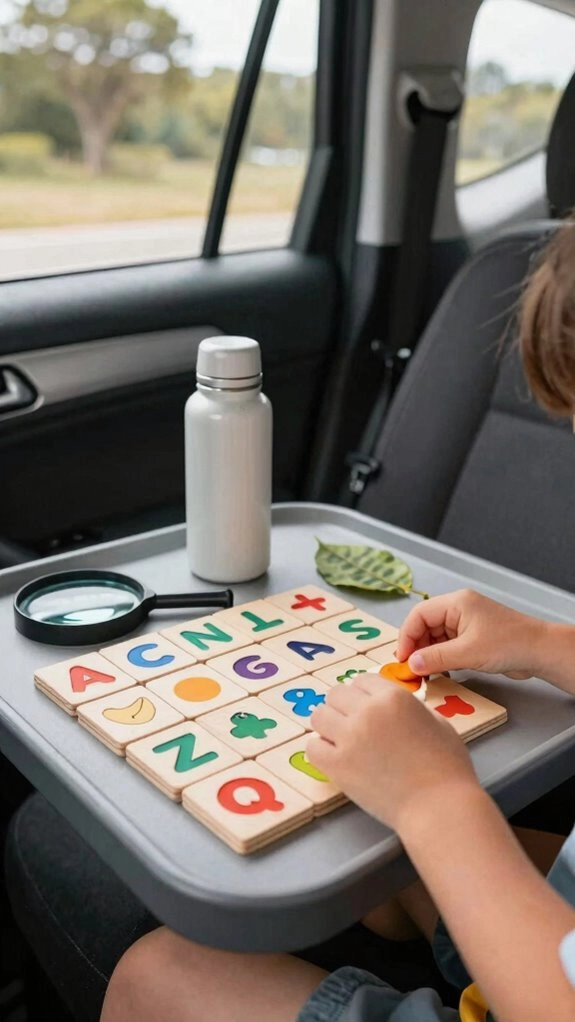
Car rides can become mini learning adventures with simple word and number games.
Try Road sign clues, letter spotting as you travel together.
Find an A on a billboard or name the first letter on a store sign.
You can also start a number hunt.
Count signs from one to ten, then see if you can reach fifteen or twenty.
For a Vehicle count tally, number talk, ask, “How many trucks do you see?”
Count without skipping.
Set a 15-minute timer to keep everyone focused.
Before the ride ends, share the biggest number and favorite letter you found.
Take Nature Walk Learning Activities Outside
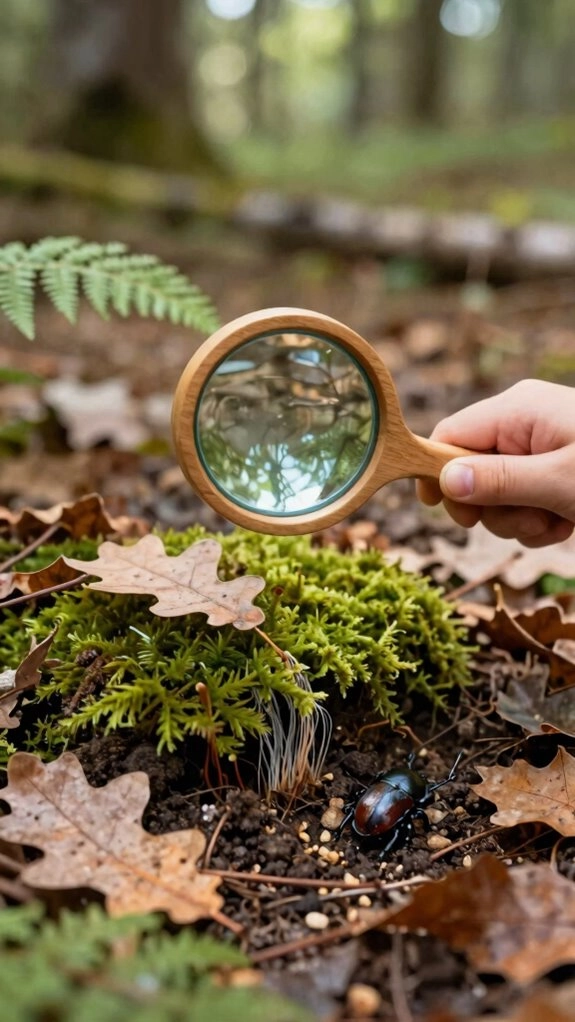
Take a short nature walk and turn it into a scavenger hunt for five simple finds.
You can watch clouds, feel the wind, and compare sunny spots with shade.
When you spot something interesting, say “I wonder why” and make a guess together.
Nature Scavenger Hunts
On your next nature walk, turn each step into a small learning mission. You and your child can discover like a team.
- Find three Leaf shapes, two smooth stones, a feather, and something green.
- Use texture talk: “I found a leaf because it’s bumpy and feels soft.”
- Count items bigger than a shoe and smaller ones. Compare your totals.
Notice season signs, such as changing leaf colors or spider webs near corners.
Look for weather clues like wet spots left behind after rain.
At home, sort your treasures by color, size, shape, or feel.
You’ll build science skills together.
Weather Watching Activities
After your scavenger hunt, let the sky become your next nature clue. Ask, “What’s the weather like today, and why?” Notice sweat, goosebumps, clouds, and moving leaves together.
| Time | Sky | Wind |
|---|---|---|
| Morning | Clear | Calm |
| Afternoon | Cloudy | Breezy |
| Evening | Rainy | Strong |
| Tomorrow | Partly cloudy | Light |
Take a five-minute weather walk. Mark your findings with crayons. Ask, “What signs tell us rain is coming?” Watch clouds build and grass lean. Count gusts for one minute. With an adult, place a small container outside for ten minutes. Compare collected water, then add three daily symbols to your weather chart.
Backyard Science Discoveries
Why wait for a special trip when your backyard holds science clues? You can investigate like a real scientist right where you belong.
- Take a 10–15 minute insect survey. Tally ants, beetles, and butterflies on scrap paper. What did you notice, and why?
- Fill a shallow container with water. Predict whether leaves, twigs, and pebbles will float or sink. Record each result. How are your predictions different?
- Become a leaf detective. Collect three to five leaves and sort them by smooth or jagged edges. Compare oval, long, and round shapes.
You can also check sun, clouds, and ground warmth. Small observations help your science team learn together.
Try a Sink-or-Float Science Activity
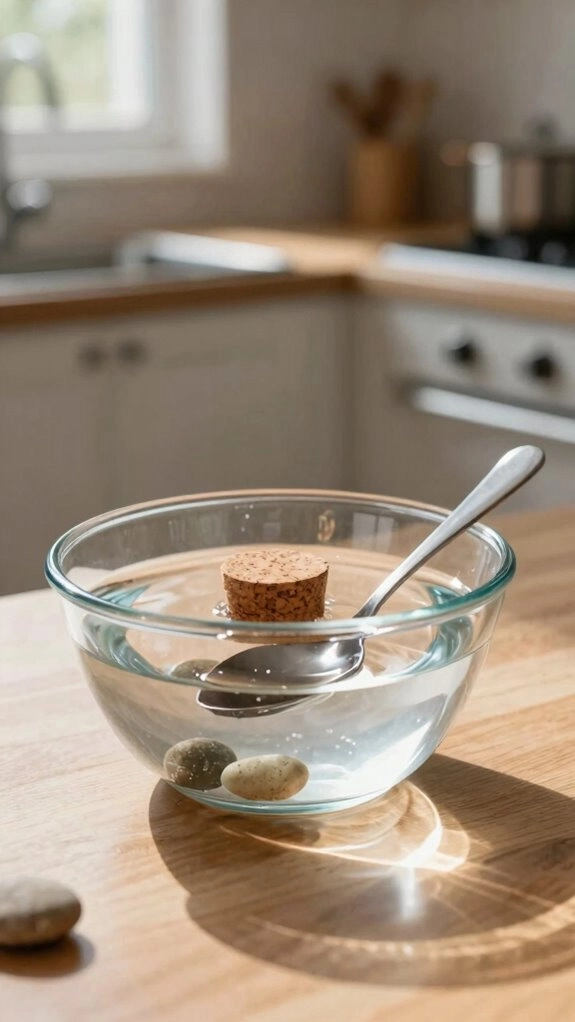
A sink-or-float test turns a simple bowl of water into a science lab.
Gather a plastic spoon, coin, button, cork, and other safe objects.
Before each test, ask your child to guess what’ll happen.
“Compare predictions, notice patterns” as each item lands in the water.
Explain that less-dense objects usually float, while denser ones sink.
Test similar items, such as two coins or two plastic pieces.
Their shape and surface area can matter too.
Sort everything into “floats” and “sinks” together.
Then change one thing, like water temperature or an item’s weight.
“Talk about why, try again” and celebrate every finding.
Create Art Activities With Recycled Materials
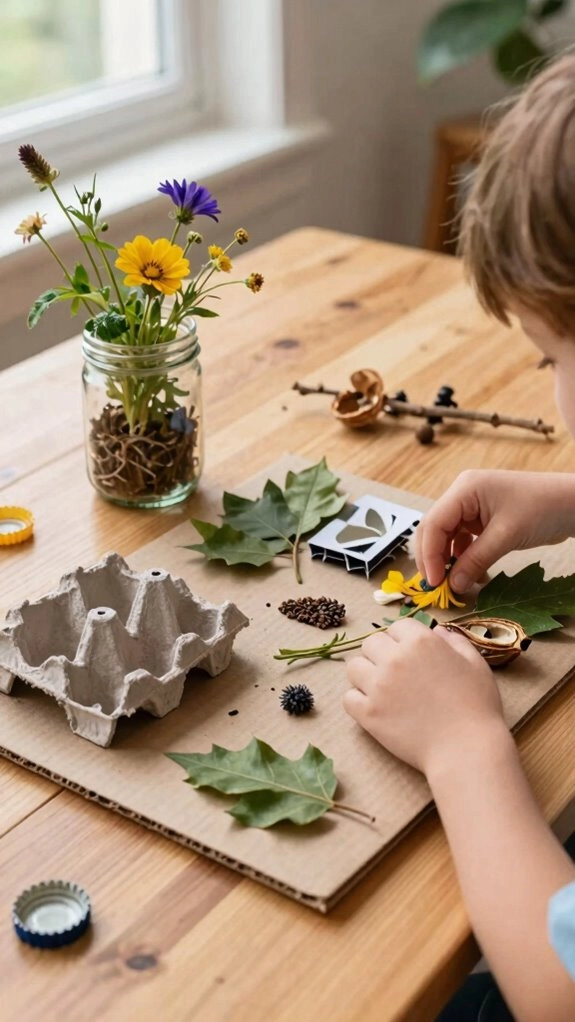
Turn a cardboard box into a castle, robot, or miniature town with your ideas.
Create bottle cap art by sorting caps by color and arranging them into pictures.
You’ll build fine-motor skills while making something bright and original.
Cardboard Box Creations
Cardboard boxes can become castles, cars, robots, or anything you imagine. Save clean boxes and invite your child to build first, decorate second. You’ll create together and uncover that everyone’s ideas belong.
- Make a tall tower or a bridge that fits a favorite book.
- Cut windows and doors, then add string pulls or paper-fastener wheels.
- Use markers, stickers, yarn, and tape to talk about textures and compare sizes.
Folding, taping, and gluing strengthen small hand muscles. Make storytelling part of play by giving each creation a job. Ask your child to describe feelings as their robot or house comes alive.
Bottle Cap Art
With a few clean bottle caps, you can create bright patterns and pictures from everyday materials.
Gather caps with your family or classmates, then sort them by color or size.
Pick up each cap and place it carefully to build strong finger skills.
Dip caps lightly in washable paint, press them onto paper, or trace around them with markers.
You can also use glue or dough for raised designs.
Try pattern naming as you work: “red-blue-red.”
Count caps in each part of your picture.
Practice Texture notice by comparing glossy and matte caps.
Watch how paint or glue changes as it dries.
Your recycled art belongs in your shared creative space.
Choose Interactive Screen Learning Activities
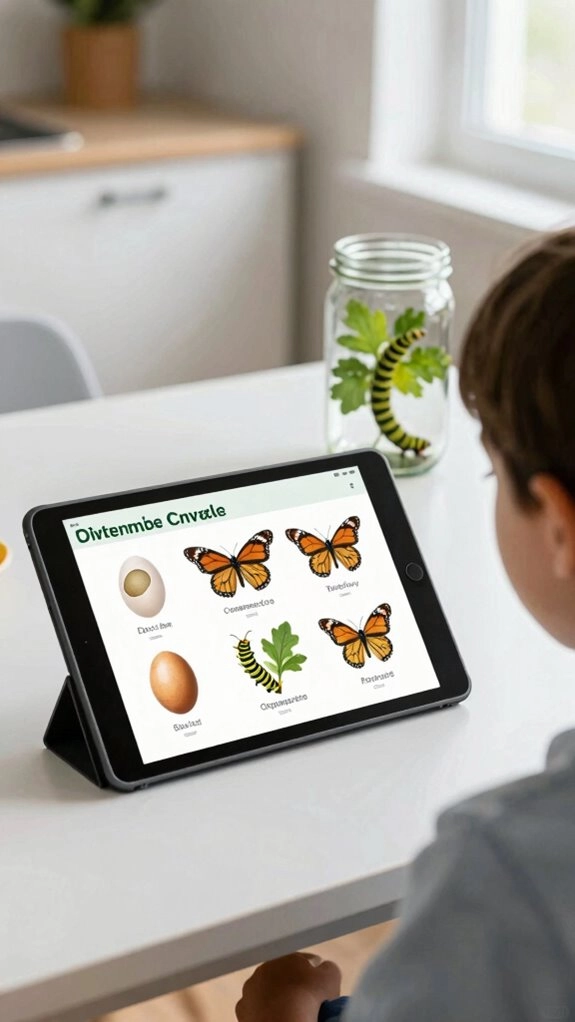
Interactive screen time can build real skills when your child takes part. Choose apps that match what they’re learning in school and help them feel included.
- Ask what feels fun, then try coding games, flashcards, or math challenges.
- Practice screen choices with a short 15-minute challenge, not endless watching.
- Discuss tapping dragging, answering, building, and creating. Compare favorite games and notice which ones teach useful skills.
If a screen activity feels too busy, switch to reading together or talking while cooking. You’re helping your child build balanced habits while joining a community of curious learners.
Keep Learning Activities Fun and Low-Pressure
Keeping learning light helps your child stay curious and confident.
Try a daily 15–20 minute timer challenge that feels like a game, not a test.
Your family can sort toys by color, trace letters in sand, or count ingredients while cooking.
Small routines matter more than perfect lessons.
Ask Storytime questions before bed and use curiosity prompts on walks or car rides.
Add problem solving talk when something needs fixing.
Give playful explanations for new words and ideas.
Choose coding games or digital flashcards over passive scrolling.
When you learn together, your child builds skills, a bigger word bank, and a stronger sense of belonging.