






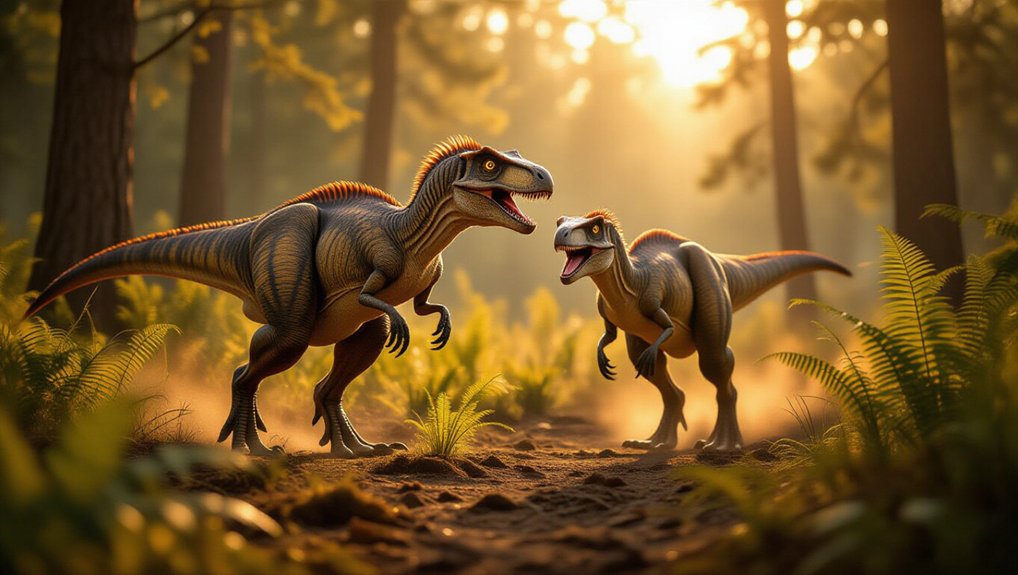

Raptor dinosaurs were fast, smart meat-eaters that used sharp claws and sharp senses to hunt. They walked on two legs, had three-fingered hands, and a huge curved claw on each hind foot. Many had feathers and light, hollow bones, which helped them move quickly and quietly. Famous raptors like Velociraptor, Deinonychus, and Utahraptor showed great variety in size and style. There is still much more to uncover about how these fierce hunters lived and survived.
- Key Takeaways
- What Defines Raptor Dinosaurs Classification and Features
- Evolution and Distribution Across Continents
- Famous Species Velociraptor Deinonychus and Others
- Anatomy of Hunters Powerful Claws and Skeletal Structure
- Hunting Behavior and Prey Selection Strategies
- Social Behavior Evidence for Pack Hunting Theory
- Feather Discovery and Modern Interpretations
- Extinction and Fossil Record Significance
- Frequently Asked Questions
Key Takeaways
- Raptor dinosaurs (dromaeosaurs) were agile, birdlike predators with hollow bones, feathers, and sharp senses that made them highly effective hunters.
- Their trademark weapon was a large curved sickle claw on each hind foot, used mainly to grip and pin struggling prey.
- Strong legs, lightweight bodies, and bipedal running allowed rapid bursts of speed and precise maneuvering during hunts.
- Evidence from trackways and fossil sites suggests some raptors may have hunted in coordinated groups, though true pack hunting is still debated.
- Species like Velociraptor, Deinonychus, Microraptor, and Utahraptor show wide variety in size and hunting style, from gliding ambushers to powerful large-bodied attackers.
What Defines Raptor Dinosaurs Classification and Features
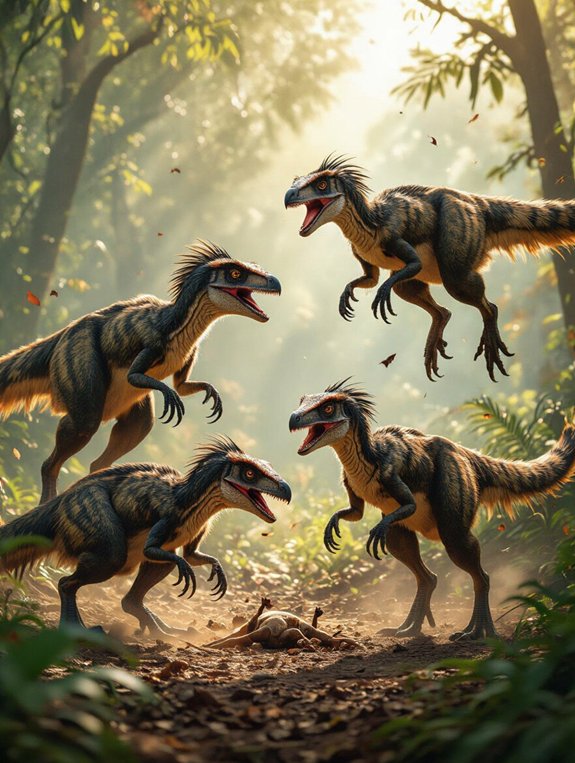
Raptor dinosaurs, also called dromaeosaurs, stand out because of several special body features. Scientists use raptor characteristics as classification criteria to decide what counts as a raptor. They look for three-fingered hands that could grip or hold struggling prey. They also look for a huge curved claw on each hind foot used for slashing. Many raptors had feathers and hollow bones which connect them to modern birds. Size does not matter much for classification. Members range from tiny Microraptor to huge Utahraptor. Sharp senses and clever hunting behavior complete their formidable predator design.
Evolution and Distribution Across Continents
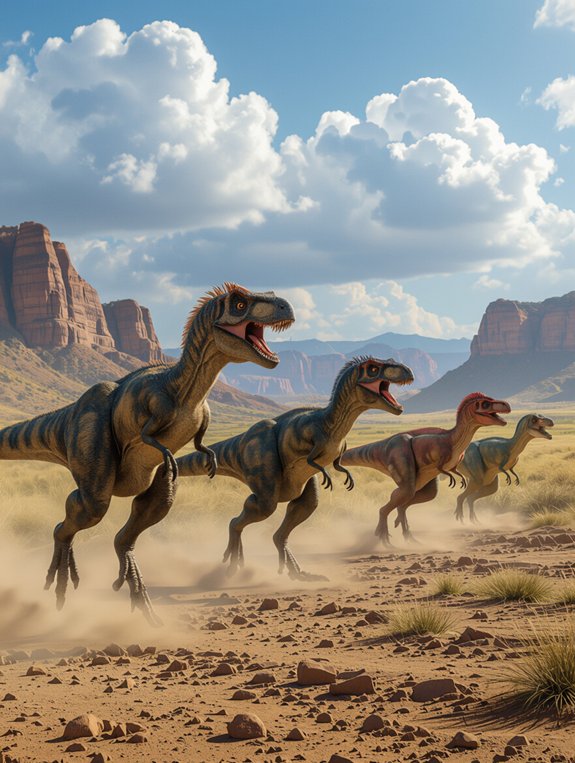
Although they lived millions of years ago, these swift hunters did not stay in one place. Raptor dinosaurs spread across many lands during the Cretaceous period. Fossils show early dromaeosaurs over 100 million years ago on several continents. Scientists see patterns that hint at continental migrations as landmasses slowly shifted. Raptors carried significant evolutionary modifications for hunting such as strong legs and grasping claws. These traits helped them survive in new habitats and climates. Finds from North America, Europe, and Mongolia reveal shared features. Vectiraptor greeni from England adds another piece to this global family story.
Famous Species Velociraptor Deinonychus and Others
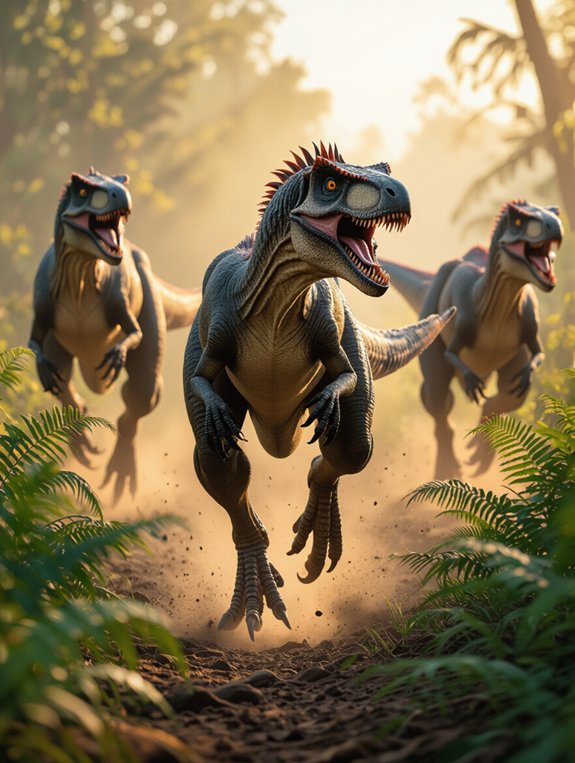
Dinosaur fans often hear a lot about Velociraptor, Deinonychus, and their fierce relatives. Velociraptor myths often show it huge and scaly, but real fossils tell another story. It was turkey sized, light, and likely feathered, hunting in ancient Mongolia. Deinonychus features include a mighty build and deadly sickle claws on each foot. These claws helped it grab and weaken struggling prey during Cretaceous hunts. Other raptors add more variety and wonder. Microraptor glided with four feathered wings. Achillobator and giant Utahraptor show the group’s amazing range in size.
Anatomy of Hunters Powerful Claws and Skeletal Structure
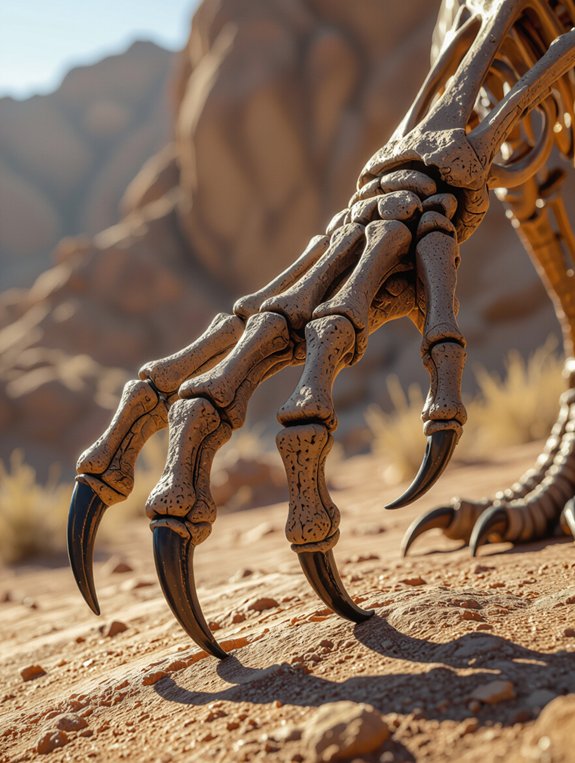
Sharp claws and light bones turned these “raptor” dinosaurs into fast and deadly hunters. Their long sickle claws reached about 6.5 centimeters and curved like hooks. Claw mechanics show these weapons gripped and held struggling prey tight. They were not slicing guts open like in many movies. Raptors walked on two toes and held the big claw off the ground. This kept it sharp and ready for action. Their skeletal adjustments included hollow bones that lowered weight and boosted speed. Three-fingered hands and relatively large brains supported quick movements and flexible problem solving.
Hunting Behavior and Prey Selection Strategies
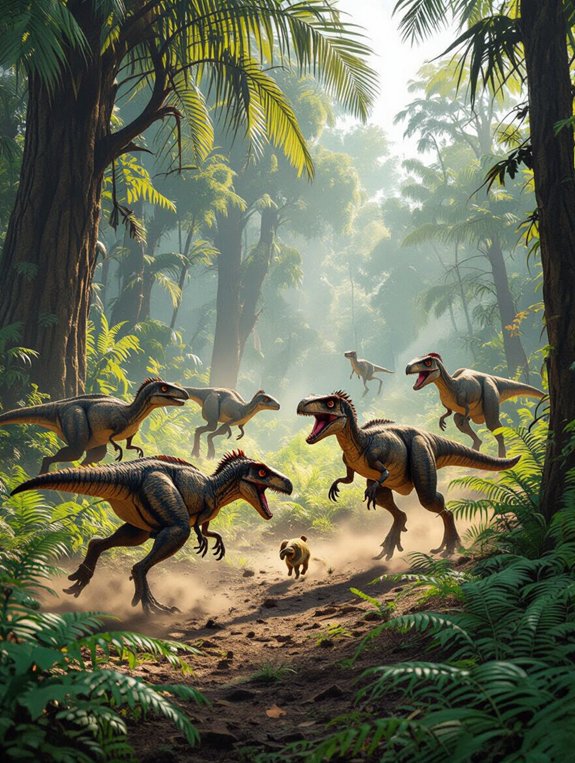
Their special claws and light bones did more than shape their bodies. They guided how velociraptors chose targets and attacked. These raptors used clever hunting tactics, testing prey interactions in each encounter. They often focused on smaller dinosaurs like Protoceratops. Surprise attacks mattered. A raptor could spring forward and drive its three‑inch hind claw into struggling prey. Many scientists think the claw gripped and pinned, like a bird’s talon. A famous fossil shows a velociraptor locked in combat with a Protoceratops, proving fierce close‑range attacks. Their sharp minds helped them plan, stalk, and outthink weaker animals.
Social Behavior Evidence for Pack Hunting Theory
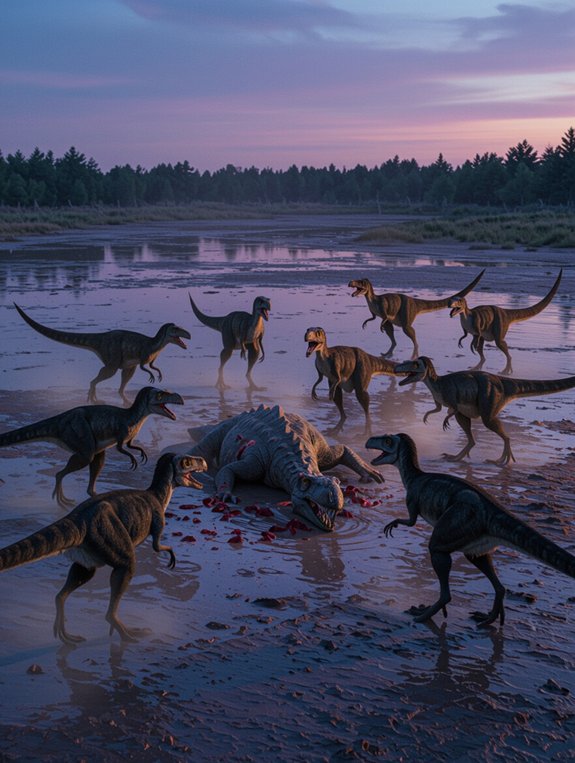
Although scientists know a lot about velociraptor bodies, they still wonder how these animals behaved together. Some paleontologists see clues that hint at social interactions. Tracks from several dromaeosaurs moving side by side suggest small herds. This makes scientists imagine shared paths and possible cooperative strategies.
| Evidence Type | What It Shows | Possible Meaning |
|---|---|---|
| Trackways | Multiple raptors together | Group movement |
| Combat fossil | Clash with Protoceratops | Risky teamwork |
| Anatomy | Speed and claws | Suits coordinated attacks |
| Intelligence | Problem solving | Planning hunts |
| Debate | Limited proof | Theory stays open |
Pack hunting remains unproven yet inspiring.



Feather Discovery and Modern Interpretations
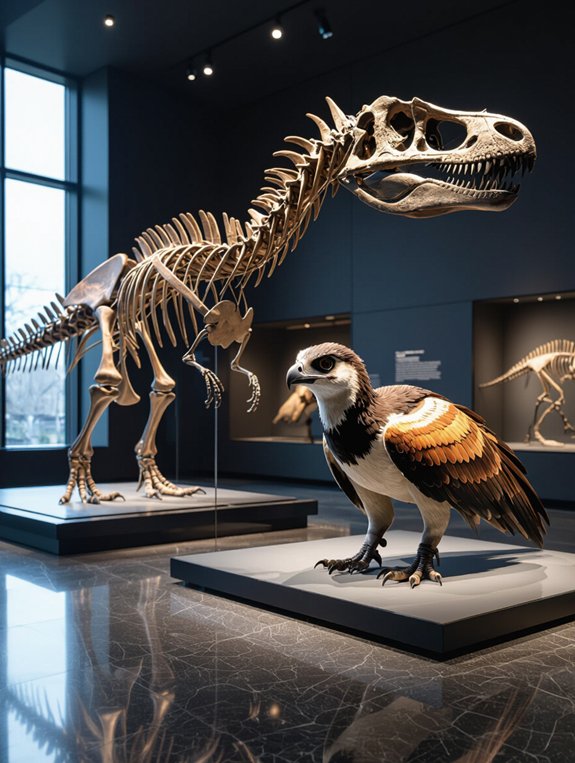
Long before movies showed them as scaly monsters, raptor dinosaurs were actually covered in feathers. Scientists uncovered quill knobs on Velociraptor arm bones. These marks match places where strong feathers attached. These feather modifications likely kept raptors warm and helped protect their nests. Some experts think bright colors and patterns supported display behaviors. Raptors may have lifted their arms or tails to signal strength or attract mates. Evidence from related species shows feathered raptors were common, not rare. This revelation brings raptors closer to modern birds of prey and reshapes how people imagine them.
Extinction and Fossil Record Significance
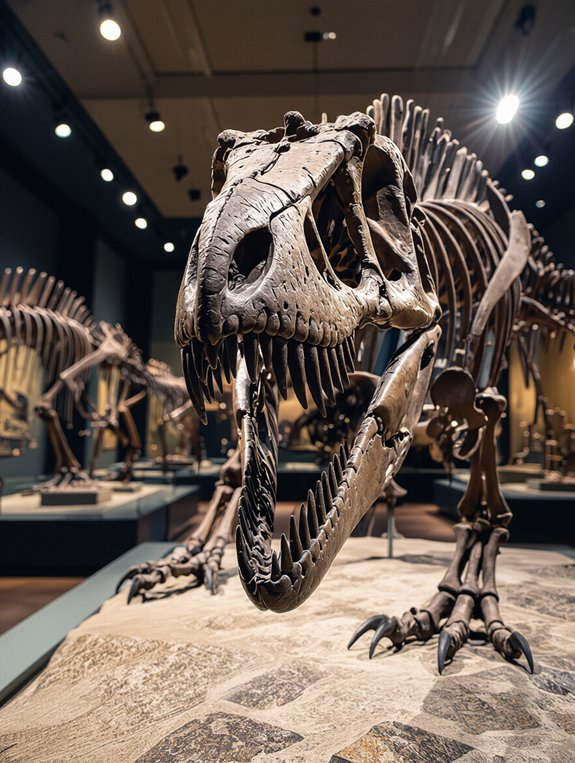
Even after raptor dinosaurs vanished, their fossils kept their story alive in the rocks. Dromaeosaurs like Velociraptor thrived until the late Cretaceous extinction ended their rule. Rapid burial during sandstorms acted like natural fossil preservation techniques and protected bones. These fossils let scientists investigate raptor bodies and hunting styles in careful detail. The famous Velociraptor fighting Protoceratops fossil shows a deadly struggle frozen in time. Bambiraptor and Vectiraptor greeni fossils reveal feathers and worldwide diversity. Together they show raptors’ ecological implications as active predators and bird relatives.
Frequently Asked Questions
How Accurately Do Movies Portray Raptor Dinosaur Intelligence and Behavior?
Movies exaggerate raptor intelligence and dinosaur behavior; film accuracy wavers like a mirage on hot sand. Viewers share a bond in awe, yet real raptors were likely clever predators, not door-opening, hyper-coordinated pack strategists.
Did Raptor Dinosaurs Communicate With Sounds, Colors, or Body Language?
Yes, they likely communicated through vocalizations signals, vivid color patterns, and expressive body language. Evidence from birds and fossils suggests calls, feather displays, and posture helped coordinate hunting, warn of danger, and maintain close-knit social bonds.
How Do Scientists Safely Excavate Delicate Raptor Dinosaur Fossils?
Scientists carefully expose delicate raptor fossils using fine excavation tools, brushes, and dental picks, then stabilize them with consolidants and plaster jackets—fossil preservation techniques that protect each shared revelation for the whole community of learners and researchers.
Could Raptor Dinosaurs Regulate Body Temperature Like Modern Birds or Mammals?
Yes, many researchers think raptors had bird‑like thermoregulation strategies; isotope studies suggest some dinosaurs kept body temperatures near 37°C. Their metabolic modifications likely supported active lifestyles, hinting at warm‑blooded traits that connect them closely to modern birds and shared ancestry.
What Role Do Amateur Fossil Hunters Play in Discovering Raptor Dinosaur Remains?
Amateur fossil hunters expand search efforts, often spotting raptor remains professionals might miss. Through careful fossil identification, ethical collecting, and collaboration with museums, they contribute meaningful findings while joining a shared community that protects and interprets ancient life together.