
22 Fascinating Facts About Jumping Spiders
- 22 Fascinating Facts About Jumping Spiders
- Key Takeaways
- What Are Jumping Spiders Physical Description Overview
- Jumping Spider Family Salticidae Over 6000 Species
- Vision and Eyes Jumping Spider Extraordinary Sight
- Jumping Spider Eye Pattern Four Pairs Identification
- Hunting Behavior Active Predators During Daylight
- Jumping Ability Remarkable Distance and Height
- How Jumping Spiders Catch Prey Tactics Strategy
- Jumping Spider Hydraulic System Leg Extension
- Dragline Silk Safety Line and Jumping Mechanics
- Jumping Spider Courtship Colorful Mating Displays
- Sexual Dimorphism Jumping Spider Male Female Differences
- Jumping Spider Defense Mechanisms Escape Strategies
- Common Species Bold Jumping Spider Phidippus Audax
- Jumping Spider Habitat Distribution Worldwide Locations
- Molting Instars Growth Stages Development Cycle
- Diet and Feeding Jumping Spider Prey Selection
- Web Building Jumping Spider Retreat Construction
- Jumping Spider as Pets Care Guide Requirements
- Lifespan and Life Cycle Jumping Spider Timeline
- Behavioral Patterns Daily Activity and Hunting Routines
- Communication Jumping Spider Visual Signals Methods
- Future Research Jumping Spider Cognition and Intelligence
- Frequently Asked Questions
- Can Jumping Spiders Pose Any Health Risk to Humans?
- Do Jumping Spiders Hibernate in Cold Climates?
- Can They Recognize Individual Humans or Faces?
- How Do Juveniles Learn Hunting Techniques?
- Are There Any Venomless Jumping Spider Species?
Jumping spiders are small active hunters with bright eyes and strong bodies. They belong to the Salticidae family with over six thousand species worldwide. Their large front eyes give sharp vision and depth perception. They stalk prey by day and spring with precise jumps using a silk safety line. Males perform colorful dances to attract females. Young spiders grow by molting through several stages. They live about a year in nature. Investigate more to uncover their clever behaviors and surprises.
Key Takeaways
- Jumping spiders (Salticidae) are tiny, compact hunters with excellent vision from a large central eye pair and nearly 360° overall sight.
- They stalk and pounce on prey using precise depth perception, often anchoring themselves with a silk safety line during jumps.
- Over 6,200 named species in roughly 700 genera inhabit nearly every environment worldwide except extreme polar zones.
- Males perform colorful, elaborate dances and leg-waving courtship displays while females assess mate fitness.
- Young spiders molt through multiple instars; adults typically live about one year and require frequent meals due to high metabolism.
What Are Jumping Spiders Physical Description Overview
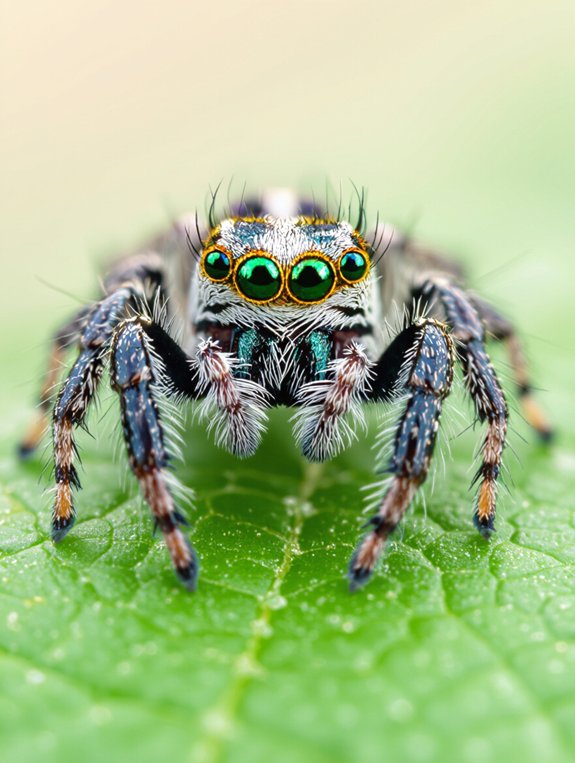
A small, sturdy creature, the jumping spider measures about 1/8 to 3/4 inch long. It has a compact, strong body that feels solid and able. Coloration patterns vary widely. Many are black, brown, or gray with bright marks that hide or signal. Eyes are large and forward facing. Eight eyes sit in neat rows for sharp vision and motion detection. Legs are short, thick, and muscular. These leg modifications let it jump far and land precisely. The overall build helps it hunt and investigate. Readers can feel connected to its clever, active presence in nature.
Jumping Spider Family Salticidae Over 6000 Species
The jumping spider family Salticidae is huge and full of variety. It has roughly 700 genera and over 6,200 named species. This family makes up about 13 percent of all spiders. Such species diversity means many colors, shapes, and sizes exist. They live nearly everywhere except extreme polar zones. Tropical places hold many kinds. These spiders do not rely on webs to hunt. Instead they use strong jumps and clear sensory tools as evolutionary modifications for catching prey. The largest, Hyllus giganteus, reaches about 25 mm. Readers who love nature can feel part of this broad spider family.
Vision and Eyes Jumping Spider Extraordinary Sight
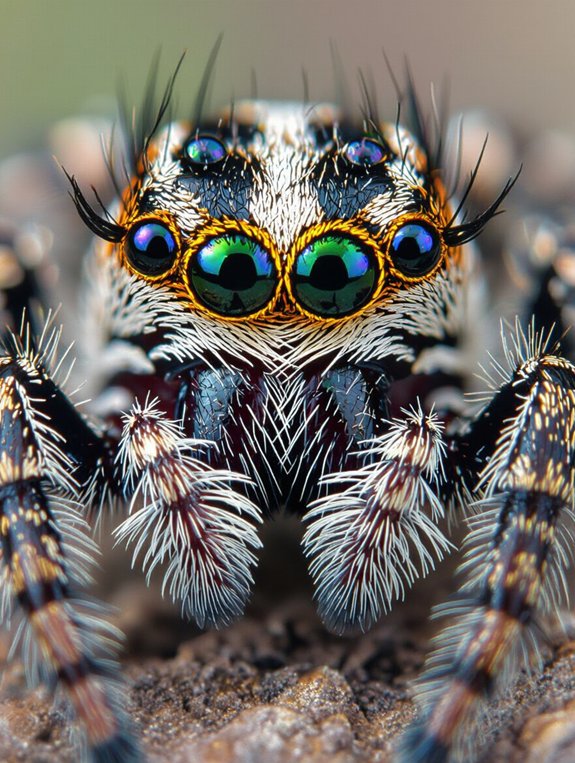
Tiny lenses and sharp nerves make jumping spider sight truly remarkable to study. The spider shows eye modifications that enable bright color and UV vision. It uses a large central pair for detail and movable focus. Side eyes watch for motion and danger. Together they create nearly 360 degrees of view. Visual acuity is high for such small animals. This helps find prey and stay safe. The reader feels part of exploration and learning about these clever hunters.
| Eye Type | Function | Strength |
|---|---|---|
| Anterior median | Detail, color | High |
| Anterior lateral | Motion | Fast |
| Peripheral | Wide view | Broad |
Jumping Spider Eye Pattern Four Pairs Identification
From the clear images made by their front eyes it makes sense to look next at the whole eye pattern. The spider has four pairs of eyes in a unique eye arrangement. Two large front middle eyes give sharp detail and color. Two side front eyes spot motion and wide scenes. The back eyes stay fixed and add depth. Sizes and places of these eyes vary by group. That variation helps species identification. Learners can study photos and count eye sizes and positions. This small step welcomes curious readers into shared exploration about these clever little hunters.
Hunting Behavior Active Predators During Daylight
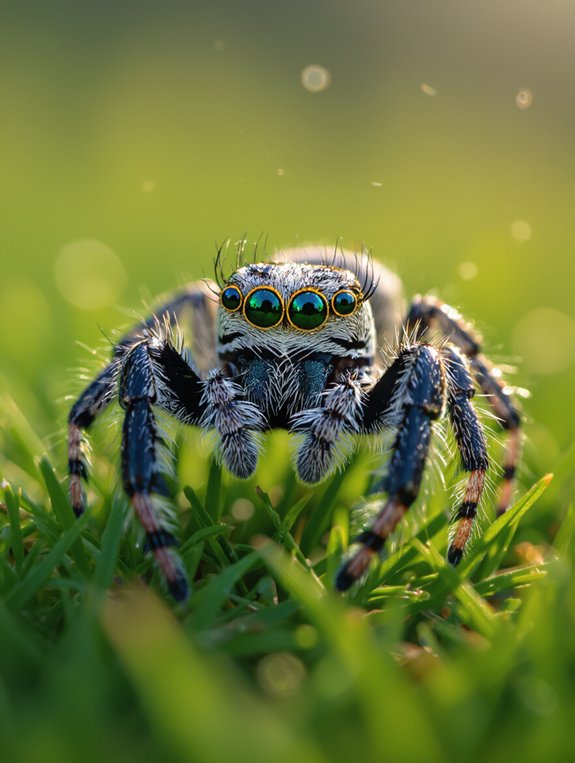
Watch as a jumping spider stalks its prey in bright daylight. It uses daytime hunting and sharp vision to find insects from afar. It moves slowly and carefully. It does not build a web to catch food. Instead it uses predator strategies like stalking and sudden pouncing. Silk serves as a safety line for balance during leaps. Its diet often includes flies, beetles, and mosquitoes. Some species also nibble plant material. The spider’s actions invite curious observers to feel part of nature and learn. Simple steps show how steady watching reveals clever hunting skills.
- Vision-based spotting
- Stalk-and-pounce method
- Silk safety line
Jumping Ability Remarkable Distance and Height
Many jumping spiders can leap an astonishing distance, sometimes up to fifty times their body length. They move with a simple, strong system that uses hemolymph pressure. This offers efficient jumping mechanics and good energy efficiency for quick escapes and travel. The spider plans a jump, tests distance with silk, then releases a burst of pressure. Their leaps help them join a group that investigates together and feels safe. Simple facts show wonder and belonging in nature.
| Trait | Note |
|---|---|
| Max reach | 50× body length |
| Human equivalent | ~800 feet |
| Energy source | Hemolymph pressure |
How Jumping Spiders Catch Prey Tactics Strategy
After perfecting their spectacular leaps, jumping spiders use sight and stealth to catch food. They spot targets from afar and plan moves with care. Their hunting efficiency comes from sharp eyes, quiet stalks, and fast pounces. They choose prey by size and risk to match their strength. Some sneak into other spiders’ webs to steal food. Upon contact they bite quickly to immobilize insects. This method keeps the group safe and proud of shared wonder.
- Stalk quietly, judge prey selection, then leap.
- Use vision, close distance, bite fast.
- Steal when needed, modify tactics for success.
Jumping Spider Hydraulic System Leg Extension
Jumping spiders utilize their leaps with a clever hydraulic trick that moves their legs. The spider uses a hydraulic mechanism that shifts hemolymph to push limbs outward. Muscles squeeze to force the fluid into leg chambers. Pressure rises and leg propulsion launches the spider up to many body lengths. Segmented legs add strength and bend where needed. This system is quick and strong for hunting and escape. The explanation helps readers feel part of a curious group who love nature. Simple parts work together so the jump is both precise and forceful for survival.
Dragline Silk Safety Line and Jumping Mechanics
A thin silk thread trails behind the spider as it prepares to leap and land. It uses dragline silk as a safety line. The silk holds tension and guides direction mid-air. Legs push quickly and hemolymph pressure adds force. The spider steadies itself and can stop a jump if needed. This helps it land safely and learn from each try.
- It spins a quick dragline silk to steady jumps.
- Silk tension lets it steer during jumping mechanics.
- The line acts as a safety net to prevent reckless landings.
Jumping Spider Courtship Colorful Mating Displays
Silk lines help spiders land and investigate safely, but courtship uses a different kind of show. Males perform courtship rituals with bright fans and careful steps. They wave colorful leg extensions and pulse their bodies. Females watch and decide if a male is fit. The mating dances can include buzz-like vibrations felt on sensory hairs. Shows may last up to an hour as interest guides timing. The scene invites community and shared wonder about nature.
| Move | Signal | Purpose |
|---|---|---|
| Leg wave | Visual | Attract attention |
| Vibration | Auditory | Communicate fitness |
| Pause | Posture | Test response |
Sexual Dimorphism Jumping Spider Male Female Differences
Bright colors and elaborate legs help tell males and females apart in many species. Males show vivid patterns and plumose hairs. Females are usually duller and larger. Male courtship uses big front legs and dances to attract mates. Female selection is calm and careful. Communities of learners can feel welcome studying these traits.
- Males: bright, smaller, showy displays.
- Females: larger, choose carefully, less showy.
- Behavior: dances, visual and sound cues, selection favors best displays.
This clear split helps nature balance roles and invites curiosity about spider lives.
Jumping Spider Defense Mechanisms Escape Strategies
Because they must survive in a world full of bigger animals, jumping spiders use smart tricks to escape danger. They spot threats early with sharp eyesight and plan an escape. Some freeze and rely on camouflage techniques to blend into leaves or bark. Others leap far using strong back legs and a silk dragline that acts like a safety tether. The dragline helps them control landings and climb back quickly. Some species mimic insects or surroundings to avoid notice. These behaviors show simple, clever predator avoidance. Observing them teaches patience and belonging in the shared web of life.
Common Species Bold Jumping Spider Phidippus Audax
After learning how jumping spiders escape danger, it helps to meet one common type up close. The bold jumping spider Phidippus audax is familiar to many people. It shows bright markings and strong spider modifications. Adults are small but leap far to catch prey. They hunt with sharp vision and do not build webs to trap food. Males perform dances to attract mates. They usually avoid people and bites are mild. This species makes observers feel welcome in nature.
- Size and look
- Hunting and vision
- Courtship and behavior
Jumping Spider Habitat Distribution Worldwide Locations
Jumping spiders live almost everywhere on Earth and surprise many people with their range. They show remarkable habitat diversity and can be found in tropical and temperate forests. They also live in deserts, scrublands, and near tides. Some even climb high slopes and reach great altitudes. People find them in homes where they help control insects silently. This wide spread shows strong ecological flexibility and resilience. The spider’s small size helps it investigate many places. Readers are invited to feel connected to nature by noticing these spiders nearby. They belong to a lively global family of hunters.
Molting Instars Growth Stages Development Cycle
When a young spider needs to grow, it sheds its old shell and makes a new one. The molting process repeats through several instars. Each instar marks a change. Instar duration depends on food, warmth, and species. Young spiders hide while soft and vulnerable. They slowly harden their new shell and then resume activity. Growth is steady and shared among many individuals. Readers are invited to care and learn about these stages.
- Number of instars varies from about five to twelve.
- Molting process leaves a clear cast of the old shell.
- Adults live roughly one year in the wild.
Diet and Feeding Jumping Spider Prey Selection
Although small in size, these spiders are fierce hunters that eat many kinds of prey. They use sharp vision to find insects from a distance. Their prey preferences favor flies, beetles, and mosquitoes. Hunting is active. They stalk and leap rather than build trapping webs. Some species also sip nectar or nibble plant matter. Larger types may catch tiny frogs or lizards. High metabolism means frequent meals to fuel jumping. Dietary habits vary by species and size. This creates a sense of shared wonder for those who watch. Together readers belong to curious observers.
| Prey | Size | Emotion |
|---|---|---|
| Flies | Small | Amazement |
| Beetles | Small | Curiosity |
| Mosquitoes | Tiny | Care |
| Nectar | Tiny | Warmth |
| Lizards | Larger | Awe |
Web Building Jumping Spider Retreat Construction
A tiny silken tent is often the first sign of a jumping spider’s home. It shows retreat construction using silk utilization for shelter and molting. The tent hides the spider in plants. It keeps eggs safe. The silk is strong and makes quick escape lines. Some spiders add tethers to reach prey. Building these retreats shows flexibility. The spider plans sites that suit weather and safety. This behavior invites observers to feel connected to nature. The small homes reflect care and skill. List of simple notes for curious readers:
- Shelters for molting and rest
- Concealment and egg protection
- Escape tethers and prey access
Jumping Spider as Pets Care Guide Requirements
Because jumping spiders are curious and active, they need a home that fits their energy and size. A proper jumping spider habitat is a small terrarium with good ventilation and a secure lid. Provide substrate like coconut fiber for hiding and gentle burrows. Add branches or silk plants for climbing and jumping. Feed small live insects such as fruit flies or pinhead crickets every few days. Keep humidity near 60–70% and temperature around 70–80°F. Clean the enclosure regularly and check for mold or waste. Thoughtful jumping spider care helps them stay healthy and feel safe in their home.
Lifespan and Life Cycle Jumping Spider Timeline
While many jumping spiders live only about a year in the wild, their life stories still amaze with fast growth and clever survival. The timeline shows clear life stages from egg to adult. A silk sac holds dozens of eggs. Spiderlings hatch after weeks and molt several times. Growth can take months to a year. In captivity spiders may reach two years with steady food and safety. Adults join the reproductive cycle soon after maturity. The cycle repeats, linking generations. This shared pattern helps readers feel part of nature and understand each small stage.
- Eggs and hatching
- Molting spiderlings
- Mature adults and reproduction
Behavioral Patterns Daily Activity and Hunting Routines
After growing and changing through egg, molt, and adult stages, their daily lives center on hunting and movement. Jumping spiders are active by day and search for prey. They stalk quietly and may take a roundabout route to avoid being seen. Their sharp eyes spot food from afar and help judge jumps. They leap with silk safety lines to steady landings and to climb back if needed. After seizing they bite fast and inject venom to immobilize prey. They show some social interactions in brief encounters. Their predation strategies mix patience, careful approach, and precise rapid action.
Communication Jumping Spider Visual Signals Methods
Many jumping spiders use bright moves and careful motions to talk to each other. They rely on courtship signals and visual displays to show intent. Males perform dances with leg waves and body shakes. Females watch closely and choose carefully. Their eight eyes give sharp depth vision. They also send tiny silk vibrations for extra messages. These methods help build connection and trust among spiders. The signals guide mating and friendly spacing. Listeners can learn patterns and feel part of a group.
- Colorful dances that catch the eye.
- Rhythmic leg and body movements.
- Silk and vibration backup signals.
Future Research Jumping Spider Cognition and Intelligence
How might future studies reveal the hidden intelligence of jumping spiders? Researchers will test mental abilities with puzzles and mazes. They will watch learning over time and track memory of places and patterns. Teams will study social signals during courtship and territory checks. Labs will pair behavior tests with eye studies to link visual processing to choices. Findings may show how vision guides hunting and social life. Scientists hope to share results so people feel included in exploration. Insights could inspire small robots that jump and see like spiders do. This work invites curious minds to follow and learn.
Frequently Asked Questions
Can Jumping Spiders Pose Any Health Risk to Humans?
Jumping spiders rarely pose serious health risks; jumping spider bites typically cause mild local pain and swelling, though human allergies can cause stronger reactions. The community reassures one another and seeks care if symptoms worsen or persist.
Do Jumping Spiders Hibernate in Cold Climates?
Yes — jumping spider hibernation occurs in many species; they enter dormancy or seek sheltered microhabitats. Their cold climate adjustment includes reduced activity, antifreeze-like physiology, and communal sheltering, nurturing belonging among observers and caretakers.
Can They Recognize Individual Humans or Faces?
No; jumping spiders show limited facial recognition of conspecifics but not humans. Observers note individual responses in human interaction contexts, nurturing belonging through shared curiosity and gentle respect for these attentive, tiny predators.
How Do Juveniles Learn Hunting Techniques?
Juveniles acquire hunting skills through innate patterns improved by practice and observation of conspecifics; spider behavior adjusts via trial-and-error, play-like stalking, and sensory feedback, nurturing communal belonging among curious observers who appreciate shared learning.
Are There Any Venomless Jumping Spider Species?
No — nearly all jumping spider species are venomous to prey, though harmless to humans; imagining a tiny, iridescent hunter reassures inclusive observers that spider modifications prioritize prey acquisition and community-friendly curiosity over human risk.