10 Essential Lab Equipment and Instruments
- 10 Essential Lab Equipment and Instruments
- Key Takeaways
- Analytical Balances Precision Weighing Fundamentals
- Laboratory Centrifuges Sample Separation Essentials
- Pipettes and Liquid Handling Systems Accuracy
- Water Purification Systems for Ultrapure Samples
- Fume Hoods and Biosafety Cabinets Protection
- pH Meters and Measurement Instruments
- Hotplates and Magnetic Stirrers for Reactions
- Microscopes Advanced Visualization and Analysis
- Refrigerators and Freezers Sample Preservation
- Spectrophotometers Quantitative Analysis Tools
- Frequently Asked Questions
- How Often Should Common Lab Equipment Be Calibrated or Performance-Verified?
- What Routine Maintenance Schedule Extends the Lifespan of General Lab Instruments?
- How Do I Prioritize Equipment Purchases for a New Laboratory on a Budget?
- What Training Is Essential Before New Staff Use Critical Lab Instruments?
- How Should Laboratories Document Equipment Use, Maintenance, and Incidents for Audits?
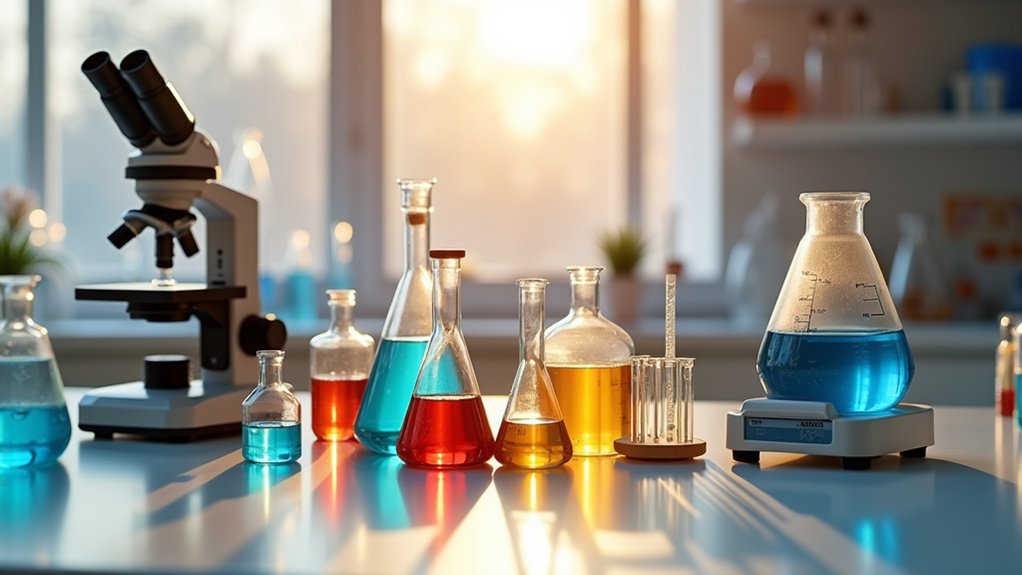
A science lab depends on several key tools. Analytical balances measure tiny masses very accurately. Centrifuges spin samples to separate mixtures. Pipettes move small amounts of liquid. Pure water systems remove salts and dirt. Fume hoods and biosafety cabinets keep people and samples safe. Hotplates and magnetic stirrers heat and mix reactions. Microscopes reveal hidden details. Refrigerators and freezers protect samples. Spectrophotometers measure light and concentration. Each tool has a special job that becomes clearer step by step.
Key Takeaways
- Analytical balances provide highly accurate mass measurements to 0.0001 g, essential for preparing precise reagents and standards.
- Centrifuges separate sample components by density, with various rotor types and speeds for diverse biological and chemical applications.
- Pipettes and automated liquid handling systems enable accurate, reproducible measurement and transfer of small liquid volumes.
- Water purification systems supply ultrapure water, critical for sensitive assays, instrument feeds, and minimizing experimental contamination.
- Safety equipment, including fume hoods and biosafety cabinets, protects users and samples from hazardous chemicals and biological agents.
Analytical Balances Precision Weighing Fundamentals
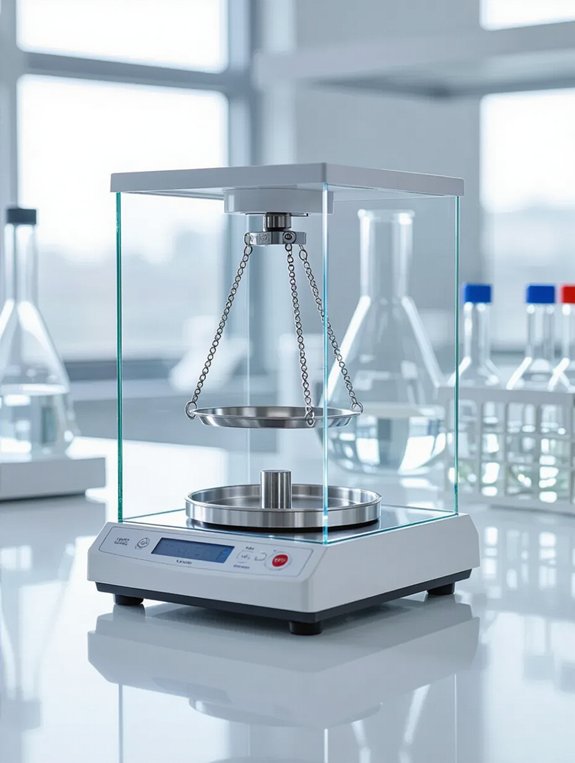
An analytical balance might look simple, but it is one of the most potent tools in a lab.
It can measure mass to 0.0001 grams, which feels almost like magic.
Students quickly see that such accuracy builds trust in every shared result.
A clear draft shield protects the pan from air currents and small bumps.
Good measurement techniques start with letting the balance warm up and settle.
The balance must be level and free from vibration.
Automatic balance calibration helps correct for temperature and other changes.
Display resolution, or “d,” shows how tiny a mass change it can show.
Laboratory Centrifuges Sample Separation Essentials
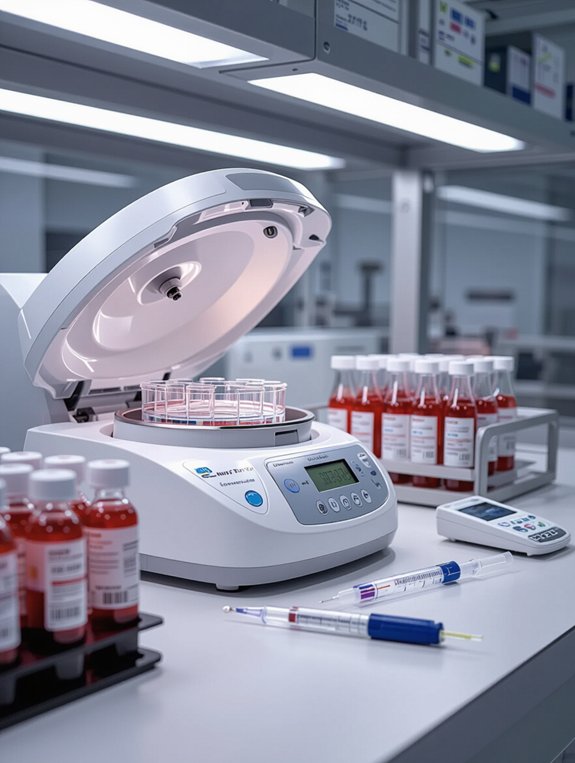
While the balance helps measure how much material is present, the centrifuge helps sort what that material holds.
It spins samples very fast to separate parts with different densities.
Common centrifuge types include tabletop models for small labs and floor-standing units for busy labs.
Ultra-centrifuges reach incredible speeds for tiny particles.
Different rotor configurations support this work.
Fixed-angle rotors hold tubes at a tilt for quick pelleting.
Swinging-bucket rotors let tubes swing outward for gentle, even layers.
Each user must balance tubes across the rotor.
Balanced loading protects the instrument and keeps results trustworthy.
Pipettes and Liquid Handling Systems Accuracy
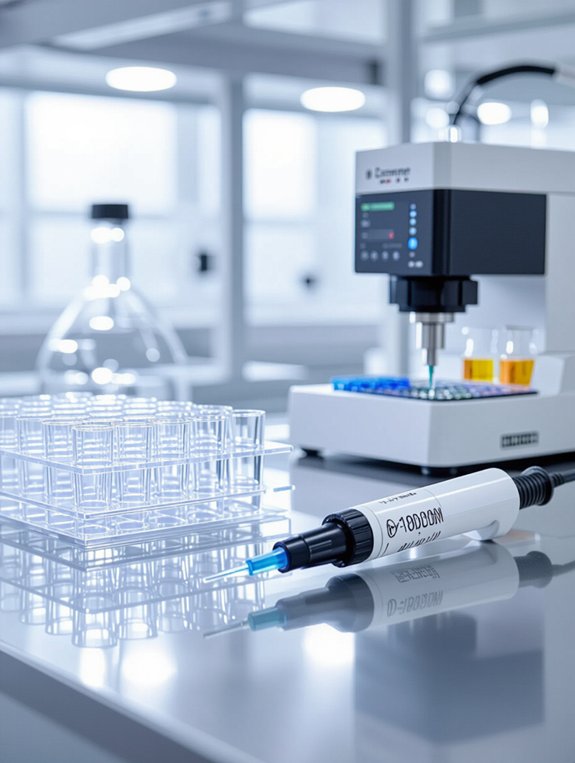
Pipettes help scientists move tiny amounts of liquid, and their accuracy really matters.
They are precision tools that can measure tiny volumes within about one percent.
To stay accurate, they need regular pipette calibration with trusted standards and records.
Even small errors can change experiment results and confuse the whole lab team.
Liquid handling systems, including robots, make steps more repeatable and steady.
They often reach about half a percent error or better.
Single‑channel pipettes suit careful work with one sample.
Multi‑channel tools handle many samples at once and support shared workflow success.
Water Purification Systems for Ultrapure Samples
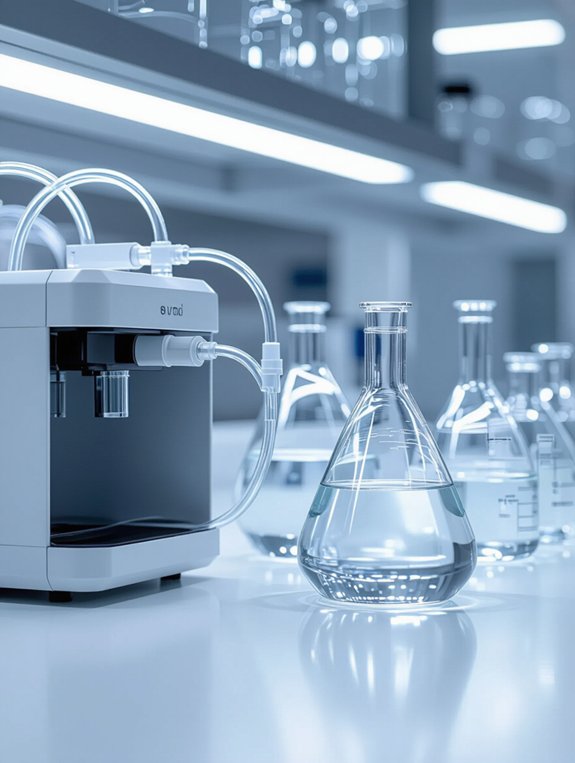
Clean water in a lab is much more than just clear and good‑tasting.
Ultrapure water protects careful work from tiny hidden impurities.
Scientists rely on smart purification technologies to reach extreme purity levels.
- Reverse osmosis removes many dissolved salts and larger particles
- Deionization strips ions so water resistivity reaches 18.2 MΩ·cm at 25°C
- Distillation separates water from contaminants by boiling and condensing
- Point‑of‑use systems give fresh ultrapure water on demand for sensitive tests
- Water quality monitoring checks filters and system performance so purity stays stable
Together these systems help every lab member trust their shared results.
Fume Hoods and Biosafety Cabinets Protection
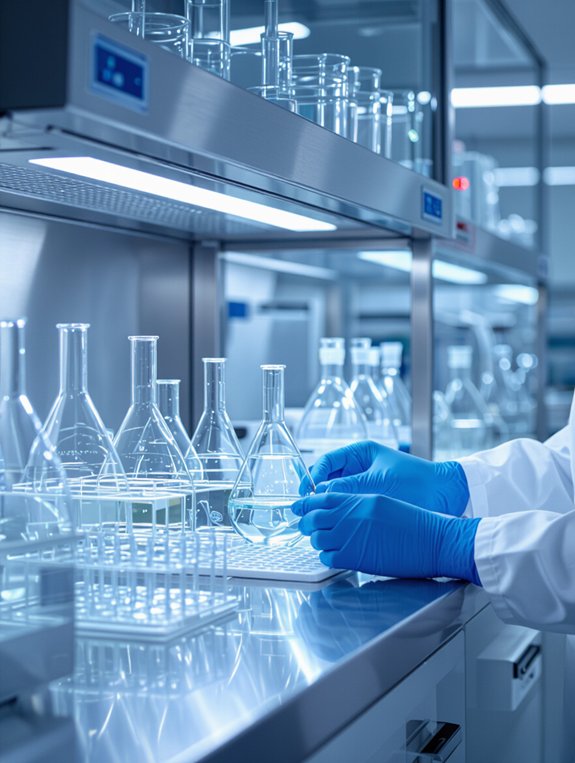
Many important lab experiments need strong protection from invisible dangers in the air.
Fume hoods pull harmful vapors and particles away from people. They use strong airflow with about 100 feet per minute at the hood face. Biosafety cabinets protect both the user and the samples. They use special HEPA filters to trap tiny germs and dust.
| Equipment Type | Key Protection Feature |
|---|---|
| Fume Hood | Ventilates hazardous fumes out of the workspace |
| Biosafety Cabinet | HEPA filters clean air around samples |
| Both | Need yearly checks and careful fume hood maintenance |
Biosafety cabinet classification (Class I, II, III) matches different risk levels.
pH Meters and Measurement Instruments
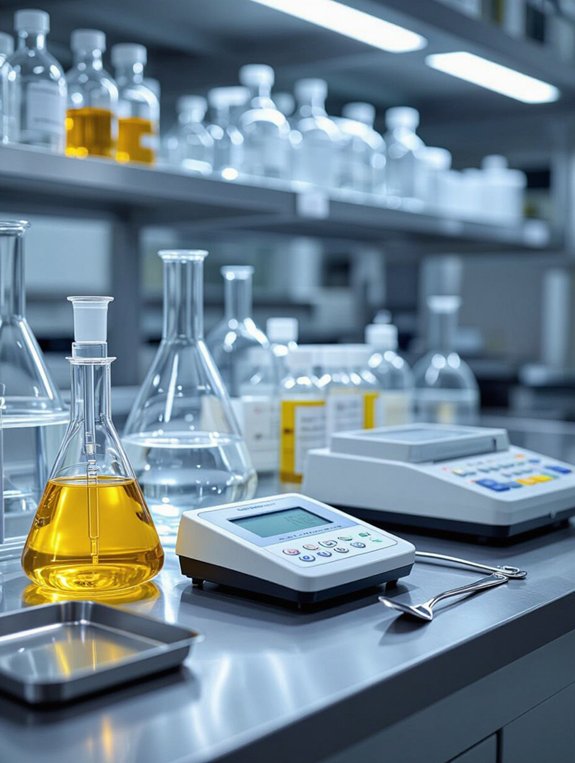
When a lab experiment needs careful control, a pH meter becomes a very important tool. It helps everyone in the lab share the same clear language of acidity and alkalinity. A pH meter uses a special glass electrode to sense hydrogen ions. The voltage it creates turns into a pH number.
- It usually measures from 0 to 14 for many kinds of solutions.
- pH calibration techniques use standard buffers so readings stay trusted and true.
- Automatic temperature compensation improves accuracy when solutions are not room temperature.
- pH meter maintenance keeps electrodes clean and responsive.
- These tools support chemistry, biology, environmental tests, and food production.
Hotplates and Magnetic Stirrers for Reactions
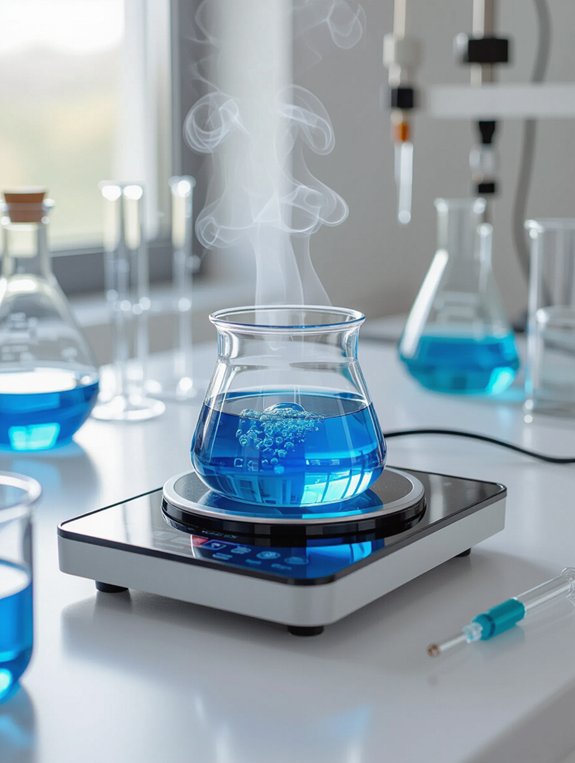
A bubbling reaction often needs both steady heat and smooth stirring to stay under control.
Hotplates give a stable heat source with careful temperature control.
They can reach about 500°C or more for tougher reactions.
Magnetic stirrers use a spinning magnetic field to turn a stir bar.
This keeps solutions mixed and boosts reaction uniformity.
Many units combine both tools in one device.
Digital displays show exact heat and stirring speed.
Students can quickly read and adjust settings together.
Modern safety features include automatic shut off and over temperature protection.
Different glass vessels fit easily on these helpful instruments.
Microscopes Advanced Visualization and Analysis
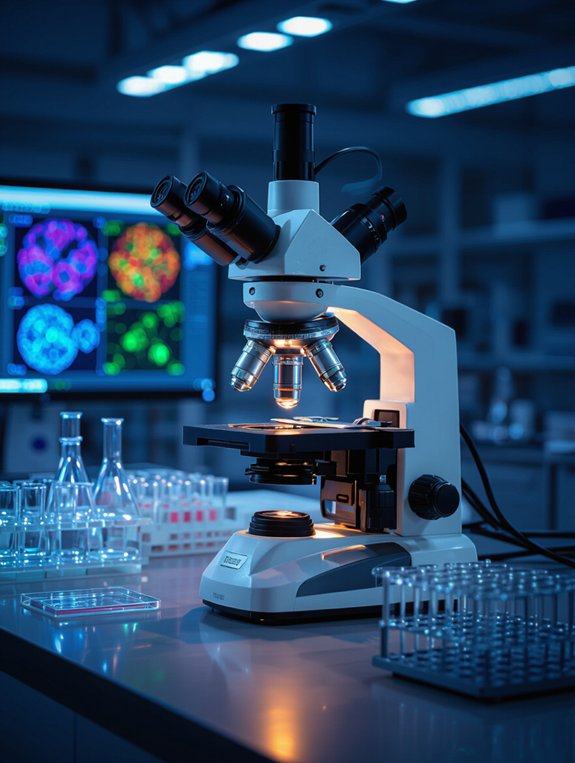
In the world of lab tools, microscopes act like super-powered magnifying glasses. They help everyone see tiny worlds that normally stay hidden. Different microscopes support different questions and skills, so every learner has a place.
- Optical microscopes use light and glass lenses to show cells and microorganisms distinctly.
- Stereo microscopes give a 3D view, perfect for careful dissection and steady hands.
- Electron microscopes reach near-atomic detail with TEM and SEM views.
- Advanced microscopy techniques reveal structures that once seemed impossible to study.
- Fluorescence imaging applications highlight specific cell parts with glowing dyes for vivid, guided exploration.
Refrigerators and Freezers Sample Preservation
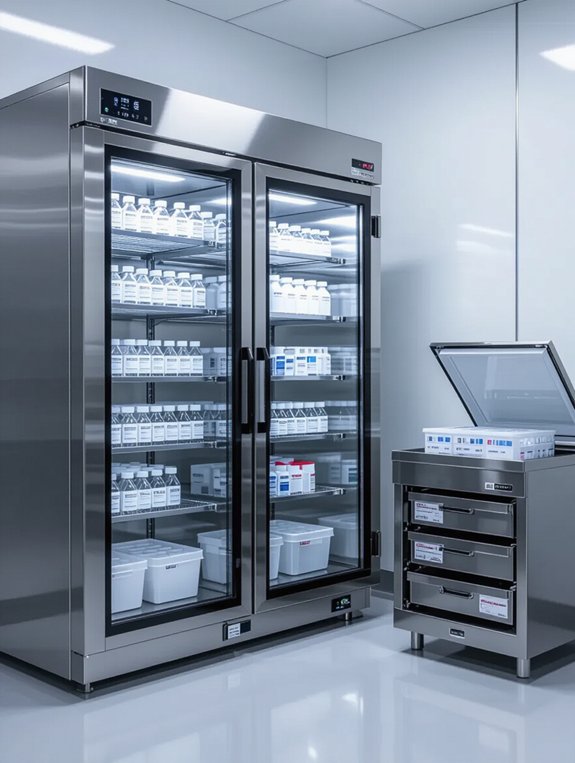
Microscopes help people see tiny cells, but refrigerators and freezers help protect them.
These units keep samples safe by holding steady temperatures. Lab refrigerators usually stay between 2 and 8°C. Freezers reach -20°C or even lower. Ultra-low and cryogenic storage can reach -80°C or -196°C for long-term protection. Careful temperature monitoring helps prevent sudden changes that damage samples. Many lab freezers use alarms to warn of problems. Good sample organization and clear labels help everyone find materials quickly. This reduces mistakes and contamination. When storage works well, the whole lab can trust its samples and results.
Spectrophotometers Quantitative Analysis Tools
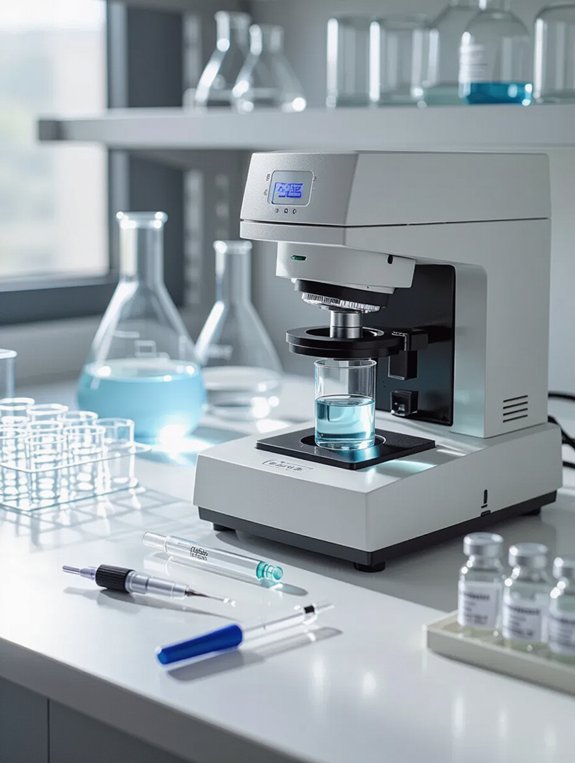
Many scientists rely on spectrophotometers when they need careful measurements in the lab.
These tools help track how much light a sample absorbs at certain wavelengths.
That absorbance measurement shows concentration and purity.
- They follow the Beer-Lambert Law, which links absorbance directly to concentration.
- They test liquids, gases, and even thin solids for many kinds of studies.
- They use calibration standards to turn light signals into trusted numbers.
- They often include automatic sample handling and data analysis software.
- They require regular maintenance and validation for accurate and shared results.
Frequently Asked Questions
How Often Should Common Lab Equipment Be Calibrated or Performance-Verified?
Common lab equipment is typically calibrated or performance-verified daily, weekly, or monthly, following SOPs and regulations. Like a well-tuned orchestra, shared calibration frequency and performance verification rituals quietly bind the lab community into one reliable ensemble.
What Routine Maintenance Schedule Extends the Lifespan of General Lab Instruments?
A routine maintenance schedule includes weekly cleaning, monthly visual inspections, quarterly calibration checks, and annual professional servicing. This preventive maintenance rhythm supports shared responsibility, strengthens lab culture, and enhances equipment lifespan for everyone relying on consistent, trustworthy results.
How Do I Prioritize Equipment Purchases for a New Laboratory on a Budget?
They prioritize equipment purchases by coordinating vital purchases with core experiments, openly mapping budget constraints, and inviting team input. Shared decisions focus first on safety, multi-use instruments, and validated methods, then expand gradually as funding and community support grow.
What Training Is Essential Before New Staff Use Critical Lab Instruments?
They require structured training in instrument operation, safety protocols, emergency shutdowns, troubleshooting basics, calibration, and documentation. Like apprentices joining an old guild, newcomers also need supervised practice, competency assessments, and shared norms that weave them into the lab community.
How Should Laboratories Document Equipment Use, Maintenance, and Incidents for Audits?
Laboratories maintain structured equipment logs and standardized incident reports, capturing usage, maintenance, and deviations. Entries include dates, responsible personnel, actions taken, and corrective steps, creating a transparent, shared record that supports trust, accountability, and readiness for audits among all team members.